Chef Juliette
Ordinary or White Consommé
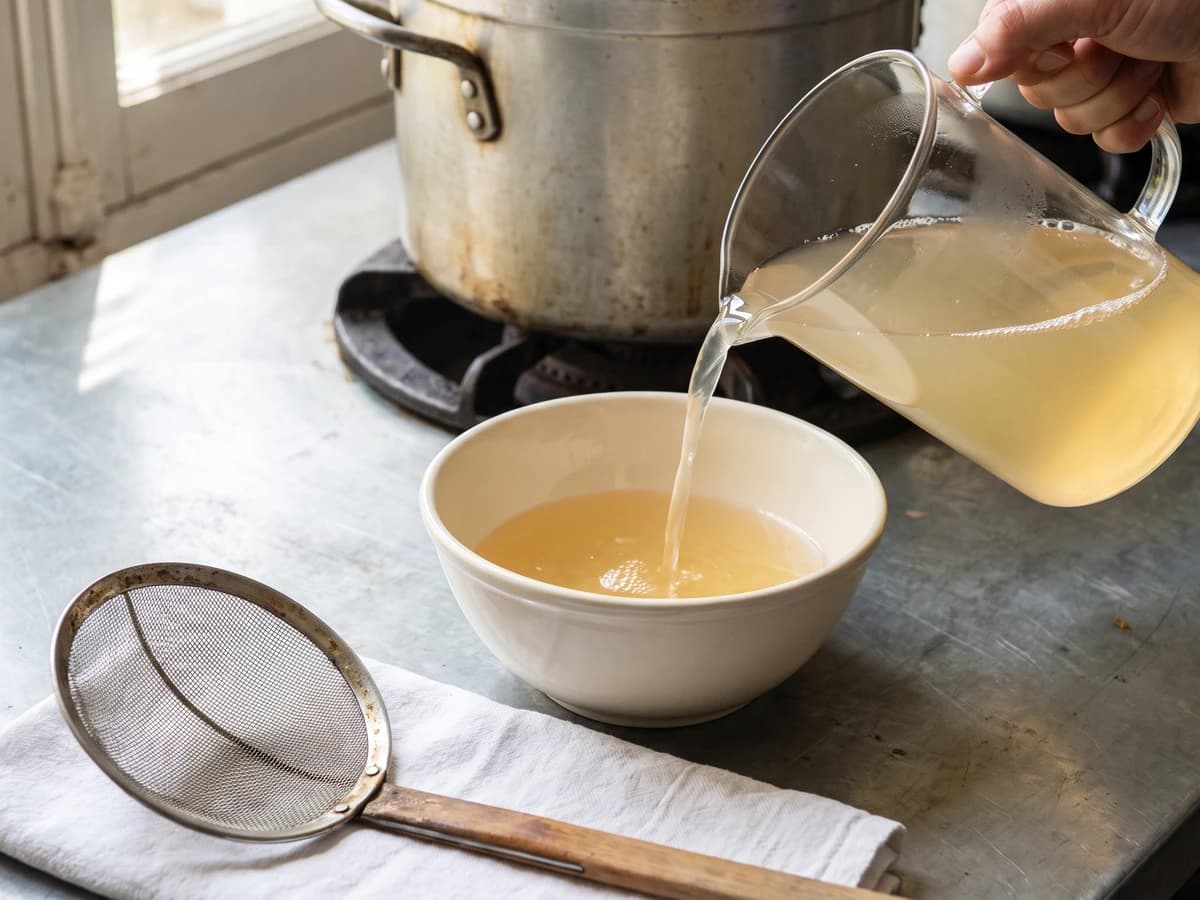
Beef shin, lean beef, and fowl begin in cold water and rise slowly toward a tremble. Skim before the boil, and you learn the quiet discipline that gives every clear French broth its backbone.
A cooking platform built around craft, culture, and the stories behind what we eat.
Created by Chef Juliette
Based on No. 42, Veal Gravy Tomaté, from Le Guide Culinaire (1907) by Auguste Escoffier
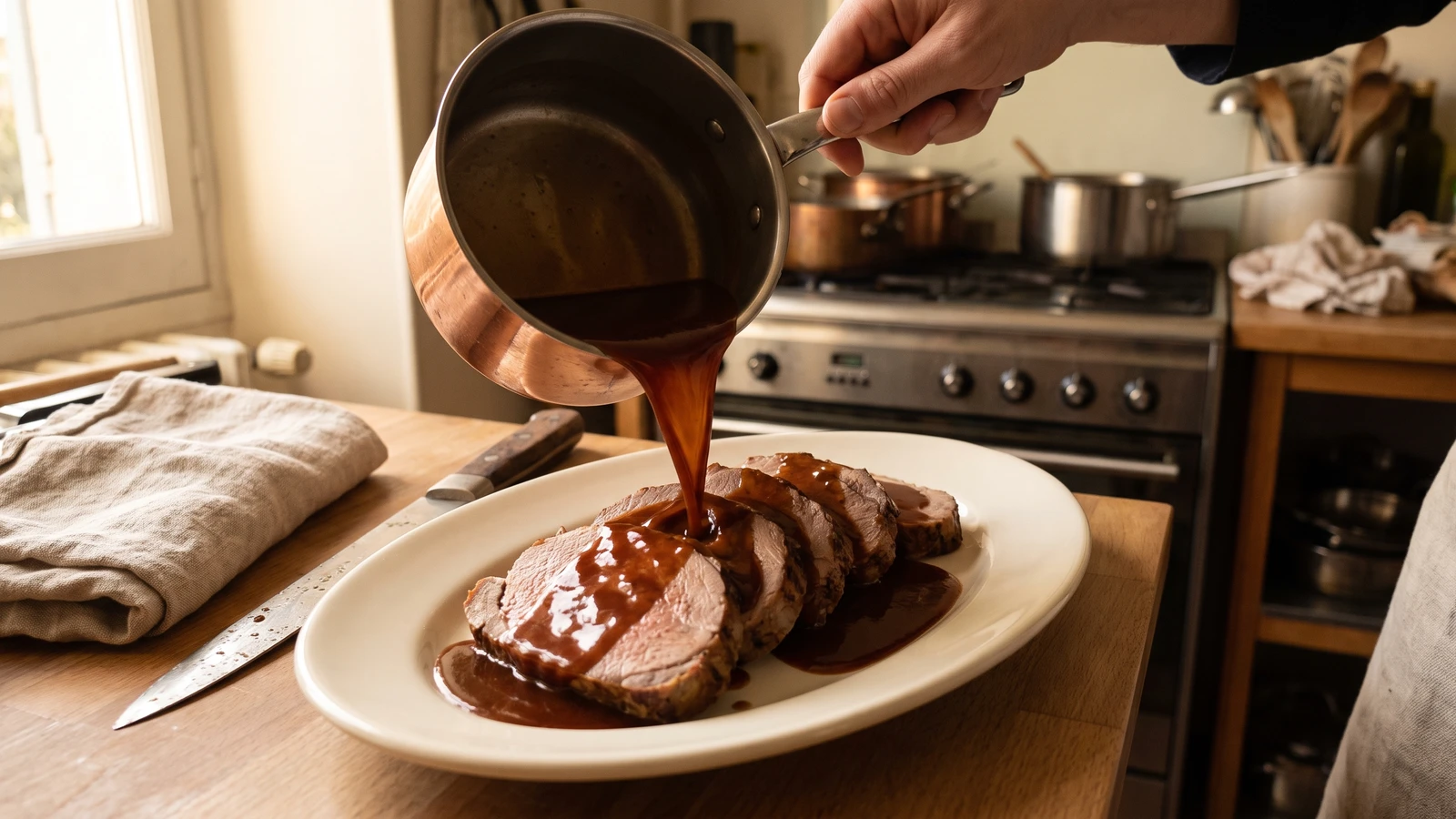
Jus de veau tomaté is reduction in its cleanest form: veal stock, tomato purée, and juice drawn down by one fifth, then strained into a glossy gravy for roasted or sautéed butcher's meat.
Jus de veau tomaté (veal gravy with tomato) teaches reduction in its cleanest form. Veal stock supplies body, tomato purée and juice bring acidity and ruddy color, and the pan removes exactly one fifth. That measured loss is the one true thing to know before touching the heat: this gravy should flow and lightly glaze meat, not cook down until it stands like a paste.
The printed formula belonged to a working sauce kitchen with a saucier on staff, veal stock never off the fire, and linen ready for straining. A salamander has no part in this preparation, so there is nothing to mimic under the home broiler. A wide saucepan, finished unsalted stock, and damp cheesecloth do the same work; the quantities are multiplied evenly to make about two quarts, enough for several suppers and sensible portions for the freezer. One cook, one stove, one evening.
The staff and perpetual stockpot were brigade scaffolding, and they can go. The veal-stock foundation, the book's proportions, the one-fifth reduction, and the gentle linen pass are the dish, so they stay. Mark the starting volume before you heat it, then stop when one fifth is gone. If you pass the mark, ça se rattrape, and the method restores exactly what escaped.
Jus de veau tomaté belongs to the French classical sauce kitchen and the cuisine bourgeoise table rather than to one province. In that grammar, tomaté means a veal gravy adjusted with a measured quantity of tomato, not a tomato sauce flavored with meat, and its proper companions are the roasted or sautéed cuts grouped as butcher's meat. It passed easily from the saucier's range to the household saucepan because its refinements are simple and exact: sound stock, controlled reduction, and a clean pass through linen.
Quantity
8 cups (1.9 L / 1.9 kg)
Quantity
¾ cup plus 2 tablespoons (210 ml / 225 g)
Quantity
2 cups (475 ml / 480 g)
| Ingredient | Quantity |
|---|---|
| finished unsalted veal stock | 8 cups (1.9 L / 1.9 kg) |
| smooth tomato purée, not concentrated tomato paste | ¾ cup plus 2 tablespoons (210 ml / 225 g) |
| unsalted tomato juice | 2 cups (475 ml / 480 g) |
Whisk the tomato purée with the tomato juice in a 6-quart straight-sided saucepan until perfectly smooth, then whisk in the veal stock. Note the combined volume and calculate four fifths of it; with these quantities, the finishing point will be about 8¾ cups. If the pan has straight sides, dip a clean wooden skewer vertically to the bottom, mark the starting depth, then make a second mark at four fifths of that depth. Measuring now keeps you from guessing later.
Set the pan over medium heat and bring the gravy just to the boil, stirring along the bottom so the tomato purée cannot catch. Lower the heat at once and maintain a steady uncovered simmer, stirring every few minutes, until the liquid reaches the four-fifths mark, about 25 to 35 minutes. It should look glossy and remain freely pourable. If you overshoot, take the pan off the heat and whisk in hot water a tablespoon at a time until the proper volume returns; evaporation removed water, so replacing it restores the balance. Ça se rattrape.
Dampen butter muslin or a double layer of cheesecloth with cold water, wring it thoroughly, and use it to line a fine-mesh sieve set over a clean saucepan. Ladle in the gravy and let it pass under its own weight. Do not press the tomato solids, because pressing turns a clean gravy muddy. If the cloth clogs, replace it; if you have already pressed and clouded the gravy, let it settle for five minutes and pass it once more through fresh damp cloth.
Warm the strained jus de veau tomaté only to a gentle simmer. Taste it with a morsel of the meat it will accompany, since reduced stock may seem mild alone and perfectly seasoned on the plate. Spoon it over roasted or sautéed veal, beef, lamb, or pork so it glazes the surface and leaves a generous pool beneath. No roux, herbs, butter, or extra aromatics belong in this particular formula. À table!
1 serving (about 60g)
Culinary guides, cultural storytelling, and the editorial depth that makes cooking meaningful.
Discover Culinary ExplorerChef Juliette
Beef shin, lean beef, and fowl begin in cold water and rise slowly toward a tremble. Skim before the boil, and you learn the quiet discipline that gives every clear French broth its backbone.
Chef Juliette
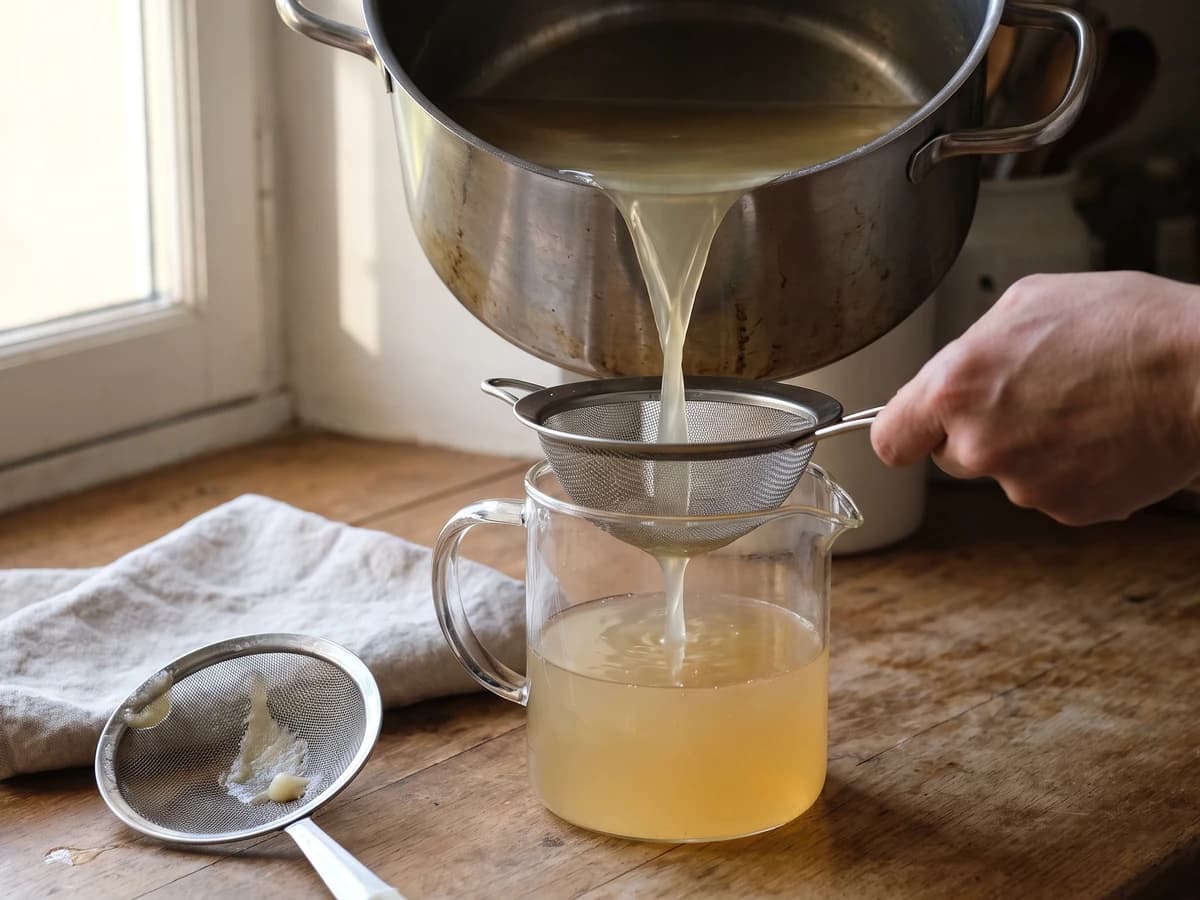
Break the veal bones small, then give them eight hours at a bare tremble. This pale, gelatinous fond becomes the quiet foundation beneath velouté, blanquette, and every sauce that must stay light.
Chef Juliette
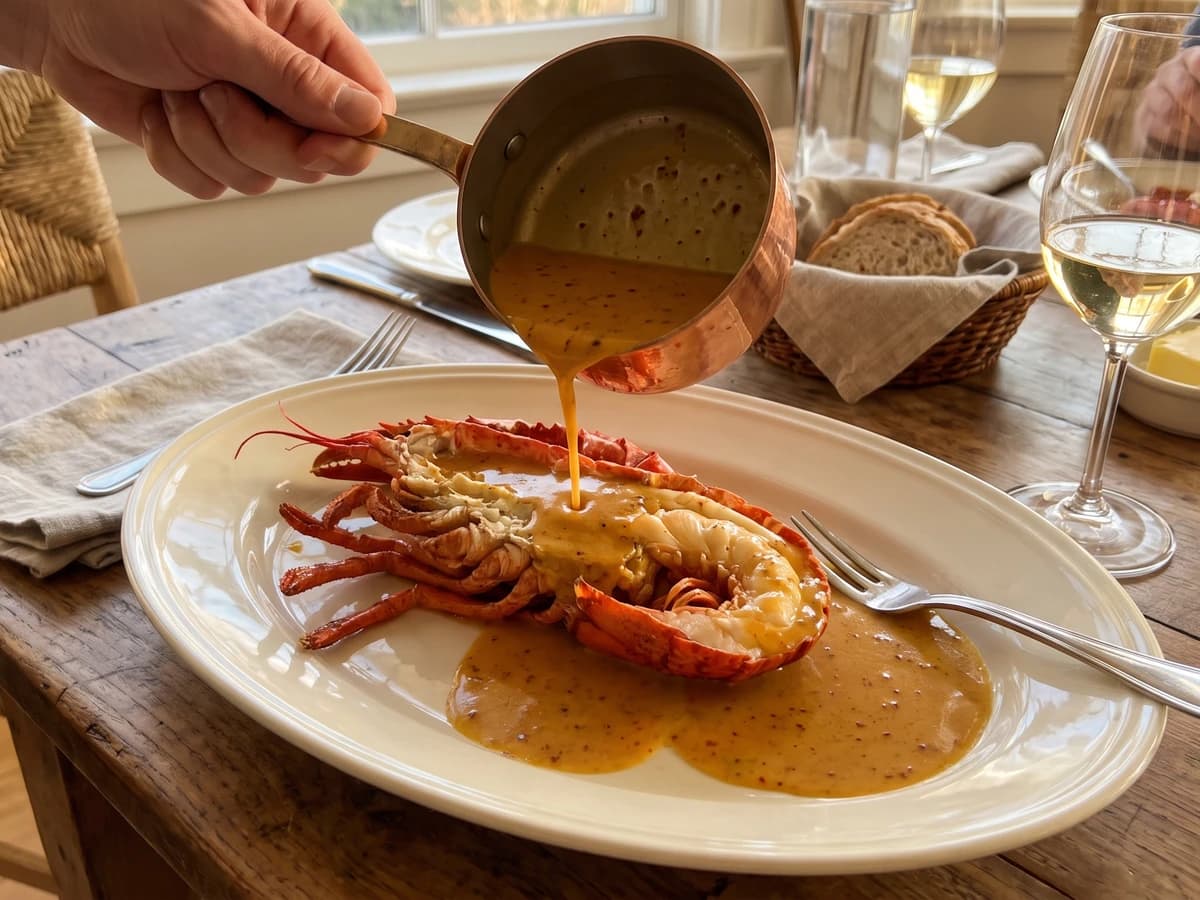
Sauce Orientale concentrates lobster-rich American Sauce with curry, then folds in cream away from the fire: a glossy, gently spiced derivative made for lobster, crayfish, and firm fish.
Chef Juliette
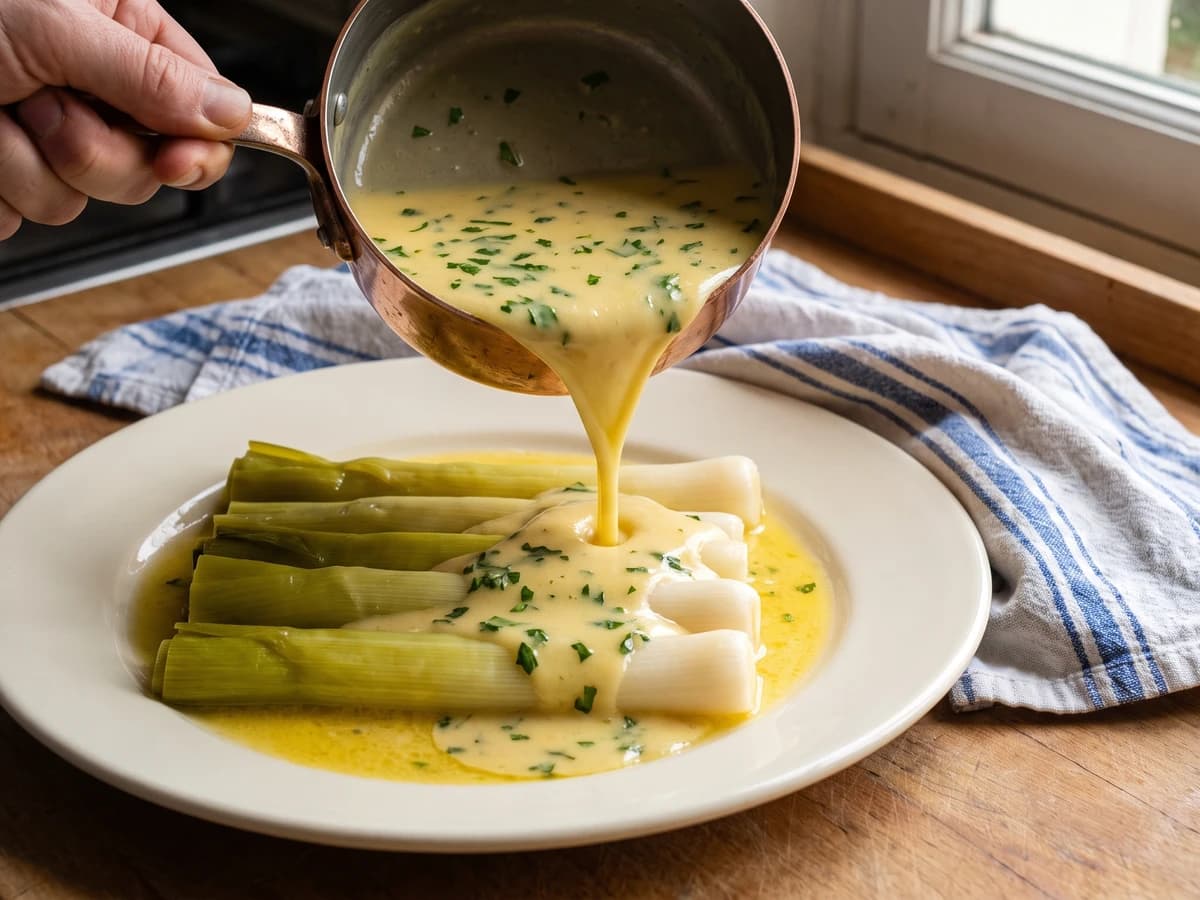
An old lesson in sauce families: Sauce Allemande takes mushroom liquor, then butter, lemon, and parsley, becoming a glossy Poulette for sheep's trotters, leeks, cauliflower, and anything needing gentle richness with a bright edge.