Chef Juliette
Omelette à l’Écossaise
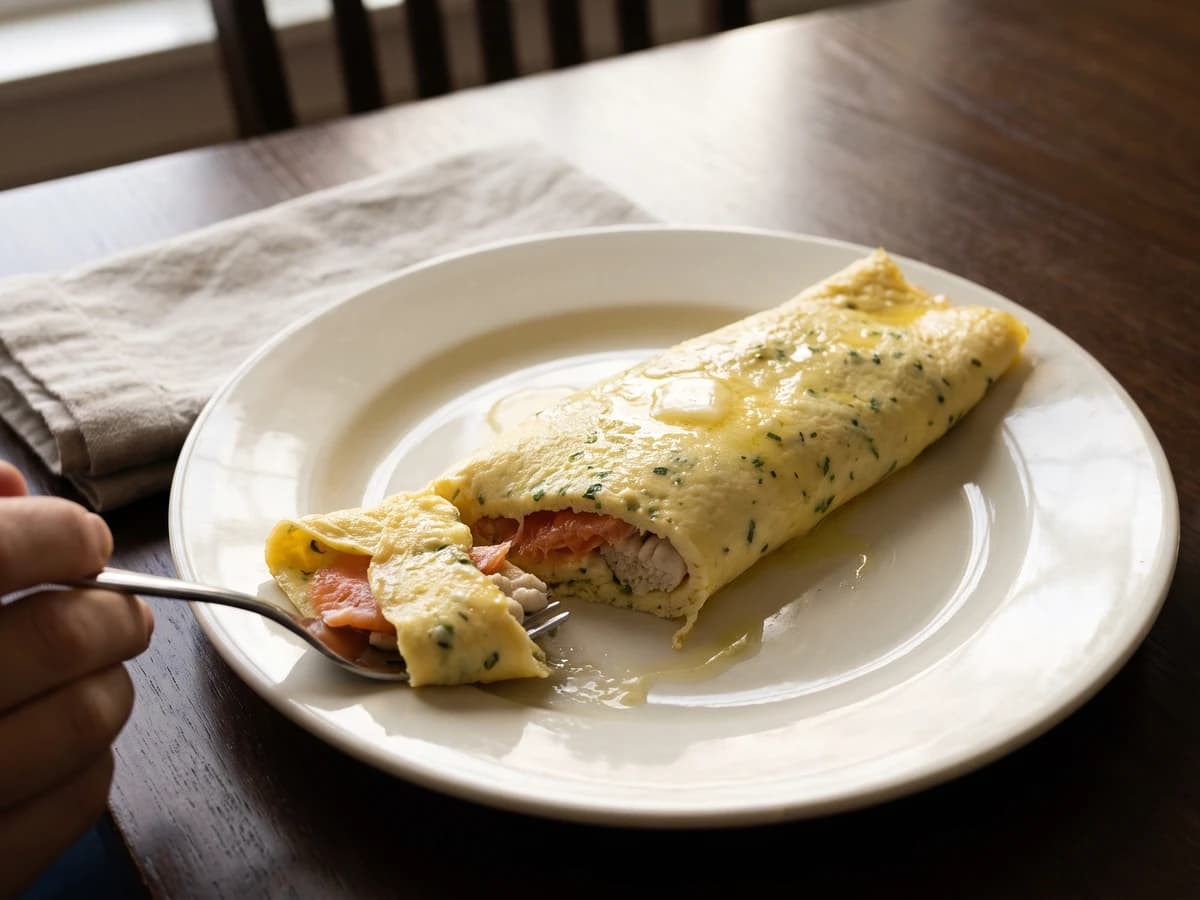
A creamy omelette aux fines herbes closes around smoked-salmon-wrapped herring milts, gently poached in butter. Have the filling ready, then roll the eggs while they still shine.
A cooking platform built around craft, culture, and the stories behind what we eat.
Created by Chef Juliette
Based on No. 419, Poached Eggs à la Bruxelloise, from Le Guide Culinaire (1907) by Auguste Escoffier
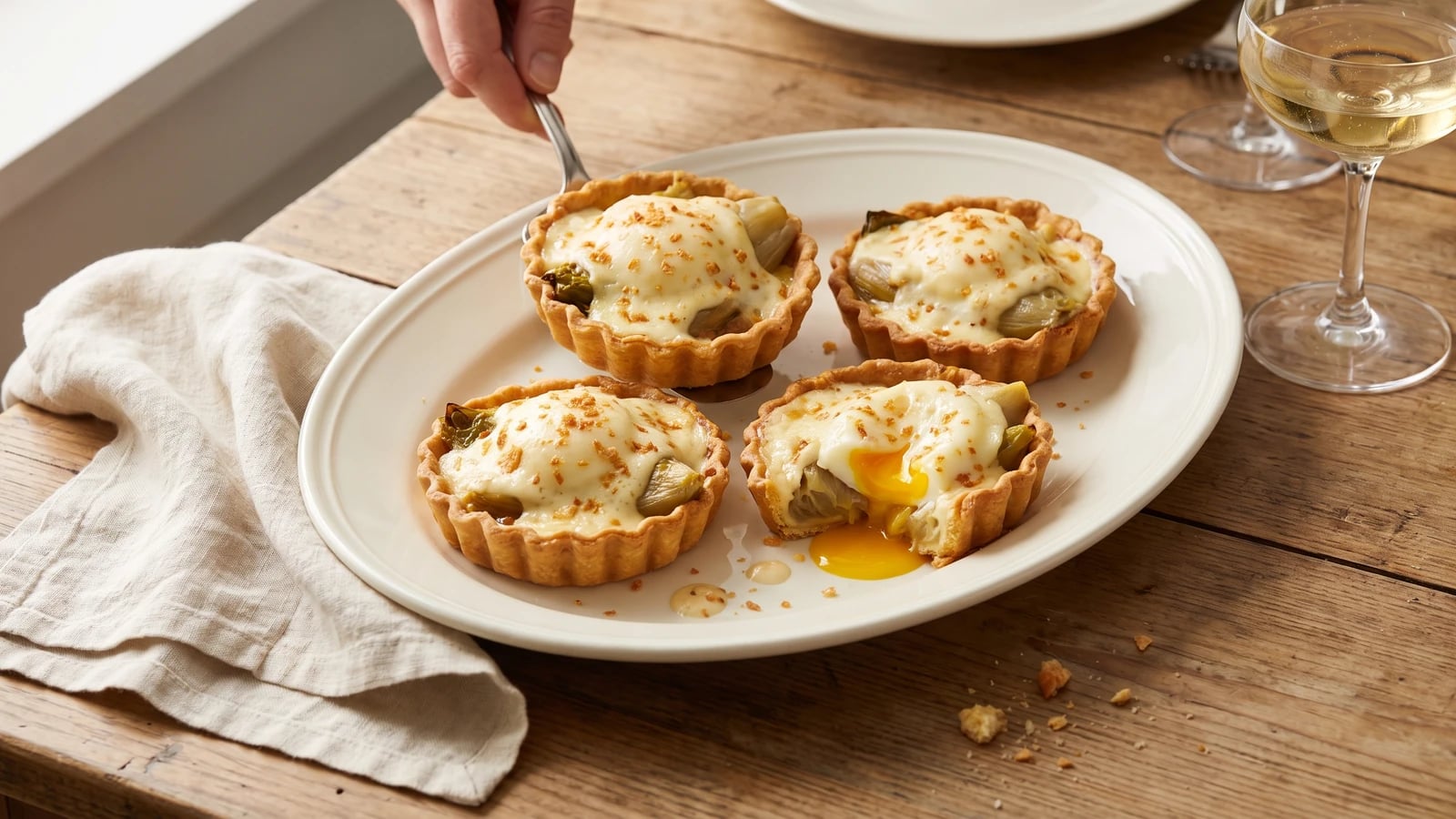
Crisp pastry, sweet-bitter endive, a soft poached egg, and ivory cream sauce meet beneath a fast biscotte glaze: a lesson in controlling moisture and heat without losing the yolk.
Œufs pochés à la Bruxelloise (poached eggs Brussels-style) teaches the discipline of finishing several soft things under fierce heat without letting any collapse. One true thing before you touch a pan: every component must arrive at assembly a little drier or less cooked than you would serve it alone. The tart stays crisp, the endive stays creamy rather than wet, and the yolk remains soft beneath its freckled biscotte crust.
The source entry assumes the kind of kitchen where tartlet shells stood ready, a saucier held cream sauce, and a salamander waited at full heat. It does not call for the stockpot that never left the fire, so neither will we. Your honest equivalents are four small tartlet tins, one skillet, one saucepan, and a thoroughly heated broiler. The brigade staging is scaffolding and can go; the braised endive, cream thickening, careful poach, and immediate glaze are the dish and must stay. One cook, one stove, one evening.
The endive decides everything. Braise it until tender, mince it only afterward as the source directs, then drive off its water before the cream goes in. A loose filling softens the pastry before the crumbs can color, so watch that reduction above every other step.
À la Bruxelloise points to Brussels, where forced chicory is called witloof in Dutch and chicon in Belgian French, and its pale leaves with their pleasant bitterness became an emblem of the city's table. French classical kitchens used the name Bruxelloise for preparations distinguished by Brussels endive, carrying a local market vegetable into tartlets, sauces, and gratins. Here the pastry, cream sauce, and rapid glaze show that passage into the grand-kitchen canon, while the braised endive remains the dish's true geographical signature.
Quantity
1 cup (240 ml / 125 g)
Quantity
6 tablespoons (90 ml / 85 g)
cubed
Quantity
2 to 3 tablespoons (30 to 45 ml / 30 to 45 g)
Quantity
3/4 teaspoon (3.75 ml / 4.5 g)
divided
Quantity
4 medium (about 1 1/4 pounds / 560 g)
Quantity
2 tablespoons (30 ml / 28 g)
Quantity
1/2 cup (120 ml / 120 g)
Quantity
1/2 cup (120 ml / 120 g)
divided equally between the endive and sauce
Quantity
1 tablespoon (15 ml / 14 g)
Quantity
1 tablespoon (15 ml / 8 g)
Quantity
1/2 cup plus 2 tablespoons (150 ml / 155 g)
divided
Quantity
1/8 teaspoon (0.6 ml / 0.3 g)
Quantity
4
Quantity
2 quarts (1.9 L / 1.9 kg)
Quantity
1 tablespoon (15 ml / 15 g)
Quantity
1/4 cup (60 ml / 20 g)
finely grated
| Ingredient | Quantity |
|---|---|
| all-purpose flour | 1 cup (240 ml / 125 g) |
| cold unsalted buttercubed | 6 tablespoons (90 ml / 85 g) |
| ice water | 2 to 3 tablespoons (30 to 45 ml / 30 to 45 g) |
| fine saltdivided | 3/4 teaspoon (3.75 ml / 4.5 g) |
| Belgian endives | 4 medium (about 1 1/4 pounds / 560 g) |
| unsalted butter for braising | 2 tablespoons (30 ml / 28 g) |
| water for braising | 1/2 cup (120 ml / 120 g) |
| heavy creamdivided equally between the endive and sauce | 1/2 cup (120 ml / 120 g) |
| unsalted butter for the cream sauce | 1 tablespoon (15 ml / 14 g) |
| all-purpose flour for the cream sauce | 1 tablespoon (15 ml / 8 g) |
| whole milkdivided | 1/2 cup plus 2 tablespoons (150 ml / 155 g) |
| ground white pepper | 1/8 teaspoon (0.6 ml / 0.3 g) |
| large eggs | 4 |
| water for poaching | 2 quarts (1.9 L / 1.9 kg) |
| white wine vinegar | 1 tablespoon (15 ml / 15 g) |
| biscottes (dry rusks)finely grated | 1/4 cup (60 ml / 20 g) |
Combine the flour with 1/4 teaspoon of the salt. Rub in the cold butter until the mixture resembles coarse crumbs with a few pea-sized pieces remaining. Add 2 tablespoons of ice water and gather the dough gently; add the final tablespoon only if dry flour remains. Press it into a disc and chill for 30 minutes. Pâte brisée, the short pastry, stays tender when handled little and rested well.
Heat the oven to 375°F (190°C). Divide the dough into four pieces, roll each about 1/8 inch (3 mm) thick, and line four 4-inch (10 cm) tartlet tins. Press the pastry into the flutes without stretching it, trim the rims, and chill for 10 minutes. Line with parchment, add pie weights, and bake for 12 minutes. Remove the weights and parchment, then bake for 5 to 7 minutes more, until the shells are dry and evenly golden. If a base puffs, press it flat with the back of a spoon while still hot. Cool briefly and unmold.
Trim only the browned ends from the endives, keeping enough core to hold the leaves together, then halve them lengthwise. Melt the braising butter in a wide skillet and arrange the endives cut-side down. Add the braising water and 1/4 teaspoon of the salt, cover, and cook over gentle heat for 12 minutes. Turn them and cook covered for another 8 to 10 minutes, until a knife enters the cores without resistance. Uncover and let the remaining liquid evaporate. The endives should be tender and buttery, not swimming.
Transfer the braised endives to a board and let them cool just enough to handle. Press out excess liquid with the back of a spoon, then mince them finely, preserving the source's sequence of braising before mincing. Return them to the skillet with 1/4 cup of the cream and cook over medium heat until the cream clings and a spoon drawn through the pan leaves a clean path. If the filling remains loose, keep reducing it rather than adding flour. It can be rescued, but only by removing the water. Set aside, covered.
Melt the sauce butter in a small saucepan. Stir in the sauce flour and cook gently for 90 seconds without coloring to make a roux blanc, a white roux. Gradually whisk in 1/2 cup of the milk, then simmer for 3 minutes until smooth and thick enough to coat a spoon. Add the remaining 1/4 cup cream, the final 1/4 teaspoon salt, and the white pepper. Simmer gently until glossy. If lumps appear, take the pan off the heat, whisk hard, and pass the sauce through a fine sieve. Ça se rattrape. Keep it covered off the heat, using the reserved 2 tablespoons of milk to loosen it if a skin forms or it tightens.
Bring the poaching water and vinegar to a bare simmer in a wide pan. Crack one egg into a small cup, tip it into a fine-mesh strainer for a few seconds to shed the watery white, then slide it gently into the pan. Repeat with the remaining eggs, leaving room between them. Poach for 2 1/2 to 3 minutes, until the whites are just set and the yolks remain very soft. If the first white feathers badly, lower the heat before adding the next; boiling water tears a poached egg apart. Lift each egg with a slotted spoon and blot the underside thoroughly on a clean towel.
Heat the broiler fully and set a rack about 5 inches (13 cm) below it. Place the tartlet shells on a rimmed baking sheet and divide the warm endive filling among them. Set one poached egg on each, spoon over enough cream sauce to coat the egg, and sprinkle moderately with the fine biscotte raspings. Broil for 60 to 90 seconds, just until the sauce bubbles at the edges and the crumbs freckle pale gold. This fierce, brief glaze is the home equivalent of the salamander. If one tartlet colors first, remove it or rotate the sheet; do not sacrifice the soft yolks while waiting for perfect uniformity.
Transfer each tartlet to a warm plate and serve immediately, while the pastry is crisp, the endive creamy, and the yolk still ready to run into both. No cheese, no stray herbs, and no decoration are needed. The biscotte glaze is the finish the source gives us, and it is enough. À table!
1 serving (about 300g)
Culinary guides, cultural storytelling, and the editorial depth that makes cooking meaningful.
Discover Culinary ExplorerChef Juliette
A creamy omelette aux fines herbes closes around smoked-salmon-wrapped herring milts, gently poached in butter. Have the filling ready, then roll the eggs while they still shine.
Chef Juliette
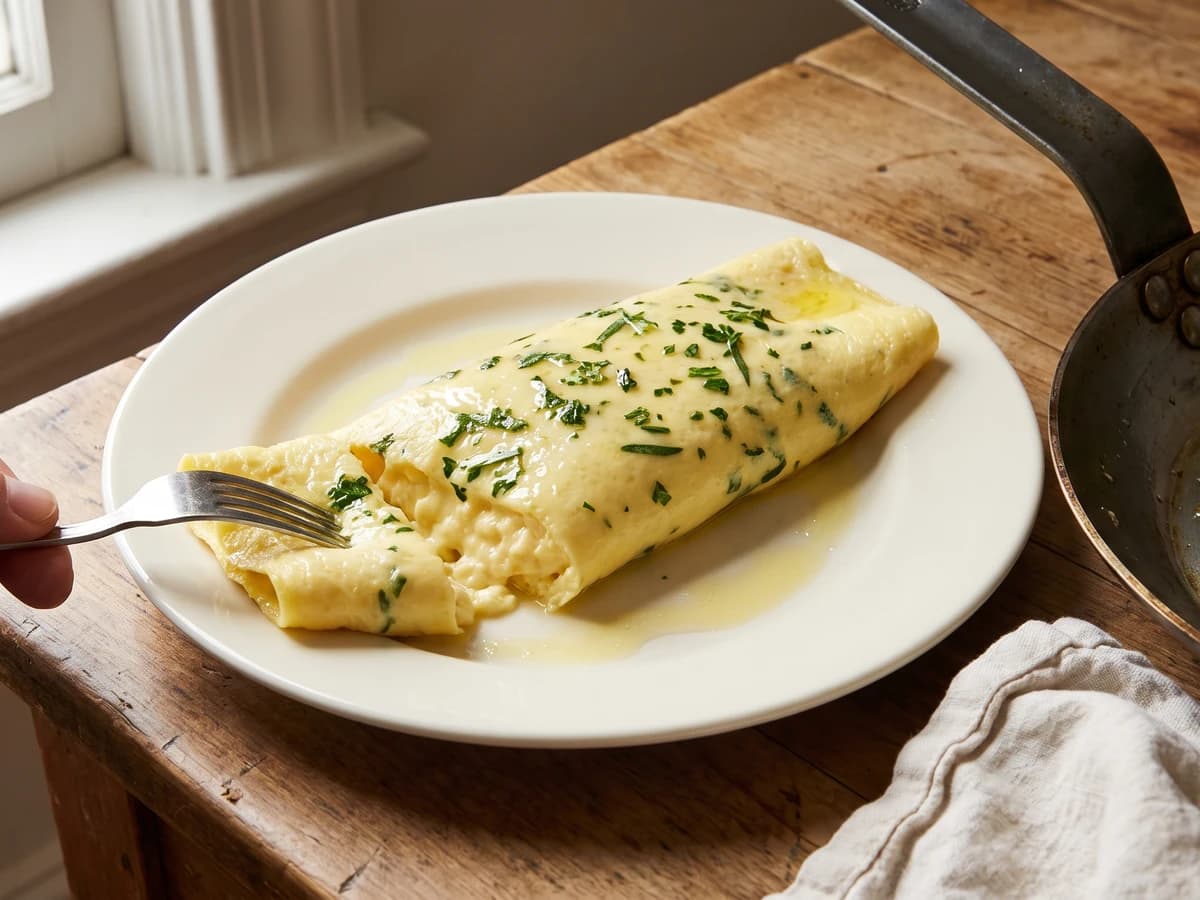
Four tender herbs, hot butter, and two eggs per pan: this rolled omelette teaches the quick hand and good judgment that keep the outside pale and the center creamy.
Chef Juliette
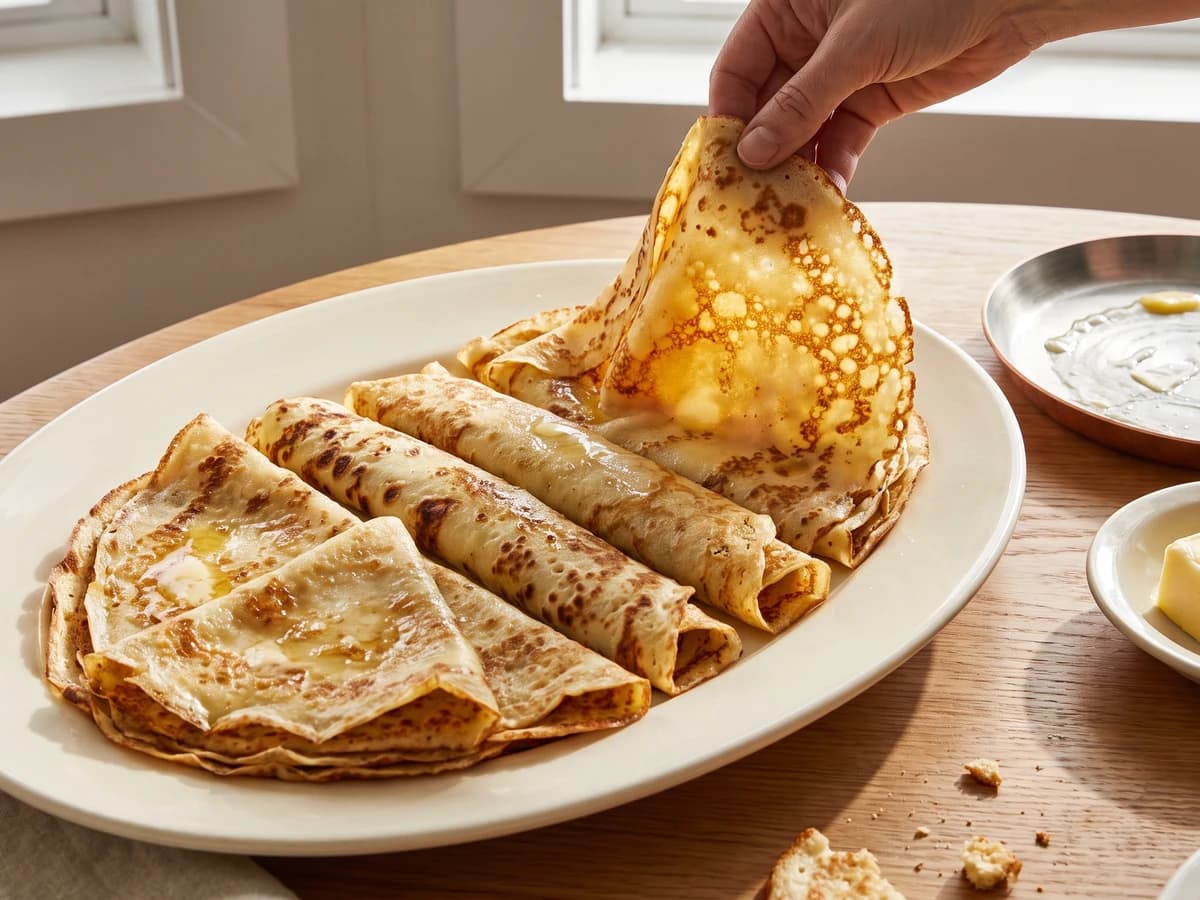
Four batters, one lesson: let the flour drink deeply before cooking, then spread the batter thinly in butter for crêpes and pannequets that bend without becoming tough.
Chef Juliette
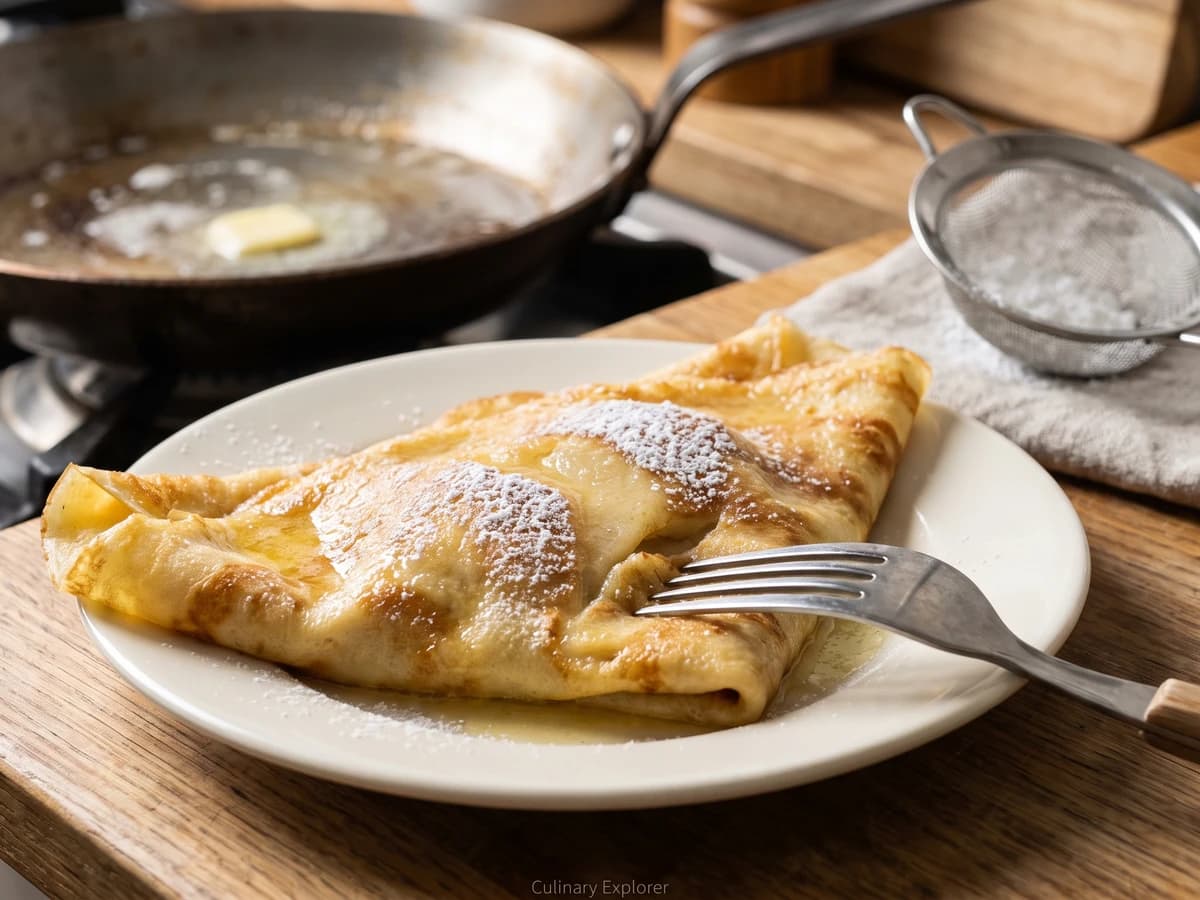
Crêpes au Couvent trap ripe Williams pear dice between two thin pours of sweet batter, then turn in one clean toss and reach the table butter-gold, powdered, and burning hot.