Chef Juliette
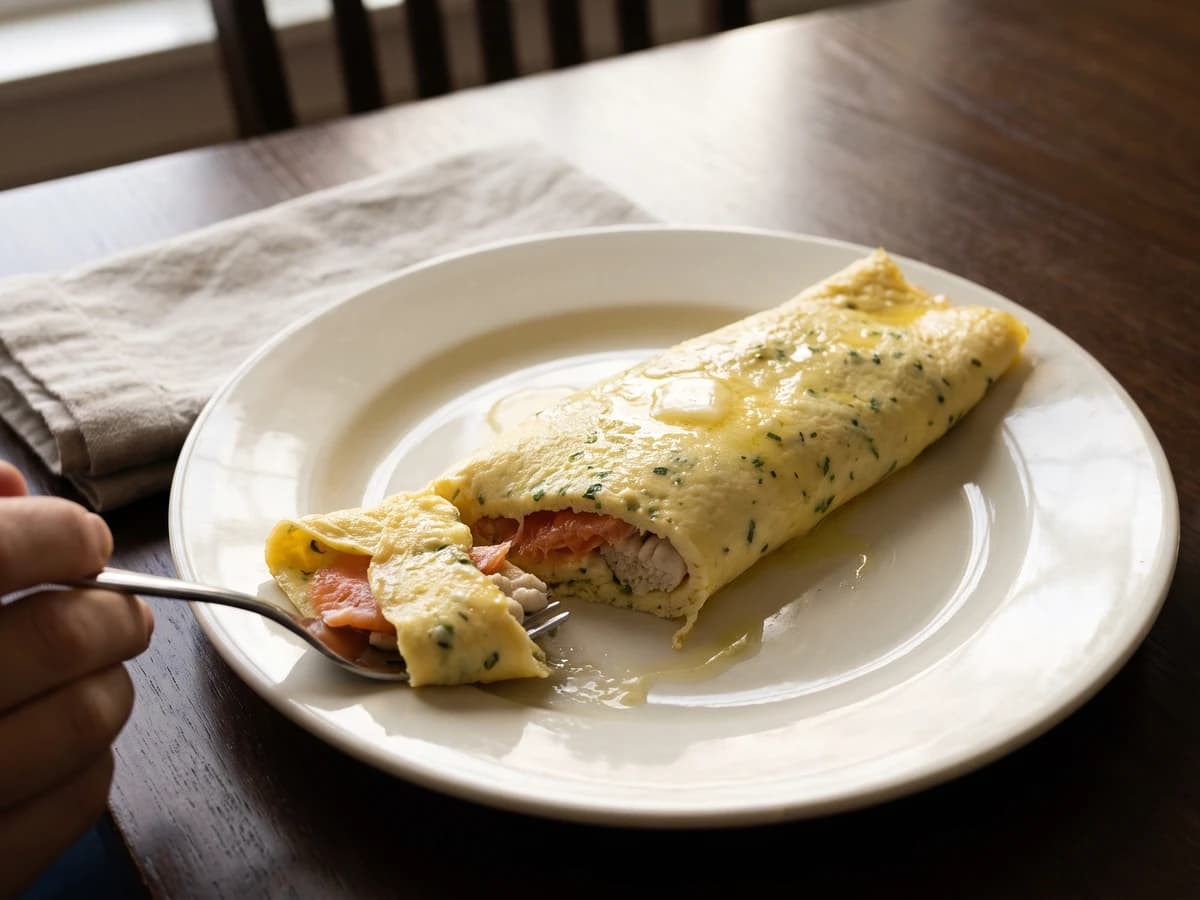
Omelette à l’Écossaise
A creamy omelette aux fines herbes closes around smoked-salmon-wrapped herring milts, gently poached in butter. Have the filling ready, then roll the eggs while they still shine.
A cooking platform built around craft, culture, and the stories behind what we eat.
Created by Chef Juliette
Based on No. 417, Poached Eggs à la Bohémienne, from Le Guide Culinaire (1907) by Auguste Escoffier
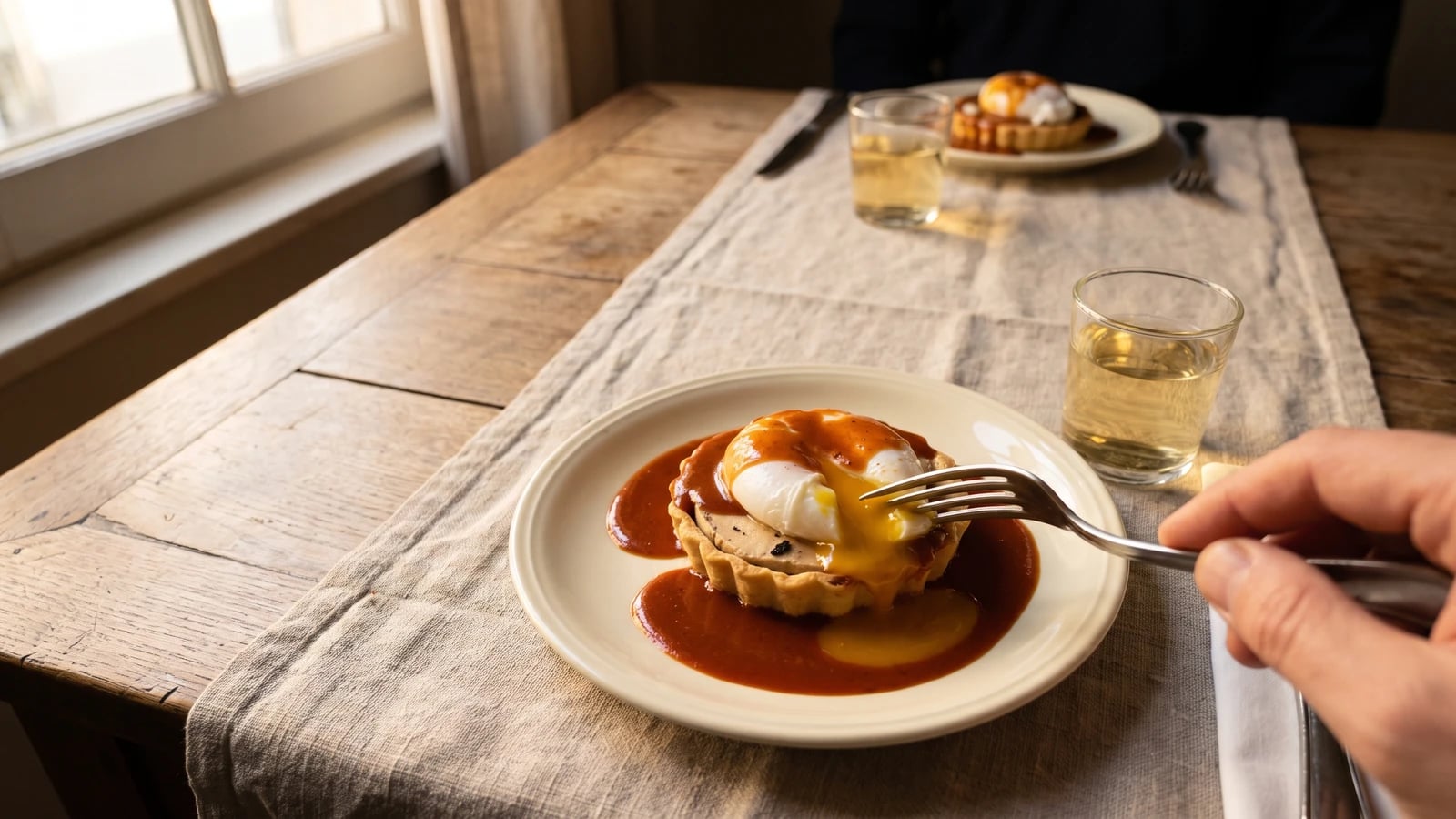
Four crisp tartlets, four tender poached eggs, and two sauces doing exact work: foie gras and truffle held below, glossy paprika-bright sauce hongroise flowing over the top.
Œufs pochés à la Bohémienne (poached eggs Bohémienne-style) teaches composition: every part must arrive hot, distinct, and ready at the same moment. A crisp tartlet carries a salpicon, a fine dice bound with sauce, of foie gras and black truffle; a soft poached egg rests above it, and sauce hongroise, the paprika-and-wine Hungarian sauce of the French canon, coats the egg without burying it.
The original entry assumed tartlet shells ready for service, a saucier on staff, white-meat glaze from a stockpot never off the fire, and enough hands to poach six eggs while the sauces waited. For four at home, reduce one cup of rich unsalted chicken stock to a spoonful of glaze, use the reserved juice from preserved black truffles as the old truffle essence, and build one small pan of sauce hongroise. The brigade's parallel pans were scaffolding and can go. The tartlet, foie gras-and-truffle salpicon, soft egg, concentrated glaze, and paprika sauce are the dish, so each stays. One cook, one stove, one evening.
When it lands correctly, the pastry breaks cleanly, the foie gras stays in tender dice, and the yolk runs into a glossy ochre sauce scented with wine, paprika, and truffle. Drain each poached egg until its underside leaves no wet mark on the towel. That small pause decides whether the tartlet stays crisp and the sauce stays itself.
Œufs pochés à la Bohémienne belongs to the cosmopolitan Parisian grand-kitchen repertoire, where named egg garnitures assembled pastry, luxury offal, truffle, and a finished sauce into a composed first course. The name does not make it a folk breakfast from Bohemia; sauce hongroise supplied the Central European note through sweet paprika and wine, handled with French roux, reduction, and butter. Its journey to the home table depends on preparing the same components in sequence instead of keeping a brigade's pantry of finished sauces.
Quantity
1 cup (240 ml / 125 g)
for the tartlets
Quantity
4 tablespoons (60 ml / 57 g)
diced, for the tartlets
Quantity
1/4 teaspoon (1.25 ml / 1.5 g)
for the tartlets
Quantity
1
Quantity
1 tablespoon plus 1 teaspoon (20 ml / 20 g)
use only as needed
Quantity
1 cup (240 ml / 240 g)
to reduce for the white-meat glaze
Quantity
1 1/4 cups (300 ml / 300 g)
for the sauce hongroise
Quantity
4 tablespoons (60 ml / 56 g)
divided, for the sauce hongroise
Quantity
1/4 cup (60 ml / 40 g)
finely chopped
Quantity
1 teaspoon (5 ml / 2.3 g)
Quantity
1/2 cup (120 ml / 120 g)
Quantity
2 tablespoons (30 ml / 16 g)
for the roux
Quantity
1/2 teaspoon (2.5 ml / 3 g)
plus more as needed
Quantity
1/8 teaspoon (0.6 ml / 0.3 g)
Quantity
1/2 cup (120 ml / 85 g)
chilled and cut into 6 mm dice
Quantity
2 tablespoons (30 ml / 20 g)
drained and cut into 6 mm dice, juice reserved
Quantity
2/3 teaspoon (3.3 ml / 4 g)
made from the reduced stock
Quantity
1/3 teaspoon (1.7 ml / 1.7 g)
use reserved truffle juice
Quantity
1 tablespoon (15 ml / 14 g)
diced, for binding the salpicon
Quantity
4
as fresh as possible
Quantity
2 tablespoons (30 ml / 30 g)
for poaching
| Ingredient | Quantity |
|---|---|
| all-purpose flourfor the tartlets | 1 cup (240 ml / 125 g) |
| cold unsalted butterdiced, for the tartlets | 4 tablespoons (60 ml / 57 g) |
| fine sea saltfor the tartlets | 1/4 teaspoon (1.25 ml / 1.5 g) |
| large egg yolk | 1 |
| ice wateruse only as needed | 1 tablespoon plus 1 teaspoon (20 ml / 20 g) |
| rich unsalted chicken stockto reduce for the white-meat glaze | 1 cup (240 ml / 240 g) |
| unsalted chicken stockfor the sauce hongroise | 1 1/4 cups (300 ml / 300 g) |
| unsalted butterdivided, for the sauce hongroise | 4 tablespoons (60 ml / 56 g) |
| yellow onionfinely chopped | 1/4 cup (60 ml / 40 g) |
| sweet Hungarian paprika | 1 teaspoon (5 ml / 2.3 g) |
| dry white wine | 1/2 cup (120 ml / 120 g) |
| all-purpose flourfor the roux | 2 tablespoons (30 ml / 16 g) |
| fine sea saltplus more as needed | 1/2 teaspoon (2.5 ml / 3 g) |
| ground white pepper | 1/8 teaspoon (0.6 ml / 0.3 g) |
| firm cooked foie gras terrine or torchonchilled and cut into 6 mm dice | 1/2 cup (120 ml / 85 g) |
| preserved whole black trufflesdrained and cut into 6 mm dice, juice reserved | 2 tablespoons (30 ml / 20 g) |
| white-meat glazemade from the reduced stock | 2/3 teaspoon (3.3 ml / 4 g) |
| truffle essenceuse reserved truffle juice | 1/3 teaspoon (1.7 ml / 1.7 g) |
| cold unsalted butterdiced, for binding the salpicon | 1 tablespoon (15 ml / 14 g) |
| large eggsas fresh as possible | 4 |
| white wine vinegarfor poaching | 2 tablespoons (30 ml / 30 g) |
Combine the tartlet flour and salt, then rub in the cold butter until the mixture resembles coarse crumbs with a few small flakes of butter remaining. Mix in the yolk and enough ice water for the dough to hold when squeezed. Press it together without kneading, flatten it into a disc, wrap, and chill for 30 minutes. If it still crumbles, add water one teaspoon at a time; if it becomes sticky, chill it rather than working in more flour.
Pour the 1 cup of rich unsalted chicken stock into the smallest light-colored saucepan you own. Simmer steadily until it reduces to about 2 teaspoons and coats a cold spoon with a shiny, lightly gelatinous film, watching closely during the final minutes. This is the home equivalent of the white-meat glaze once waiting beside the brigade stove. If it becomes too sticky but has not scorched, dissolve it with a teaspoon of water and reduce again. Measure out 2/3 teaspoon for the salpicon and reserve the rest.
Heat the oven to 375°F (190°C). Roll the chilled dough about 2 mm thick and line four 3 1/4-inch (8 cm) tartlet tins, pressing the pastry into the corners without stretching it. Trim the rims, prick the bases, and chill for 10 minutes. Line with parchment and baking weights, then bake for 12 minutes. Remove the weights and bake for another 5 to 7 minutes, until the bases are dry and the shells are evenly golden. This cuisson à blanc, or blind-baking, must stay: a pale shell softens beneath the egg and sauce. Cool the shells in their tins before lifting them out.
Melt 1 tablespoon of the sauce butter over medium-low heat and add the onion with a small pinch of salt. Cook gently for 5 minutes until soft and translucent, never browned. Take the pan off the heat, stir in the paprika for 15 seconds, then immediately add the wine. Paprika scorches quickly and turns bitter, so the wine follows at once. Return the pan to medium heat and reduce until about one-third of the wine remains and the onion smells sweet rather than raw. Strain, pressing the onion lightly, and reserve the paprika-wine reduction.
In a clean saucepan, melt another 1 tablespoon of the sauce butter. Stir in the sauce flour and cook this roux over gentle heat for 2 minutes without letting it color. Whisk in the 1 1/4 cups of chicken stock a little at a time, making each addition smooth before the next. Bring it to a bare simmer and cook for 12 to 15 minutes, whisking occasionally, until it coats the back of a spoon without tasting of raw flour. Whisk in the paprika-wine reduction, simmer for 2 minutes, then season with the remaining salt and white pepper.
Warm the measured 2/3 teaspoon of white-meat glaze with the 1/3 teaspoon of truffle essence in a very small pan just until fluid. Remove it from the heat and whisk in the cold binding butter a few pieces at a time. Let this sauce cool until warm rather than hot, then fold it gently through the diced foie gras and truffle, using only enough to cohere the salpicon without crushing its clean dice. If the foie gras begins to soften into paste, stop and chill the bowl for 5 minutes. Ça se rattrape: once the butter firms slightly, fold once more and leave it alone.
Strain the sauce hongroise into a clean pan and adjust its body over gentle heat. It should nap the back of a spoon and flow in a broad ribbon, thick enough to cling to an egg but loose enough to pool around the tartlet. If it is thin, reduce it briefly; if tight, loosen it with a spoonful of stock. Remove it from the heat and whisk in the remaining 2 tablespoons of cold sauce butter until glossy. If the butter separates, take the pan completely off the heat and whisk in 1 tablespoon of cold stock. Hold the finished sauce over warm water, never direct heat.
Bring a wide pan of water about 3 inches deep to the gentlest tremble and add the vinegar. Crack each egg into a small fine-mesh sieve for a few seconds so the loose white drains away, then transfer it to a cup. Slide in one egg at a time and poach two at once for about 3 minutes, spooning a little water over the exposed white, until the white is set and the yolk remains fluid. If the white feathers through the pan, lower the heat immediately and gather it toward the yolk with a spoon. Lift each egg with a slotted spoon and drain it on a folded clean towel until its underside leaves no wet mark.
Set one warm tartlet shell on each warmed plate. Divide the foie gras and truffle salpicon among the shells, keeping it level so the eggs sit securely. Place one drained poached egg on each tartlet, then spoon the glossy sauce hongroise over the egg, coating it generously and allowing a little to pool around the pastry. Serve at once, while the shell is crisp and the yolk still flows. À table!
1 serving (about 225g)
Culinary guides, cultural storytelling, and the editorial depth that makes cooking meaningful.
Discover Culinary ExplorerChef Juliette
A creamy omelette aux fines herbes closes around smoked-salmon-wrapped herring milts, gently poached in butter. Have the filling ready, then roll the eggs while they still shine.
Chef Juliette
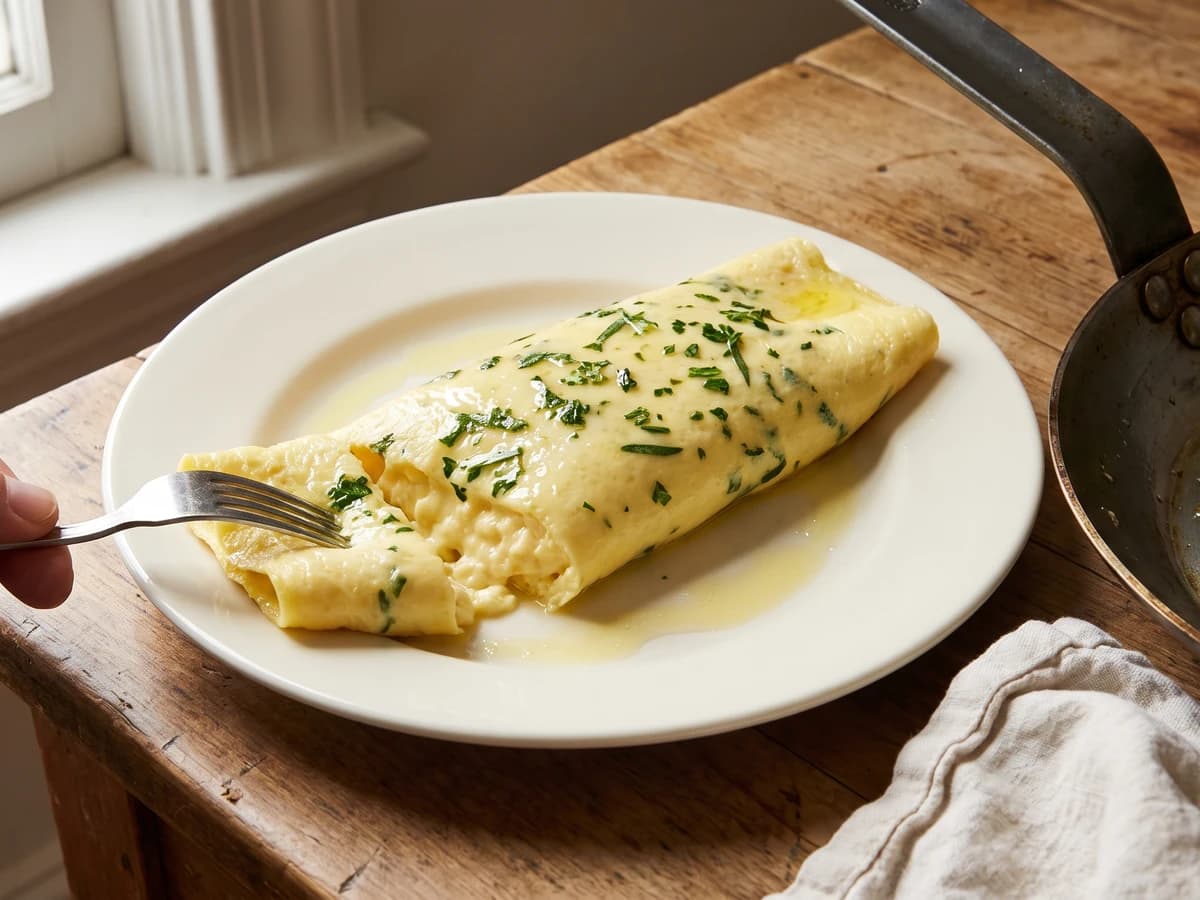
Four tender herbs, hot butter, and two eggs per pan: this rolled omelette teaches the quick hand and good judgment that keep the outside pale and the center creamy.
Chef Juliette
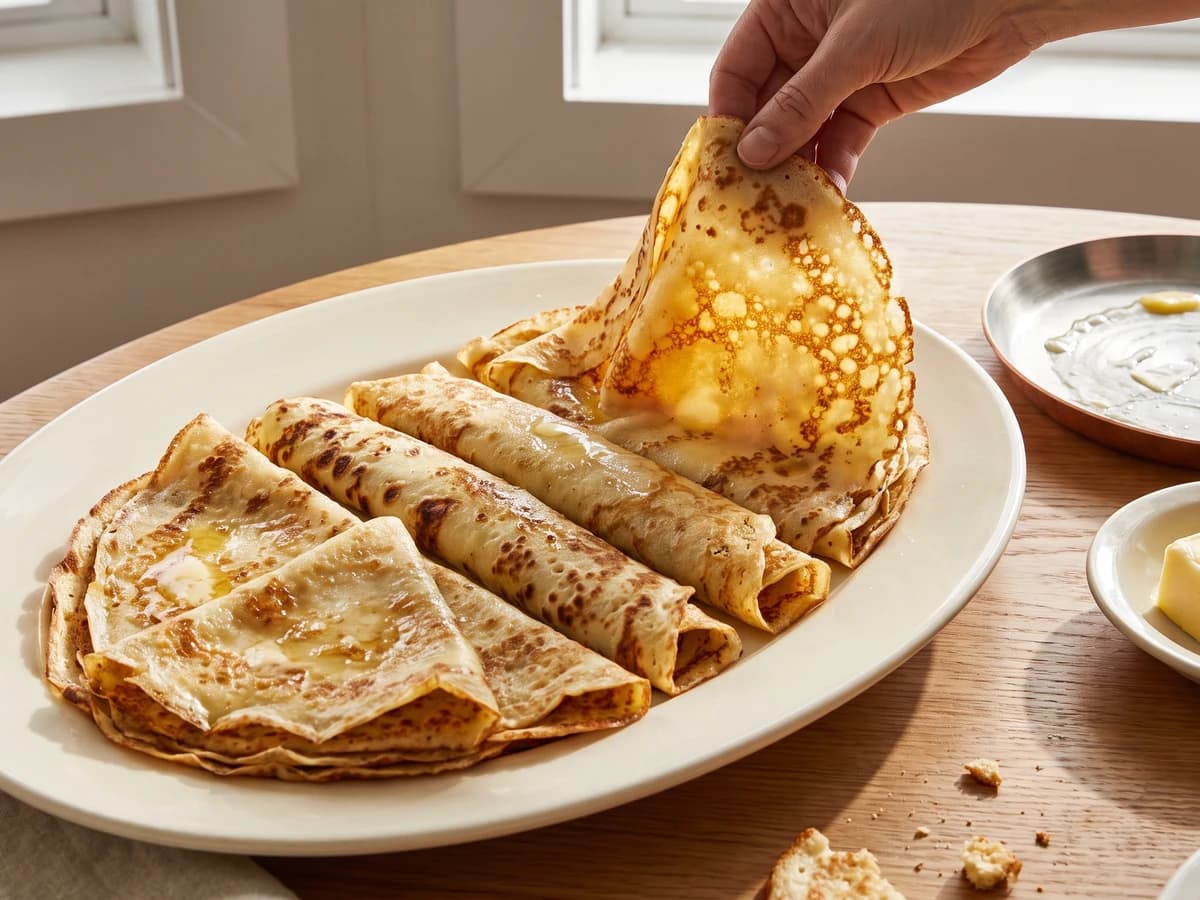
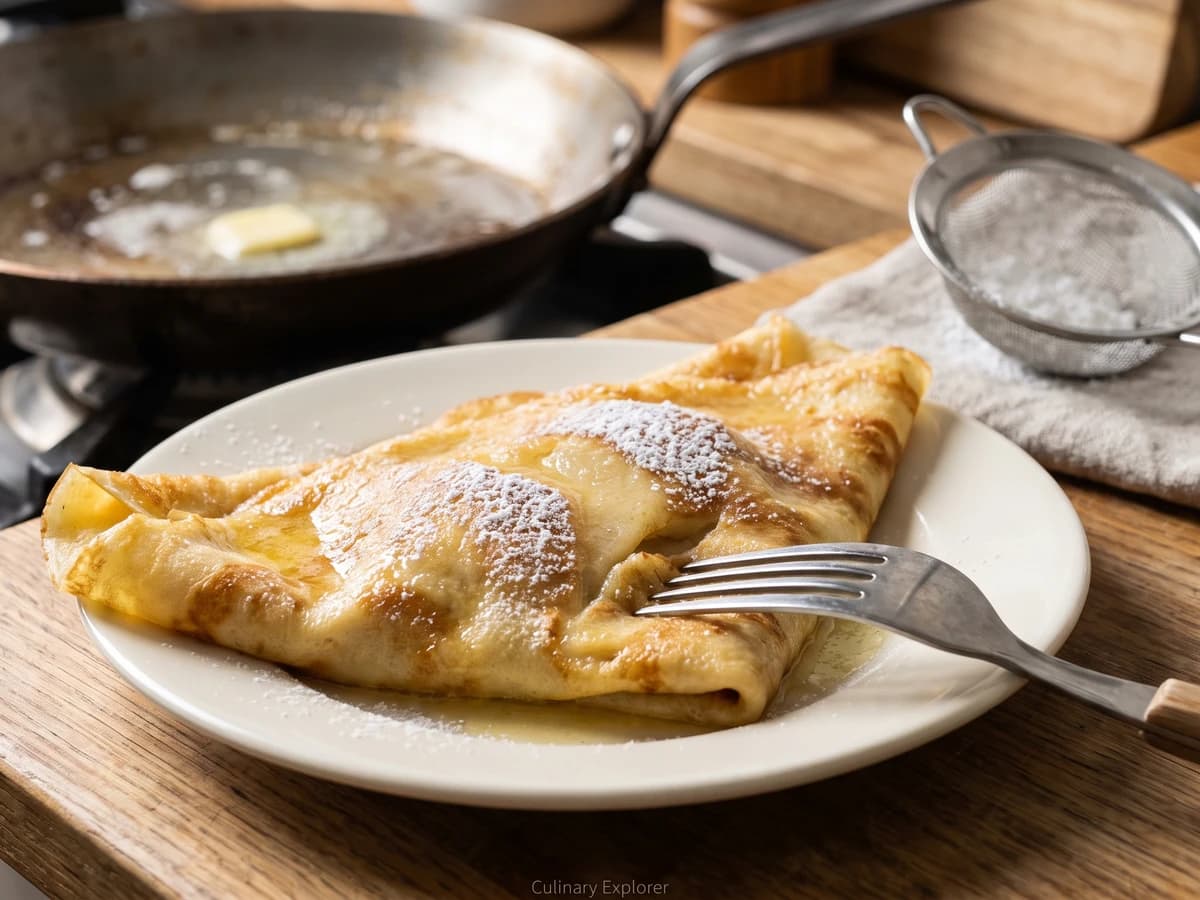
Four batters, one lesson: let the flour drink deeply before cooking, then spread the batter thinly in butter for crêpes and pannequets that bend without becoming tough.
Chef Juliette
Crêpes au Couvent trap ripe Williams pear dice between two thin pours of sweet batter, then turn in one clean toss and reach the table butter-gold, powdered, and burning hot.