Chef Juliette
Omelette à l’Écossaise
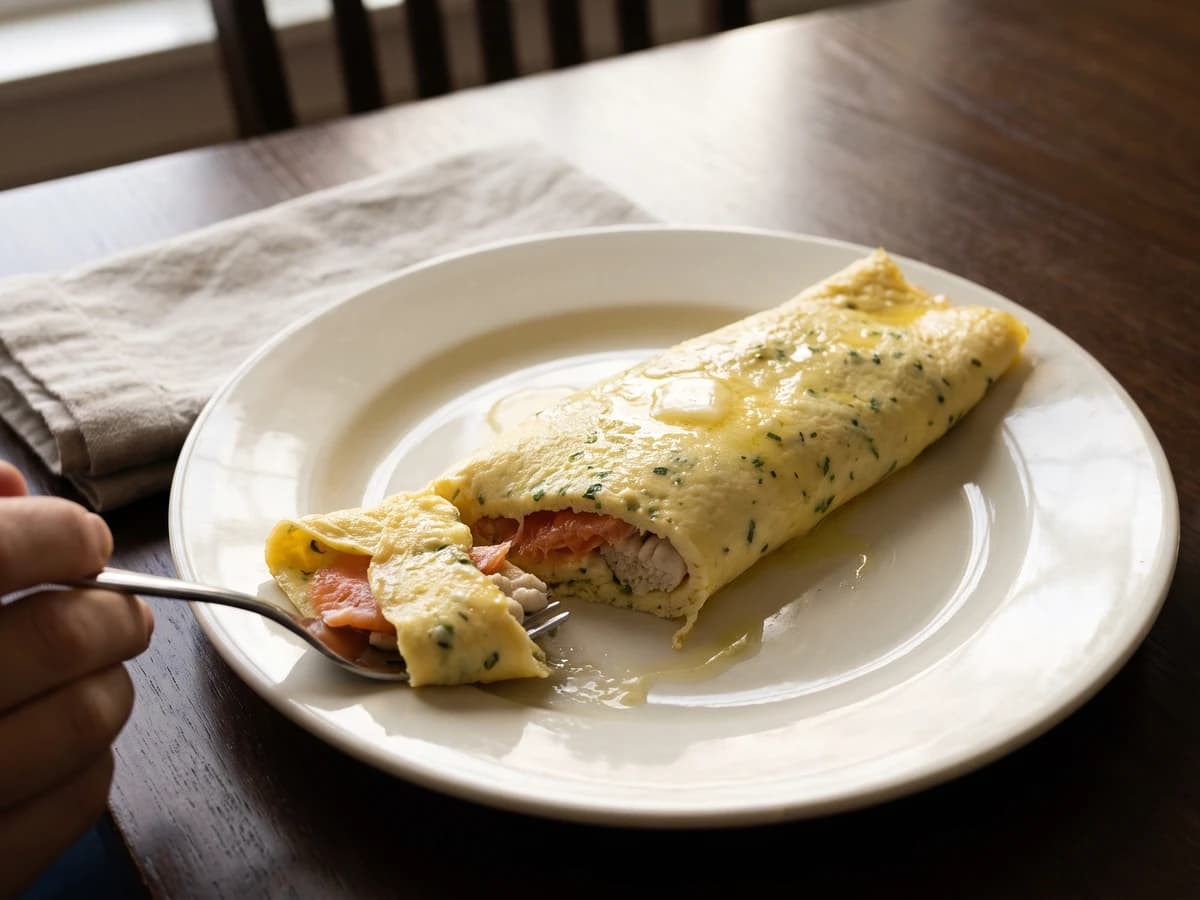
A creamy omelette aux fines herbes closes around smoked-salmon-wrapped herring milts, gently poached in butter. Have the filling ready, then roll the eggs while they still shine.
A cooking platform built around craft, culture, and the stories behind what we eat.
Created by Chef Juliette
Based on No. 416, Poached Eggs en Berceau, from Le Guide Culinaire (1907) by Auguste Escoffier
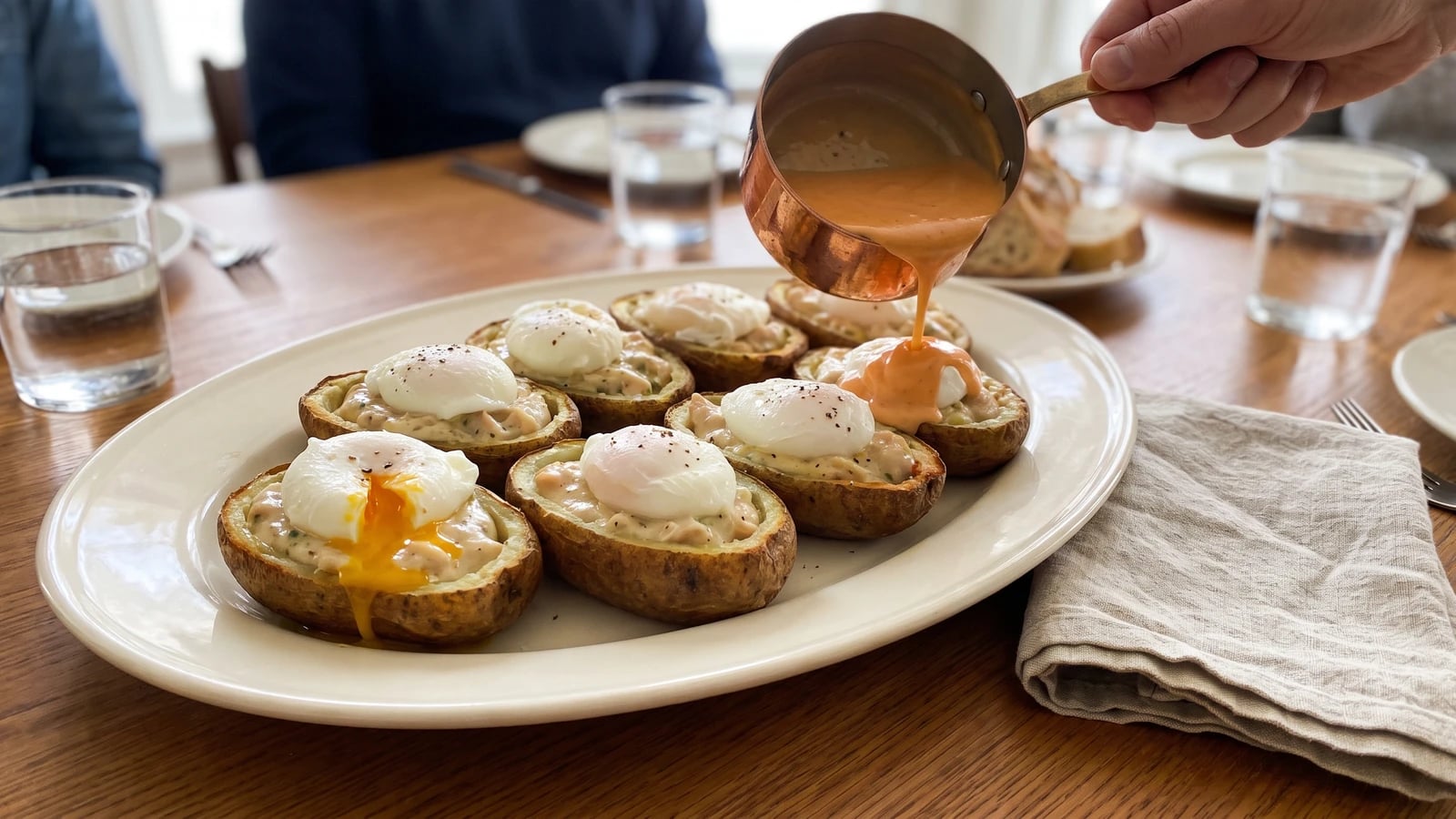
Baked potato shells become little cradles for creamed chicken and softly poached eggs, all under glossy Sauce Aurore: an old composed egg dish made practical for one home stove.
Œufs pochés en berceau (poached eggs in little cradles) teaches the essential order of composed cookery: build every supporting element before you begin the one that cannot wait. Here, that means baked potato shells lined with creamed chicken, a glossy Sauce Aurore, a tomato-tinted velouté, and only then the poached eggs. Before you touch a pan, know this: the cradles and sauce must be ready before the eggs meet the water.
The original entry assumed evenly graded fine Dutch potatoes, chicken mince already prepared by the cold station, a saucier on staff, and stock never off the fire. A salamander stood ready for nearly every composed dish, but this source asks for coating, not browning, so we leave it out rather than invent a gratin. Four sturdy baking potatoes become eight cradles for four people, the chicken is mixed by hand with cream, and the Sauce Aurore is built in one small pan while the potatoes bake. The held components and brigade portions were scaffolding. The potato cradle, creamed chicken, tender egg, and rosy sauce are the dish, and all four remain.
When it lands correctly, each bronzed shell holds a pale cushion of chicken, a yielding egg, and enough coral-ivory sauce to gleam and pool at the edges. The pleasure is in the contrast, crisp skin against soft fillings, rich sauce against the clean yolk. Keep the poaching water below a boil and dry each egg before saucing it. Those two small acts decide the plate.
Œufs pochés en berceau belongs to the Paris-centered classical repertoire of composed egg entrées, in which familiar household ingredients were arranged into named forms and finished with one of the canonical sauce families. Berceau describes the shape rather than a region: hollowed baked potatoes resemble little cradles, while creamed chicken and Sauce Aurore connect them to grand-kitchen practice. Despite its egg centerpiece, the dish was as much a luncheon first course or light supper as a morning plate.
Quantity
4 (about 2¾ lb / 1.25 kg total)
scrubbed
Quantity
1 cup loosely packed (240 ml / 225 g)
chilled
Quantity
½ cup (120 ml / 120 g), divided
Quantity
4 tablespoons (60 ml / 56 g), divided
Quantity
2 tablespoons (30 ml / 16 g)
Quantity
1¼ cups (300 ml / 300 g)
warmed
Quantity
¼ cup (60 ml / 60 g)
Quantity
8
Quantity
2 quarts (1.9 L / 1.9 kg)
for poaching
Quantity
¼ cup (60 ml / 60 g)
Quantity
2 teaspoons (10 ml / 12 g), divided
Quantity
½ teaspoon (2.5 ml / 1 g), divided
| Ingredient | Quantity |
|---|---|
| large floury baking potatoes, such as russetsscrubbed | 4 (about 2¾ lb / 1.25 kg total) |
| very finely ground chickenchilled | 1 cup loosely packed (240 ml / 225 g) |
| cold heavy cream | ½ cup (120 ml / 120 g), divided |
| unsalted butter | 4 tablespoons (60 ml / 56 g), divided |
| plain flour | 2 tablespoons (30 ml / 16 g) |
| unsalted chicken stockwarmed | 1¼ cups (300 ml / 300 g) |
| strained tomato purée | ¼ cup (60 ml / 60 g) |
| very fresh large eggs | 8 |
| waterfor poaching | 2 quarts (1.9 L / 1.9 kg) |
| white wine vinegar | ¼ cup (60 ml / 60 g) |
| fine sea salt | 2 teaspoons (10 ml / 12 g), divided |
| ground white pepper | ½ teaspoon (2.5 ml / 1 g), divided |
Heat the oven to 425°F (220°C). Prick the potatoes several times and set them directly on the oven rack with a baking sheet beneath to catch any drips. Bake for 50 to 65 minutes, turning once, until a small knife passes cleanly through the center but the skins remain intact. Let them stand only until your hands can manage them; warm potato is easier to hollow without cracking.
While the potatoes bake, combine the cold ground chicken with ¼ cup (60 ml / 60 g) of the cream, ½ teaspoon of the salt, and ⅛ teaspoon of the white pepper. Stir firmly with a wooden spoon until the mince becomes cohesive and slightly tacky, with no pockets of loose cream. Keep it cold until needed. If it turns slack or greasy, the mixture has become too warm; chill it for 10 minutes, then stir again. Ça se rattrape.
Lower the oven to 400°F (200°C). Cut each potato in half lengthwise with the point of a small knife. Scoop out the flesh carefully, leaving a sturdy ½-inch (1.25 cm) wall and an unbroken skin. Melt 1 tablespoon of the butter and brush it inside the eight shells, then season lightly with salt and white pepper. If a shell splits, press a little reserved potato pulp across the tear from inside and brush it with butter. It will hold once baked.
Divide the creamed chicken among the shells, about 2 tablespoons in each, and spread it thinly over the bottom and sides to form the cradle's lining. Arrange the shells on a rimmed baking sheet and bake for 15 to 18 minutes, until the chicken is opaque, tender, and reaches 165°F (74°C) at its thickest point. Do not brown it. If the edges color before the center is cooked, cover the tray loosely with foil. Reduce the oven to 325°F (165°C) and hold the cradles there while you finish the sauce and eggs.
Melt 2 tablespoons of the butter in a 2-quart saucepan over medium-low heat. Stir in the flour and cook this roux for 2 minutes, keeping it pale gold. Whisk in the warm chicken stock a little at a time, making each addition smooth before adding the next, then simmer gently for 5 minutes until the velouté naps the back of a spoon. Whisk in the tomato purée and remaining ¼ cup (60 ml / 60 g) cream, then simmer for 3 minutes. Season with salt and white pepper, remove from the heat, and whisk in the final tablespoon of cold butter for gloss. If the sauce is lumpy, whisk firmly and strain it; if too thick, add stock by the spoonful; if thin, simmer it a little longer. Ça se rattrape. Keep it warm without boiling.
Do not begin until the cradles are cooked and the Sauce Aurore is ready. Bring the water and vinegar to a bare tremble in a wide pan, with small bubbles gathering below the surface but no rolling boil. Crack each egg into its own small cup, then slide four eggs into the water one at a time. Nudge any wandering white gently around its yolk and poach for about 3 minutes, until the white is set and the yolk remains yielding. Lift the eggs into a bowl of cold water and repeat with the remaining four. If the whites feather, lower the heat and trim the wisps after poaching. The egg inside is unharmed.
Bring a fresh pan of water just below a simmer. Rewarm all eight eggs for 45 to 60 seconds, then lift them onto a clean towel and blot them thoroughly; water left on an egg thins the sauce at once. Set one egg into each hot chicken-lined cradle and spoon over enough Sauce Aurore to coat it generously, letting a little settle around the rim. Do not put the assembled eggs under the broiler. The source asks for a coating, and further heat would toughen the whites.
Arrange two cradles per person on warmed plates, or carry all eight to the table on an oval platter. Serve immediately, while the potato skins retain their firmness, the sauce still gleams, and the yolks run into the creamed chicken when cut. À table!
1 serving (about 500g)
Culinary guides, cultural storytelling, and the editorial depth that makes cooking meaningful.
Discover Culinary ExplorerChef Juliette
A creamy omelette aux fines herbes closes around smoked-salmon-wrapped herring milts, gently poached in butter. Have the filling ready, then roll the eggs while they still shine.
Chef Juliette
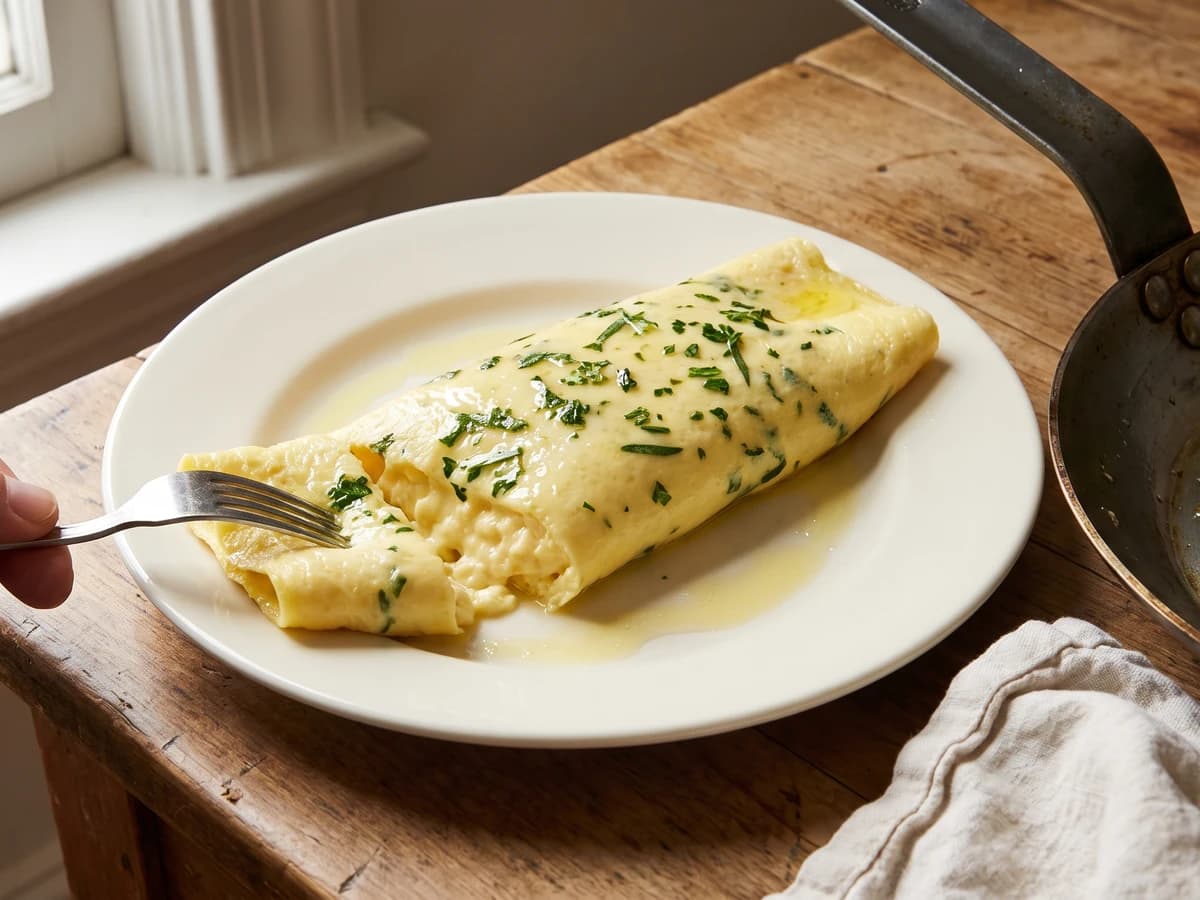
Four tender herbs, hot butter, and two eggs per pan: this rolled omelette teaches the quick hand and good judgment that keep the outside pale and the center creamy.
Chef Juliette
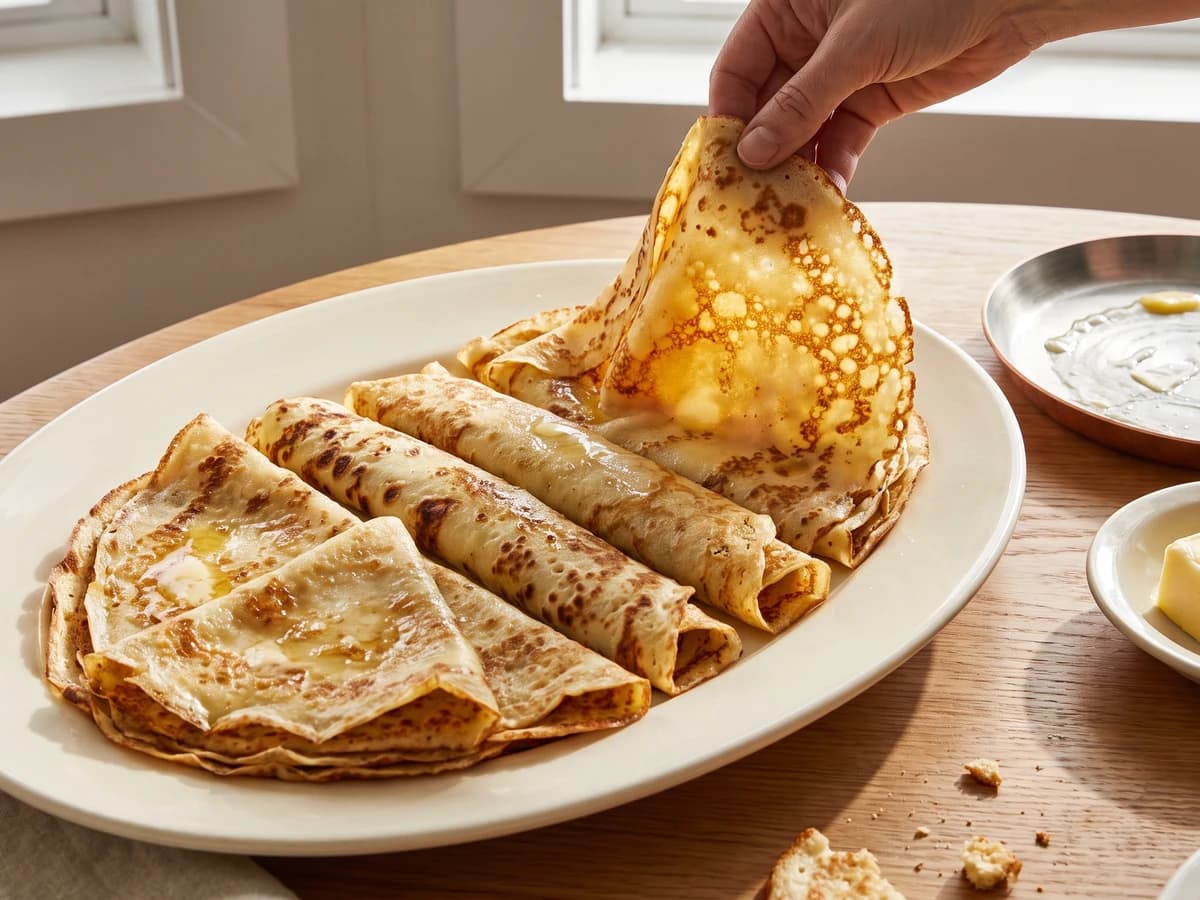
Four batters, one lesson: let the flour drink deeply before cooking, then spread the batter thinly in butter for crêpes and pannequets that bend without becoming tough.
Chef Juliette
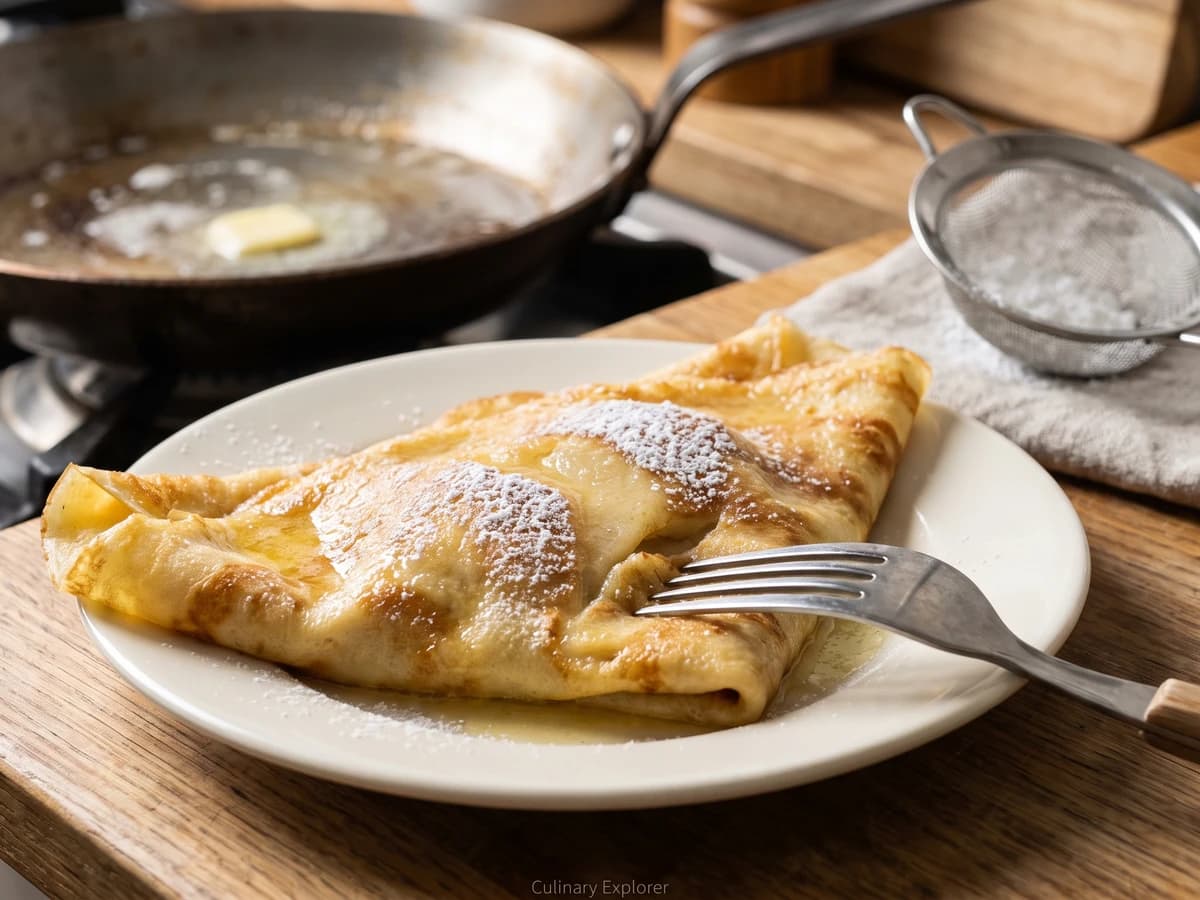
Crêpes au Couvent trap ripe Williams pear dice between two thin pours of sweet batter, then turn in one clean toss and reach the table butter-gold, powdered, and burning hot.