Chef Juliette
Omelette à l’Écossaise
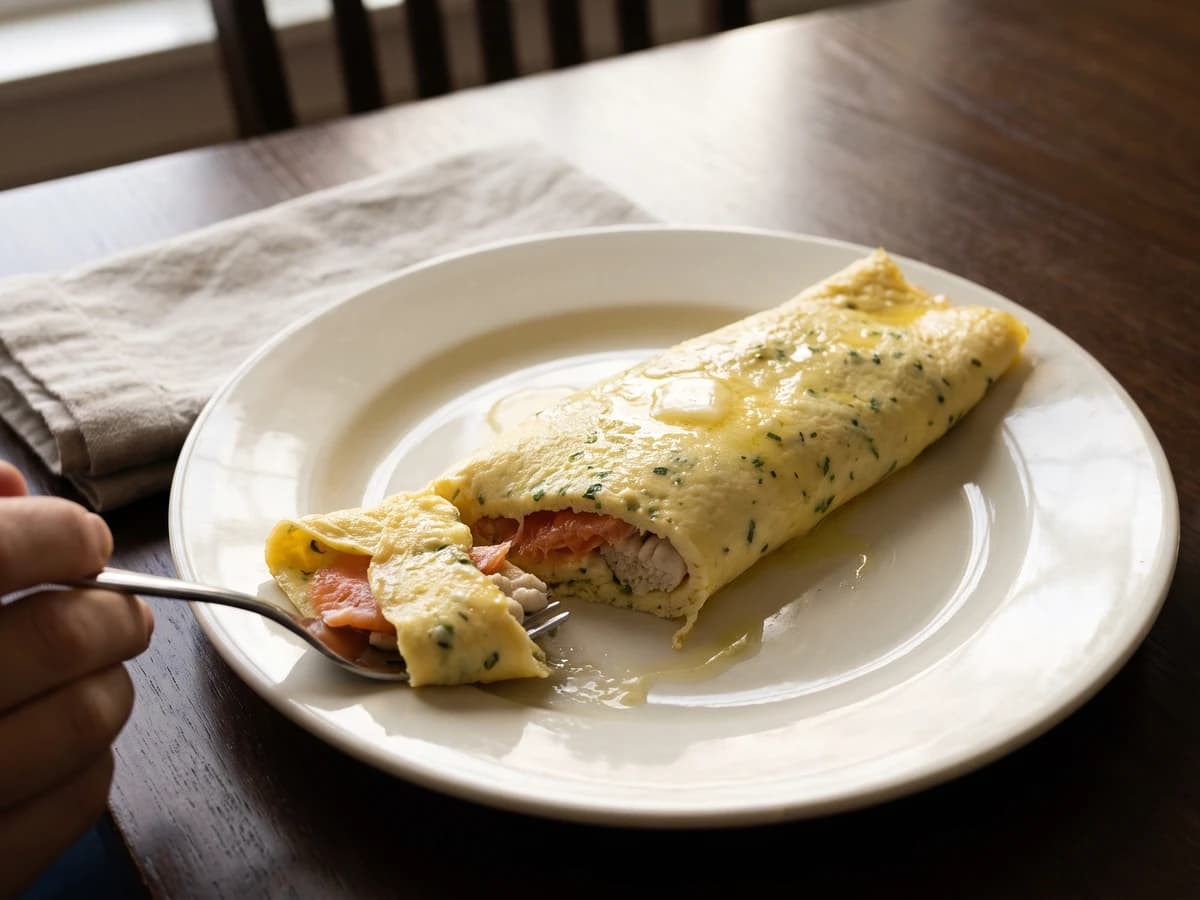
A creamy omelette aux fines herbes closes around smoked-salmon-wrapped herring milts, gently poached in butter. Have the filling ready, then roll the eggs while they still shine.
A cooking platform built around craft, culture, and the stories behind what we eat.
Created by Chef Juliette
Based on No. 415, Poached Eggs à l’Aurore, from Le Guide Culinaire (1907) by Auguste Escoffier
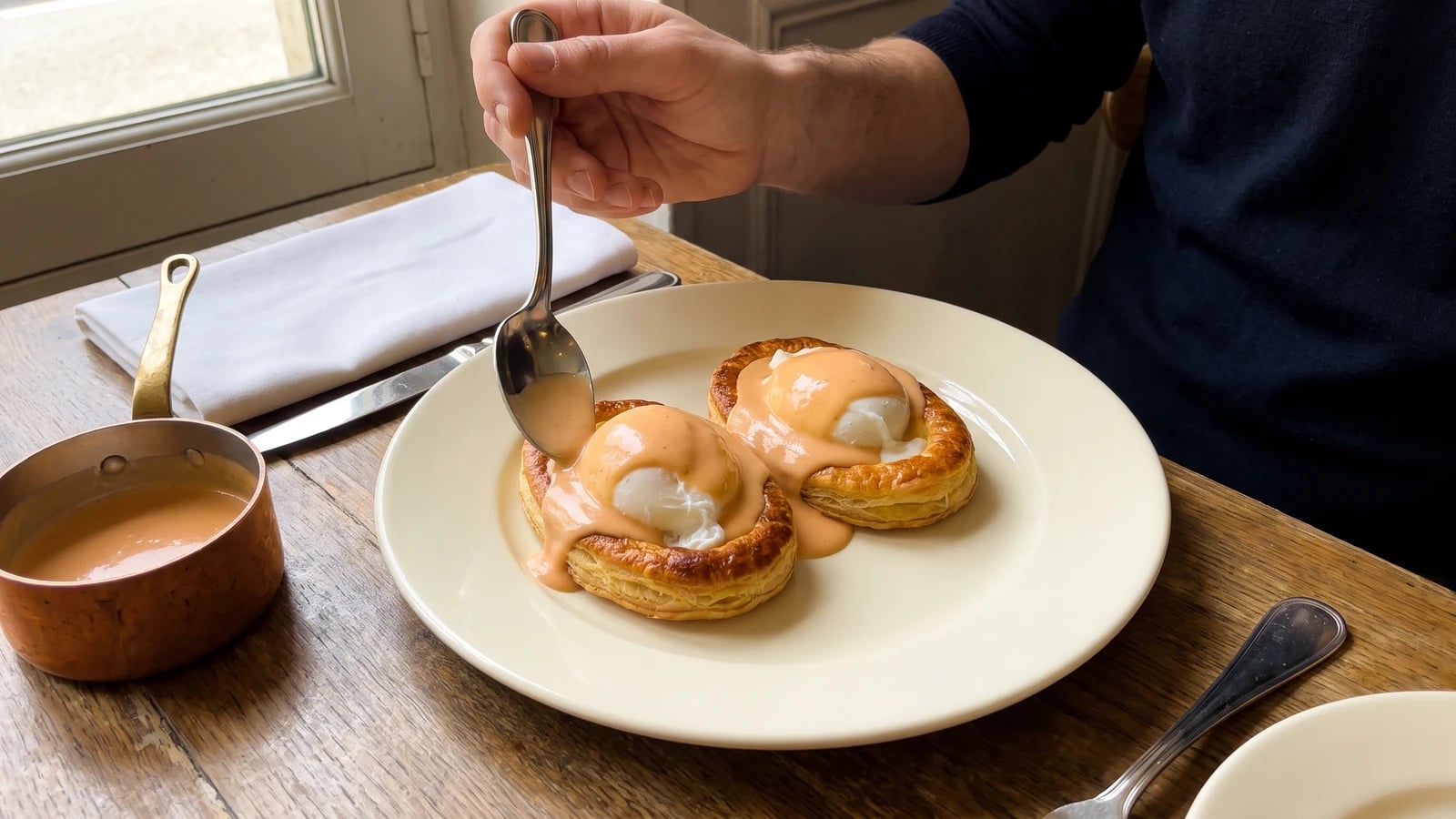
Tender poached eggs, crisp oval Feuilletés, and sauce aurore glowing rose-gold: a lesson in timing three delicate elements so yolk, pastry, and velouté arrive together at their best.
Œufs pochés à l’Aurore (poached eggs in dawn-colored sauce) teach coordination. Crisp pastry, tender white, flowing yolk, and warm sauce must meet at the last moment. The one true thing is this: the sauce and pastry wait for the eggs, never the reverse.
The terse original assumed a saucier on staff with velouté, the blond roux-and-stock foundation, already warm, stock never off the fire, and a pastry station turning out oval Feuilletés (puff-pastry puffs). At home, one small saucepan builds the sauce, good frozen all-butter puff pastry replaces a day of laminating, and everything is scaled to eight eggs. There is no gratin here, so the salamander stays out of it. Separate brigade stations are scaffolding; the roux-built sauce, careful poaching, and crisp pastry are the dish and must stay. One cook, one stove, one evening.
When it lands correctly, the sauce aurore gleams pale coral over eggs that yield at the touch of a fork, while the exposed pastry edges remain deep gold and crisp. Before the first egg touches water, have the sauce warm, the Feuilletés baked, and the plates ready. That preparation decides the dish.
Œufs pochés à l’Aurore belong to the Parisian classical service table, where a named sauce and a pastry base turned the poached egg into a composed entrée. Aurore means dawn, referring to the coral color made when tomato purée blushes a pale velouté, not to a separate regional larder. The canonical entry distinguishes poached eggs on oval Feuilletés from soft-boiled eggs standing upright in ring-shaped Feuilletés, changing the pastry shape to follow the posture of the egg.
Quantity
1 sheet, about 10 by 15 inches and 9 ounces (25 by 38 cm / 255 g)
thawed but still cold
Quantity
1
Quantity
1 tablespoon (15 ml / 15 g)
Quantity
2 tablespoons (30 ml / 28 g)
Quantity
3 tablespoons (45 ml / 24 g)
Quantity
1½ cups (360 ml / 360 g)
divided
Quantity
¼ cup (60 ml / 65 g)
Quantity
½ cup (120 ml / 120 g)
reserve 1 tablespoon for rescuing the sauce if needed
Quantity
1 tablespoon (15 ml / 14 g)
cut into small cubes
Quantity
1 teaspoon (5 ml / 6 g)
divided
Quantity
⅛ teaspoon (0.6 ml / 0.3 g)
Quantity
8
very fresh
Quantity
2 quarts (1.9 L / 1.9 kg)
Quantity
2 tablespoons (30 ml / 30 g)
Quantity
4 cups (960 ml / 960 g)
| Ingredient | Quantity |
|---|---|
| all-butter puff pastry for the oval Feuilletésthawed but still cold | 1 sheet, about 10 by 15 inches and 9 ounces (25 by 38 cm / 255 g) |
| large egg for the egg wash | 1 |
| water for the egg wash | 1 tablespoon (15 ml / 15 g) |
| unsalted butter for the roux | 2 tablespoons (30 ml / 28 g) |
| all-purpose flour | 3 tablespoons (45 ml / 24 g) |
| light chicken stockdivided | 1½ cups (360 ml / 360 g) |
| smooth canned tomato purée | ¼ cup (60 ml / 65 g) |
| heavy creamreserve 1 tablespoon for rescuing the sauce if needed | ½ cup (120 ml / 120 g) |
| cold unsalted buttercut into small cubes | 1 tablespoon (15 ml / 14 g) |
| fine sea saltdivided | 1 teaspoon (5 ml / 6 g) |
| ground white pepper | ⅛ teaspoon (0.6 ml / 0.3 g) |
| large eggsvery fresh | 8 |
| water for poaching | 2 quarts (1.9 L / 1.9 kg) |
| distilled white vinegar | 2 tablespoons (30 ml / 30 g) |
| ice water | 4 cups (960 ml / 960 g) |
Heat the oven to 400°F (200°C) and line a baking sheet with parchment. Keep the puff pastry cold, rolling it only enough to smooth the creases and leave it about ⅛ inch (3 mm) thick. Cut eight ovals measuring roughly 3½ by 2½ inches (9 by 6 cm), then prick the center of each three times while leaving a ½-inch (1 cm) border untouched. Beat the egg with the water and brush a thin film over the tops without letting it run down the cut edges, where it would glue the layers together. Chill for 10 minutes, then bake for 18 to 22 minutes, until deeply golden, crisp underneath, and visibly layered. If a center domes too high to hold an egg, press it gently with the back of a spoon while the pastry is still warm. Ça se rattrape.
Reserve ¼ cup (60 ml) of the stock for adjusting the finished sauce. Melt the 2 tablespoons of butter in a 2-quart saucepan over medium-low heat, add the flour, and stir constantly for 2 minutes. This is the roux blond, a pale butter-and-flour foundation: it should smell faintly of warm biscuit but take almost no color. Add the remaining stock in three portions, whisking each addition smooth before the next. Bring to a bare simmer and cook for 4 to 5 minutes, whisking around the corners, until the velouté nappes the back of a spoon and a finger drawn through it leaves a clean track. If lumps persist, pass the sauce through a fine sieve and return it to the clean pan. Never apologize for a rescued sauce.
Whisk the tomato purée into the velouté and simmer gently for 3 minutes, just long enough to cook away its raw edge. Add all but the reserved tablespoon of cream, ¾ teaspoon of the salt, and the white pepper. Simmer for another 3 to 5 minutes, until the sauce is pale coral, glossy, and thick enough to mask an egg without sitting like paste. Remove it from the heat and monter au beurre, mount it with the cold butter, whisking in one cube at a time. If the butter forms an oily rim, the sauce was too hot; whisk in the reserved cold cream a teaspoon at a time until it gathers again. If the sauce is too thick, add reserved stock by the spoonful. Cover and hold it warm, never boiling.
Set the bowl of ice water beside the stove. Combine the poaching water and vinegar in a wide 12-inch (30 cm) pan and bring it to a bare tremble, about 185°F (85°C), with small bubbles on the bottom but no rolling boil. Crack four eggs into separate cups, keeping every yolk intact, then lower them into the water one at a time. Nudge any loose white toward its yolk with a spoon and poach for 2½ minutes, until the whites hold but the yolks remain very soft. Lift the eggs into the ice water with a slotted spoon and repeat with the remaining four. Ragged edges are cosmetic, not failure; trim them neatly once the whites have set.
Lower the poaching water to the gentlest tremble. Drain the chilled eggs, return all eight to the hot water, and rewarm them for 45 to 60 seconds. Lift each onto a clean folded towel and blot the underside carefully. This drying matters: water carried onto the plate thins the sauce and turns the Feuilletés soft. Stir the sauce and check its consistency while the eggs drain; loosen it with a spoonful of reserved stock if it has tightened.
Arrange two warm oval Feuilletés on each of four warmed plates. Set one drained egg on every Feuilleté, then spoon the sauce aurore generously over each egg, masking the white while leaving the golden pastry border visible. Serve at once, while the yolks still flow, the sauce gleams, and the pastry answers the fork with a clean crisp bite. À table!
1 serving (about 295g)
Culinary guides, cultural storytelling, and the editorial depth that makes cooking meaningful.
Discover Culinary ExplorerChef Juliette
A creamy omelette aux fines herbes closes around smoked-salmon-wrapped herring milts, gently poached in butter. Have the filling ready, then roll the eggs while they still shine.
Chef Juliette
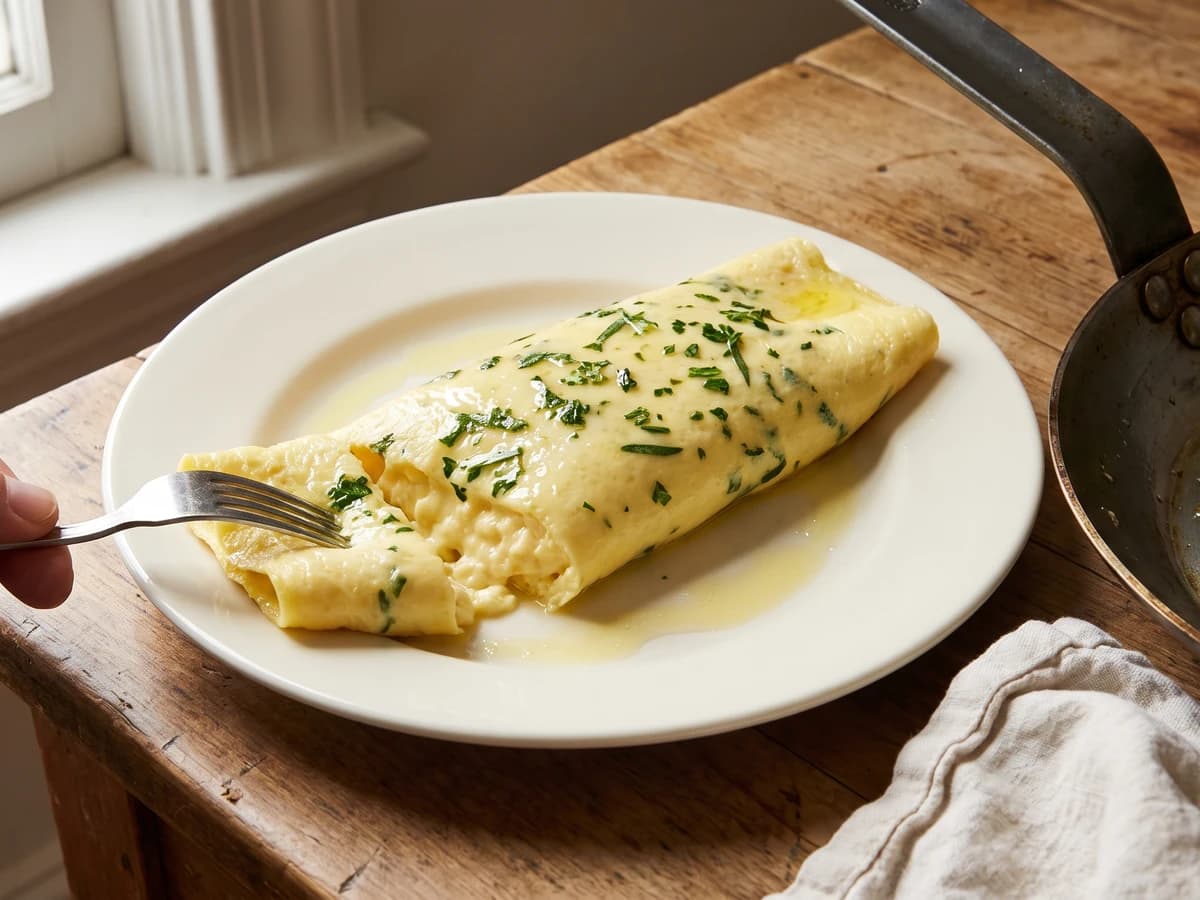
Four tender herbs, hot butter, and two eggs per pan: this rolled omelette teaches the quick hand and good judgment that keep the outside pale and the center creamy.
Chef Juliette
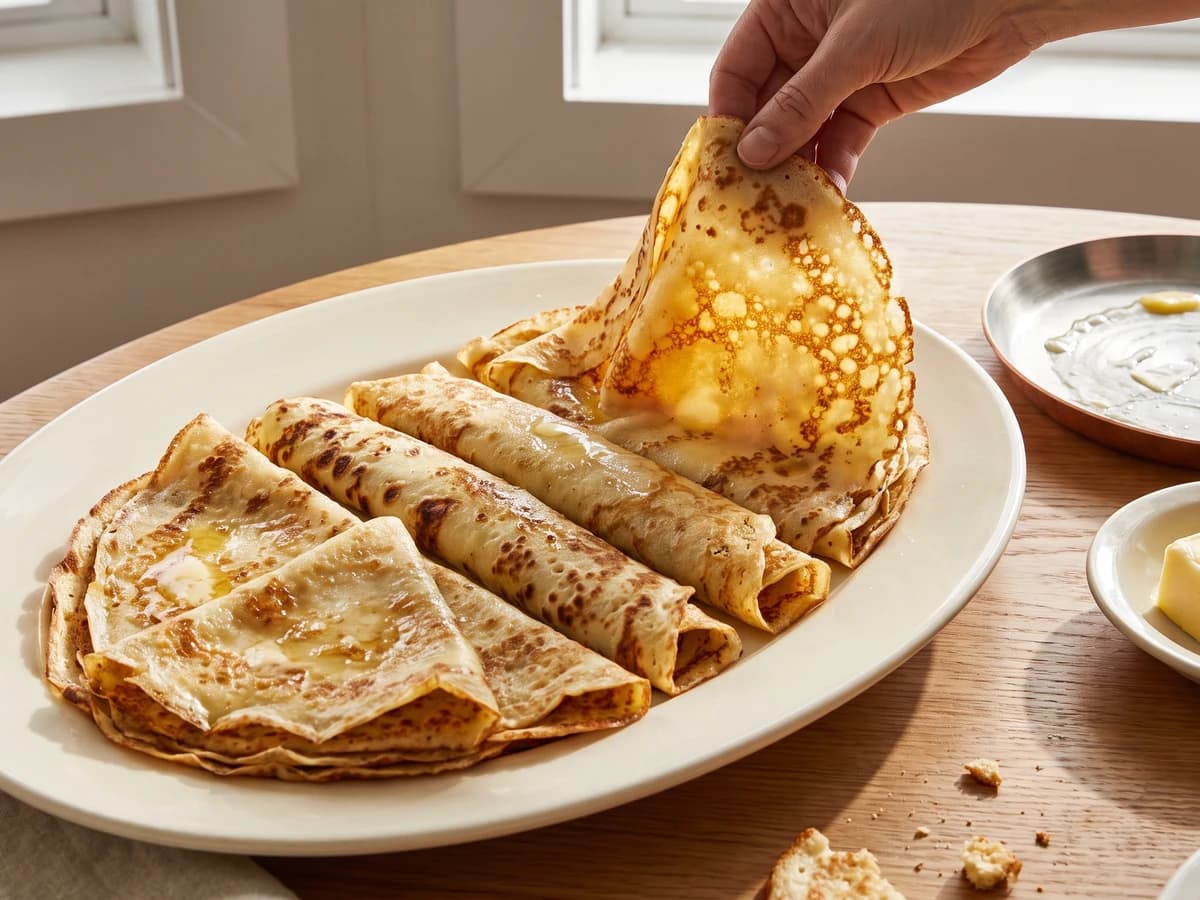
Four batters, one lesson: let the flour drink deeply before cooking, then spread the batter thinly in butter for crêpes and pannequets that bend without becoming tough.
Chef Juliette
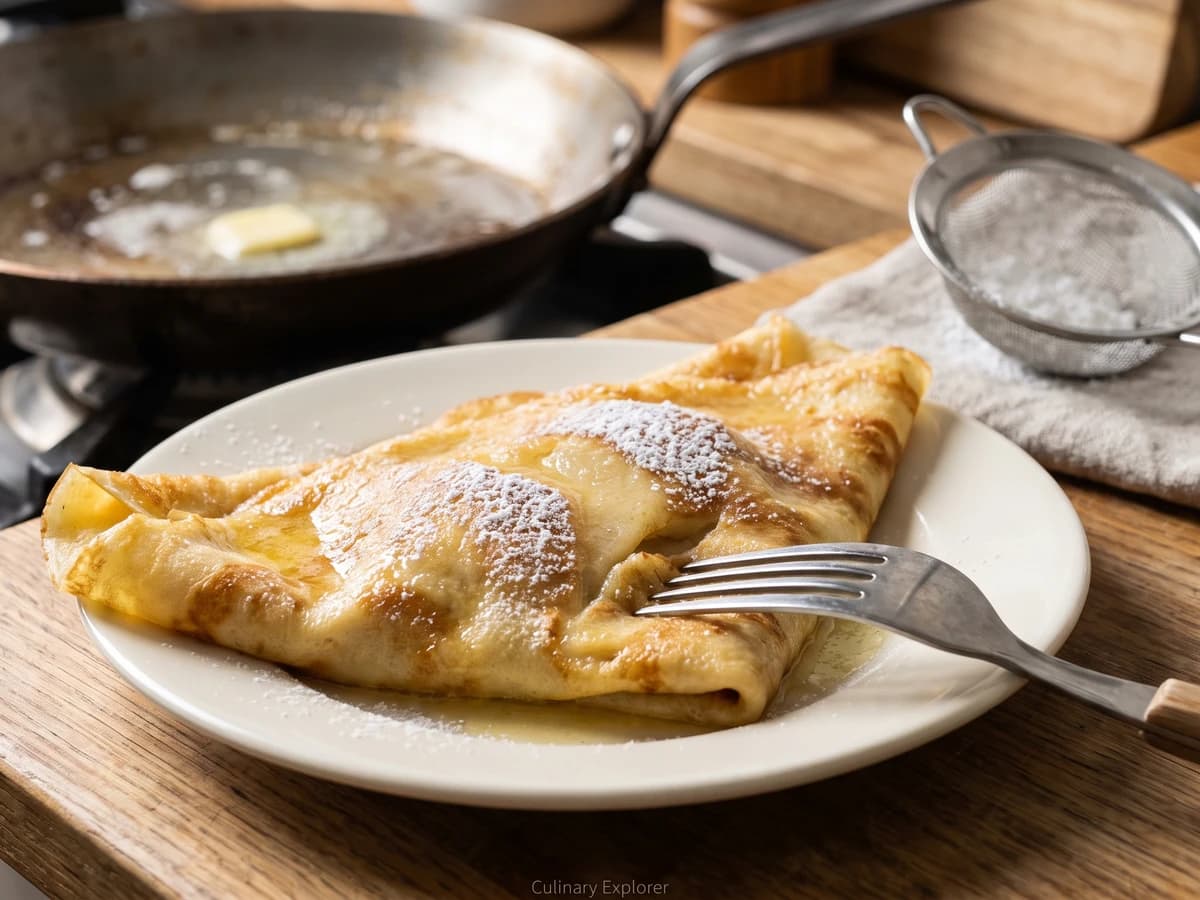
Crêpes au Couvent trap ripe Williams pear dice between two thin pours of sweet batter, then turn in one clean toss and reach the table butter-gold, powdered, and burning hot.