Chef Juliette
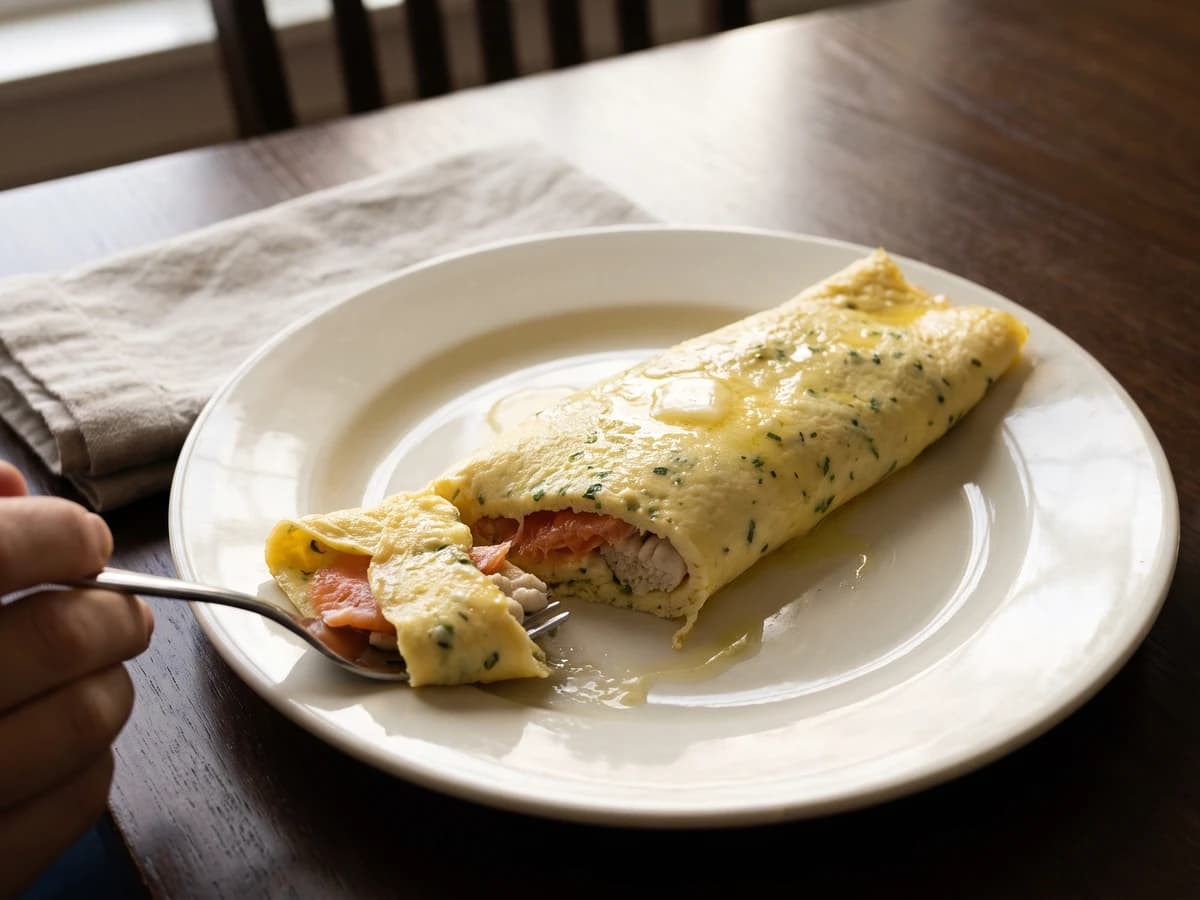
Omelette à l’Écossaise
A creamy omelette aux fines herbes closes around smoked-salmon-wrapped herring milts, gently poached in butter. Have the filling ready, then roll the eggs while they still shine.
A cooking platform built around craft, culture, and the stories behind what we eat.
Created by Chef Juliette
Based on No. 414, Poached Eggs Argenteuil, from Le Guide Culinaire (1907) by Auguste Escoffier
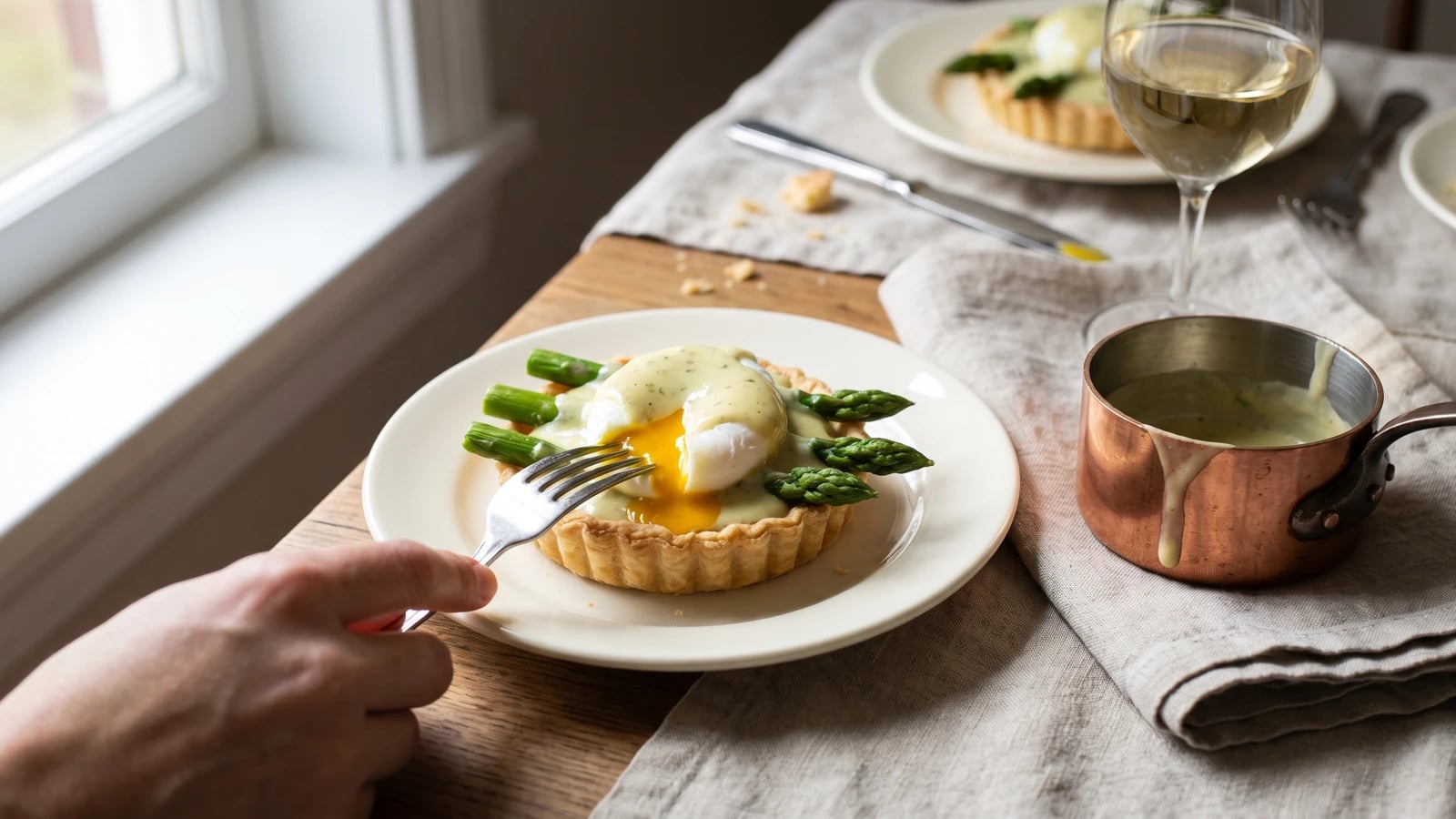
Tender poached eggs settle over asparagus-filled tartlets beneath an ivory-green veil of cream sauce and asparagus purée, a composed French first course made practical for one cook without surrendering its precision.
Œufs pochés Argenteuil (poached eggs with asparagus) teaches readiness. The one true thing to know before touching a pan is that the eggs wait for nothing: the pastry must be crisp, the asparagus cooked, and the sauce smooth and warm before the first egg enters the water. Do that, and this apparently grand arrangement becomes calm work.
The brigade entry assumed baked tartlet cases from the pastry station, prepared asparagus and purée, and a saucier guarding the cream sauce. It requires neither a stockpot nor a salamander, and neither belongs here. For one cook, the honest equivalent is one small batch of pâte brisée, one bunch of asparagus used from tip to tender stalk, and a single saucepan for the sauce. Separate stations were scaffolding and can disappear. The architecture of the dish must stay: cut asparagus in every shell, six green tips arranged as a star, a poached egg above, then cream sauce mixed with exactly half its volume of asparagus purée.
Only the scale and order have changed. Four tartlets replace brigade quantities, the stalks provide both filling and purée, and the eggs are poached only after everything else is waiting. The finished dish should show butter-gold pastry, bright tips beneath the egg, and a pale green sauce that falls in a soft veil rather than a paste. Have every tartlet filled and the sauce ready before you poach. One cook, one stove, one evening.
Argenteuil, on the Seine northwest of Paris in Île-de-France, supplied the capital with celebrated asparagus from its market gardens, and the classical designation Argenteuil came to signal asparagus purée, tips, or both. The town became especially associated with pale, earth-covered spears, yet this formula explicitly requires green heads arranged in a star. The dish carried a market-garden ingredient into the composed Parisian repertoire without disguising it: asparagus remains the filling, the garnish, and the substance of the sauce.
Quantity
1½ cups (360 ml / 180 g)
Quantity
½ teaspoon (2.5 ml / 3 g)
Quantity
7 tablespoons (105 ml / 100 g)
cut into small cubes
Quantity
1
Quantity
2 to 3 tablespoons (30 to 45 ml / 30 to 45 g)
Quantity
24 spears (about 1¼ pounds / 560 g)
Quantity
2 teaspoons (10 ml / 12 g)
divided
Quantity
2 tablespoons (30 ml / 28 g)
Quantity
2 tablespoons (30 ml / 16 g)
Quantity
1 cup (240 ml / 245 g)
warmed
Quantity
⅓ cup (80 ml / 80 g)
Quantity
⅛ teaspoon (0.6 ml / 0.3 g)
Quantity
4
as fresh as possible
Quantity
2 tablespoons (30 ml / 30 g)
| Ingredient | Quantity |
|---|---|
| all-purpose flour | 1½ cups (360 ml / 180 g) |
| fine sea salt | ½ teaspoon (2.5 ml / 3 g) |
| cold unsalted buttercut into small cubes | 7 tablespoons (105 ml / 100 g) |
| large egg yolk | 1 |
| ice water | 2 to 3 tablespoons (30 to 45 ml / 30 to 45 g) |
| thick green asparagus spears | 24 spears (about 1¼ pounds / 560 g) |
| fine sea saltdivided | 2 teaspoons (10 ml / 12 g) |
| unsalted butter | 2 tablespoons (30 ml / 28 g) |
| all-purpose flour | 2 tablespoons (30 ml / 16 g) |
| whole milkwarmed | 1 cup (240 ml / 245 g) |
| heavy cream | ⅓ cup (80 ml / 80 g) |
| finely ground white pepper | ⅛ teaspoon (0.6 ml / 0.3 g) |
| large eggsas fresh as possible | 4 |
| white wine vinegar | 2 tablespoons (30 ml / 30 g) |
Combine the 1½ cups flour with the ½ teaspoon salt. Rub in the cold butter until the mixture resembles coarse crumbs with a few pea-sized pieces remaining. Add the yolk and 2 tablespoons ice water, stirring only until the dough begins to hold together; add the final tablespoon drop by drop if dry flour remains. Press it into a disc without kneading, wrap, and chill for 30 minutes. Pâte brisée, short pastry, stays tender when the butter remains cold and the dough is handled briefly.
Heat the oven to 375°F (190°C). Roll the pastry about ⅛ inch (3 mm) thick and line four 4-inch (10 cm) fluted tartlet tins, pressing it into the corners without stretching. Trim the rims, prick the bases, and chill for 15 minutes. Line each shell with parchment and baking weights, then bake for 15 minutes. Remove the weights and parchment and bake for another 8 to 10 minutes, until the bases are dry and the edges are butter-gold. Cool in the tins, then carefully unmould.
Trim the woody ends and peel the lower third of each spear if its skin is tough. Cut one green head from every spear exactly 1½ inches (4 cm) long, giving you 24 tips, then cut the tender stalks crosswise into small pieces. Bring a broad saucepan of water to a boil and season it with 1½ teaspoons of the divided salt. Cook the tips for 2 to 3 minutes, until bright green and tender without collapsing, then lift them into cold water. Cook the stalk pieces in the same water until fully tender, about 4 minutes. Cool, drain, and dry everything well.
Purée enough of the cooked stalk pieces to produce exactly ½ cup (120 ml / about 115 g), adding no more than a spoonful of the cooking water if the blades need help. Pass it through a fine sieve so the sauce will coat the eggs smoothly. Keep the remaining cut asparagus for the tartlet filling. The purée should taste distinctly of asparagus and hold a soft mound, not run like soup.
Melt the 2 tablespoons butter in a small saucepan over medium-low heat. Stir in the 2 tablespoons flour and cook for 90 seconds without allowing the roux to colour. Add the warm milk gradually, whisking each addition smooth before the next, then simmer gently for 5 minutes. Add the cream and continue until the sauce is smooth, glossy, and reduced to exactly 1 cup (240 ml); season with the remaining ½ teaspoon salt and the white pepper. Whisk in the ½ cup asparagus purée, preserving the source ratio of two parts cream sauce to one part purée. If it turns lumpy, take it off the heat, whisk vigorously, and pass it through the sieve. Ça se rattrape. Hold the pale green sauce over barely warm water.
Set the tartlet shells on warm plates and divide the remaining cut asparagus among them. Arrange six tips in each shell with their points radiating outward like a star, exactly as the original entry directs. Keep the centres clear enough to cradle the eggs. If necessary, warm the filled shells in a 275°F (135°C) oven for no more than 5 minutes, loosely covered so the asparagus does not dry.
Fill a wide sauté pan with 2½ to 3 inches (6 to 8 cm) of water, add the vinegar, and bring it to a bare tremble, about 180 to 185°F (82 to 85°C). Crack each egg into its own small cup, then slide all four into separate areas of the pan. Poach for 3 to 3½ minutes, gently folding loose white around each yolk with a spoon, until the whites are set and the yolks remain yielding. If the water begins boiling, pull the pan off the heat until it settles; hard boiling tears the whites. Lift each egg with a slotted spoon, trim any ragged fringe, and drain it thoroughly on a folded towel. A wet egg dilutes the sauce, so this quiet little step decides the finish.
Place one drained egg in the centre of each asparagus star. Spoon the warm sauce over the egg until the white is generously coated while the green points remain visible around it. The sauce should fall in a soft veil and pool slightly inside the tartlet; if it has tightened while waiting, loosen it with a teaspoon of warm milk. Serve immediately, while the pastry is crisp and the yolk still flows. À table!
1 serving (about 320g)
Culinary guides, cultural storytelling, and the editorial depth that makes cooking meaningful.
Discover Culinary ExplorerChef Juliette
A creamy omelette aux fines herbes closes around smoked-salmon-wrapped herring milts, gently poached in butter. Have the filling ready, then roll the eggs while they still shine.
Chef Juliette
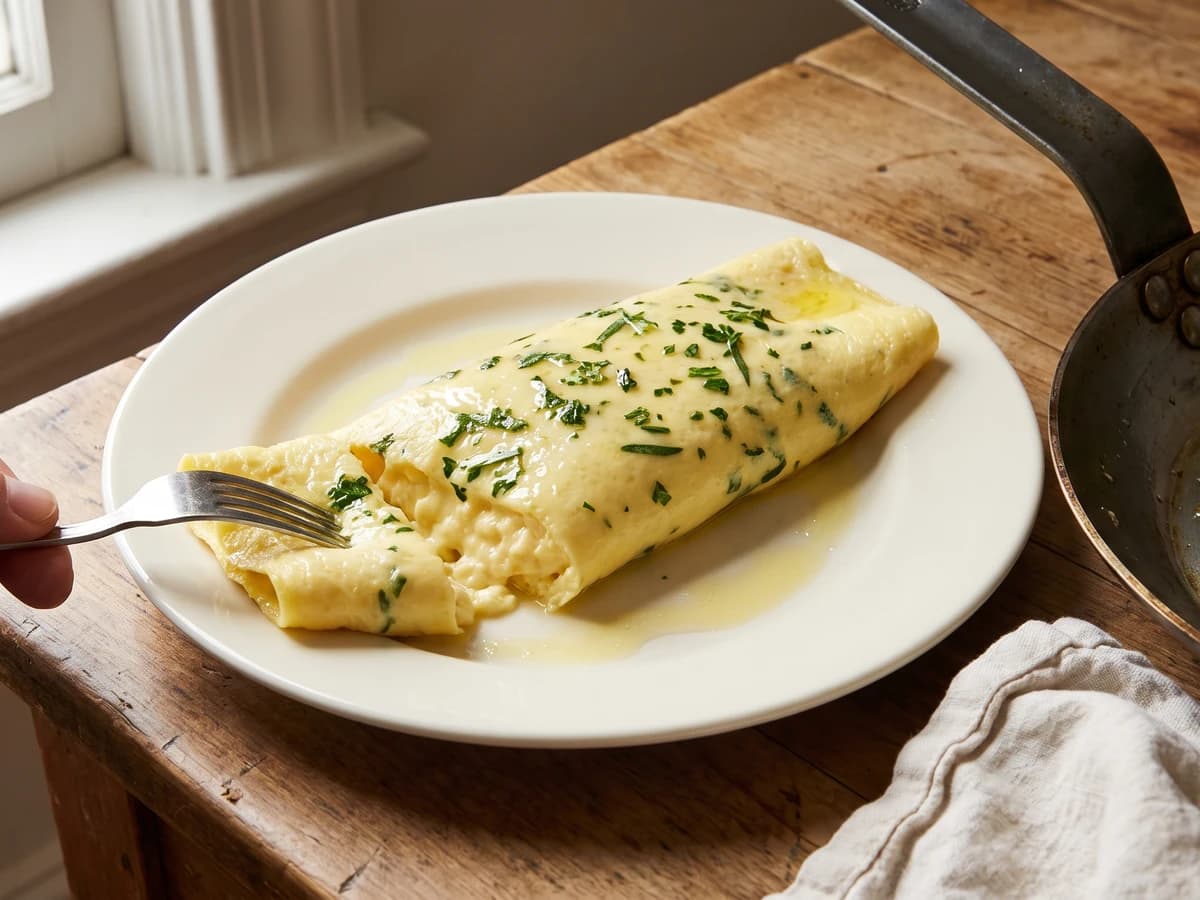
Four tender herbs, hot butter, and two eggs per pan: this rolled omelette teaches the quick hand and good judgment that keep the outside pale and the center creamy.
Chef Juliette
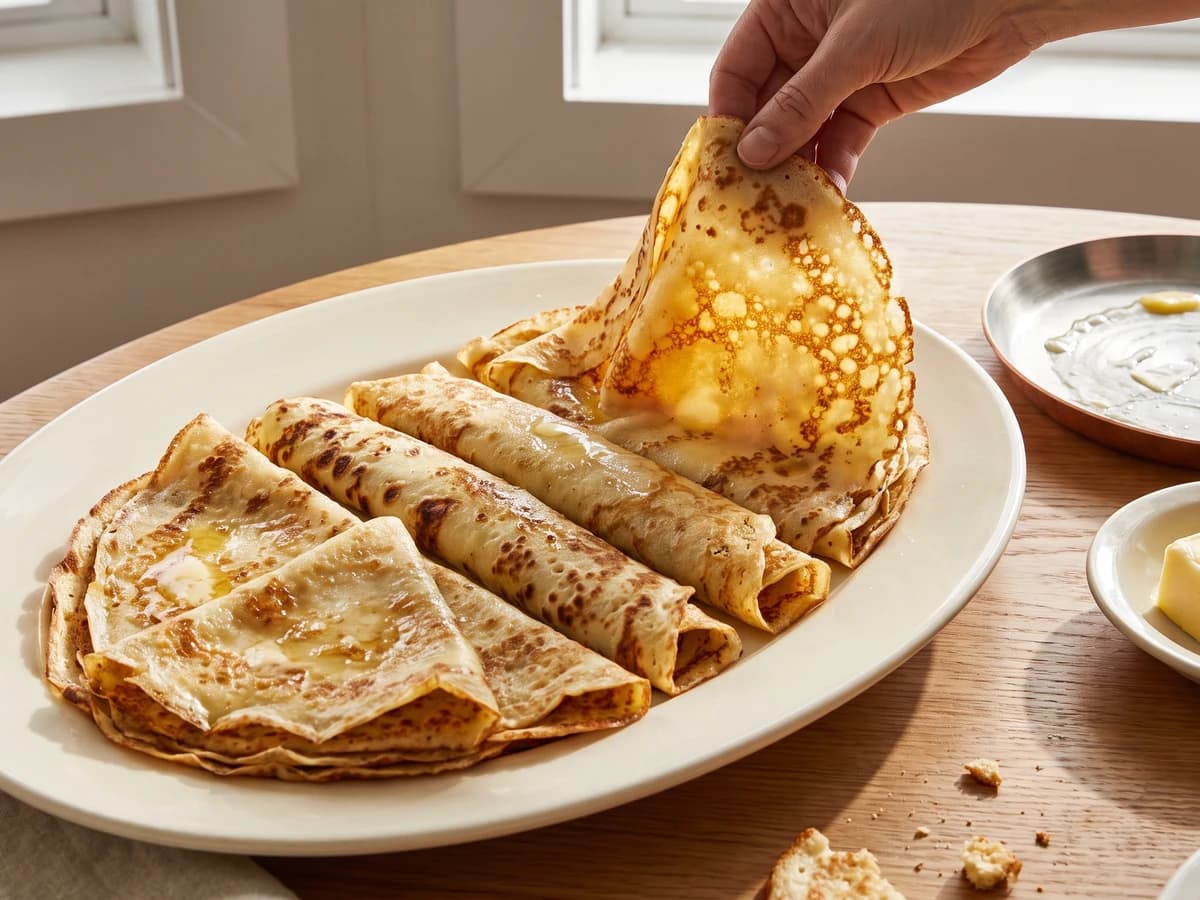
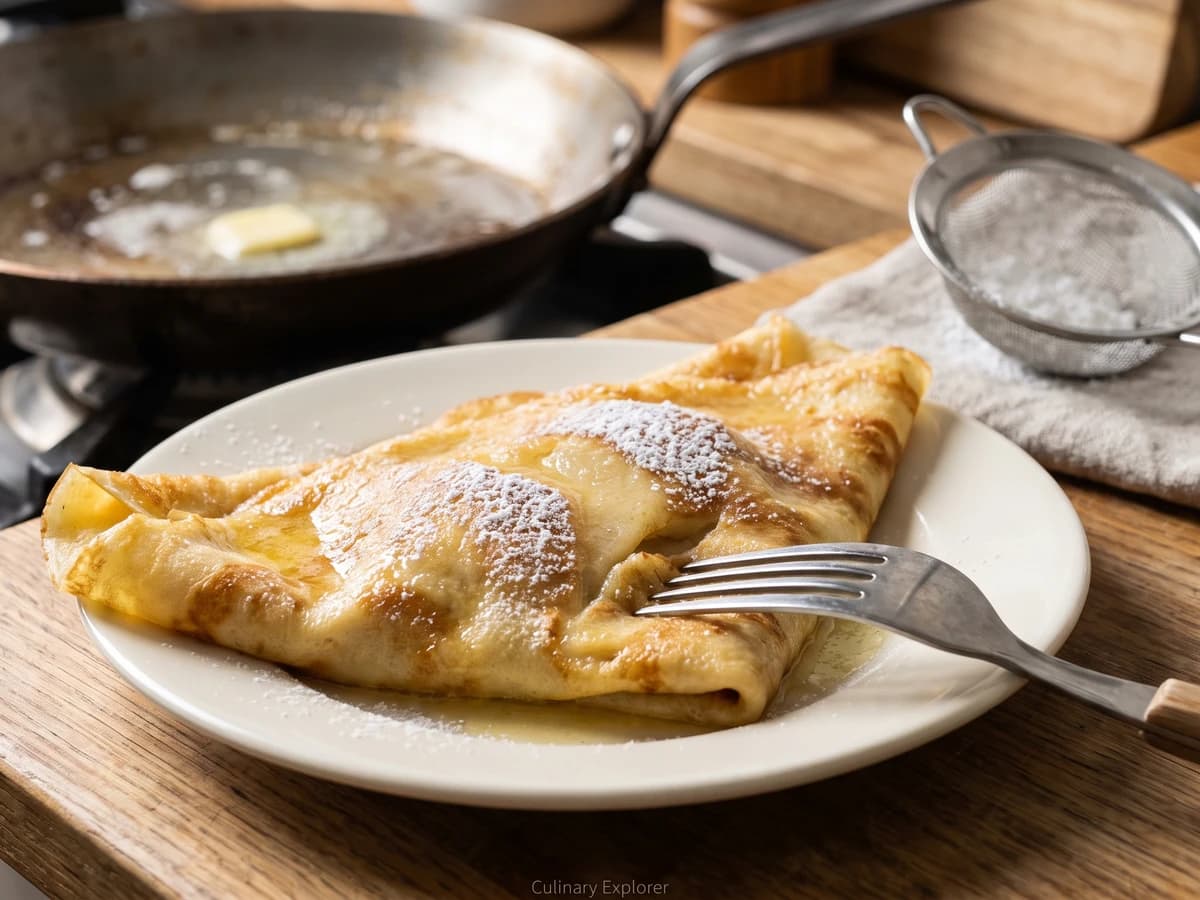
Four batters, one lesson: let the flour drink deeply before cooking, then spread the batter thinly in butter for crêpes and pannequets that bend without becoming tough.
Chef Juliette
Crêpes au Couvent trap ripe Williams pear dice between two thin pours of sweet batter, then turn in one clean toss and reach the table butter-gold, powdered, and burning hot.