Chef Juliette
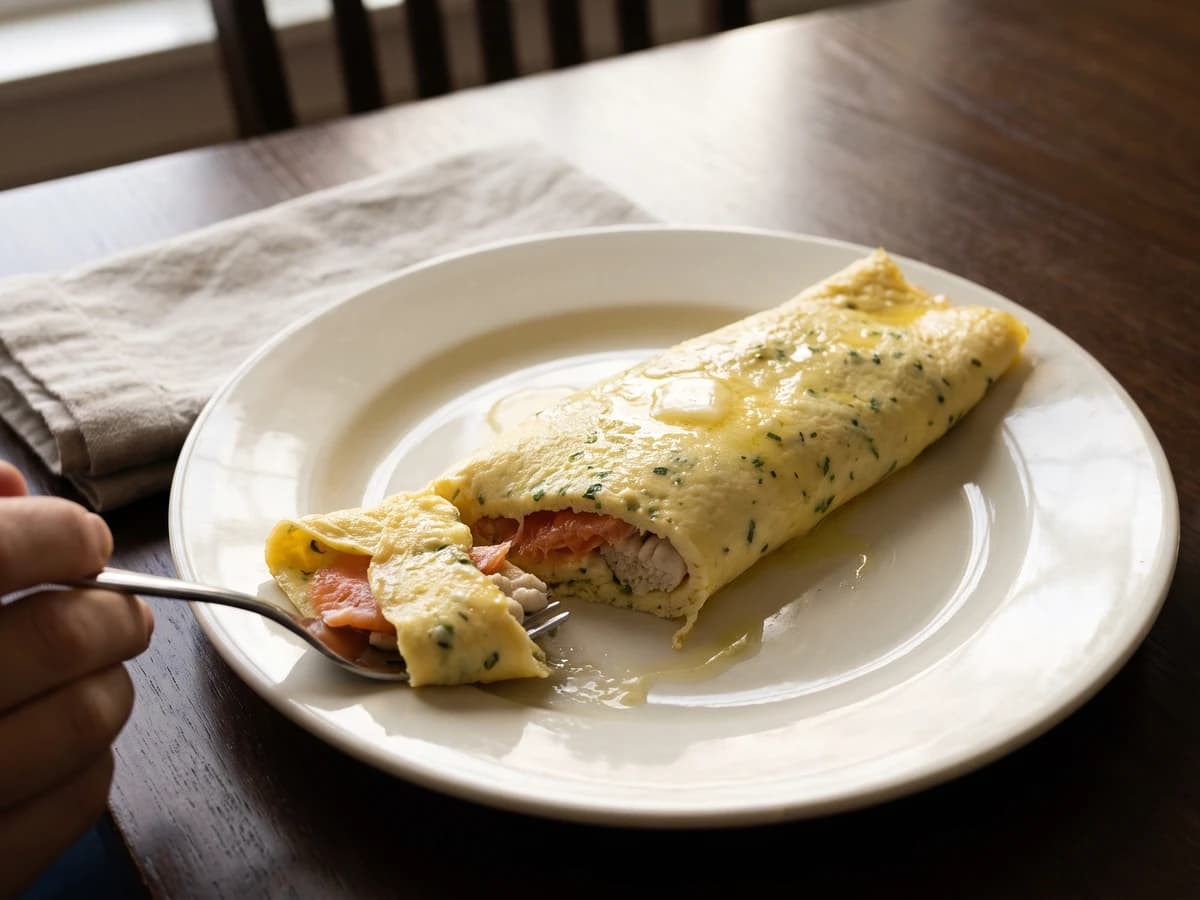
Omelette à l’Écossaise
A creamy omelette aux fines herbes closes around smoked-salmon-wrapped herring milts, gently poached in butter. Have the filling ready, then roll the eggs while they still shine.
A cooking platform built around craft, culture, and the stories behind what we eat.
Created by Chef Juliette
Based on No. 412, The Cooking of Soft-boiled Eggs, from Le Guide Culinaire (1907) by Auguste Escoffier
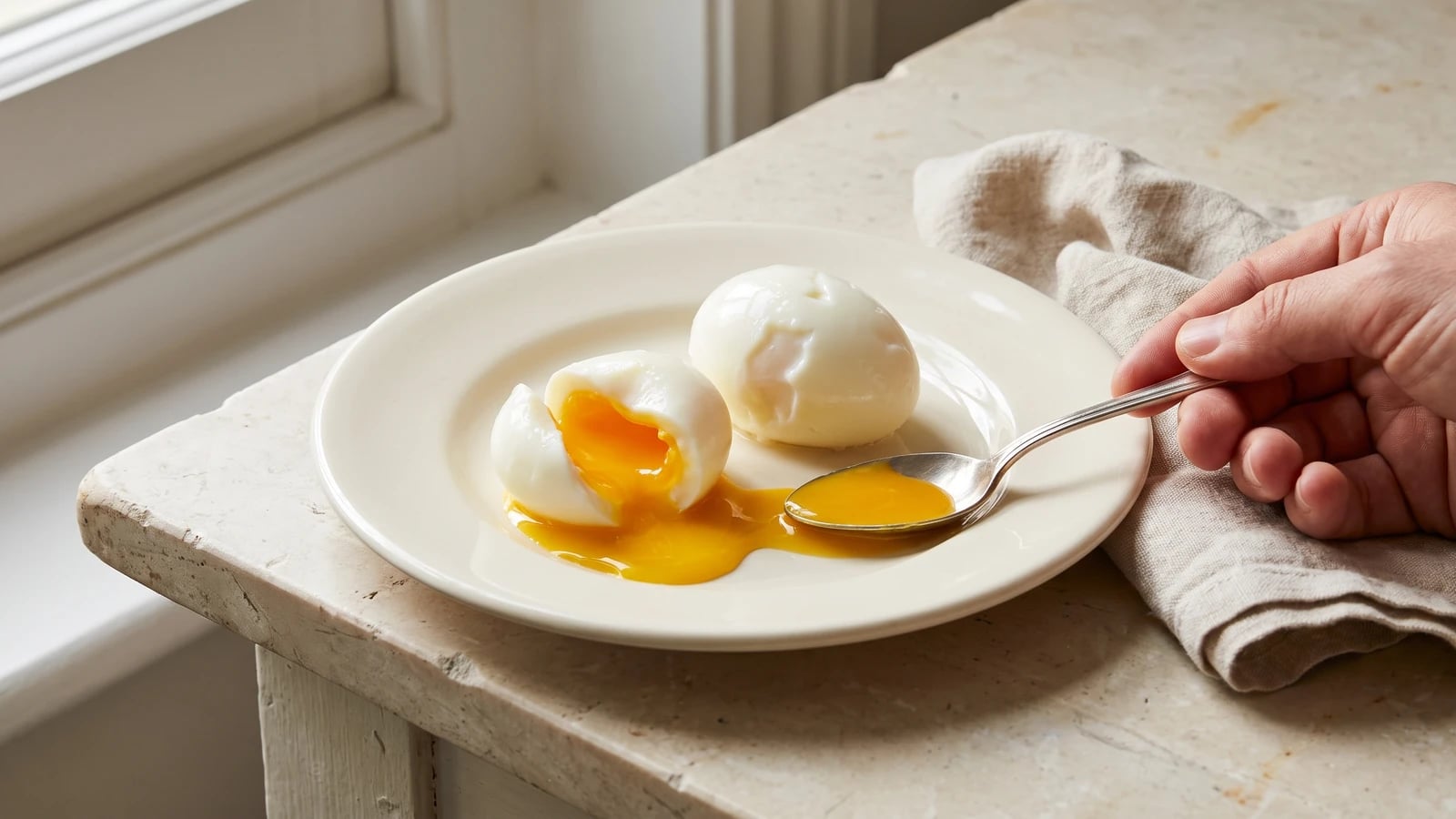
Very fresh eggs lowered and lifted as one, cooked six minutes from the water’s return to the boil, then shelled warm: a small lesson in timing with a tender white and flowing yolk.
Œufs mollets (soft-boiled eggs) teach precision before ornament. The one true thing is this: the six minutes begin only after the water has returned fully to the boil. Start sooner and the whites may remain too fragile to shell; hesitate longer and the yolks lose their flowing centre.
The source formula assumed brigade volume: dozens of eggs lowered and lifted together in a large perforated colander, followed by a hot salted holding station for service. The home translation is eight eggs in a small large-holed metal colander, one deep pot, and a bowl of salted hot water. The batch-lowering stays because equal cooking is the dish; extended holding is service scaffolding and can go when everyone is ready to eat. One cook, one stove, one evening.
Done properly, each egg has a smooth, tender white surrounding a yolk that runs thick and gold when opened. Very fresh eggs can cling stubbornly to their shells, so peel without force and use the rescue in the method if the membrane catches. The step that decides everything is simple: lower the eggs together, then start the six minutes only when the water has fully returned to the boil.
Œufs mollets belong to the French bourgeois table and the classical kitchens of Paris, though the technique became part of the national canon rather than any single regional larder. Mollet means soft or tender, and the name distinguishes this peeled egg, with its set white and yielding yolk, from œuf à la coque, which is served in its shell. The large-holed colander records the method’s journey into brigade service, where cooks timed many eggs as one batch before shelling and holding them for salads, vegetables, and sauced entrées.
Quantity
8
all the same size and temperature
Quantity
4 quarts (3.8 liters / 3.8 kilograms)
for boiling
Quantity
2 quarts (1.9 liters / 1.9 kilograms)
for cooling
Quantity
1 quart (950 milliliters / 950 grams)
for the hot holding bath
Quantity
2 teaspoons (10 milliliters / 12 grams)
for the holding bath
| Ingredient | Quantity |
|---|---|
| very fresh large eggsall the same size and temperature | 8 |
| waterfor boiling | 4 quarts (3.8 liters / 3.8 kilograms) |
| cold waterfor cooling | 2 quarts (1.9 liters / 1.9 kilograms) |
| waterfor the hot holding bath | 1 quart (950 milliliters / 950 grams) |
| fine saltfor the holding bath | 2 teaspoons (10 milliliters / 12 grams) |
Bring the 4 quarts of water to a full rolling boil in a deep pot. Put the cold water in a wide bowl beside the stove. Dissolve the salt in the remaining quart of water and warm it to 140 to 150°F (60 to 66°C), then cover it and take it off the heat. This moderately salted water is for holding, not cooking; if the eggs will go straight to the table, you may omit the hold because it is brigade service scaffolding.
Arrange the eggs in a single layer in the large-holed metal colander. Lower the whole colander gently into the boiling water so every egg is submerged, keeping the heat high. The boil will falter. Wait until it returns to a full rolling boil, then start a timer for exactly six minutes. This is the principle inside the method: count from the return to the boil, not from the plunge.
When the six minutes are complete, lift out the colander and let it drain for a few seconds. Lower the eggs into the bowl of cold water for 45 seconds, no longer. This brief cooling makes the shells safe to handle and checks the cooking at the surface without chilling the flowing yolks.
Working with one egg at a time, tap the shell lightly all over and begin peeling at the broad end, where the air pocket gives you an opening. Ease a fingertip or the bowl of a teaspoon beneath the membrane and let the shell come away in small pieces. If the white begins tearing, stop. Ça se rattrape: return the egg to the cold water for 20 seconds, find the membrane again, and peel beneath the water instead of pulling against the white. A small nick is no disaster.
Transfer each shelled egg to the moderately salted hot water as soon as it is peeled. Keep the water between 140 and 150°F (60 and 66°C) and hold the eggs for no more than 10 minutes; hotter water continues cooking the yolks, so temper it with a little cold water if necessary. Lift the eggs out with a slotted spoon, blot briefly, and serve two per person. The whites should be set and tender, the yolks thickly flowing. À table!
1 serving (about 100g)
Culinary guides, cultural storytelling, and the editorial depth that makes cooking meaningful.
Discover Culinary ExplorerChef Juliette
A creamy omelette aux fines herbes closes around smoked-salmon-wrapped herring milts, gently poached in butter. Have the filling ready, then roll the eggs while they still shine.
Chef Juliette
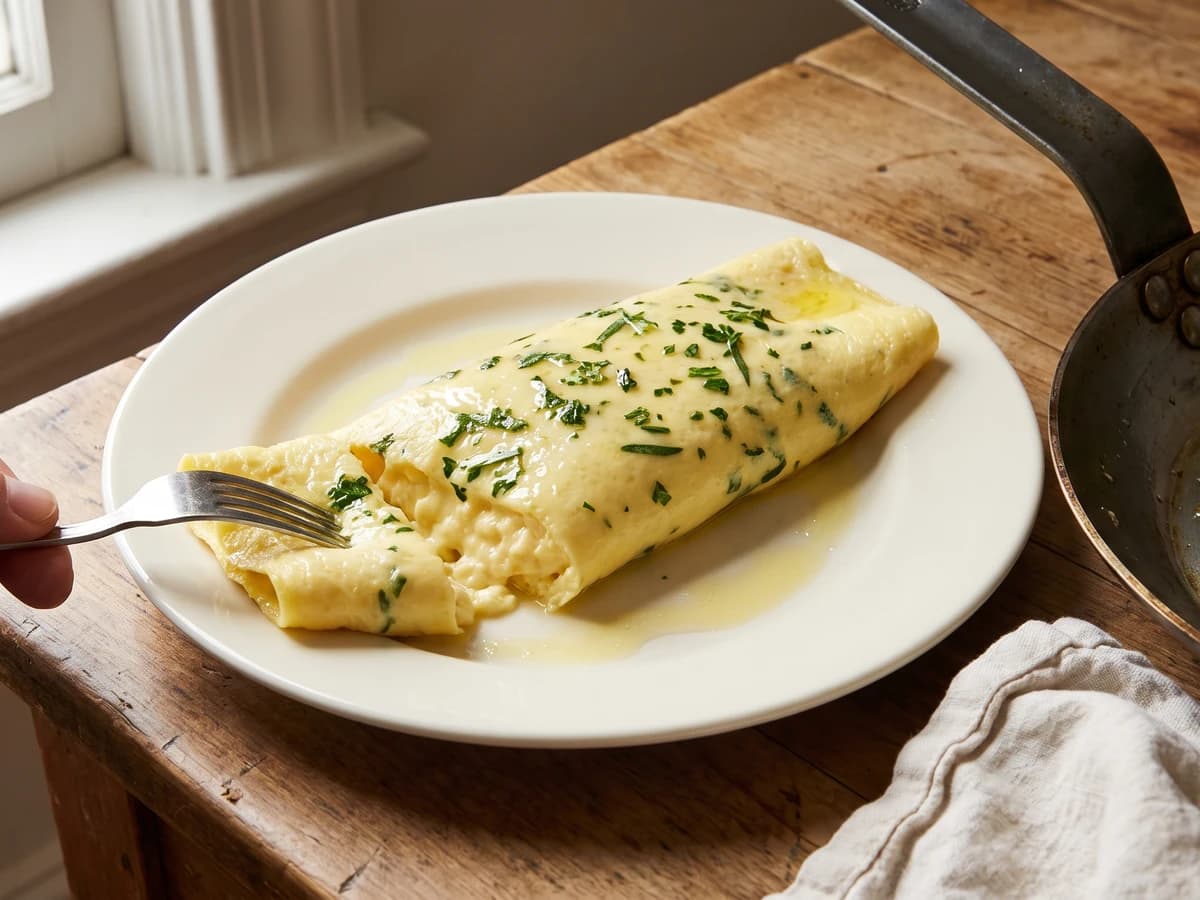
Four tender herbs, hot butter, and two eggs per pan: this rolled omelette teaches the quick hand and good judgment that keep the outside pale and the center creamy.
Chef Juliette
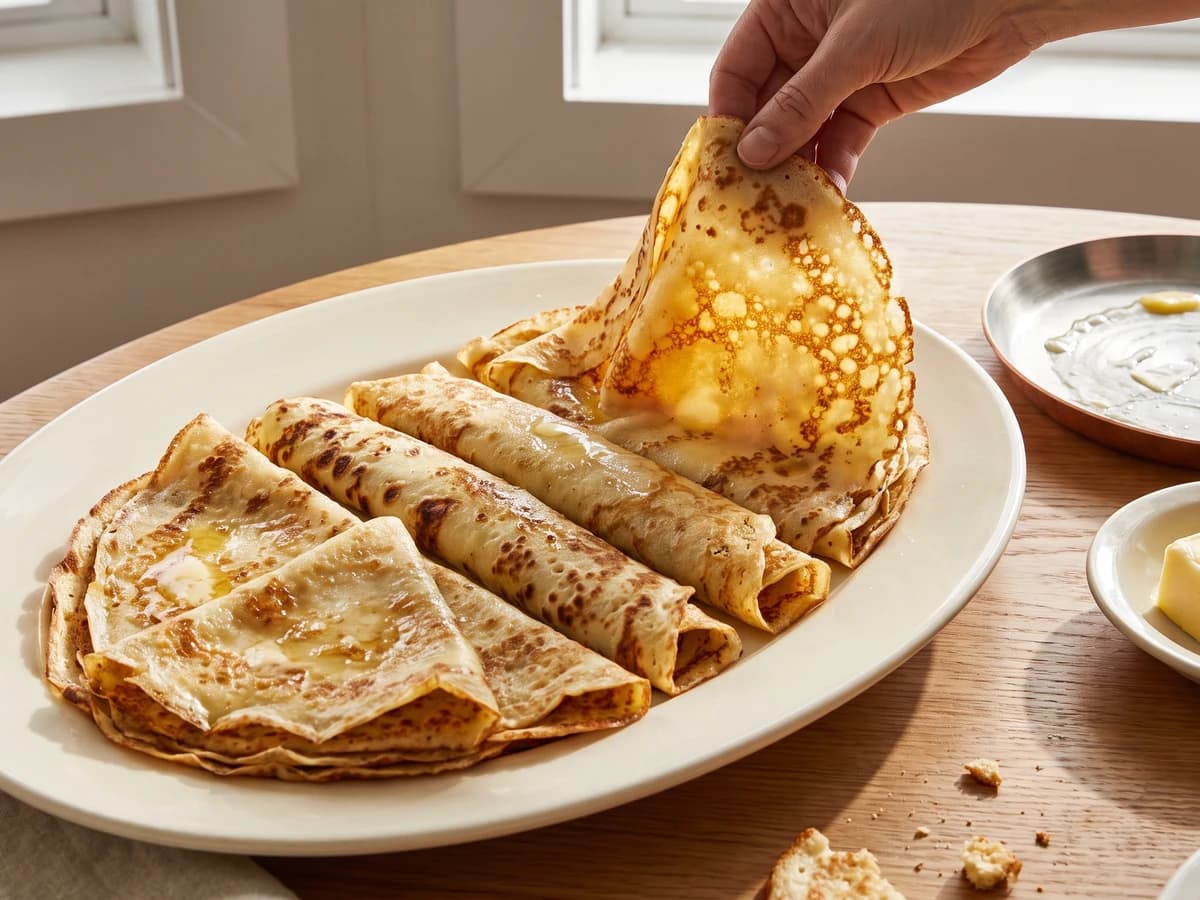
Four batters, one lesson: let the flour drink deeply before cooking, then spread the batter thinly in butter for crêpes and pannequets that bend without becoming tough.
Chef Juliette
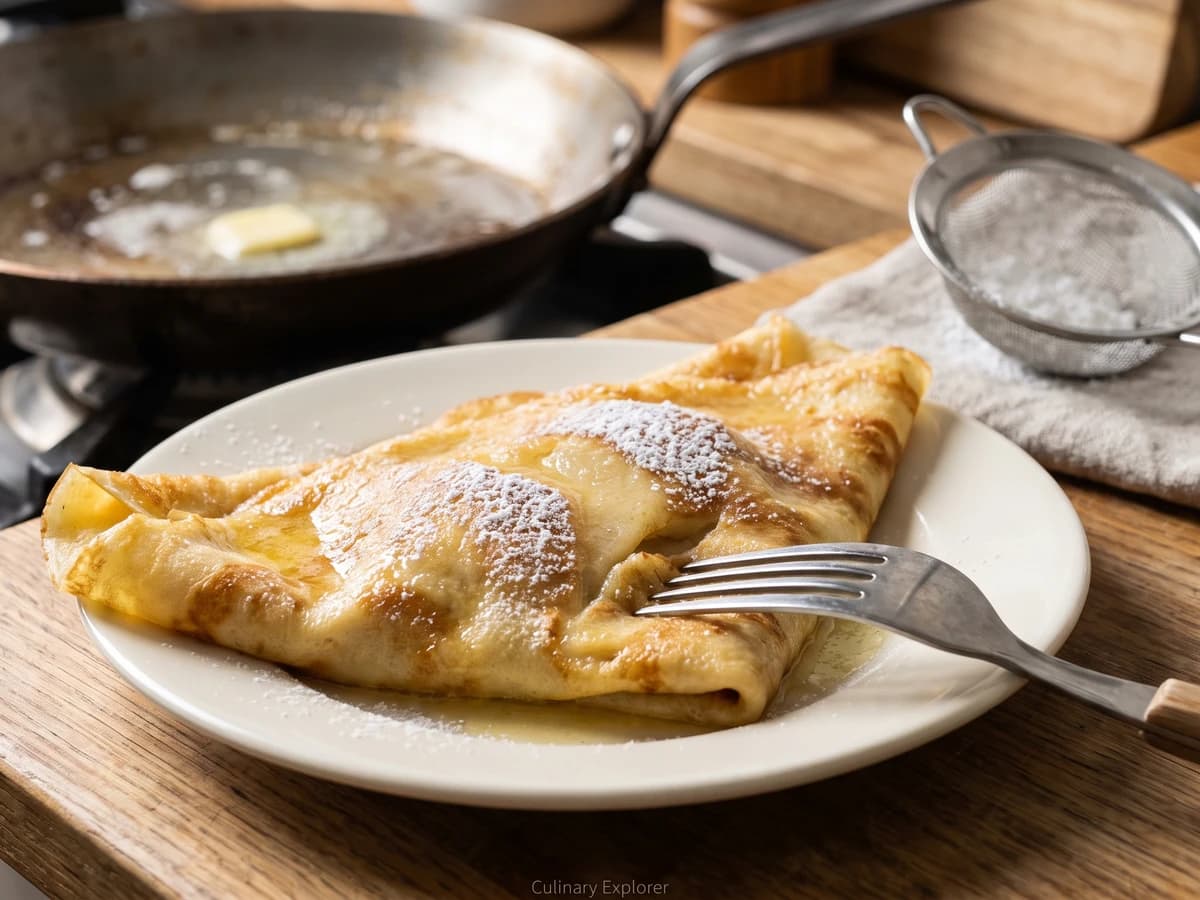
Crêpes au Couvent trap ripe Williams pear dice between two thin pours of sweet batter, then turn in one clean toss and reach the table butter-gold, powdered, and burning hot.