Chef Juliette
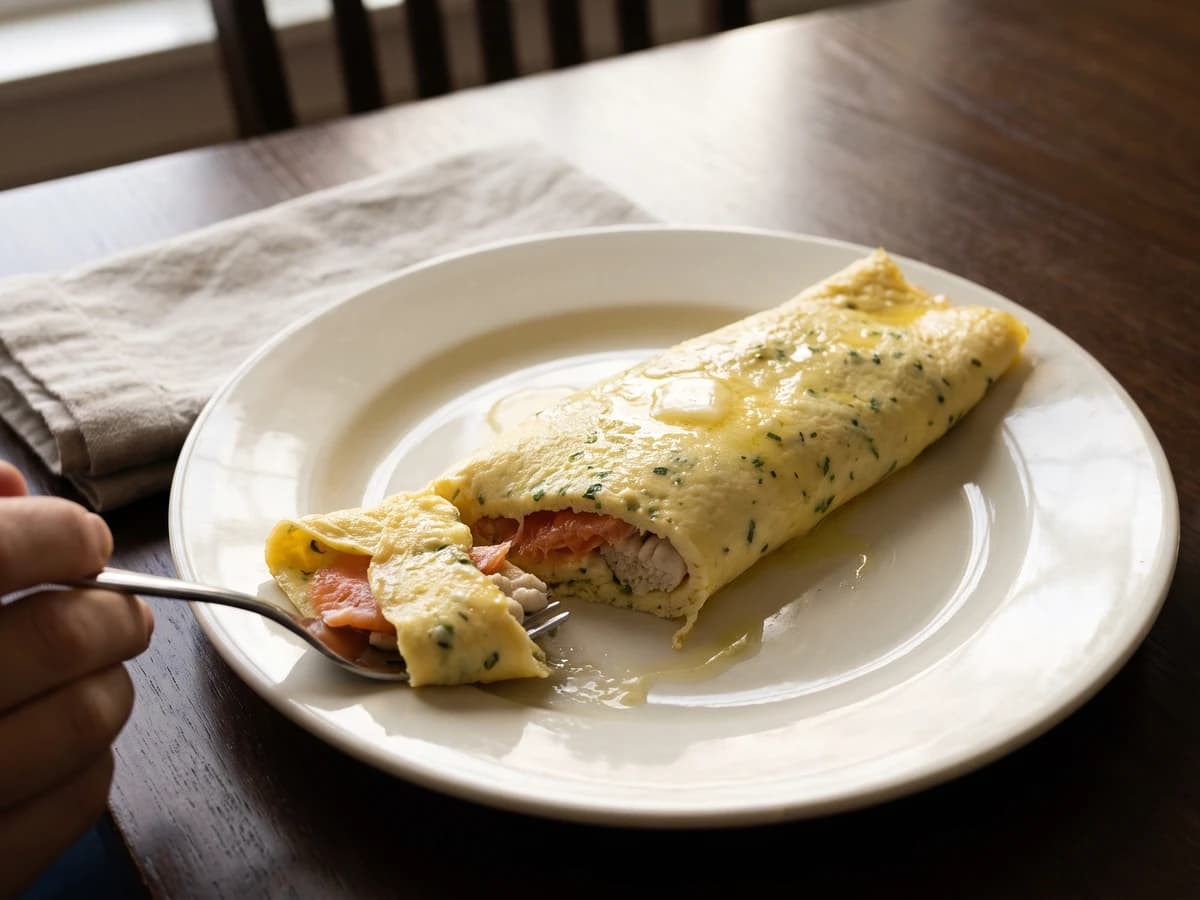
Omelette à l’Écossaise
A creamy omelette aux fines herbes closes around smoked-salmon-wrapped herring milts, gently poached in butter. Have the filling ready, then roll the eggs while they still shine.
A cooking platform built around craft, culture, and the stories behind what we eat.
Created by Chef Juliette
Based on No. 410, Eggs à la Reine, from Le Guide Culinaire (1907) by Auguste Escoffier
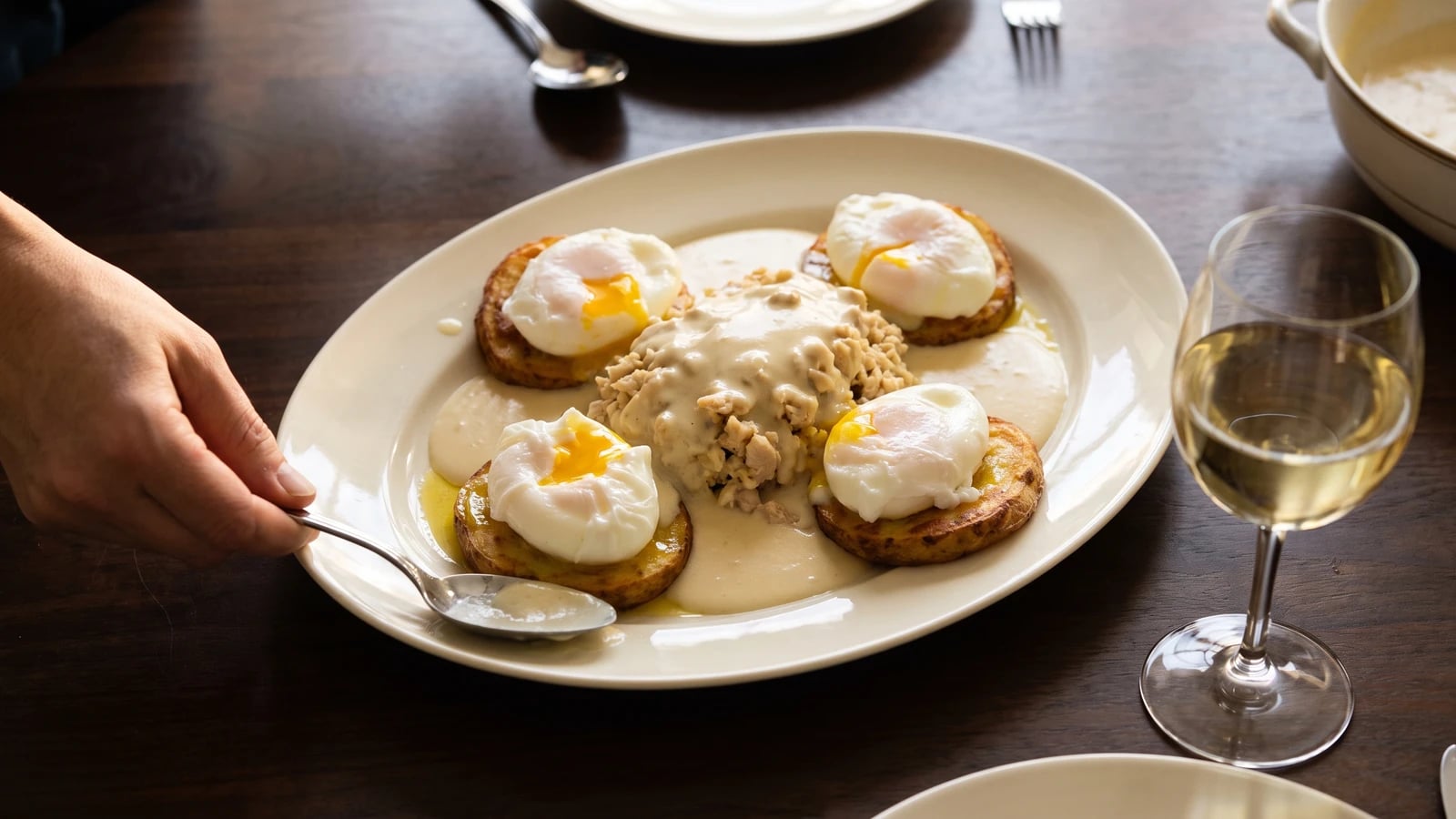
Four neatly trimmed pan eggs sit on bronzed Duchesse potato discs, circling tender chicken mincemeat as Suprême sauce forms its ivory border, a composed classical supper made manageable at home.
Œufs à la Reine (pan-fried eggs on browned potato purée discs, with minced chicken and a velvety chicken-cream sauce) teaches the discipline of hot assembly. The one true thing to know before touching a pan is this: the eggs are the clock. Duchesse Potatoes, Chicken Mincemeat, Suprême Sauce, platter, and cutter must all be ready before the first egg meets the butter.
The original entry assumed a saucier holding Suprême Sauce, a stock never off the fire, prepared potatoes and chicken waiting in the larder, and a salamander close enough to bronze the discs on command. At home, prepare those three finished components ahead, warm them separately in small pans, use the upper heat of an ordinary oven, and replace the round fancy-cutter with a plain pastry ring. The brigade's perpetual mise en place was scaffolding, and it can go. The browned Duchesse base, tender pan egg, chicken center, and distinct border of Suprême Sauce are the dish, and they stay. Four portions, one cook, one stove, one evening.
When it lands correctly, the potatoes are bronzed beneath pale, softly set eggs, the yolks remain fluid, and the Suprême Sauce gleams around the chicken without drowning the crisp edges. Have everything hot before frying the eggs, then work without fuss. That final five minutes decides the dish.
Œufs à la Reine belongs to the codified Parisian grand-kitchen repertoire and the formal bourgeois supper table, rather than to a particular regional breakfast tradition. In classical menu language, à la reine signals a delicate poultry-centered garnish with a pale, cream-enriched sauce, which explains the pairing of chicken mincemeat and Suprême Sauce. Its composed appearance is grand, but its working logic is domestic: prepare the supporting parts ahead and cook the eggs only when the table is ready.
Quantity
1½ cups (355 ml / 360 g)
Quantity
1¼ cups (300 ml / 300 g)
Quantity
1 cup (240 ml / 240 g)
Quantity
4
Quantity
1
Quantity
3 tablespoons (45 ml / 42 g)
divided
Quantity
¼ teaspoon (1.25 ml / 1.5 g)
Quantity
⅛ teaspoon (0.6 ml / 0.3 g)
Quantity
2 tablespoons (30 ml / 30 g)
as needed
| Ingredient | Quantity |
|---|---|
| prepared Duchesse Potatoes | 1½ cups (355 ml / 360 g) |
| prepared Chicken Mincemeat | 1¼ cups (300 ml / 300 g) |
| prepared Suprême Sauce | 1 cup (240 ml / 240 g) |
| large eggs | 4 |
| large egg held in reserve (optional) | 1 |
| unsalted butterdivided | 3 tablespoons (45 ml / 42 g) |
| fine salt | ¼ teaspoon (1.25 ml / 1.5 g) |
| ground white pepper | ⅛ teaspoon (0.6 ml / 0.3 g) |
| hot water (optional)as needed | 2 tablespoons (30 ml / 30 g) |
Heat the oven to 425°F (220°C) and line a baking sheet with parchment. Divide the prepared Duchesse Potatoes into four equal 3-ounce (90 g) portions. Set an 8 cm round cutter on the sheet, pack one portion inside to form a disc about ⅜ inch (1 cm) thick, smooth the top, and lift the cutter straight up. Repeat with the remaining potatoes. These discs must match the cutter used later for the eggs, because the clean fit is part of the composition.
Melt 1 tablespoon (15 ml / 14 g) of the butter and brush it over the discs. Bake for 15 to 18 minutes, until their surfaces feel set and their edges turn deep butter-gold. If they remain pale, place them under the broiler for 30 to 60 seconds, watching without looking away. The broiler is the home salamander, and it works quickly. If a disc begins to spread, remove the tray, reshape its edge with the cutter, and return it to the oven for 2 minutes. Ça se rattrape. Keep the browned discs warm.
While the potatoes brown, put the prepared Chicken Mincemeat in one small saucepan and the prepared Suprême Sauce in another. Cover the chicken and warm it over low heat, stirring occasionally, until thoroughly hot and still spoonable. Warm the Suprême Sauce over the gentlest heat, whisking often and never letting it boil. If the sauce tightens while it waits, whisk in the hot water one teaspoon at a time until it once again naps the back of a spoon. If a skin forms, whisk it smooth and pass the sauce through a fine sieve.
Melt the remaining 2 tablespoons (30 ml / 28 g) butter in a well-seasoned omelet pan or nonstick skillet over medium-low heat. Fry the eggs two at a time, leaving enough space between them for trimming. Season with the salt and white pepper, then cook for 2 to 3 minutes, until the whites are tender and completely set while the yolks remain fluid. Spoon a little hot butter over any translucent white close to the yolk, avoiding the yolk itself. Pale, supple whites are wanted here, not crisp brown lace.
Slide each egg onto a flat plate or board. Center the same 8 cm cutter around the yolk and press straight down through the white, making a neat round the size of its potato disc. If the white resists, trace the inside of the cutter with a thin knife rather than twisting it. Twisting risks the yolk. If one breaks, fold that egg into the hot Chicken Mincemeat and fry the reserved egg in fresh butter. Never apologize at your own table; fix it and carry on.
Arrange the four browned Duchesse discs in a circle on a warmed oval platter. Set one trimmed egg squarely on each disc, then spoon the hot Chicken Mincemeat into a generous mound at the center. Pour the Suprême Sauce in a continuous border around the chicken and inside the circle of eggs, keeping it away from the bronzed outer edges of the potatoes. Serve immediately, while the sauce gleams and the yolks still yield under the fork. À table!
1 serving (about 270g)
Culinary guides, cultural storytelling, and the editorial depth that makes cooking meaningful.
Discover Culinary ExplorerChef Juliette
A creamy omelette aux fines herbes closes around smoked-salmon-wrapped herring milts, gently poached in butter. Have the filling ready, then roll the eggs while they still shine.
Chef Juliette
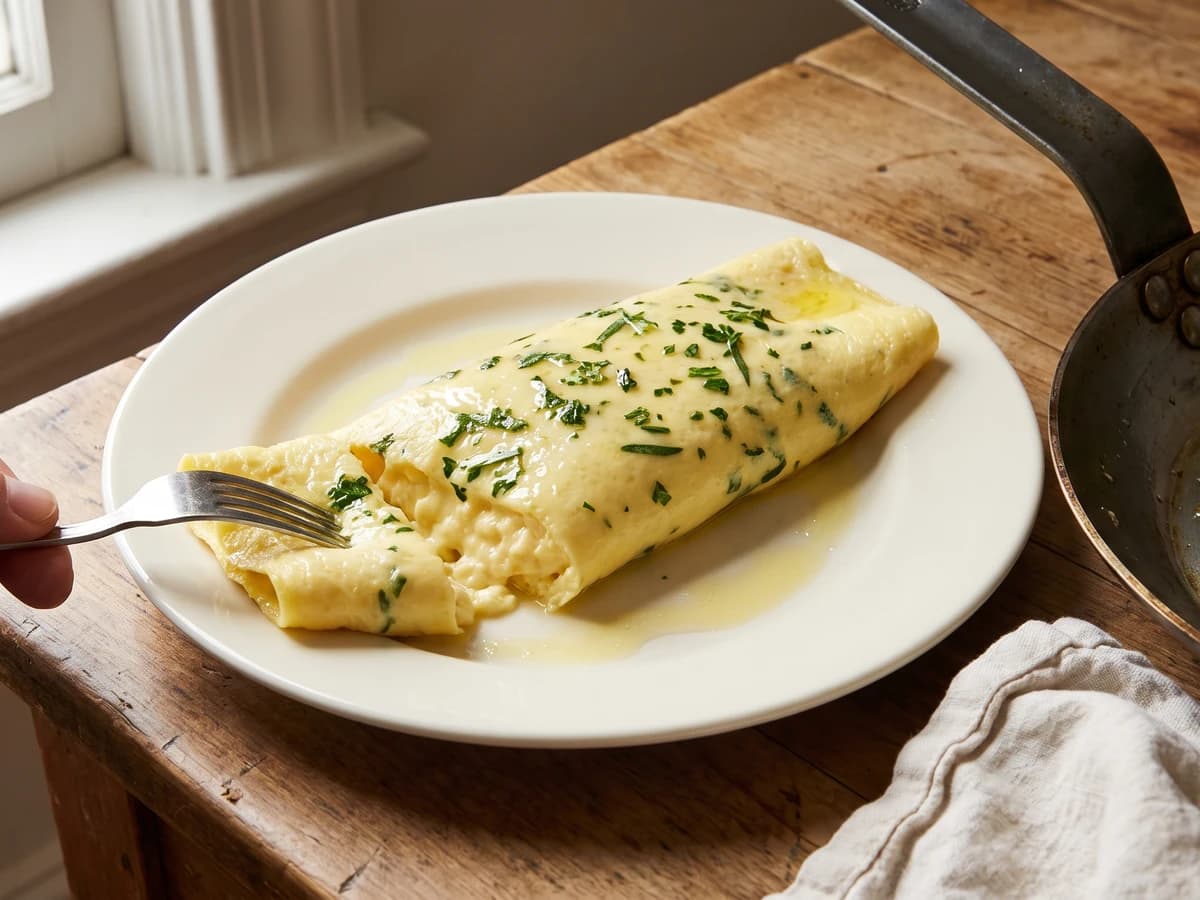
Four tender herbs, hot butter, and two eggs per pan: this rolled omelette teaches the quick hand and good judgment that keep the outside pale and the center creamy.
Chef Juliette
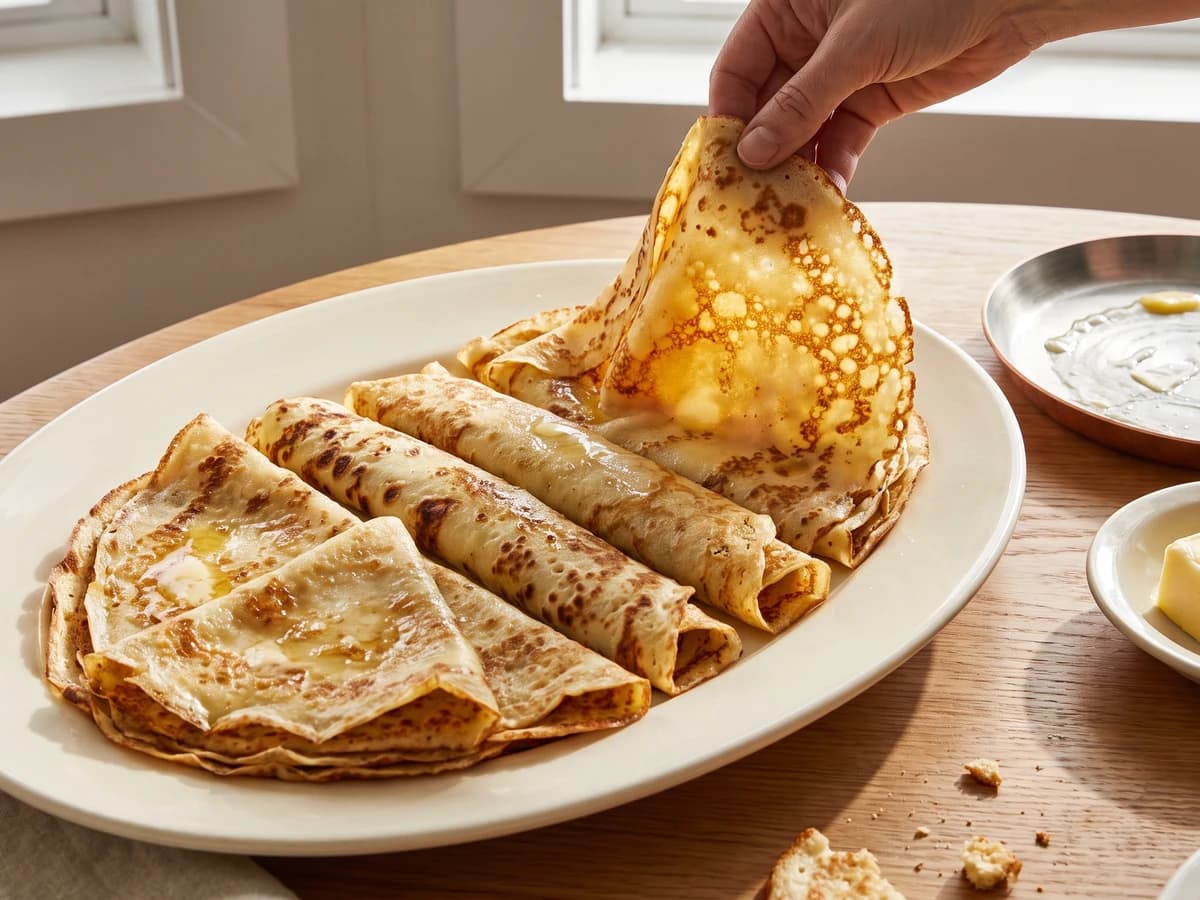
Four batters, one lesson: let the flour drink deeply before cooking, then spread the batter thinly in butter for crêpes and pannequets that bend without becoming tough.
Chef Juliette
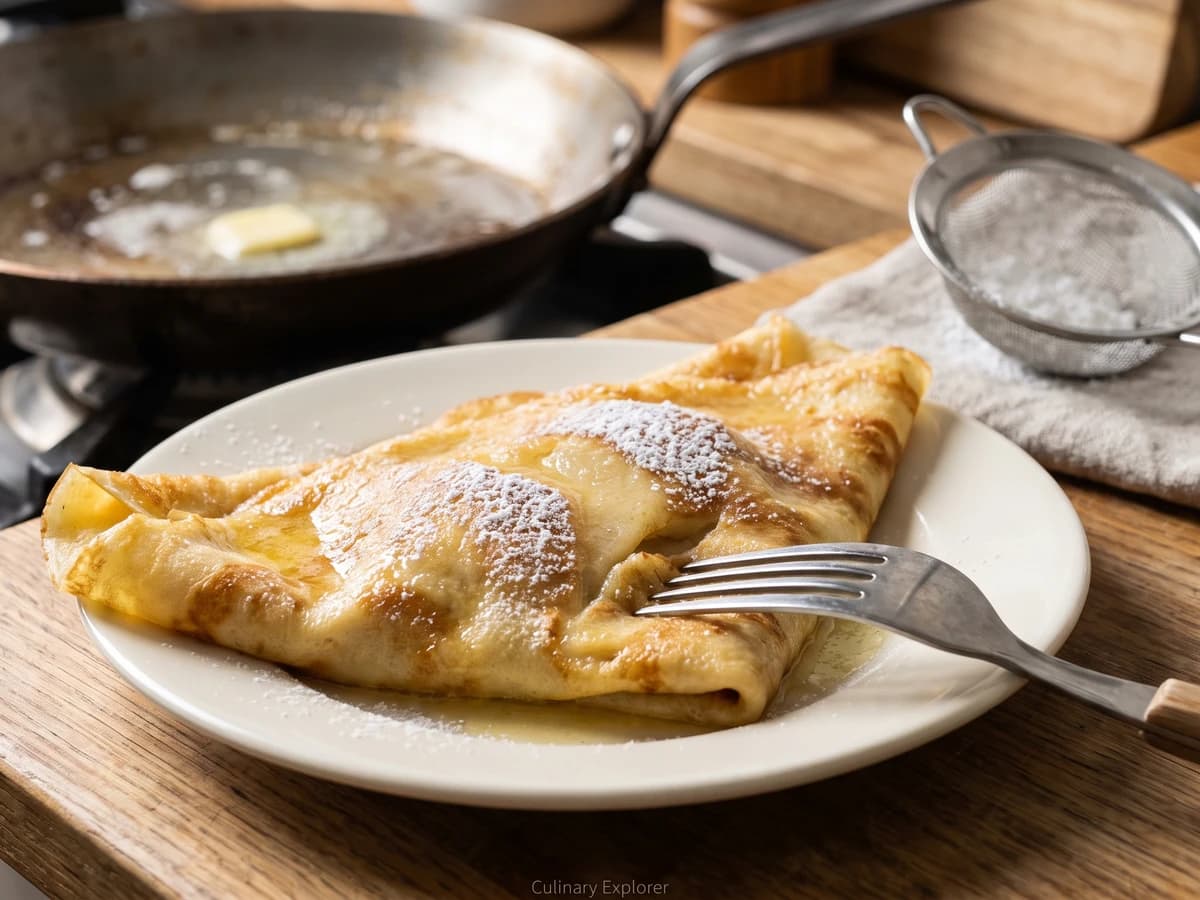
Crêpes au Couvent trap ripe Williams pear dice between two thin pours of sweet batter, then turn in one clean toss and reach the table butter-gold, powdered, and burning hot.