Chef Juliette
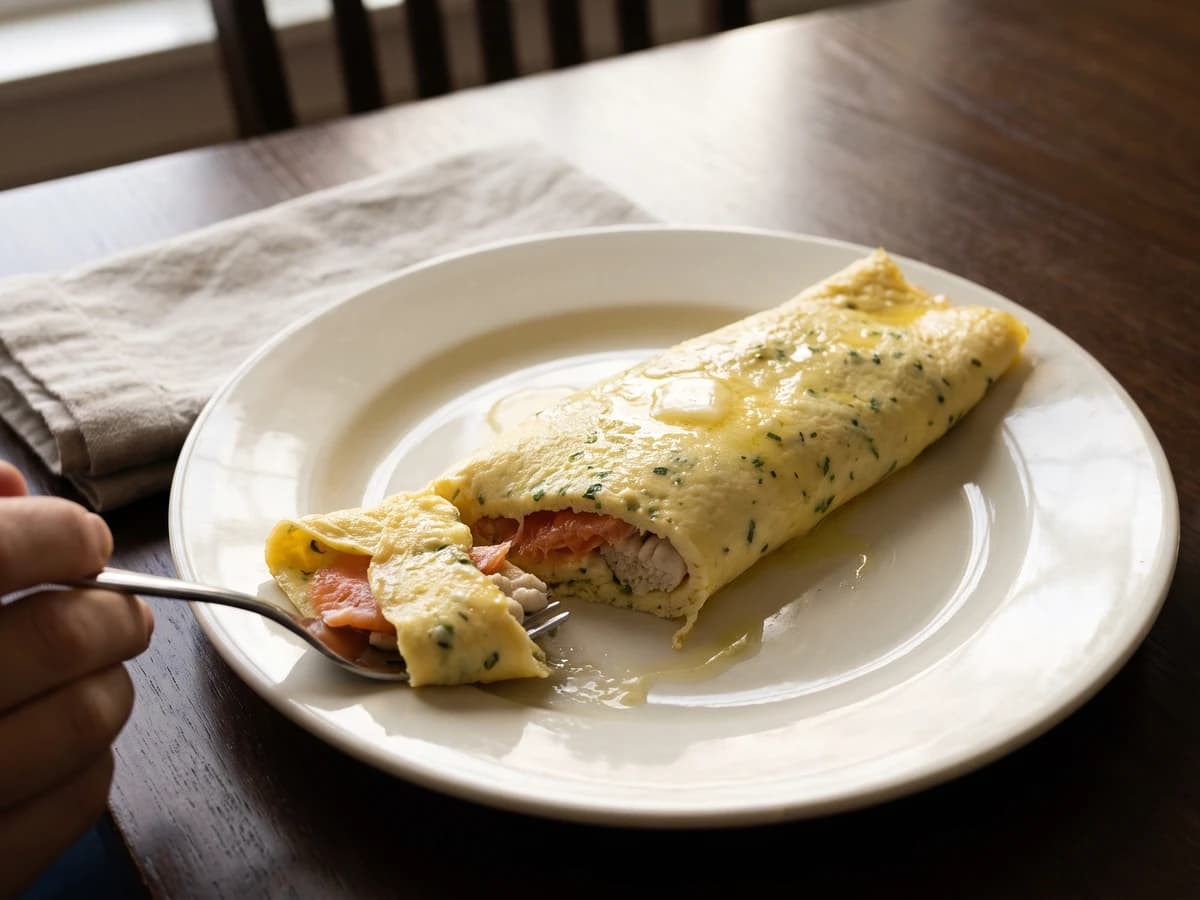
Omelette à l’Écossaise
A creamy omelette aux fines herbes closes around smoked-salmon-wrapped herring milts, gently poached in butter. Have the filling ready, then roll the eggs while they still shine.
A cooking platform built around craft, culture, and the stories behind what we eat.
Created by Chef Juliette
Based on No. 404, Lully Eggs, from Le Guide Culinaire (1907) by Auguste Escoffier
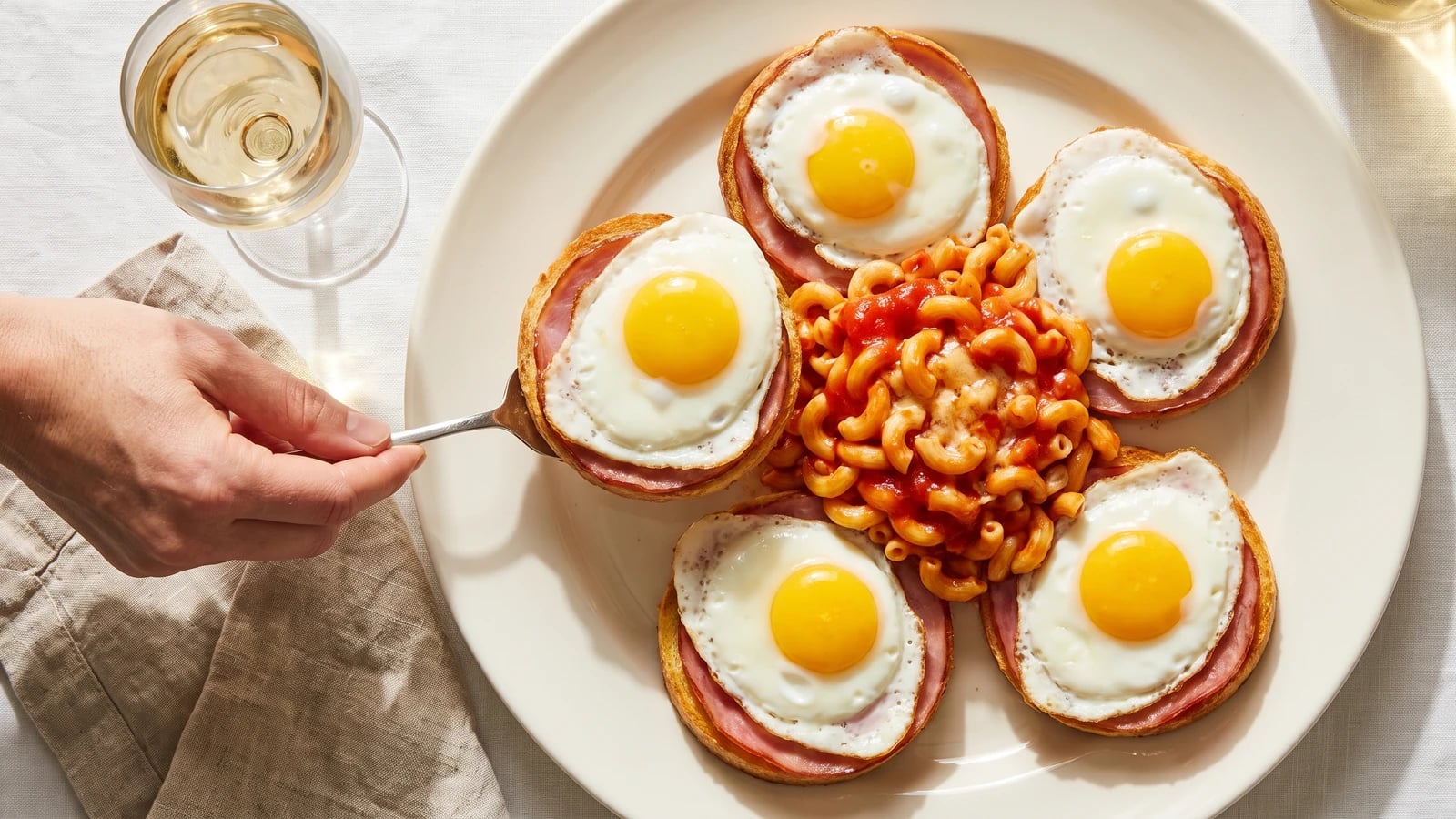
Œufs Lully turn four humble elements into a composed supper: tender pan eggs, butter-fried cured ham, crisp toast, and a glossy center of macaroni bound with tomatoes cooked down in butter.
Œufs Lully (fried eggs on ham and toast with tomato-bound macaroni) teaches the order of service. The one true thing to know before touching a pan is that the eggs come last. Tomates concassées (roughly chopped tomatoes) must first cook down in butter, the macaroni must be bound and waiting, and every round of toast and ham must be ready to receive its egg.
The source assumes a brigade's simultaneous hands, a hot shelf, and a decorative round cutter. For one cook, one stove, one evening, a 3-inch biscuit cutter and a low oven holding only the toast and ham provide the honest equivalents. The preparation is scaled to four, one egg per person, because the entry gives its composition rather than home quantities. Simultaneous frying and the ornamental cutter are scaffolding. The butter-fried ham, matching rounds, tomato macaroni, and circular arrangement are the dish, and all of them stay.
When it arrives correctly, the platter has a generous red-gold mound at its center, four neat eggs circling it, crisp toast underneath, and cured ham gleaming with butter between them. Finish the tomato macaroni and build the toast-and-ham rounds before the eggs meet the pan. That order decides the dish.
Œufs Lully belongs to the named preparations of Parisian classical service, and its title honors Jean-Baptiste Lully, the Florentine-born composer who shaped musical life at the French court. Its macaroni and tomato center quietly recalls that Italian origin within a thoroughly French composition of butter-fried egg, cured ham, and toast. This is not a regional breakfast but a formal platter carried from grand kitchens into home cookery, with the central macaroni garnish identifying the preparation as surely as the eggs themselves.
Quantity
1½ cups (360 ml / 300 g)
concassées
Quantity
1 cup (240 ml / 115 g)
Quantity
8 tablespoons (120 ml / 113 g)
divided
Quantity
4 thin slices (about 4 ounces / 115 g)
Quantity
4 slices (about 5 ounces / 140 g)
Quantity
4
Quantity
2 quarts (1.9 L / 1.9 kg)
Quantity
4 teaspoons (20 ml / 24 g)
divided
Quantity
¼ teaspoon (1 ml / 0.5 g)
divided
| Ingredient | Quantity |
|---|---|
| peeled and seeded ripe tomatoes, or drained canned whole tomatoesconcassées | 1½ cups (360 ml / 300 g) |
| dried small elbow macaroni | 1 cup (240 ml / 115 g) |
| unsalted butterdivided | 8 tablespoons (120 ml / 113 g) |
| jambon cru, or unsmoked dry-cured ham | 4 thin slices (about 4 ounces / 115 g) |
| firm white sandwich bread | 4 slices (about 5 ounces / 140 g) |
| large eggs | 4 |
| water | 2 quarts (1.9 L / 1.9 kg) |
| fine sea saltdivided | 4 teaspoons (20 ml / 24 g) |
| freshly ground white pepperdivided | ¼ teaspoon (1 ml / 0.5 g) |
Heat the oven to 200°F (95°C) and warm an oven-safe serving platter inside. With a 3-inch (7.5 cm) round cutter, stamp four rounds from the bread and four matching rounds from the ham. Keep the ham chilled while you begin the tomatoes. Bring the water and 3 teaspoons of the salt to a boil for the macaroni. The matching circles are part of the composition, but the source's ornamental fancy-cutter is brigade scaffolding; an ordinary biscuit cutter, or an inverted bowl and a sharp knife, does the same work honestly.
Melt 3 tablespoons of the butter in a small sauté pan over medium-low heat. Add the concassées, ½ teaspoon of the salt, and a pinch of white pepper. Cook uncovered for 12 to 18 minutes, stirring more often as the liquid disappears, until the tomatoes darken slightly and a spoon drawn through them leaves a clean trail. This reduction is the foundation: watery tomatoes slide away from the macaroni instead of binding it. If they catch before reducing, lower the heat and add a tablespoon of the pasta water. If the butter beads at the edges, stir in a teaspoon of starchy water until the mixture turns glossy again. Ça se rattrape.
Boil the macaroni until tender throughout but still holding its shape, usually 7 to 9 minutes. Reserve 1 cup of the cooking water, then drain the macaroni thoroughly. Fold it into the reduced tomatoes and cook for 2 minutes over low heat, stirring until the tomato and butter cling to every curve. The mixture should mound softly rather than run. If it looks dry, loosen it one spoonful at a time with the reserved water; if liquid gathers underneath, keep it over the heat until that moisture cooks away. Cover and hold off the heat for no longer than 10 minutes.
Melt 1½ tablespoons of the butter in a 10-inch (25 cm) omelet pan over medium heat. Fry the bread rounds until crisp and evenly golden, about 2 minutes per side, then place them on the warmed platter. Melt another 1½ tablespoons of butter in the same pan and fry the ham rounds briefly, about 15 to 30 seconds per side, just until their edges ripple and the fat turns glossy. Cured ham toughens if treated like bacon, so keep this quick. Set one ham round on each toast and return the platter to the low oven for no more than 5 minutes.
Wipe any dark crumbs from the omelet pan and lower the heat to medium-low. Melt 1 tablespoon of the remaining butter, slide in 2 eggs, and season lightly with salt and white pepper. Cook until the whites are fully opaque and barely golden underneath while the yolks still tremble, spooning foaming butter over any translucent white but not over the yolks. Slide the eggs onto a flat plate and stamp each into a neat round with the same cutter, centering the yolk and pressing straight down without twisting. If an egg sticks, take the pan off the heat for 20 seconds before easing a thin spatula beneath it; if the white tears, tuck that edge beneath the ham when you stack it. Ça se rattrape. Repeat with the final tablespoon of butter and the remaining eggs.
Taste the macaroni and correct the salt and white pepper. If it tightened while waiting, loosen it with one spoonful of reserved cooking water over low heat. Mound it generously in the center of the warm platter. Arrange the four toast-and-ham rounds evenly around it, then place one stamped egg on each. The toast must remain crisp, the ham glossy, the macaroni properly bound, and the yolks soft, so bring the platter to the table immediately. À table!
1 serving (about 260g)
Culinary guides, cultural storytelling, and the editorial depth that makes cooking meaningful.
Discover Culinary ExplorerChef Juliette
A creamy omelette aux fines herbes closes around smoked-salmon-wrapped herring milts, gently poached in butter. Have the filling ready, then roll the eggs while they still shine.
Chef Juliette
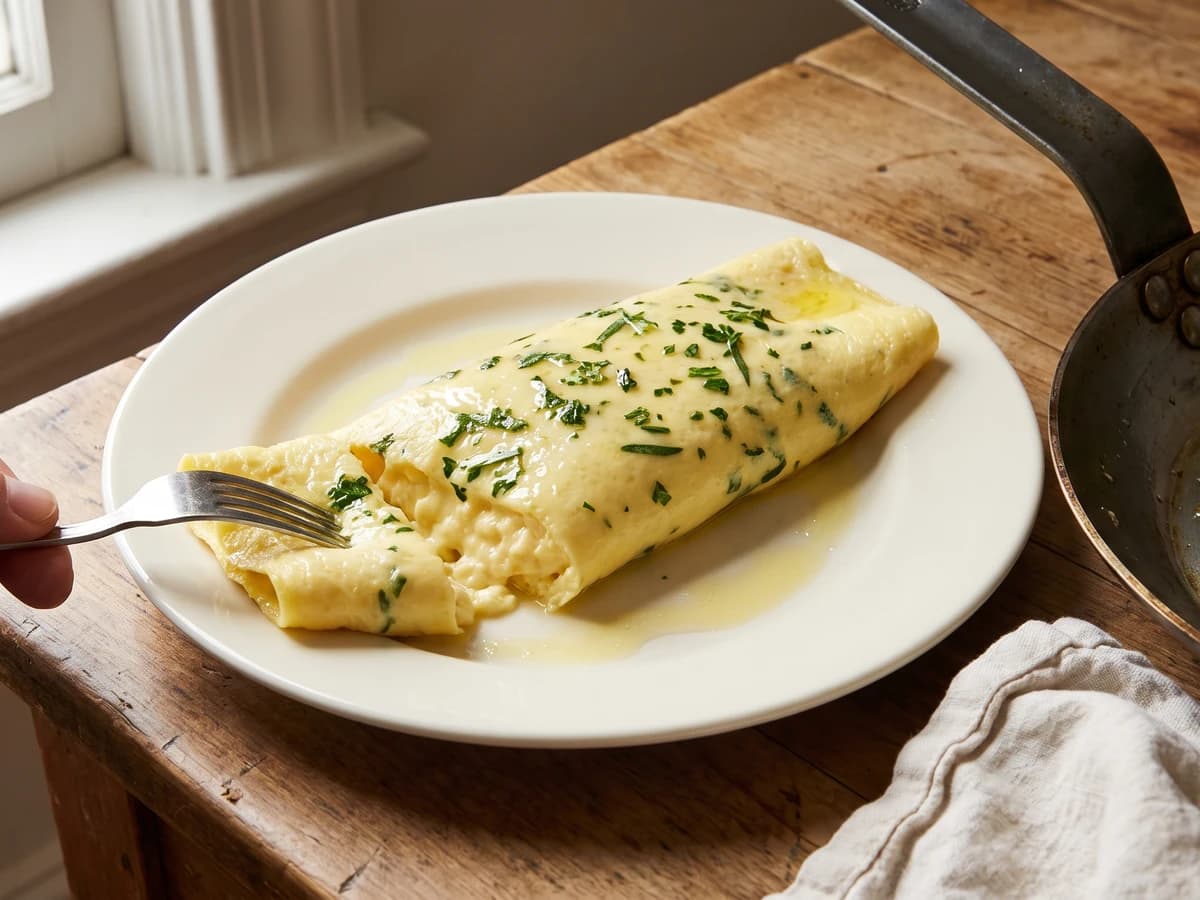
Four tender herbs, hot butter, and two eggs per pan: this rolled omelette teaches the quick hand and good judgment that keep the outside pale and the center creamy.
Chef Juliette
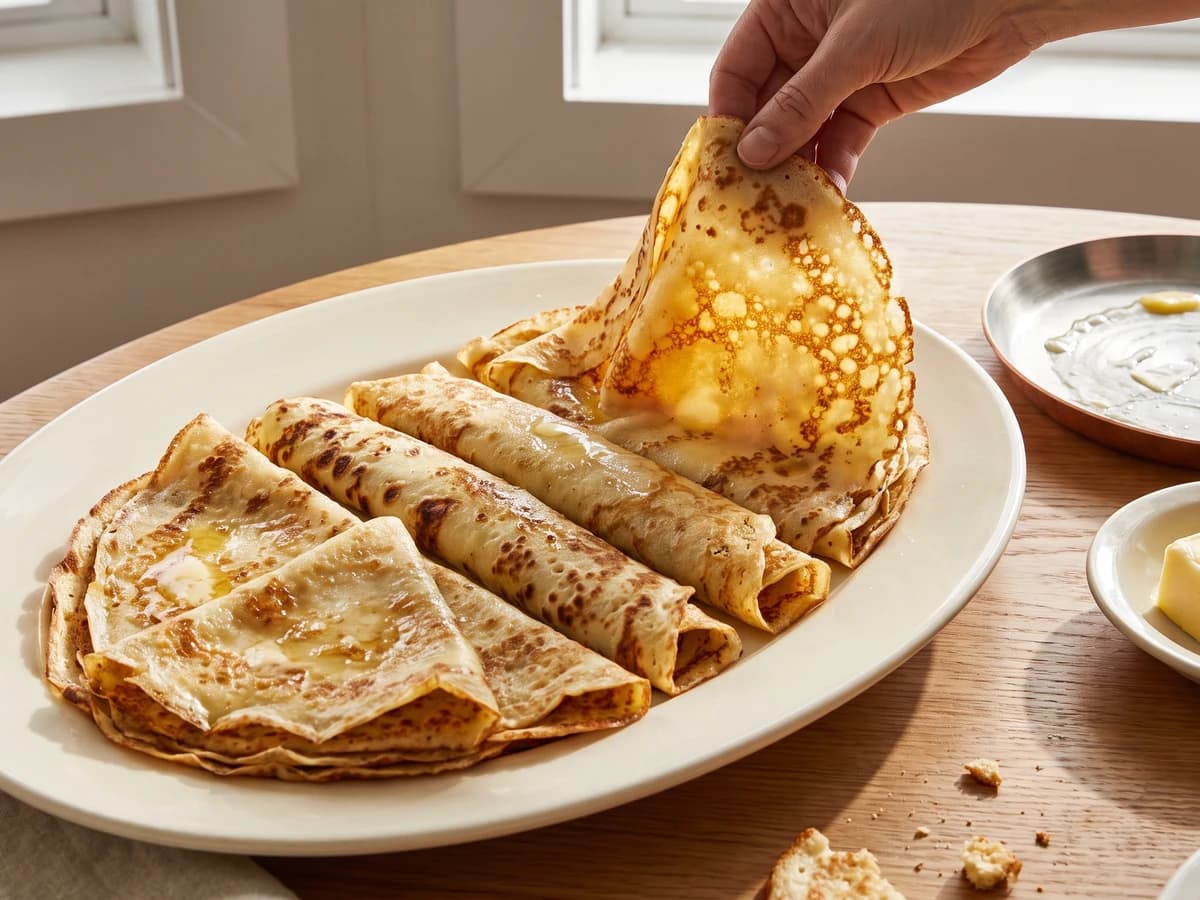
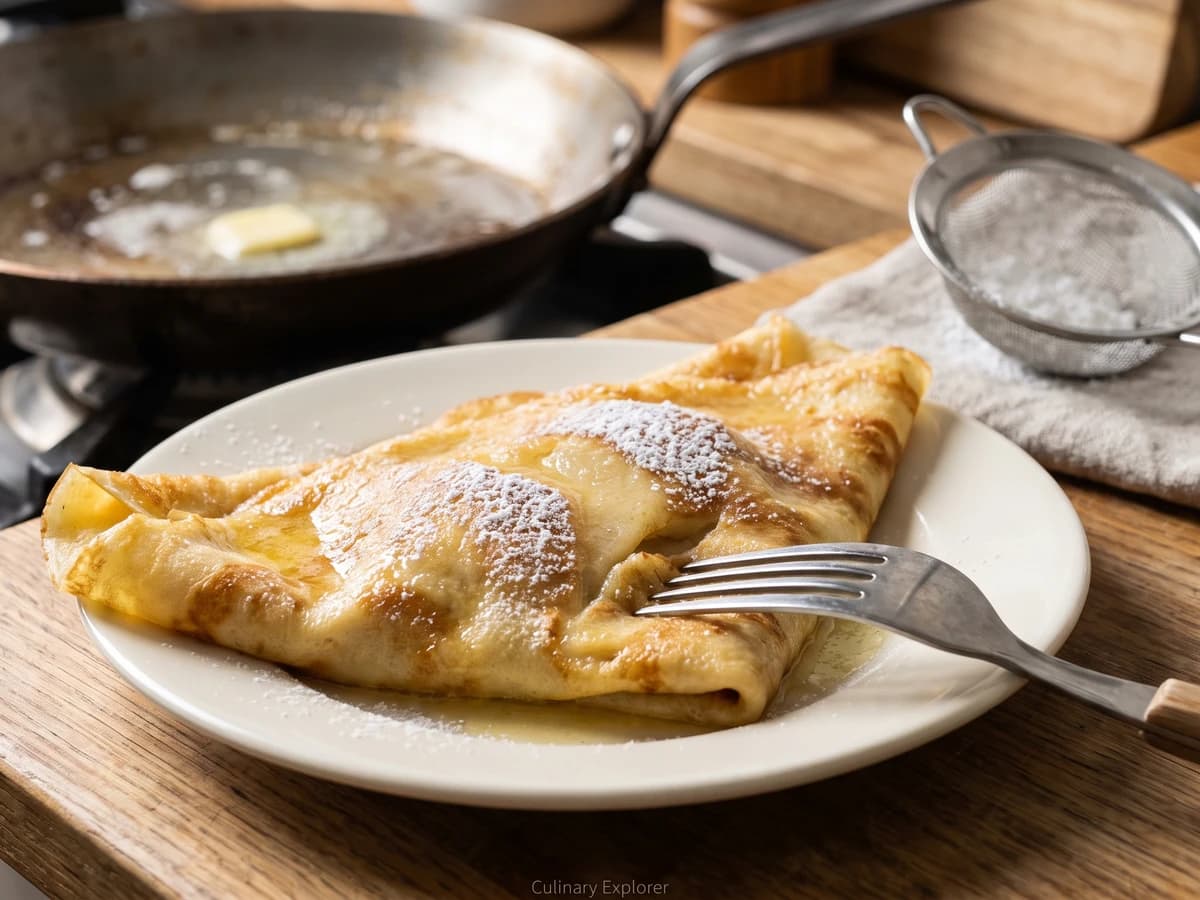
Four batters, one lesson: let the flour drink deeply before cooking, then spread the batter thinly in butter for crêpes and pannequets that bend without becoming tough.
Chef Juliette
Crêpes au Couvent trap ripe Williams pear dice between two thin pours of sweet batter, then turn in one clean toss and reach the table butter-gold, powdered, and burning hot.