Chef Juliette
Omelette à l’Écossaise
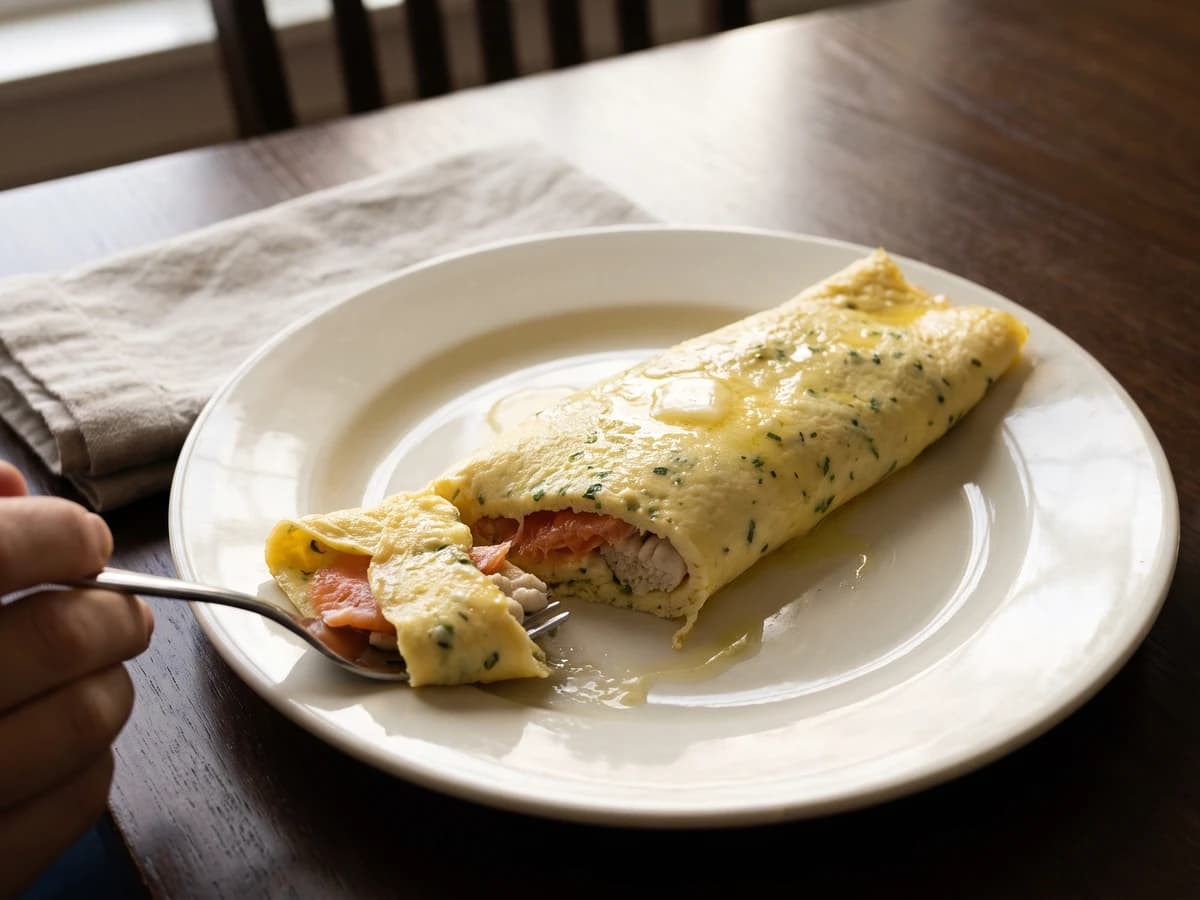
A creamy omelette aux fines herbes closes around smoked-salmon-wrapped herring milts, gently poached in butter. Have the filling ready, then roll the eggs while they still shine.
A cooking platform built around craft, culture, and the stories behind what we eat.
Created by Chef Juliette
Based on No. 403, Jockey Club Eggs, from Le Guide Culinaire (1907) by Auguste Escoffier
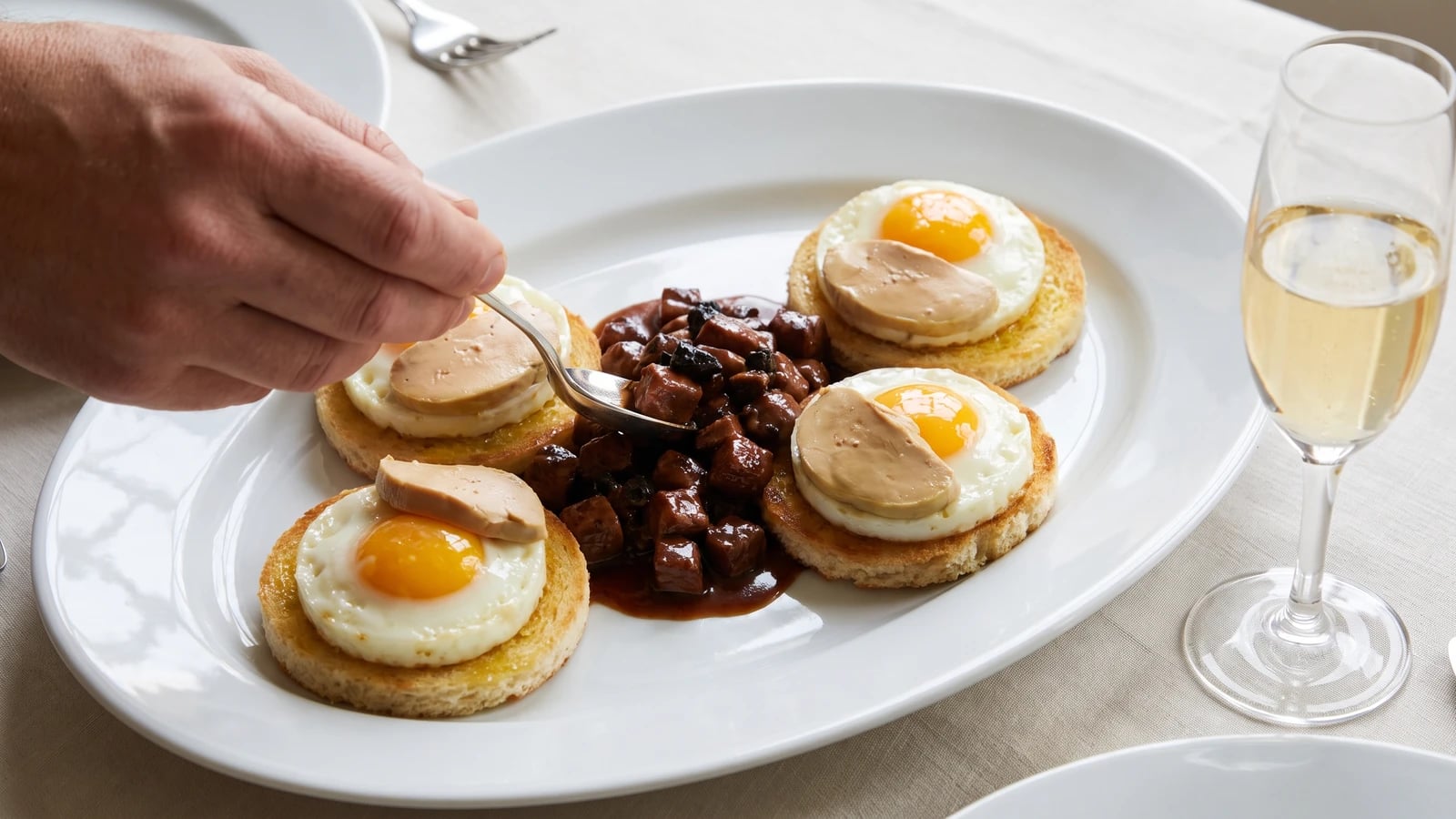
Butter-cooked eggs trimmed into neat rounds, laid on toast, and masked with foie gras purée form a crown around sautéed calf kidney and black truffle bound in glossy demi-glace.
Œufs Jockey Club (Jockey Club eggs) teaches the discipline of last-minute assembly. The one true thing to know before touching a pan is that the toast, foie gras purée, demi-glace, truffle, warm platter, and cutter must all be ready before the eggs and kidney begin. Those two wait for no one.
The grand kitchen behind the entry assumed a saucier on staff, veal stock never off the fire, a salamander ready to toast bread, and enough hands to cook and trim eggs while the garnish was finished. Your honest equivalents are prepared veal demi-glace reduced in one saucepan, toast browned in a skillet, and a warm platter set beside the stove. Making a mother sauce from bones tonight is brigade scaffolding and can go. The dense veal glaze, sautéed kidney, foie gras mask, trimmed eggs, and crown arrangement are the dish itself, so they stay. Four portions make it manageable for one cook, one stove, one evening.
When it arrives, the foie gras should lie smooth and pale over tender eggs, while diced kidney and black truffle gleam in a dark pool at the center. Richness is not the difficulty here. Timing is. Lay out the entire crown before cooking the eggs, and the rest becomes a calm sequence rather than a scramble.
Œufs Jockey Club belongs to the named-garnish repertoire of Parisian grand kitchens, its title invoking the capital's private sporting-club table rather than a regional household dish. Foie gras, truffle, calf kidney, and reduced veal glaze turned eggs into a formal savory course, while the crown arrangement displayed the costly garnish at the center of the table. It is often filed with breakfast dishes, but its structure is that of an entrée for a composed meal, rich, hot, and served the instant the eggs are ready.
Quantity
1 kidney (about 10 oz / 285 g before trimming; about 7 oz / 200 g trimmed)
membrane, fat, and white core removed; cut into ½-inch (1.25 cm) dice
Quantity
1 small truffle (1 oz / 28 g)
drained if needed and cut into ¼-inch (6 mm) dice
Quantity
¾ cup (180 ml / 190 g)
Quantity
5 oz (140 g)
brought to cool room temperature
Quantity
4 slices (about 4 oz / 112 g total)
cut into 3¼-inch (8 cm) rounds
Quantity
4
Quantity
4 tablespoons (60 ml / 57 g)
divided
Quantity
1 teaspoon (5 ml / 6 g)
divided
Quantity
½ teaspoon (2.5 ml / 1 g)
| Ingredient | Quantity |
|---|---|
| calf kidneymembrane, fat, and white core removed; cut into ½-inch (1.25 cm) dice | 1 kidney (about 10 oz / 285 g before trimming; about 7 oz / 200 g trimmed) |
| black truffle, fresh or whole-preserveddrained if needed and cut into ¼-inch (6 mm) dice | 1 small truffle (1 oz / 28 g) |
| prepared low-salt veal demi-glace | ¾ cup (180 ml / 190 g) |
| cooked foie gras terrinebrought to cool room temperature | 5 oz (140 g) |
| thin slices pain de miecut into 3¼-inch (8 cm) rounds | 4 slices (about 4 oz / 112 g total) |
| large pasteurized shell eggs | 4 |
| unsalted butterdivided | 4 tablespoons (60 ml / 57 g) |
| fine saltdivided | 1 teaspoon (5 ml / 6 g) |
| freshly ground black pepper | ½ teaspoon (2.5 ml / 1 g) |
Warm a large oval platter and four plates in a 200°F (95°C) oven. Set the toast rounds, trimmed kidney, diced truffle, eggs, butter, warm platter, and round cutter within reach. Arrange the empty toast rounds once on the platter to judge the crown, then return them to the board. This rehearsal is brigade scaffolding reduced to thirty useful seconds: once the eggs enter the pan, you should make no decisions.
Press the room-temperature foie gras through a fine-mesh sieve with the back of a spoon, then work it with a small spatula until perfectly smooth and spreadable. Cover and keep it at cool room temperature. If it remains crumbly, warm the spoon under hot water, dry it, and work the purée again. If it turns oily, chill it for five minutes and stir until it comes back together. Ça se rattrape.
Bring the veal demi-glace to a lively simmer in a small saucepan and reduce it to about ½ cup (120 ml), or until it reaches nappe, meaning it coats the back of a spoon in a dense, glossy film. Do not season until it has reduced. If it becomes sticky or salty, whisk in water one teaspoon at a time until the gloss returns; if it runs from the spoon like broth, reduce it further. Hold it over the gentlest heat.
Melt 1 tablespoon (15 ml / 14 g) butter in a wide skillet over medium heat. Add the pain de mie rounds and brown them lightly on both sides, pressing once so each surface meets the butter. They should be crisp enough to support the egg but not hard under the knife. Transfer them to the warm platter in a crown, leaving a generous open space at the center.
Pat the kidney dice very dry and season them with a little salt and pepper. Heat 1½ tablespoons (22 ml / 21 g) butter in the skillet over medium-high heat until its foam subsides, then add the kidney in one uncrowded layer. Sauté, cooking quickly in hot butter, until well browned and cooked through, about 3 to 4 minutes; the largest pieces should reach 160°F (71°C). If the kidney releases liquid and begins to gray, lift it out, boil away the liquid, add a dab of the reserved butter, and return the dice for a quick browning. Fold in the truffle, remove the skillet from the heat, and add enough hot demi-glace to bind everything in a dense glaze without drowning it. Cover loosely and keep beside the stove.
Melt the remaining 1½ tablespoons (22 ml / 21 g) butter in a clean omelet pan over medium-low heat. Cook the eggs two at a time so the whites retain their shape, spooning a little hot butter over the unset white while leaving the yolk untouched. The whites should set tenderly without crisp edges, and the yolks should remain fluid. Tilt the pan gently and slide each pair onto a warm plate. Center the 3¼-inch (8 cm) cutter over each yolk and press straight down to trim the white into a neat round. If a white tears, tuck the loose edge beneath it on the toast, where the purée will conceal the repair. If a yolk breaks and runs, cook a replacement; this crown depends on intact eggs.
Slide one trimmed egg onto each toast round. Season lightly, then mask every egg with an even layer of foie gras purée, spreading it gently to the trimmed edge without pressing on the yolk. Spoon the glazed calf kidney and truffle into the center of the crown, adding just enough demi-glace to make the garnish gleam and hold together. Carry the platter directly to the table. Nothing improves while it waits. À table!
1 serving (about 205g)
Culinary guides, cultural storytelling, and the editorial depth that makes cooking meaningful.
Discover Culinary ExplorerChef Juliette
A creamy omelette aux fines herbes closes around smoked-salmon-wrapped herring milts, gently poached in butter. Have the filling ready, then roll the eggs while they still shine.
Chef Juliette
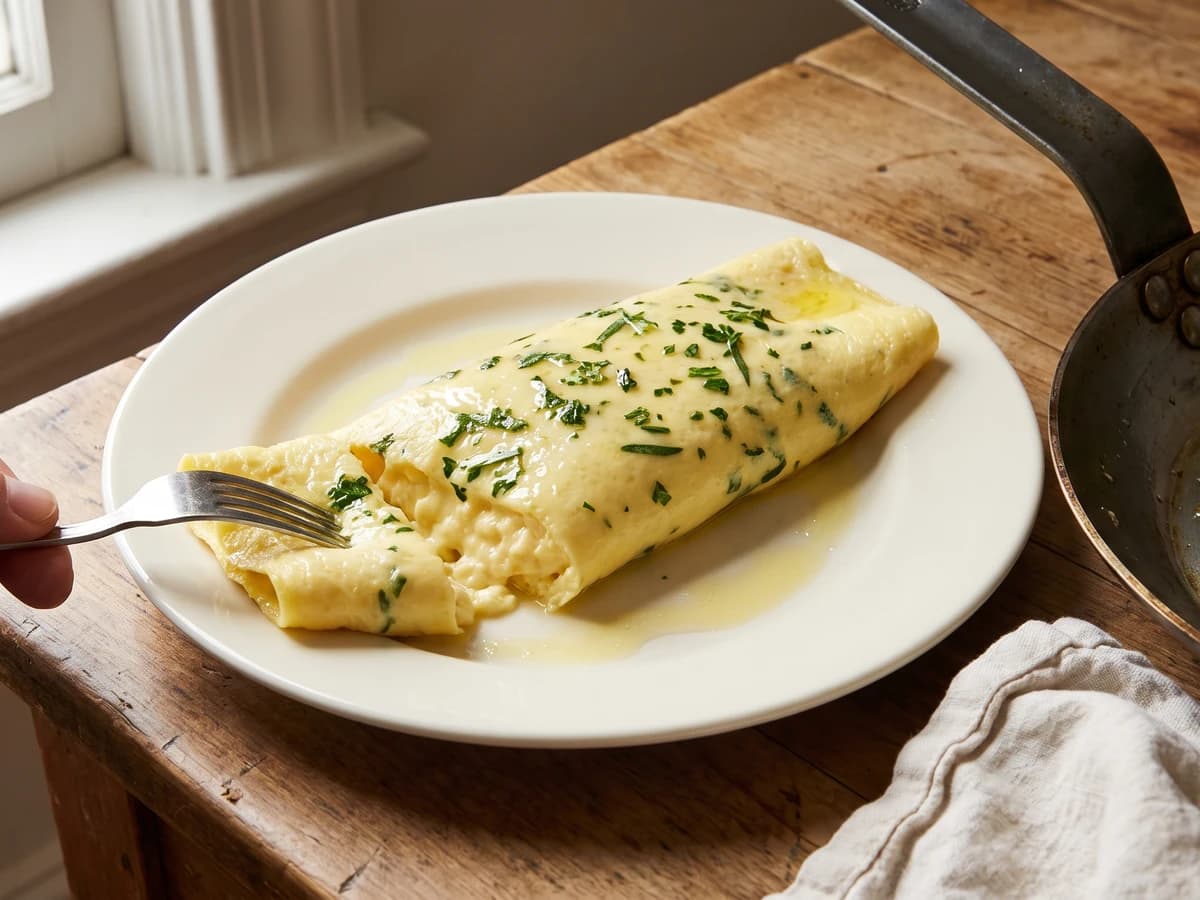
Four tender herbs, hot butter, and two eggs per pan: this rolled omelette teaches the quick hand and good judgment that keep the outside pale and the center creamy.
Chef Juliette
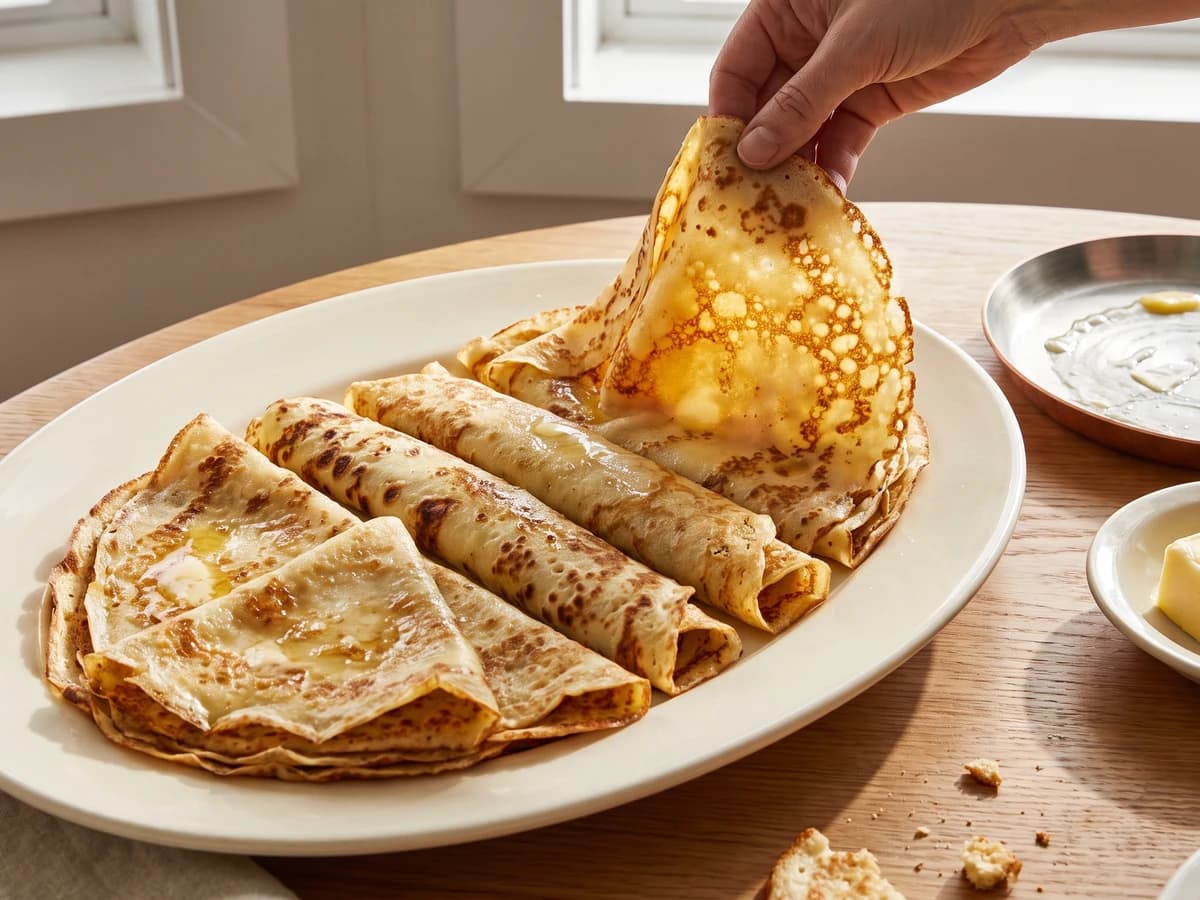
Four batters, one lesson: let the flour drink deeply before cooking, then spread the batter thinly in butter for crêpes and pannequets that bend without becoming tough.
Chef Juliette
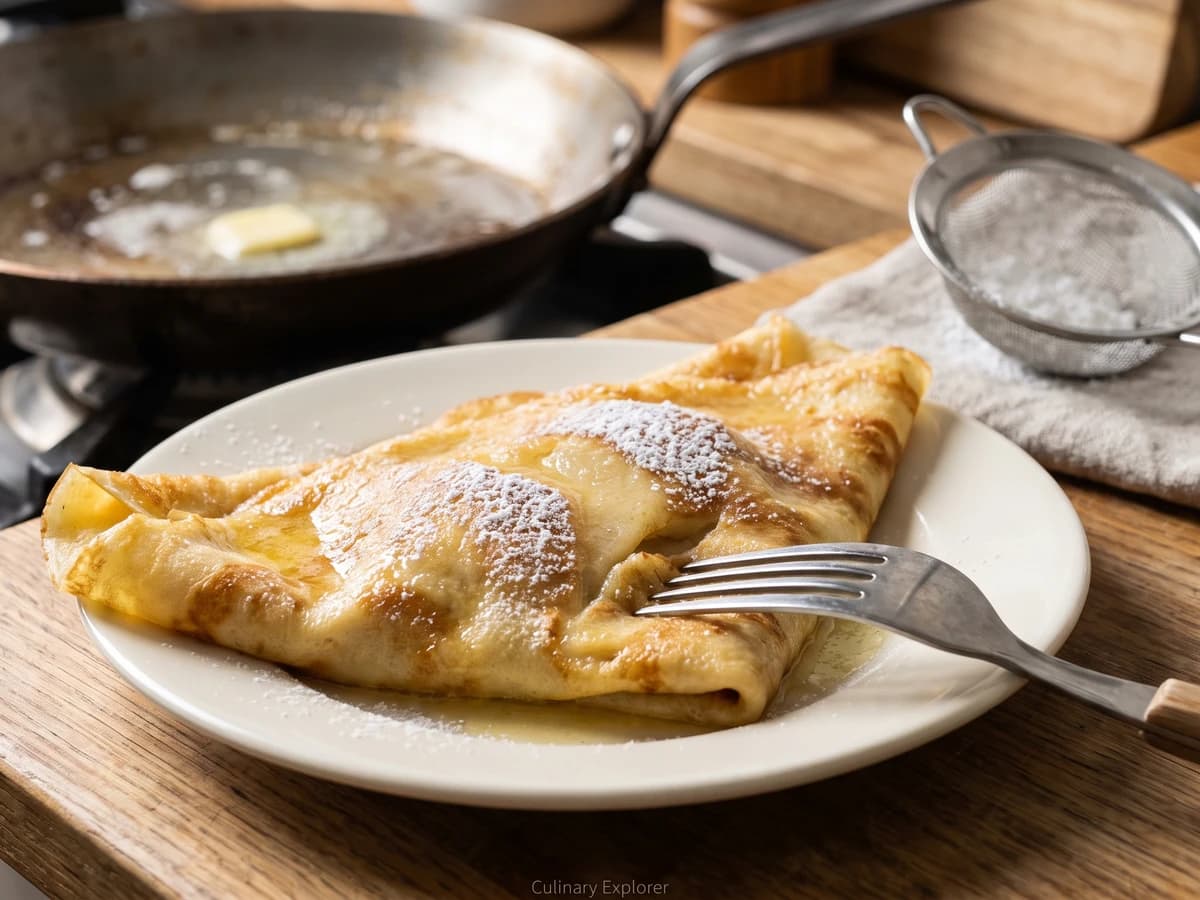
Crêpes au Couvent trap ripe Williams pear dice between two thin pours of sweet batter, then turn in one clean toss and reach the table butter-gold, powdered, and burning hot.