Chef Juliette
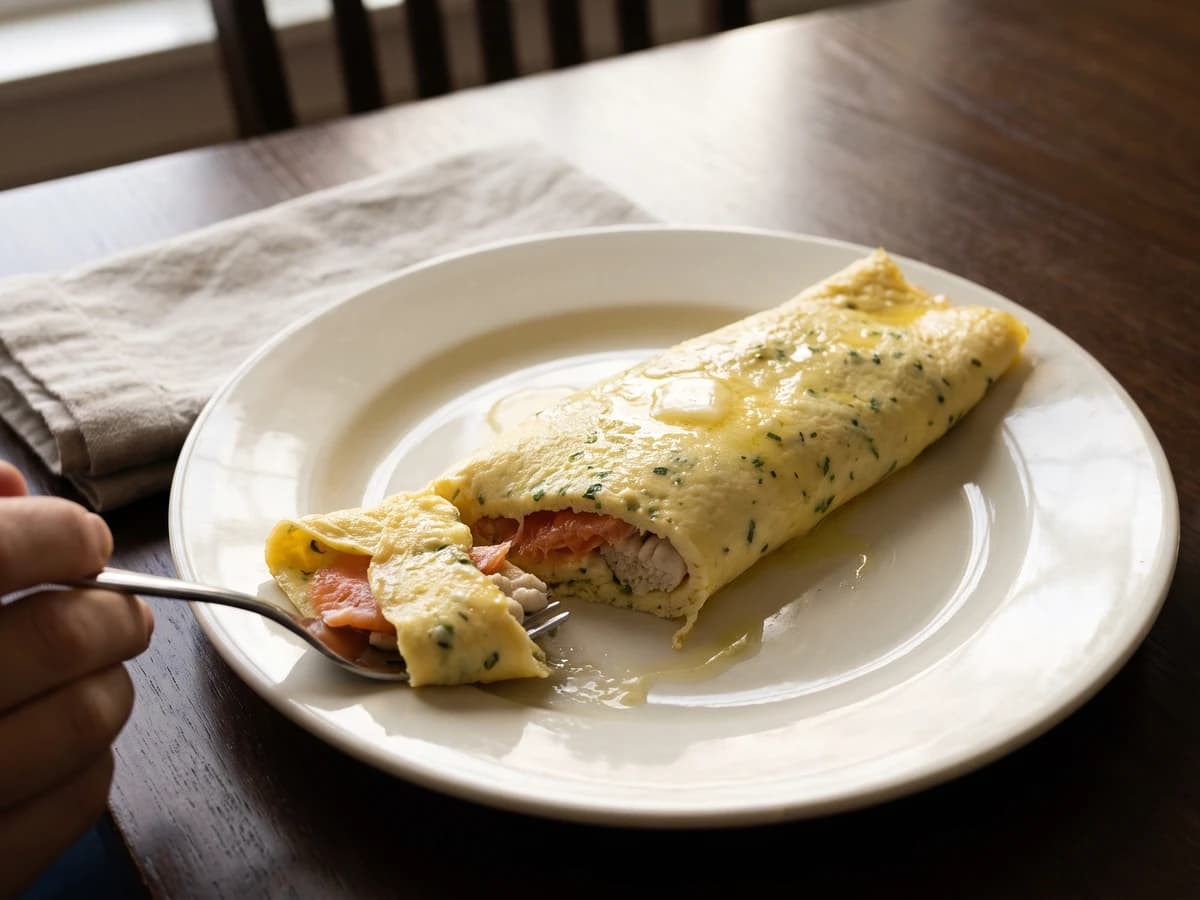
Omelette à l’Écossaise
A creamy omelette aux fines herbes closes around smoked-salmon-wrapped herring milts, gently poached in butter. Have the filling ready, then roll the eggs while they still shine.
A cooking platform built around craft, culture, and the stories behind what we eat.
Created by Chef Juliette
Based on No. 400, Eggs à la Florentine, from Le Guide Culinaire (1907) by Auguste Escoffier
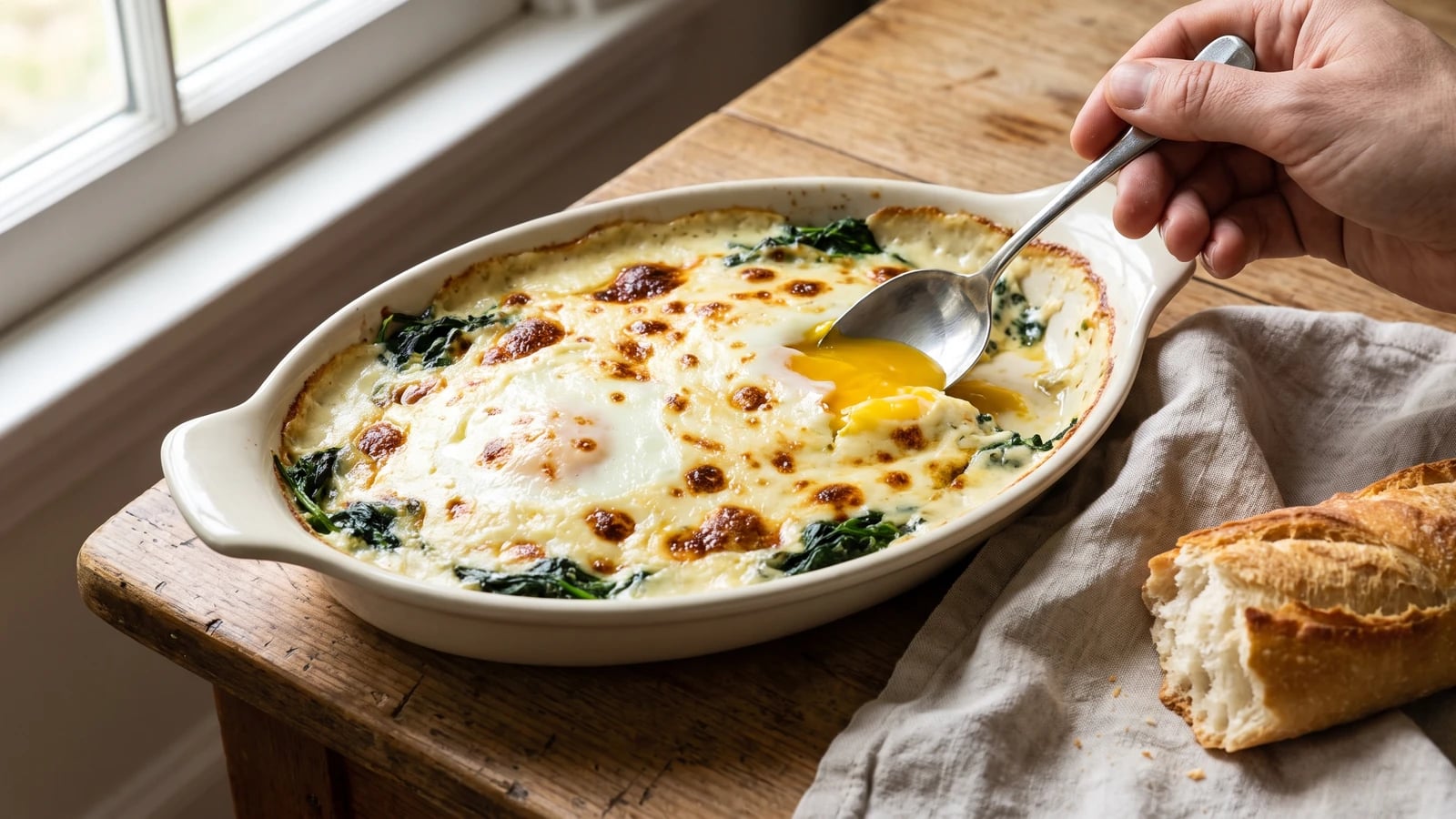
Œufs à la Florentine teaches the fierce-heat finish: tender eggs on buttered spinach, covered with Mornay and glazed until ivory sauce freckles bronze just as the whites set.
Œufs à la Florentine (eggs on buttered spinach under Mornay) teaches one precise lesson: control the water before you control the heat. Spinach that still holds its cooking liquid thins the sauce, delays the eggs, and prevents the bronzed glaze that defines the dish. Cook it in butter until the leaves are tender, glossy, and quite dry.
The original entry assumed a saucier with Mornay ready, individual service dishes, and a fierce oven capable of cooking the eggs while glazing their sauce. At home, the sauce remains a separate finished preparation, but a preheated metal sheet supplies fierce heat underneath while the broiler supplies it above. Making sauce during egg service was brigade scaffolding and can go; buttered spinach, grated cheese, raw eggs, Mornay, and simultaneous cooking and glazing are the dish, so every one stays. Four portions, one cook, one stove, one evening.
When the timing lands, the Mornay is ivory beneath scattered bronze, the spinach remains distinctly green, the whites are set, and the yolks yield softly when the spoon enters. Before you break a single egg, look at the spinach pan: its floor must be dry.
À la florentine is a French classical label for preparations built on spinach, and Œufs à la Florentine found its working home in Parisian grand kitchens and bourgeois dining rooms rather than on a Florentine breakfast table. The familiar court story that a Florentine royal introduced spinach to France is tidy but poorly documented; what is certain is that French cooks made “Florentine” a stable grammar of spinach, sauce, and glazing for eggs, fish, and poultry. Here, Mornay and fierce heat carry a simple spinach-and-egg supper into the classical repertoire.
Quantity
16 loosely packed cups (3.8 L / 450 g)
washed and thoroughly dried
Quantity
2 tablespoons (30 ml / 28 g)
Quantity
½ teaspoon (2.5 ml / 3 g)
Quantity
¼ teaspoon (1.25 ml / 0.5 g)
Quantity
2 tablespoons (30 ml / 12 g)
finely grated
Quantity
8
Quantity
½ cup (120 ml / 125 g)
warm and pourable
| Ingredient | Quantity |
|---|---|
| baby spinachwashed and thoroughly dried | 16 loosely packed cups (3.8 L / 450 g) |
| unsalted butter | 2 tablespoons (30 ml / 28 g) |
| fine salt | ½ teaspoon (2.5 ml / 3 g) |
| ground white pepper | ¼ teaspoon (1.25 ml / 0.5 g) |
| Gruyèrefinely grated | 2 tablespoons (30 ml / 12 g) |
| large eggs | 8 |
| prepared Mornay saucewarm and pourable | ½ cup (120 ml / 125 g) |
Set an upper-middle oven rack about 6 inches (15 cm) below the broiler. Place a heavy rimmed baking sheet on it and heat the oven to 500°F (260°C) for at least 20 minutes. Meanwhile, warm the Mornay gently until it falls from a spoon in a broad ribbon, then cover it off the heat. If a skin forms, whisk it back in; ça se rattrape.
Melt the butter in a wide sauté pan over medium-high heat. Add the spinach by generous handfuls, turning each addition through the butter before adding the next. Season with the salt and white pepper, then cook uncovered for 5 to 7 minutes, turning often, until the leaves are tender and glossy and no liquid remains on the pan floor. Keep its green colour; tenderness is wanted, browning is not.
Divide the hot spinach among four shallow ovenproof gratin dishes, spreading it into an even bed and making two slight hollows in each. Sprinkle each portion with two generous pinches of grated Gruyère. Break the eggs one at a time into a small cup, then slide two into each dish. Spoon exactly 2 tablespoons of warm Mornay over each portion, covering the eggs with a thin, even blanket. This preserves the source entry's sequence and proportion: spinach, cheese, eggs, then Mornay.
Set the gratin dishes on the blazing-hot sheet and immediately switch the broiler to high. Cook for 4 to 7 minutes, rotating the sheet once if your broiler colours unevenly, until the Mornay bubbles at the edges and freckles bronze while the whites set beneath it. Watch continuously after the fourth minute. Simultaneous setting and glazing is the point of the dish.
Let the dishes stand for 1 minute so the whites finish setting without hardening the yolks. Set each hot gratin dish on a small plate and serve at once, with bread for the Mornay and buttered spinach caught around the rim. Never apologize at your own table. À table!
1 serving (about 190g)
Culinary guides, cultural storytelling, and the editorial depth that makes cooking meaningful.
Discover Culinary ExplorerChef Juliette
A creamy omelette aux fines herbes closes around smoked-salmon-wrapped herring milts, gently poached in butter. Have the filling ready, then roll the eggs while they still shine.
Chef Juliette
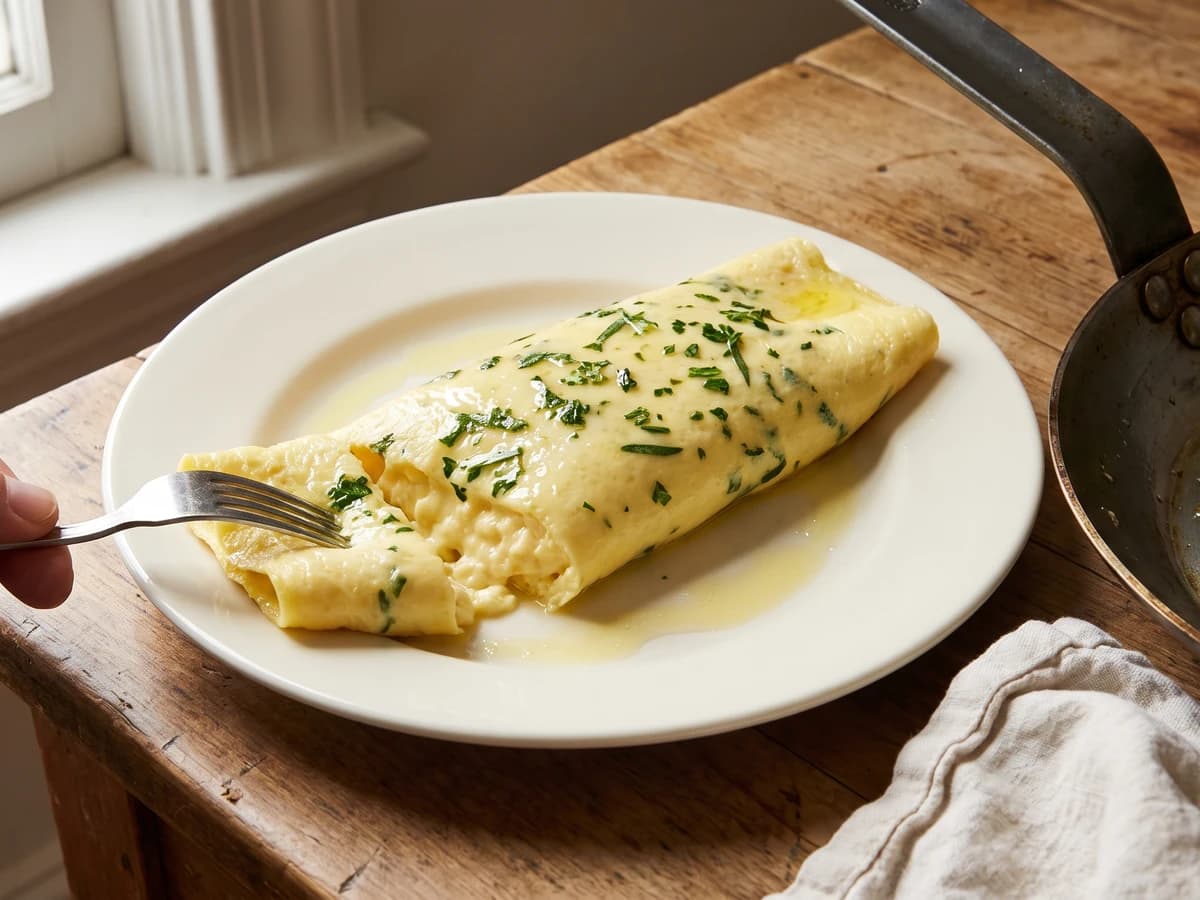
Four tender herbs, hot butter, and two eggs per pan: this rolled omelette teaches the quick hand and good judgment that keep the outside pale and the center creamy.
Chef Juliette
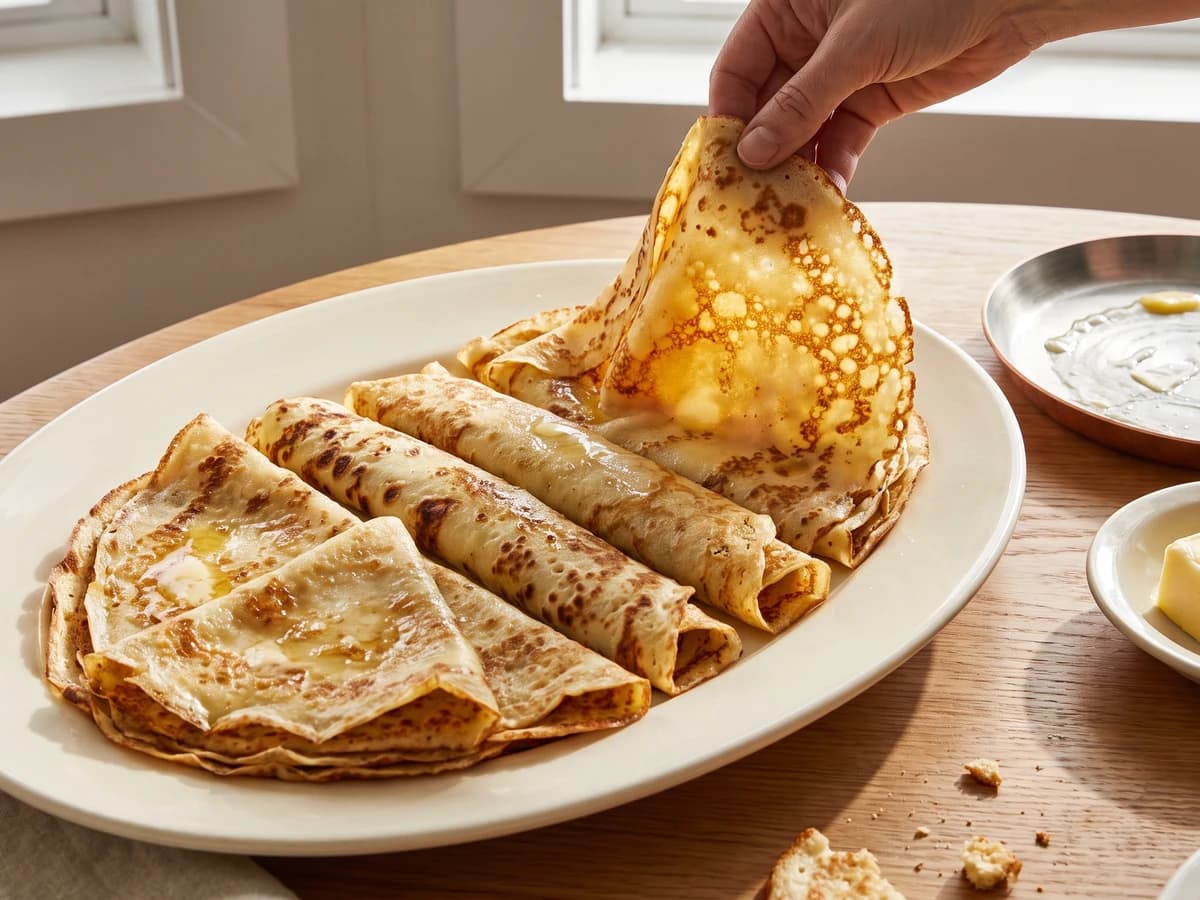
Four batters, one lesson: let the flour drink deeply before cooking, then spread the batter thinly in butter for crêpes and pannequets that bend without becoming tough.
Chef Juliette
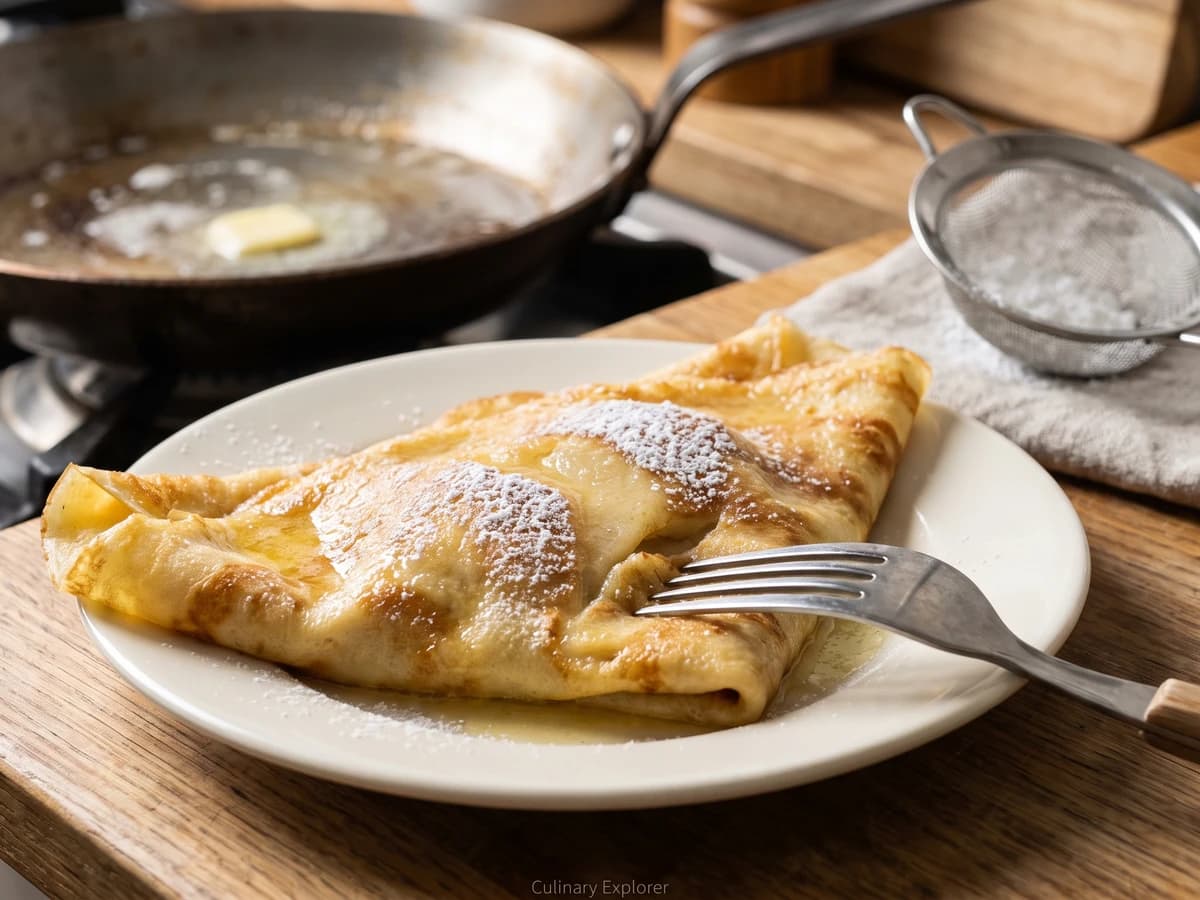
Crêpes au Couvent trap ripe Williams pear dice between two thin pours of sweet batter, then turn in one clean toss and reach the table butter-gold, powdered, and burning hot.