Chef Juliette
Omelette à l’Écossaise
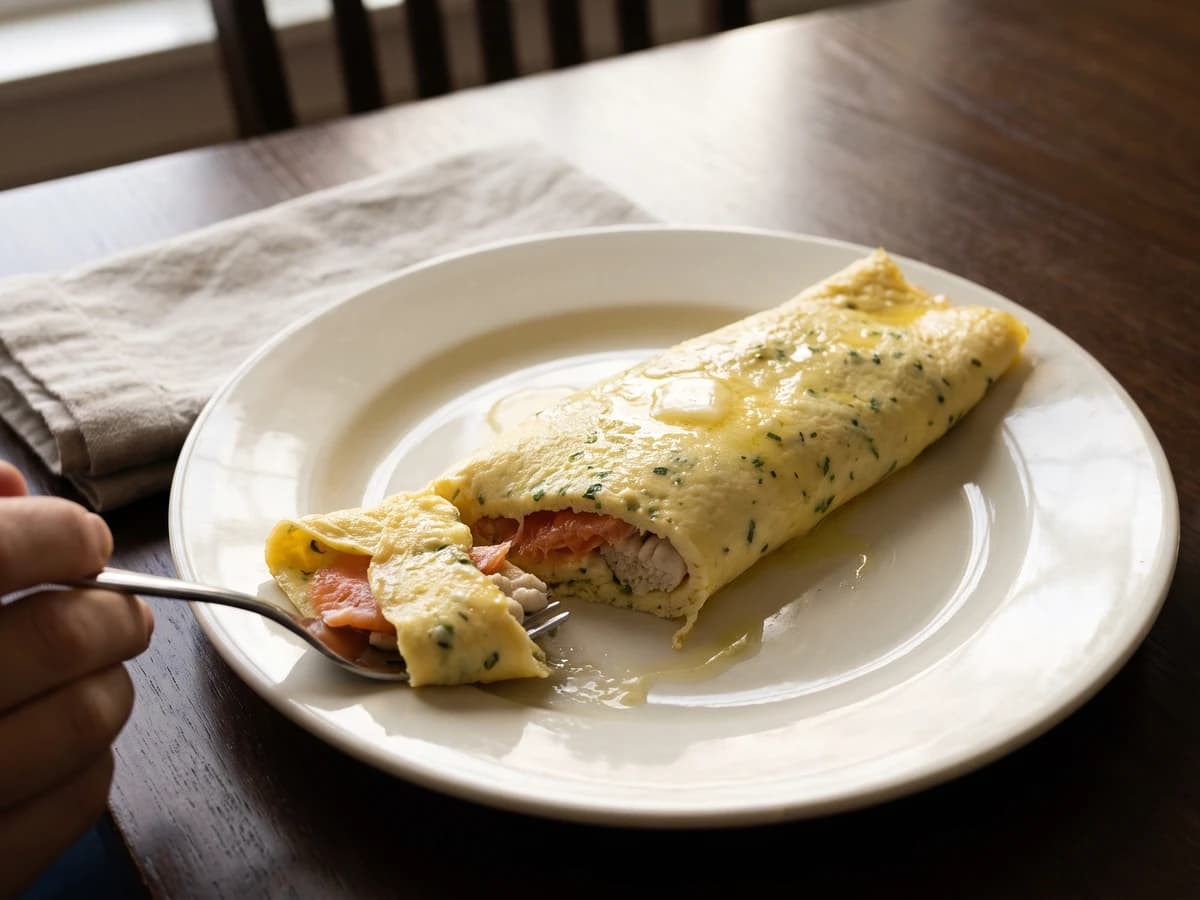
A creamy omelette aux fines herbes closes around smoked-salmon-wrapped herring milts, gently poached in butter. Have the filling ready, then roll the eggs while they still shine.
A cooking platform built around craft, culture, and the stories behind what we eat.
Created by Chef Juliette
Based on No. 399, Devilled Eggs, from Le Guide Culinaire (1907) by Auguste Escoffier
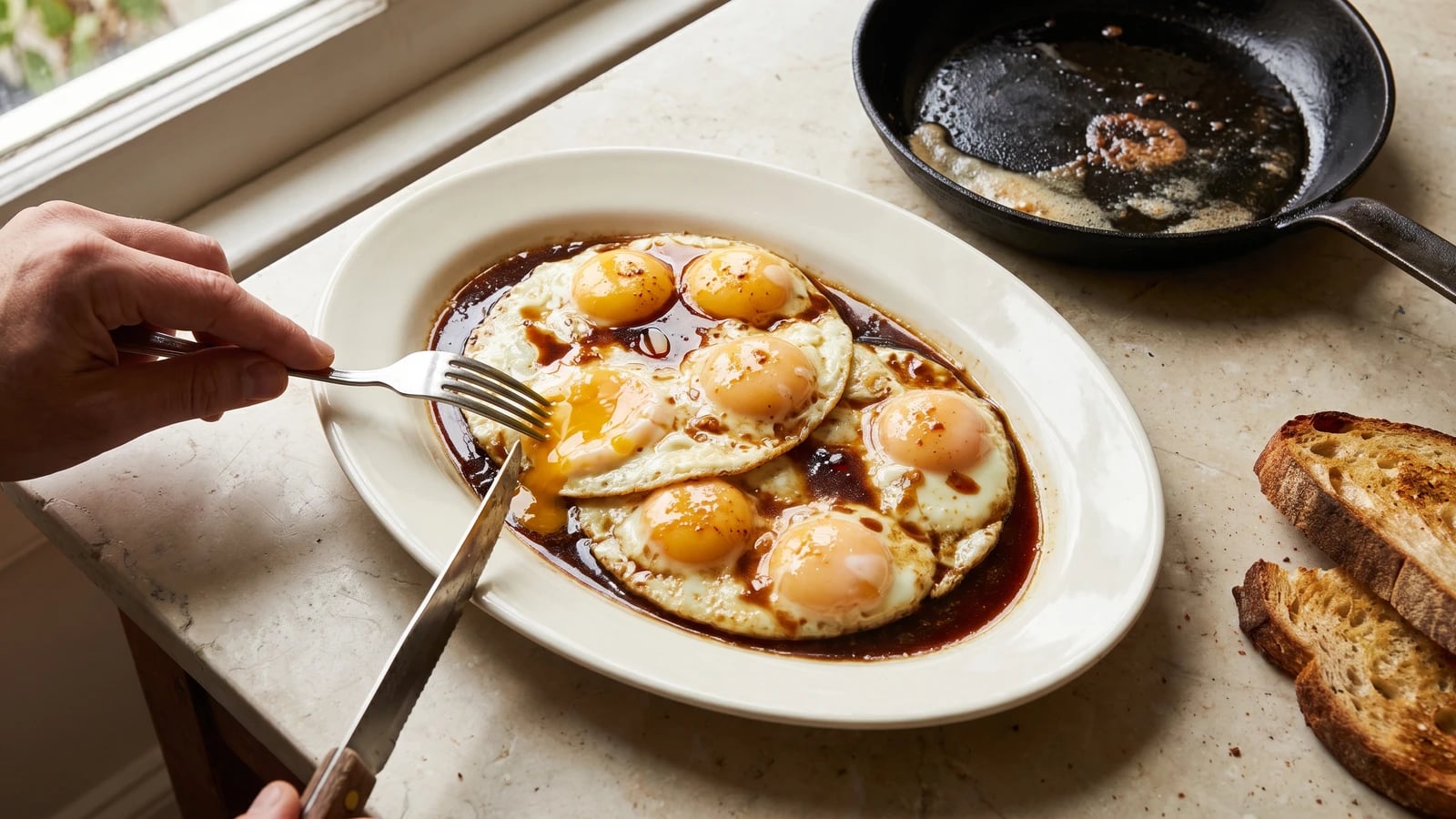
Eight eggs become two tender, turnable rounds, then beurre noir and wine vinegar strike while the yolks still run. This is not the stuffed picnic egg, and the skillet proves it.
Œufs à la Diable (devilled eggs) teach the exact moment eggs become strong enough to turn and remain tender enough to eat with a spoon. You are not stuffing hard-cooked halves. You are setting fresh eggs into one soft round, turning them like a pancake, then sharpening their richness with beurre noir (butter taken to deep chestnut) and wine vinegar. The one true thing is simple: the whites must become one sheet before the eggs move.
No saucier, permanent stockpot, or salamander is hiding behind this preparation. The original entry assumed a seasoned omelet pan, a practiced wrist, and quantities decided at service. At home, a 25 cm nonstick or well-seasoned skillet and a flat plate give one cook the same clean turn. The entry leaves quantity open, so eight eggs become two controlled four-egg rounds for four people. The smaller batches and plate-assisted inversion replace brigade rhythm and the risky wrist toss. They are scaffolding. The pan-turn, beurre noir, and vinegar rinse are the dish, so they stay exactly where they belong.
Wait until the whites have bonded underneath and only a faint translucence remains on top. If an edge clings, loosen it and give the eggs another twenty seconds. Do not force the turn. That patience, followed by one decisive inversion, is the step that matters most.
Œufs à la Diable belongs to the classical French dining-room repertoire of eggs cooked à la minute in an omelet pan, a practice carried easily from Parisian kitchens to the home stove. In French usage, à la diable describes a family of assertive, sharp preparations rather than one fixed garnish; here the devil is neither paprika nor mustard, but the dark edge of beurre noir cut with wine vinegar. The familiar cold stuffed egg follows a different path, closer to œufs mimosa; this preparation stays hot, whole-yolked, and pan-turned.
Quantity
8
Quantity
5 tablespoons (75 ml / 70 g)
divided
Quantity
2 teaspoons (10 ml / 10 g)
Quantity
¾ teaspoon (3.75 ml / 4.5 g)
divided
| Ingredient | Quantity |
|---|---|
| large eggs | 8 |
| unsalted butterdivided | 5 tablespoons (75 ml / 70 g) |
| red wine vinegar | 2 teaspoons (10 ml / 10 g) |
| fine saltdivided | ¾ teaspoon (3.75 ml / 4.5 g) |
Set a wide serving platter beside the stove and warm it with hot tap water, then dry it thoroughly. Place a flat heatproof plate, slightly wider than the skillet, within reach. Divide the butter into two 1-tablespoon portions for frying and one 3-tablespoon portion for the beurre noir. Keep 1 teaspoon of that finishing butter cold to control the browning later.
Heat the skillet over medium heat and melt 1 tablespoon of butter, swirling it across the base. When the foam subsides without taking colour, crack in four eggs, spacing the yolks apart and nudging the whites together so they join. Season with half the salt. Cook for 2 to 3 minutes, until the underside holds as one round and the upper whites are nearly opaque. If the base colours before the whites join, lower the heat; gentle heat gives you time.
Cover the skillet with the flat plate. Grip plate and pan firmly with folded towels, then invert them together in one decisive movement. Lift away the skillet and slide the egg round back into it, uncooked side down. Cook for 15 to 30 seconds, just long enough to set the surface while leaving the yolks fluid, then slide the round onto the warm platter. Repeat with four more eggs, the second tablespoon of butter, and the remaining salt. If a round folds or tears, lower the pan, unfold it with two spatulas, and bring the pieces together on the platter. Ça se rattrape. The shape may be less tidy, but the eggs and their sauce lose nothing.
Return the empty skillet to medium heat. Add all but the reserved teaspoon of finishing butter and let it foam, quiet, and deepen from gold to chestnut. Swirl continuously once brown specks appear. Beurre noir should smell richly nutty and look darker than beurre noisette, but it must never smell acrid. If the colour races, pull the skillet from the heat and add the reserved cold teaspoon of butter; it arrests the cooking. Pour the beurre noir immediately over both egg rounds.
Take the skillet off the heat and add the red wine vinegar carefully. Swirl it around the entire pan, lifting the last browned butter specks, then pour the sharp pan rinse over the eggs. This final rinse is not decoration. It cuts the butter and completes the à la diable character. Carry the platter directly to the table while the yolks are still soft and the beurre noir gleams. À table!
1 serving (about 110g)
Culinary guides, cultural storytelling, and the editorial depth that makes cooking meaningful.
Discover Culinary ExplorerChef Juliette
A creamy omelette aux fines herbes closes around smoked-salmon-wrapped herring milts, gently poached in butter. Have the filling ready, then roll the eggs while they still shine.
Chef Juliette
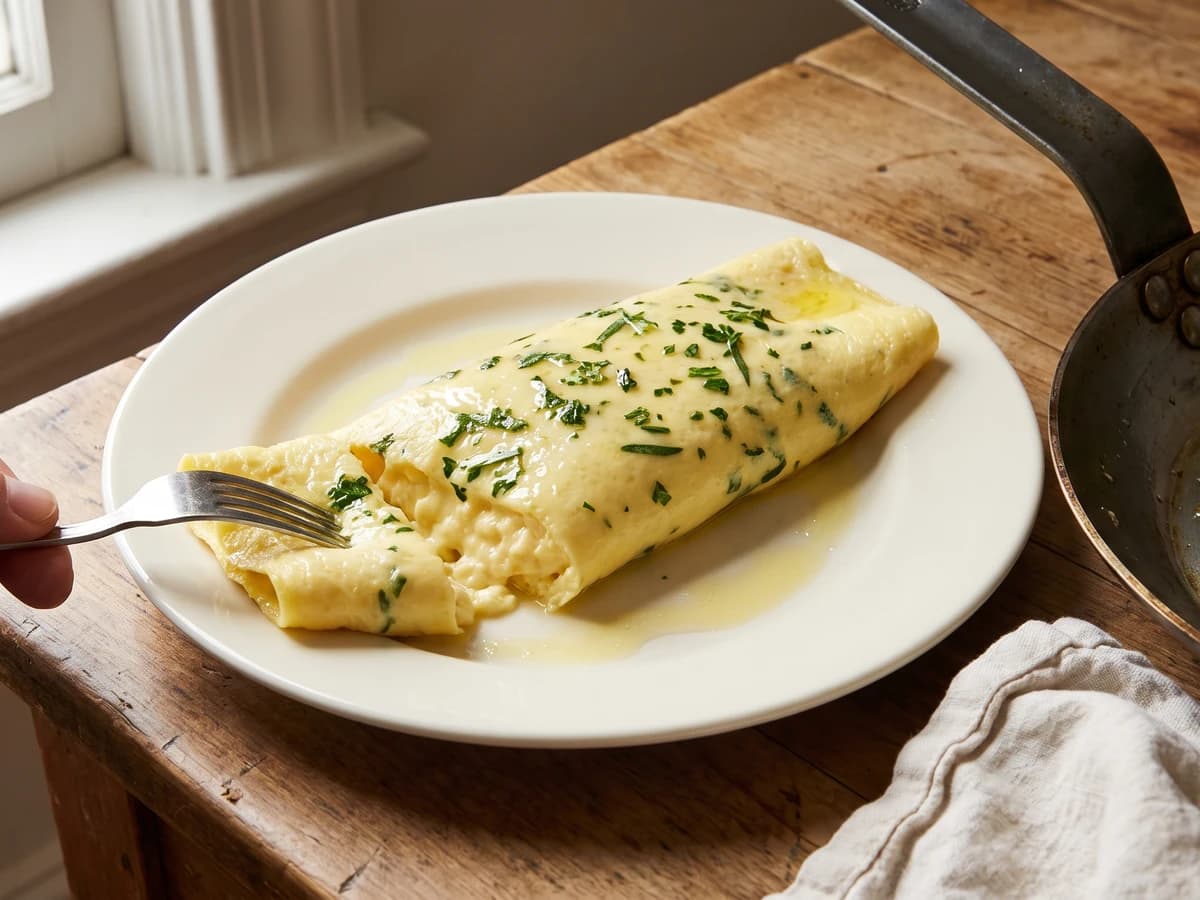
Four tender herbs, hot butter, and two eggs per pan: this rolled omelette teaches the quick hand and good judgment that keep the outside pale and the center creamy.
Chef Juliette
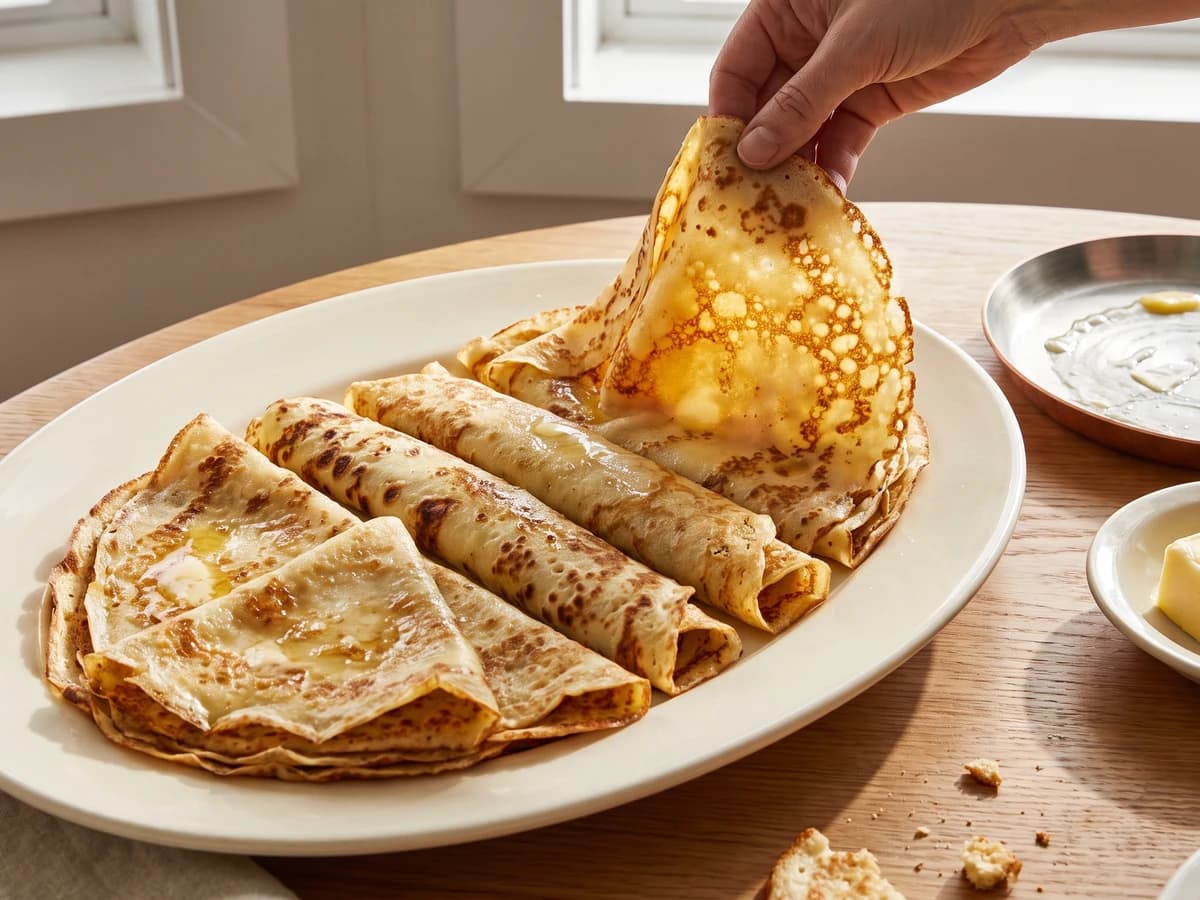
Four batters, one lesson: let the flour drink deeply before cooking, then spread the batter thinly in butter for crêpes and pannequets that bend without becoming tough.
Chef Juliette
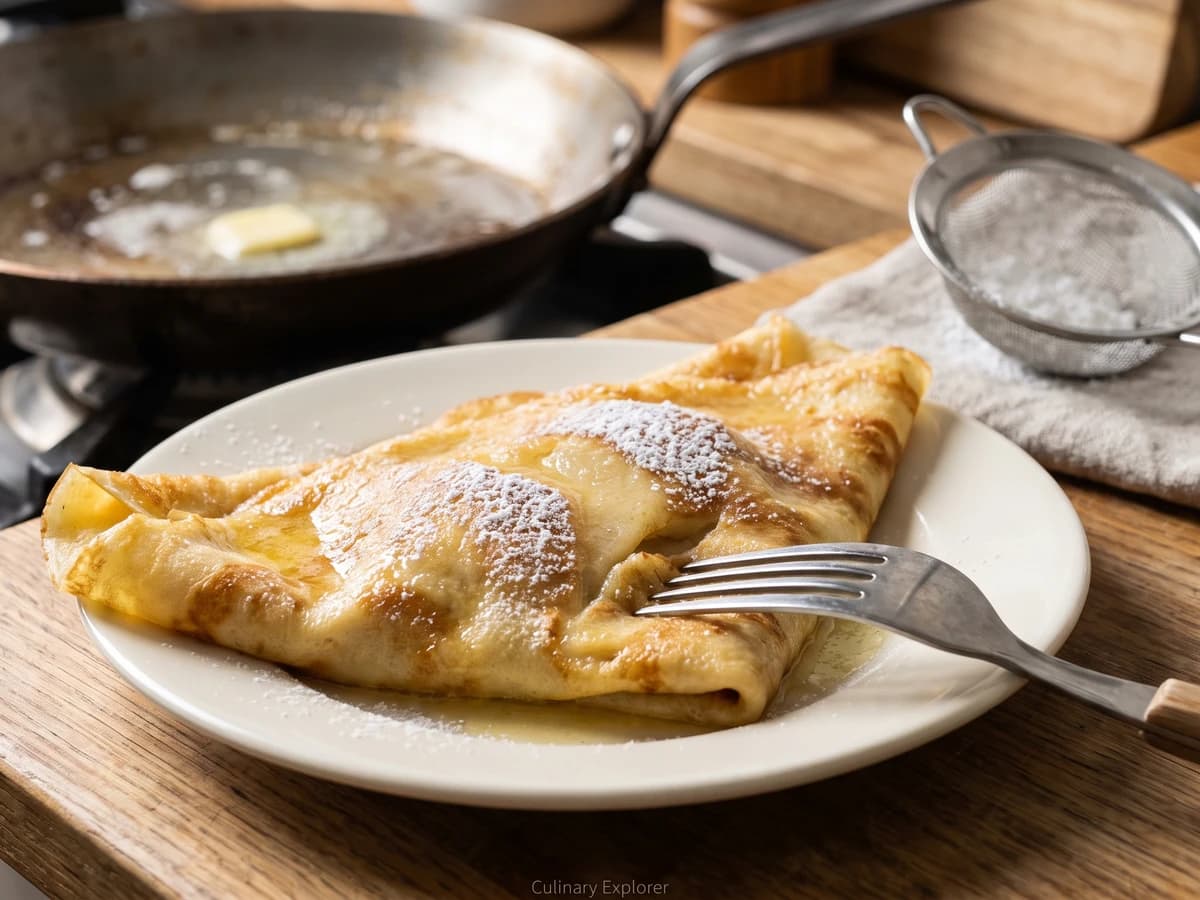
Crêpes au Couvent trap ripe Williams pear dice between two thin pours of sweet batter, then turn in one clean toss and reach the table butter-gold, powdered, and burning hot.