Chef Juliette
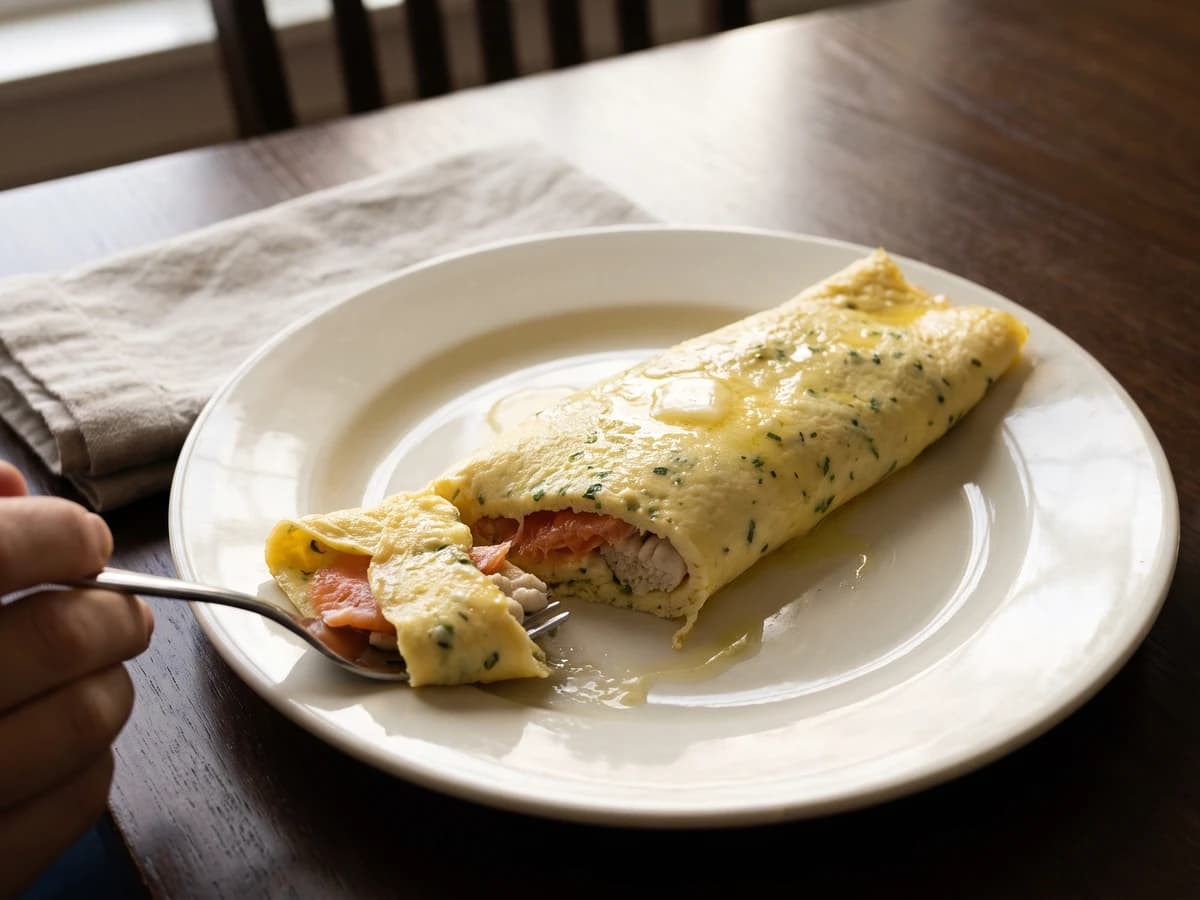
Omelette à l’Écossaise
A creamy omelette aux fines herbes closes around smoked-salmon-wrapped herring milts, gently poached in butter. Have the filling ready, then roll the eggs while they still shine.
A cooking platform built around craft, culture, and the stories behind what we eat.
Created by Chef Juliette
Based on No. 397, Eggs with Brown Butter, from Le Guide Culinaire (1907) by Auguste Escoffier
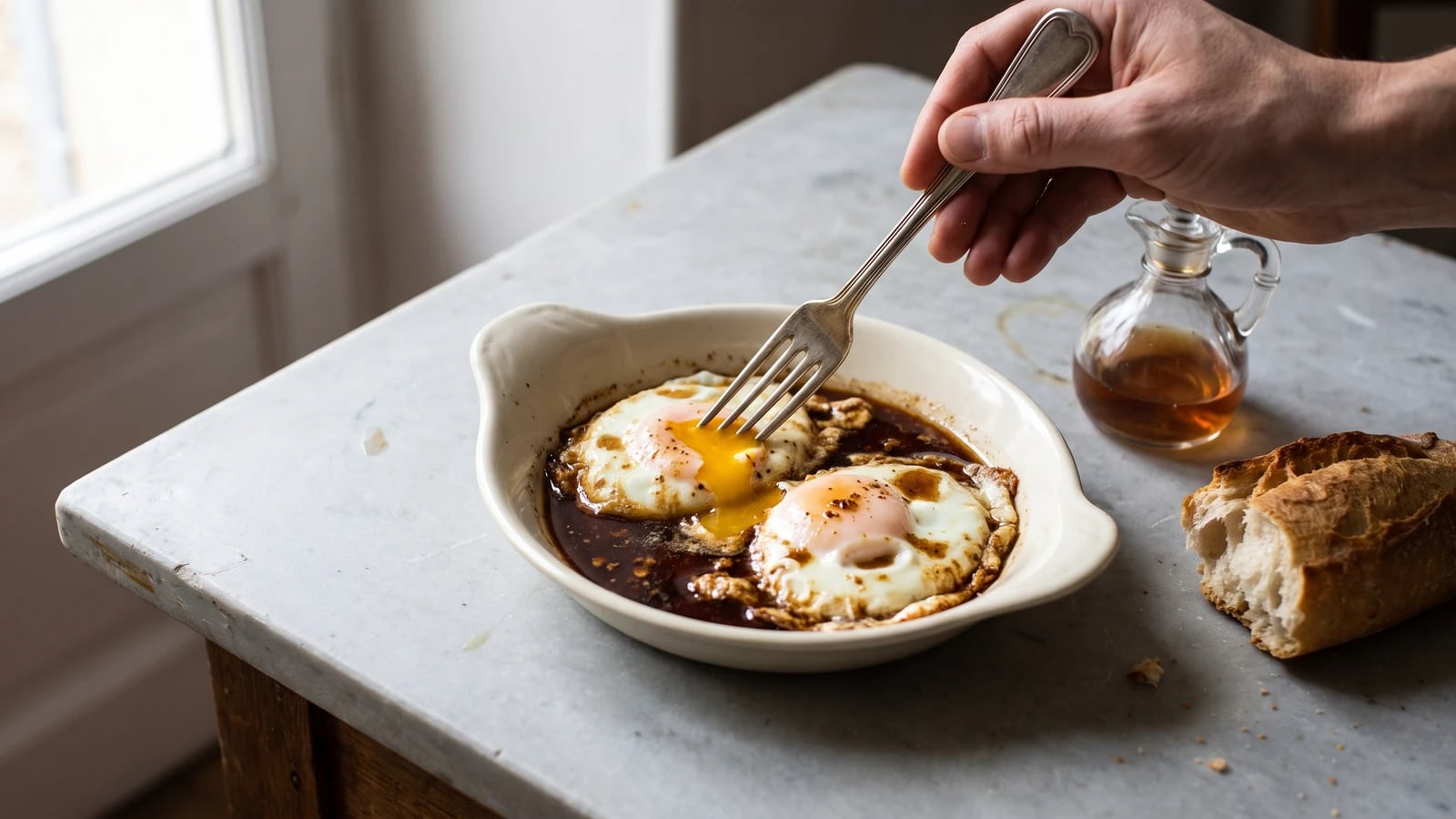
Œufs au beurre noir teach the narrow, glorious distance between browned and burned: tender baked eggs, nearly black butter, and vinegar added last for a supper finished before the toast cools.
Œufs au beurre noir (Eggs with Brown Butter) teach the narrow, glorious distance between browned and burned. The one true thing before you touch the pan is this: beurre noir must travel beyond gold to deep mahogany, almost black as the entry commands, yet it must still smell of toasted milk, never ash. That final breath of vinegar doesn't make a separate sauce; it cuts through the butter and wakes the eggs.
The original dish method assumed small fireproof egg dishes, a salamander or fierce oven ready to set their tops, and hands that could fire every portion for immediate service. A home kitchen gets four shallow dishes onto one sheet pan and into one hot oven. The first of the entry's two methods is kept because it scales cleanly; the repeated omelet-pan method is saved for the tip below. No saucier and no stockpot are needed. One cook, one stove, one evening.
Individual firing is brigade scaffolding and can go. The proportions, the very dark butter, the order of butter before vinegar, and immediate service are the dish, and all stay. Watch the butter's aroma more than the clock; that is the step that decides everything.
Œufs au beurre noir belong to the Parisian bistro and cuisine bourgeoise, the well-kept urban home table, where quick egg dishes shared the same pan grammar as skate dressed with beurre noir. The preparation moved easily between home and professional kitchens because its pleasure depends on attention rather than an elaborate sauce: dark butter, eggs, vinegar, immediate service. Despite the name, beurre noir is not burned butter; it is butter carried to the edge of blackness while the vinegar keeps its richness from lying heavy.
Quantity
8
Quantity
1 tablespoon (15 ml / 14 g)
softened, for the egg dishes
Quantity
2 tablespoons (30 ml / 28 g), plus up to 2 tablespoons (30 ml / 28 g) held in reserve
for the beurre noir
Quantity
¼ teaspoon (1.25 ml / 1.25 g)
Quantity
½ teaspoon (2.5 ml / 3 g)
Quantity
¼ teaspoon (1.25 ml / 0.6 g)
| Ingredient | Quantity |
|---|---|
| large eggs | 8 |
| unsalted buttersoftened, for the egg dishes | 1 tablespoon (15 ml / 14 g) |
| unsalted butterfor the beurre noir | 2 tablespoons (30 ml / 28 g), plus up to 2 tablespoons (30 ml / 28 g) held in reserve |
| red wine vinegar | ¼ teaspoon (1.25 ml / 1.25 g) |
| fine sea salt | ½ teaspoon (2.5 ml / 3 g) |
| freshly ground black pepper | ¼ teaspoon (1.25 ml / 0.6 g) |
Heat the oven to 400°F (200°C) with a rack in the middle. Use the softened butter to coat four shallow 5-inch (12 cm) ovenproof egg dishes, paying attention to the edges where the whites are most likely to catch. Set the dishes on a rimmed sheet pan. Crack each egg first into a cup, then slip two into each dish so the yolks remain whole. Divide the salt and pepper evenly over them.
Bake for 8 to 11 minutes, until the outer whites are opaque and set but the whites nearest the yolks still tremble slightly. The yolks should remain fluid beneath a delicate surface. Pull the dishes before the whites look completely firm, because the hot porcelain continues cooking them at the table. If one dish sets faster, remove it first; equal timing is less important than properly cooked eggs.
When the eggs have about 3 minutes left, put the 2 tablespoons butter into a small, light-colored stainless-steel pan over medium heat. Let it melt, foam, and crackle. Swirl rather than stir as the foam thins and the milk solids move from gold through chestnut to very deep mahogany, a shade short of black. Remove the pan the instant the aroma turns deeply nutty. If the flecks race to black or smell acrid, don't pour the butter over the eggs. Ça se rattrape: discard it, wipe the pan clean, and brown the reserved butter while the eggs wait out of the oven. You've lost a little butter, not supper.
Immediately spoon the beurre noir over the eggs, dividing it equally so each dish receives about ½ tablespoon (7 g). Now set the nearly empty pan off the heat, add the red wine vinegar, and swirl it through the browned residue. It will hiss sharply. Divide those few vinegared drops over the eggs only after the butter, exactly in that order. The vinegar should sharpen the dish, not announce itself.
Carry the dishes directly to the table. The whites should be tender, the yolks ready to run, and the beurre noir should form a deep mahogany gloss around both. This dish doesn't hold and has no reason to. À table!
1 serving (about 105g)
Culinary guides, cultural storytelling, and the editorial depth that makes cooking meaningful.
Discover Culinary ExplorerChef Juliette
A creamy omelette aux fines herbes closes around smoked-salmon-wrapped herring milts, gently poached in butter. Have the filling ready, then roll the eggs while they still shine.
Chef Juliette
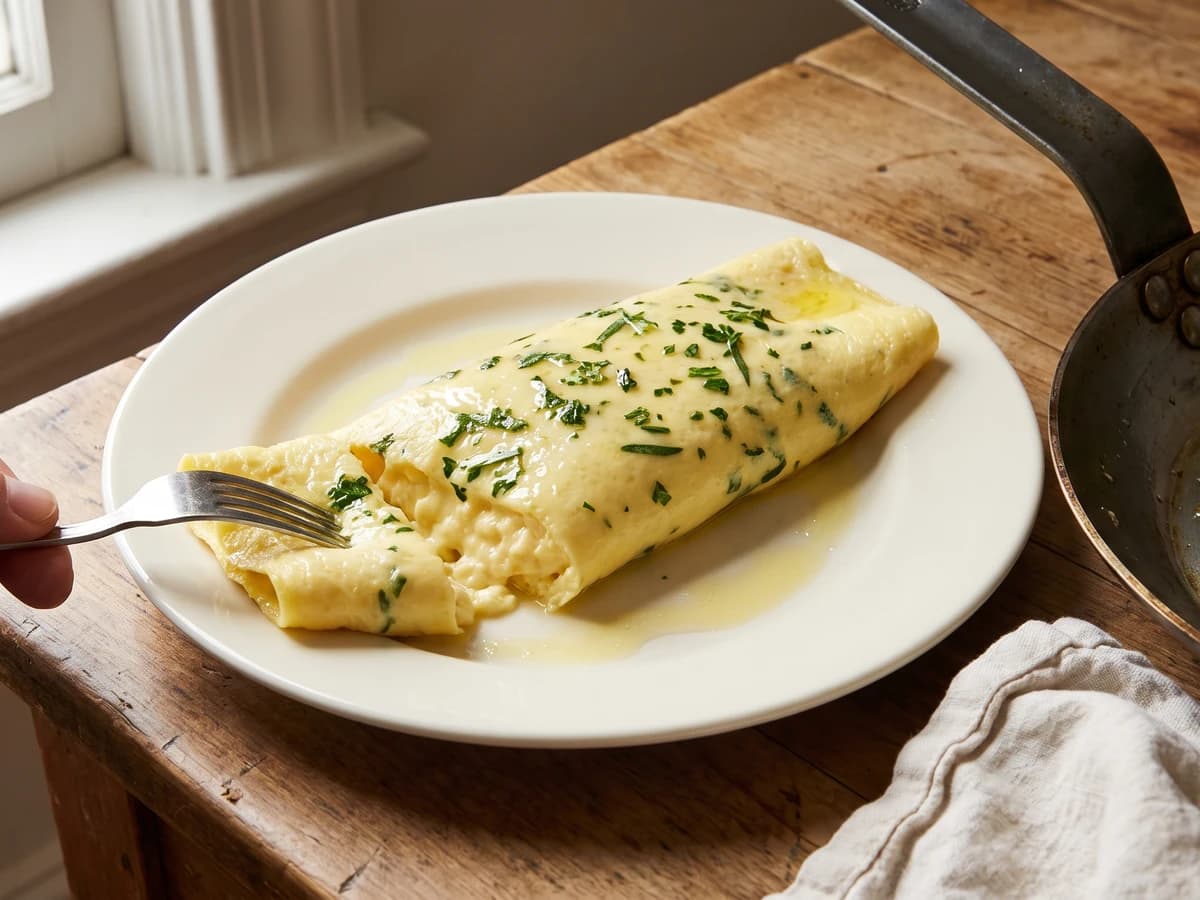
Four tender herbs, hot butter, and two eggs per pan: this rolled omelette teaches the quick hand and good judgment that keep the outside pale and the center creamy.
Chef Juliette
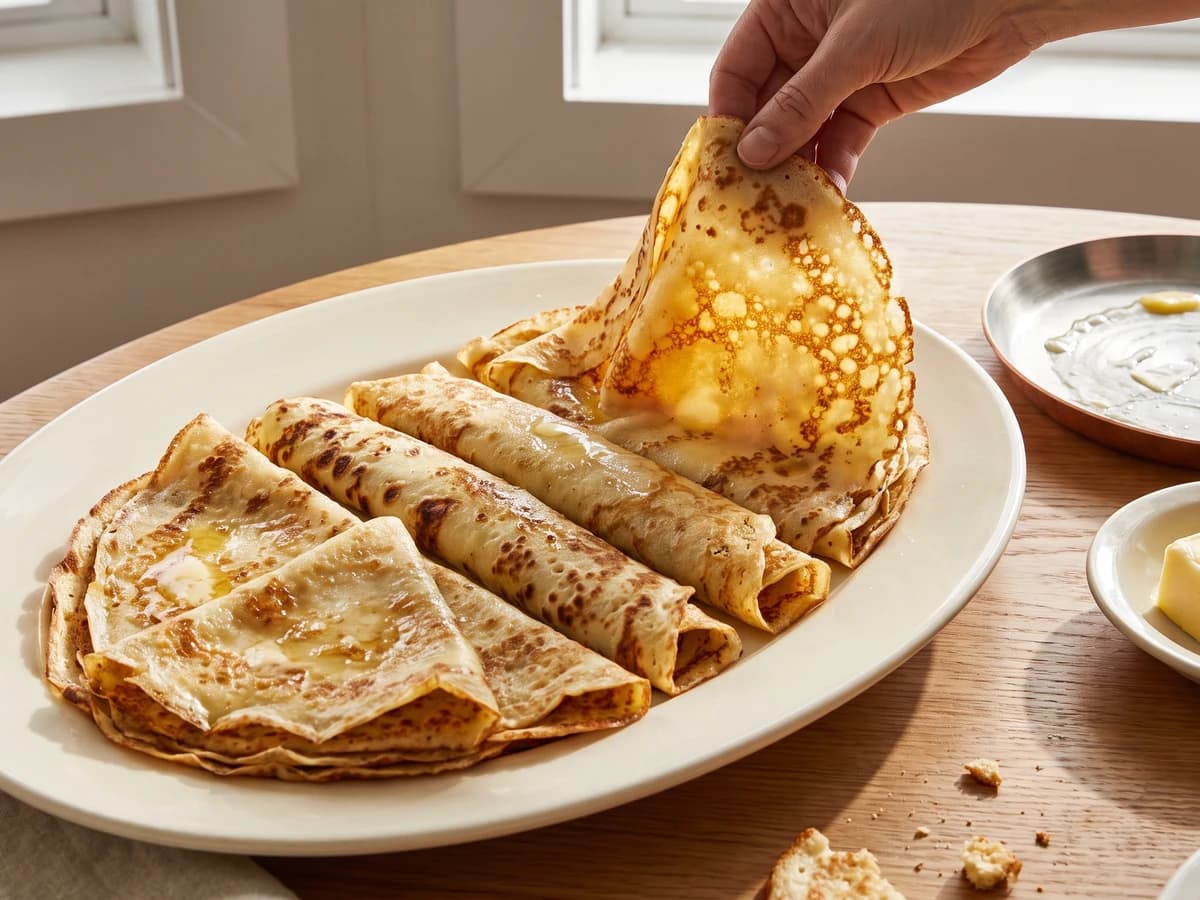
Four batters, one lesson: let the flour drink deeply before cooking, then spread the batter thinly in butter for crêpes and pannequets that bend without becoming tough.
Chef Juliette
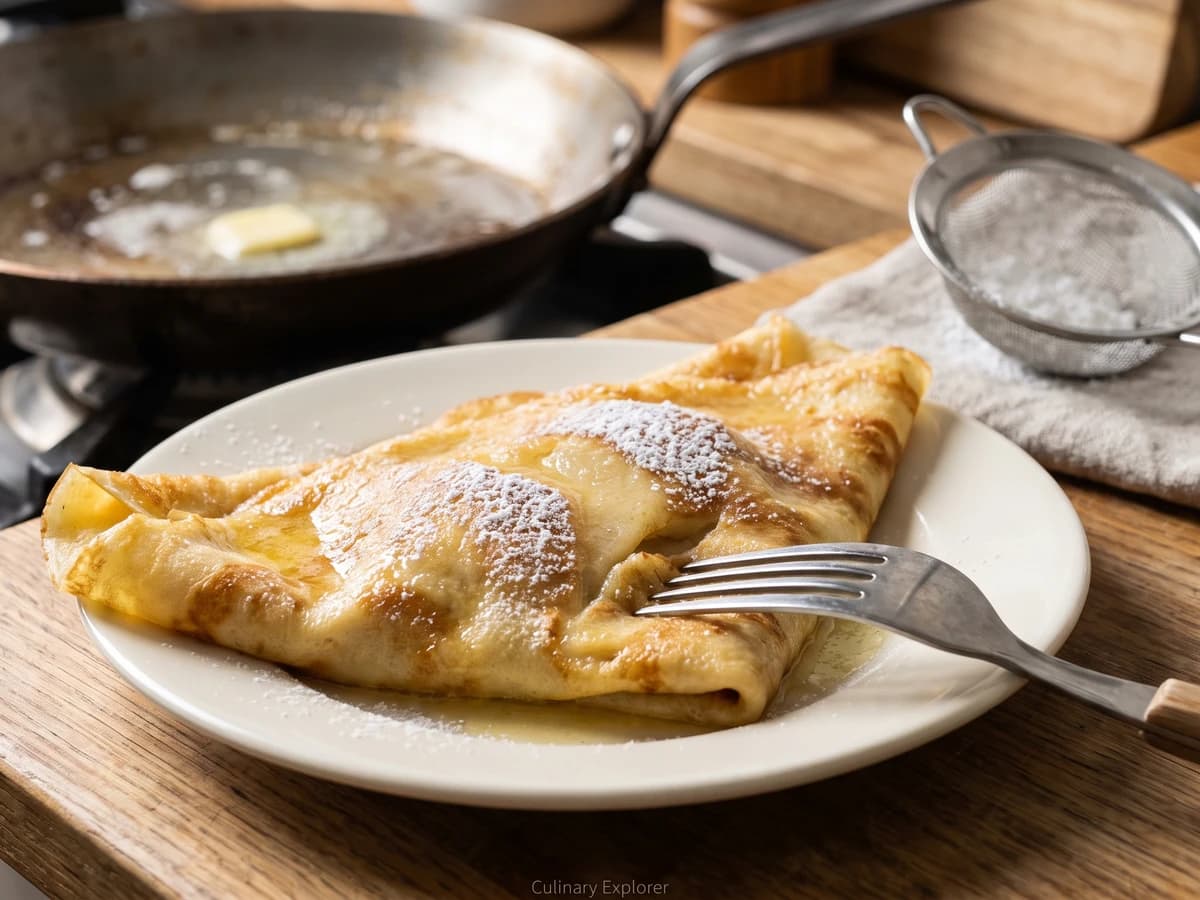
Crêpes au Couvent trap ripe Williams pear dice between two thin pours of sweet batter, then turn in one clean toss and reach the table butter-gold, powdered, and burning hot.