Chef Juliette
Omelette à l’Écossaise
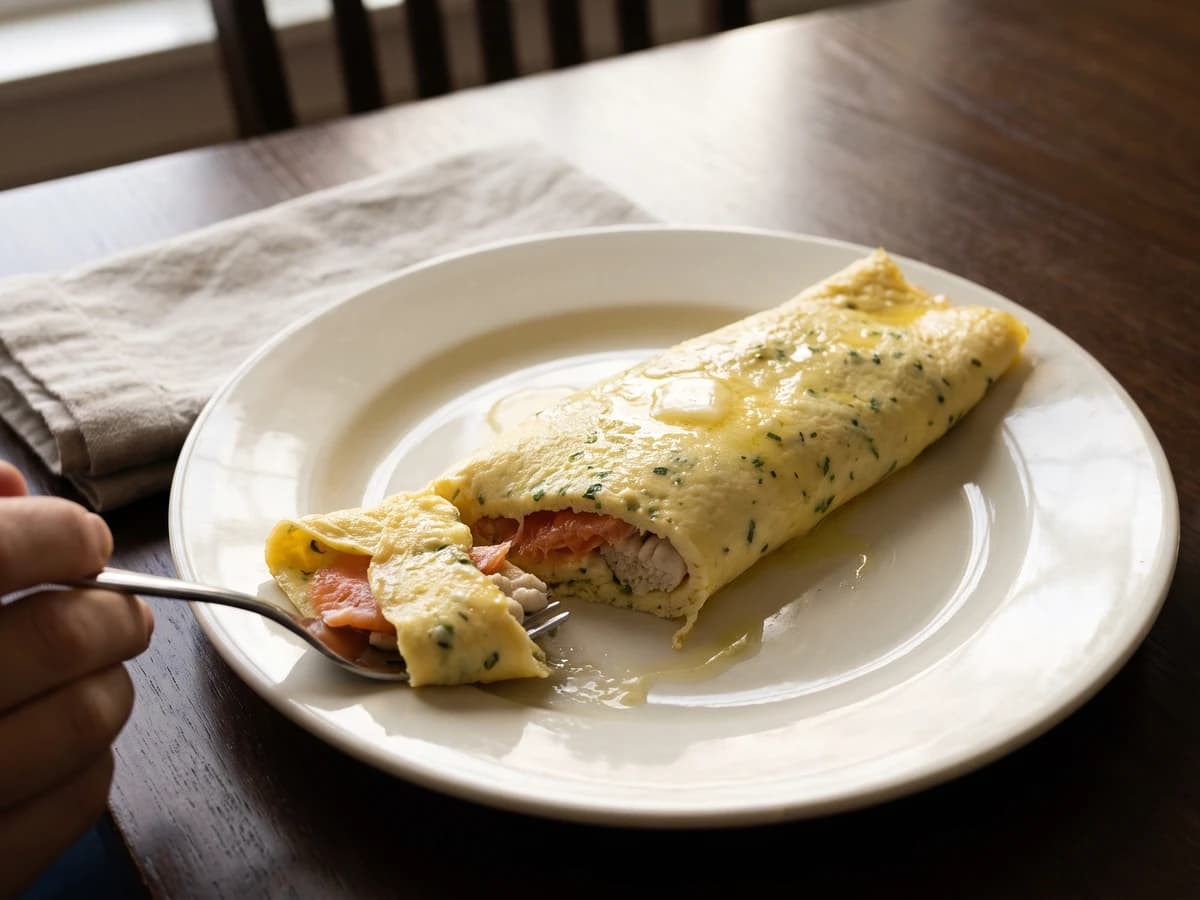
A creamy omelette aux fines herbes closes around smoked-salmon-wrapped herring milts, gently poached in butter. Have the filling ready, then roll the eggs while they still shine.
A cooking platform built around craft, culture, and the stories behind what we eat.
Created by Chef Juliette
Based on No. 396, Bercy Eggs, from Le Guide Culinaire (1907) by Auguste Escoffier
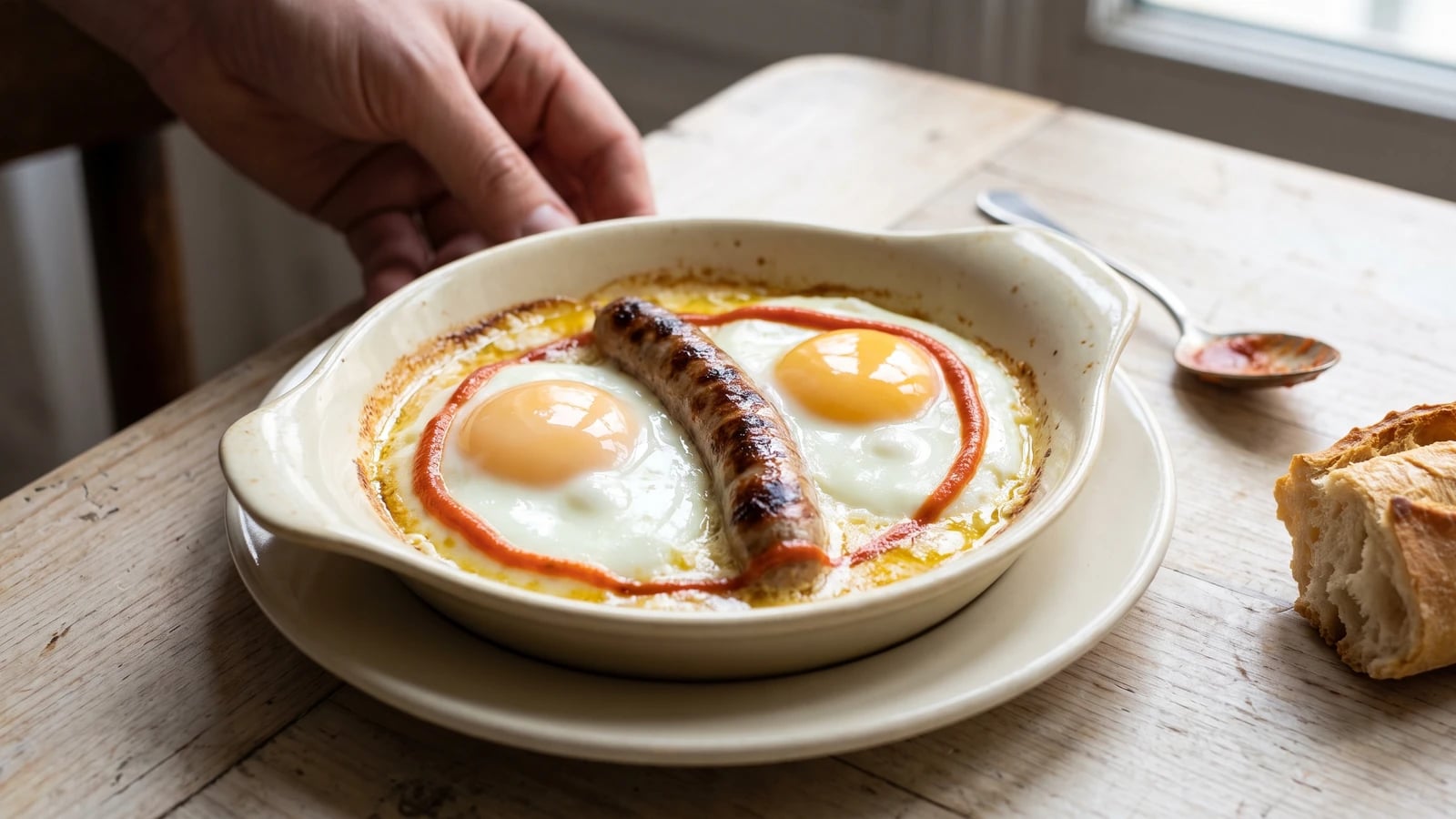
Œufs Bercy turns a buttered baking dish into a lesson in timing: set whites, glossy yolks, one grilled sausage between them, and just enough tomato sauce to draw a bright red thread.
Œufs Bercy (eggs baked in butter with grilled sausage and tomato sauce) teaches the narrow, useful distance between a set white and a glossy yolk. That is the one true thing to know before touching the pan: whites and yolks finish on different clocks. A shallow hot dish sets the white from below while butter protects the yolk's gloss, but the cook must still recognize the final minute.
The brigade formula assumed a saucier keeping smooth tomato sauce ready, a salamander capable of finishing shallow dishes in a flash, and, elsewhere in that kitchen, a stockpot never off the fire. Œufs Bercy needs no stock. For four servings, the honest home equivalents are four small gratin dishes on a preheated sheet, a skillet for the chipolatas, and one small pan of finished tomato sauce. The upper oven and hot sheet replace the salamander with controlled heat. Separate hands and holding pans are scaffolding and can go; the buttered dish, whole yolks, grilled sausage between them, and red thread around them are the dish and stay. One cook, one stove, one evening.
You are aiming for whites that are quite done, with no clear albumen trembling beside the yolks, while the yolks remain domed, golden, and mobile beneath their buttered sheen. The moment that matters is the final minute: pull the dishes when the last clear white turns opaque but each yolk still moves when the dish is nudged.
Œufs Bercy belongs to the Bercy quarter of Paris, where wine warehouses along the Seine, merchants' taverns, and simple grilled foods made eggs and sausage natural companions. In the classical egg repertoire, Bercy here names the garnish, not the white-wine-and-shallot Sauce Bercy: one small grilled sausage rests between two yolks, with tomato sauce traced around them. The codified preparation carried a wine-quarter supper into grand-kitchen service, yet its proportions remain perfectly suited to the home table.
Quantity
4 (about 8 oz / 225 g total)
left whole
Quantity
8
Quantity
4 tablespoons (60 ml / 56 g)
divided equally
Quantity
1/4 cup (60 ml / 65 g)
fully prepared
Quantity
1/4 teaspoon (1.25 ml / 1.5 g)
Quantity
1/8 teaspoon (0.6 ml / 0.3 g)
| Ingredient | Quantity |
|---|---|
| small fresh pork chipolata sausagesleft whole | 4 (about 8 oz / 225 g total) |
| large eggs | 8 |
| unsalted butterdivided equally | 4 tablespoons (60 ml / 56 g) |
| smooth tomato saucefully prepared | 1/4 cup (60 ml / 65 g) |
| fine sea salt | 1/4 teaspoon (1.25 ml / 1.5 g) |
| freshly ground white pepper | 1/8 teaspoon (0.6 ml / 0.3 g) |
Set a rack in the upper third of the oven and heat it to 375°F / 190°C. Place a heavy rimmed baking sheet inside while the oven heats; its stored heat gives the egg whites a prompt, even set. Warm the tomato sauce in a small saucepan over gentle heat until fluid enough to fall from a spoon in a narrow ribbon, then cover it and keep it barely warm. A hard boil thickens the sauce and spoils the clean thread required at the finish.
Heat a dry cast-iron skillet or grill pan over medium heat. Add the chipolatas and cook for 8 to 10 minutes, rolling them frequently so the casings become evenly deep bronze without splitting. They are ready when their centers reach 160°F / 71°C and feel springy rather than soft. If the casings darken before the centers cook, lower the heat, move the sausages toward the cooler edge, and cover the pan for 2 minutes before browning them again. Ça se rattrape. Transfer them to a warm plate and do not pierce them.
Divide half the butter, 2 tablespoons / 28 g, among the four shallow dishes. Set them on the hot baking sheet for 60 to 90 seconds, just until the butter melts and begins to foam, then remove the sheet carefully. Tilt each dish so the butter coats the bottom and lower sides. Wipe the sausage skillet clean, melt the remaining butter over low heat, and take it off the heat before it colors. Crack each egg into a small cup before sliding it into the dish; this protects the yolk from shell fragments and gives you control over its placement.
Slide two eggs into each buttered dish, placing the yolks side by side with a narrow lane between them for the sausage. Spoon the remaining melted butter over the yolks and let a little run onto the whites, then season evenly with the salt and white pepper. Return the dishes on their sheet to the oven and bake for 5 to 8 minutes, rotating the sheet after 4 minutes. The whites must be fully opaque and softly firm, including the thicker ring close to each yolk; the yolks should remain high, glossy, and responsive when nudged. If the yolks begin to cloud while a ring of white remains clear, move the sheet to the lower rack, spoon butter from the dish edges over only the translucent white, and continue in 30-second intervals. Ça se rattrape.
Remove the dishes as soon as the whites are done. Lay one grilled chipolata in the lane between the two yolks of each portion, keeping both yolks visible. Spoon about 1 tablespoon / 15 ml of warm tomato sauce in a narrow, continuous thread around the eggs, never across their glossy centers. A thread, not a moat. Set each hot dish on an underplate, warn your guests that the porcelain is hot, and serve immediately. À table!
1 serving (about 165g)
Culinary guides, cultural storytelling, and the editorial depth that makes cooking meaningful.
Discover Culinary ExplorerChef Juliette
A creamy omelette aux fines herbes closes around smoked-salmon-wrapped herring milts, gently poached in butter. Have the filling ready, then roll the eggs while they still shine.
Chef Juliette
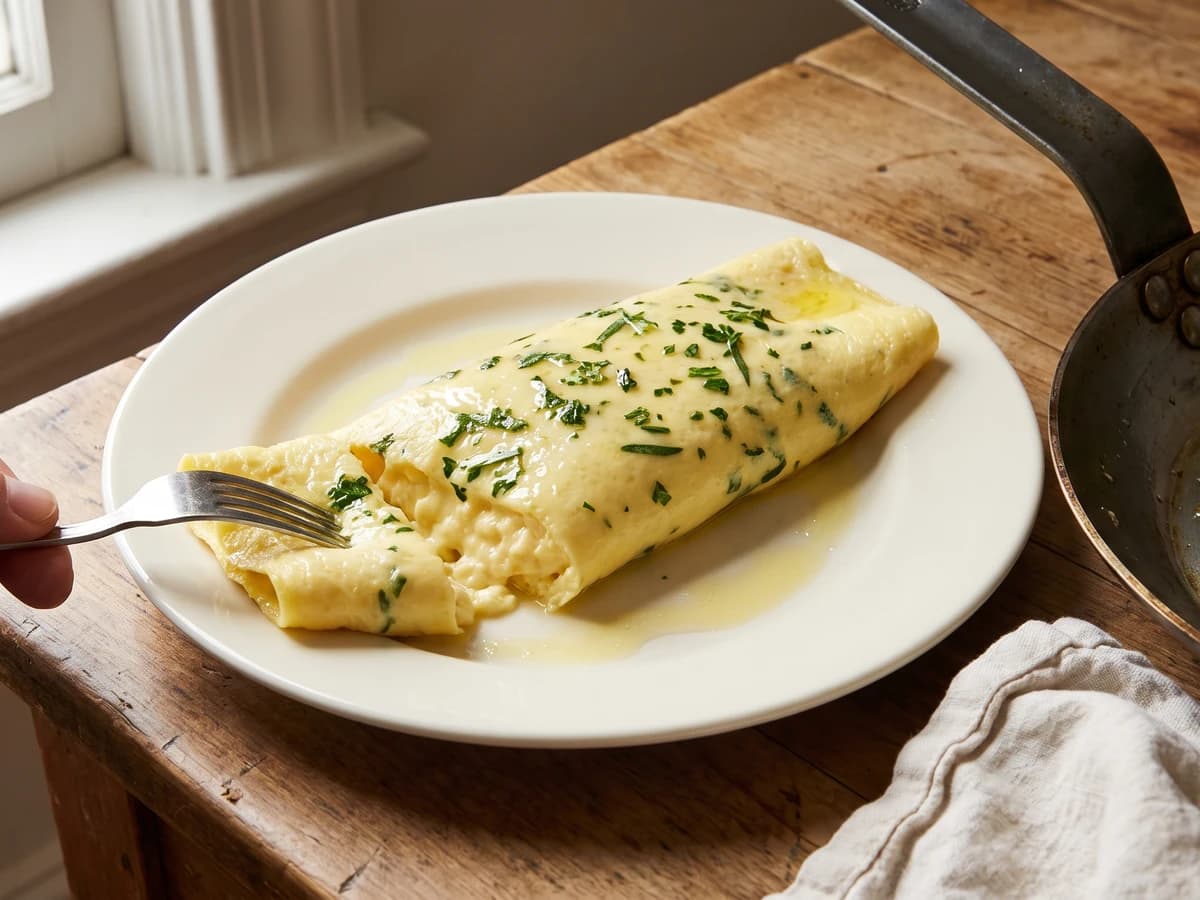
Four tender herbs, hot butter, and two eggs per pan: this rolled omelette teaches the quick hand and good judgment that keep the outside pale and the center creamy.
Chef Juliette
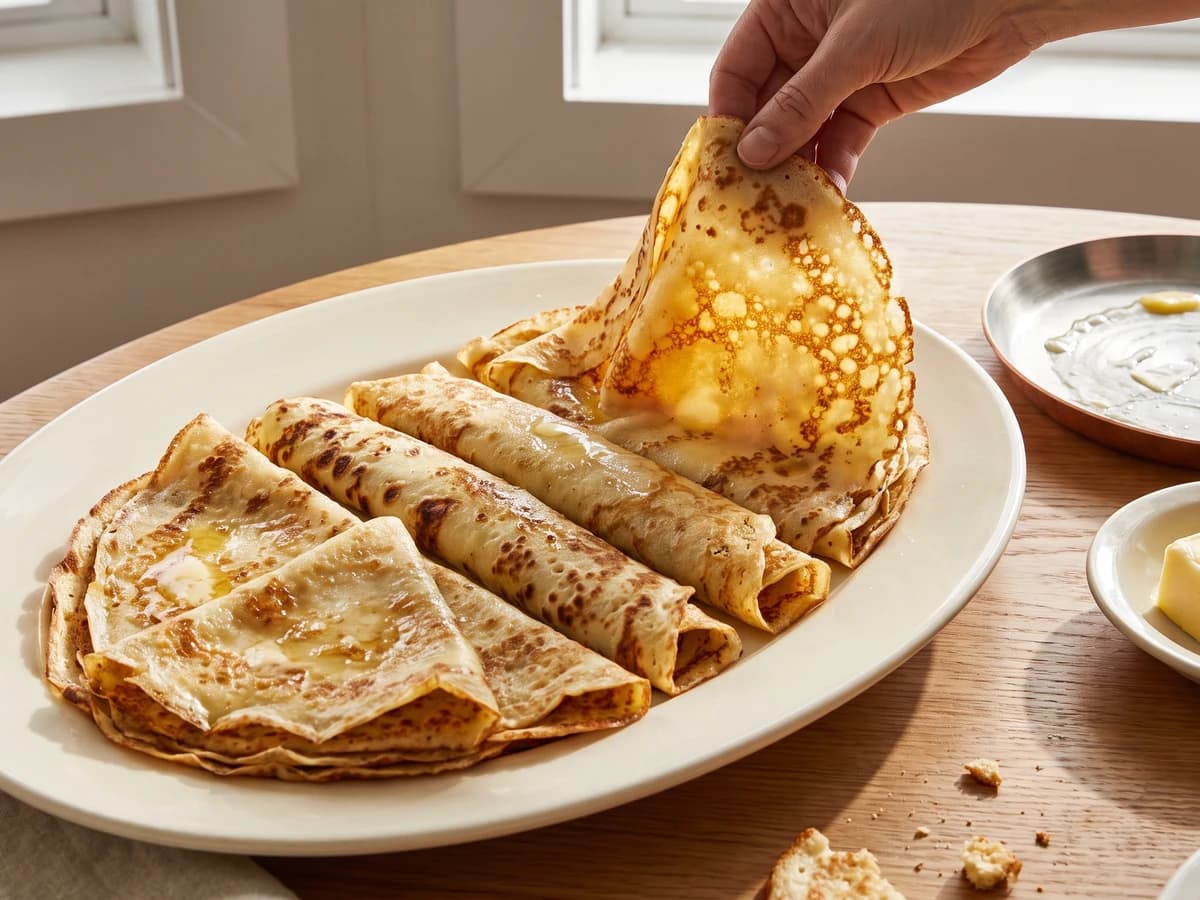
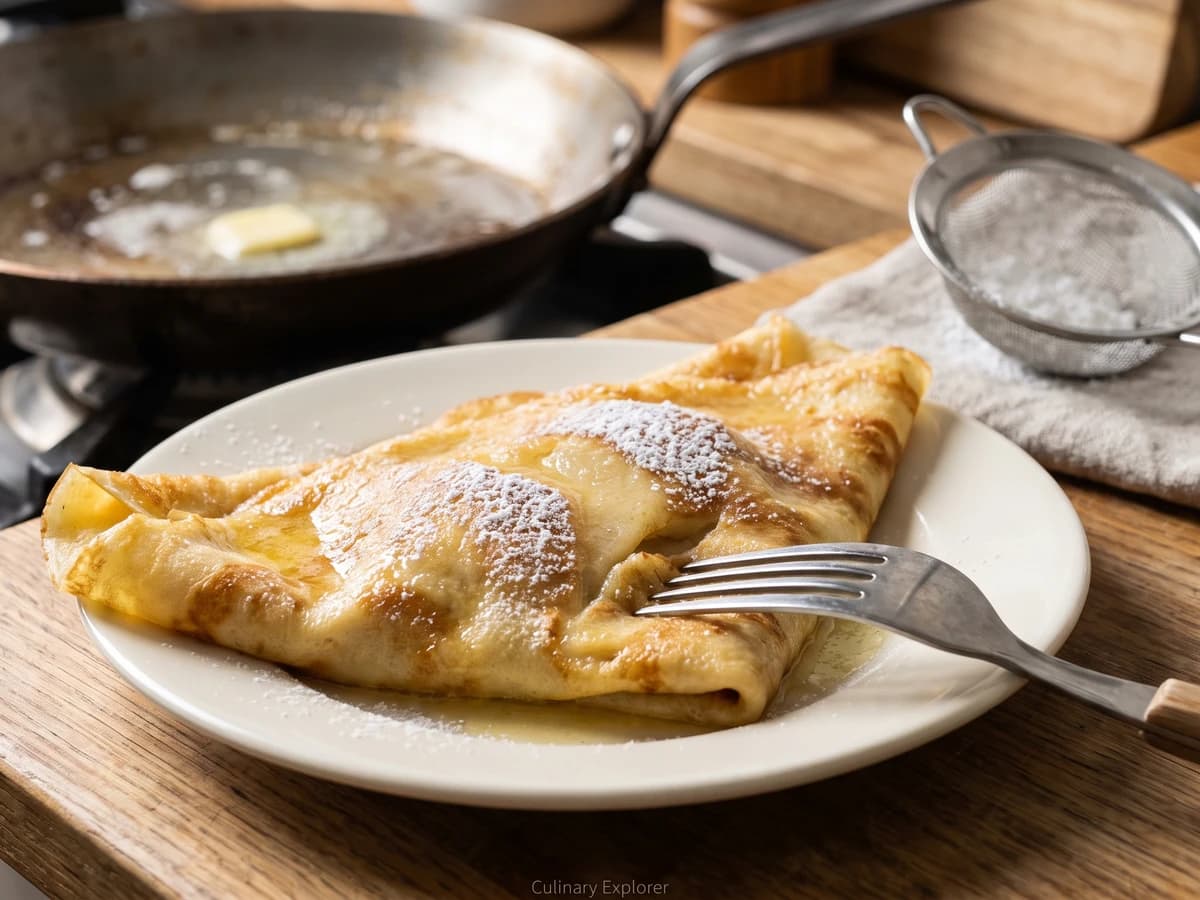
Four batters, one lesson: let the flour drink deeply before cooking, then spread the batter thinly in butter for crêpes and pannequets that bend without becoming tough.
Chef Juliette
Crêpes au Couvent trap ripe Williams pear dice between two thin pours of sweet batter, then turn in one clean toss and reach the table butter-gold, powdered, and burning hot.