Chef Juliette
Ordinary or White Consommé
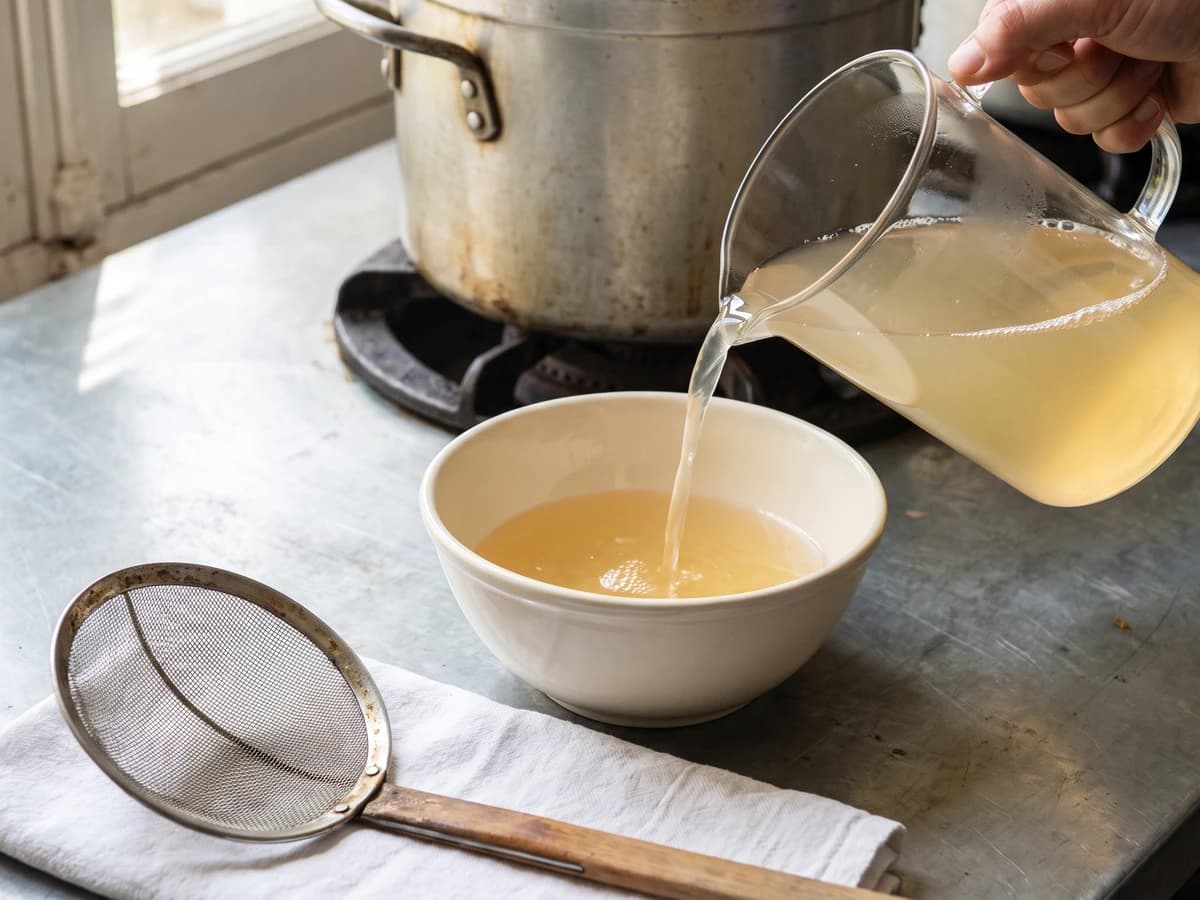
Beef shin, lean beef, and fowl begin in cold water and rise slowly toward a tremble. Skim before the boil, and you learn the quiet discipline that gives every clear French broth its backbone.
A cooking platform built around craft, culture, and the stories behind what we eat.
Created by Chef Juliette
Based on No. 39, Grand-Veneur Sauce, from Le Guide Culinaire (1907) by Auguste Escoffier
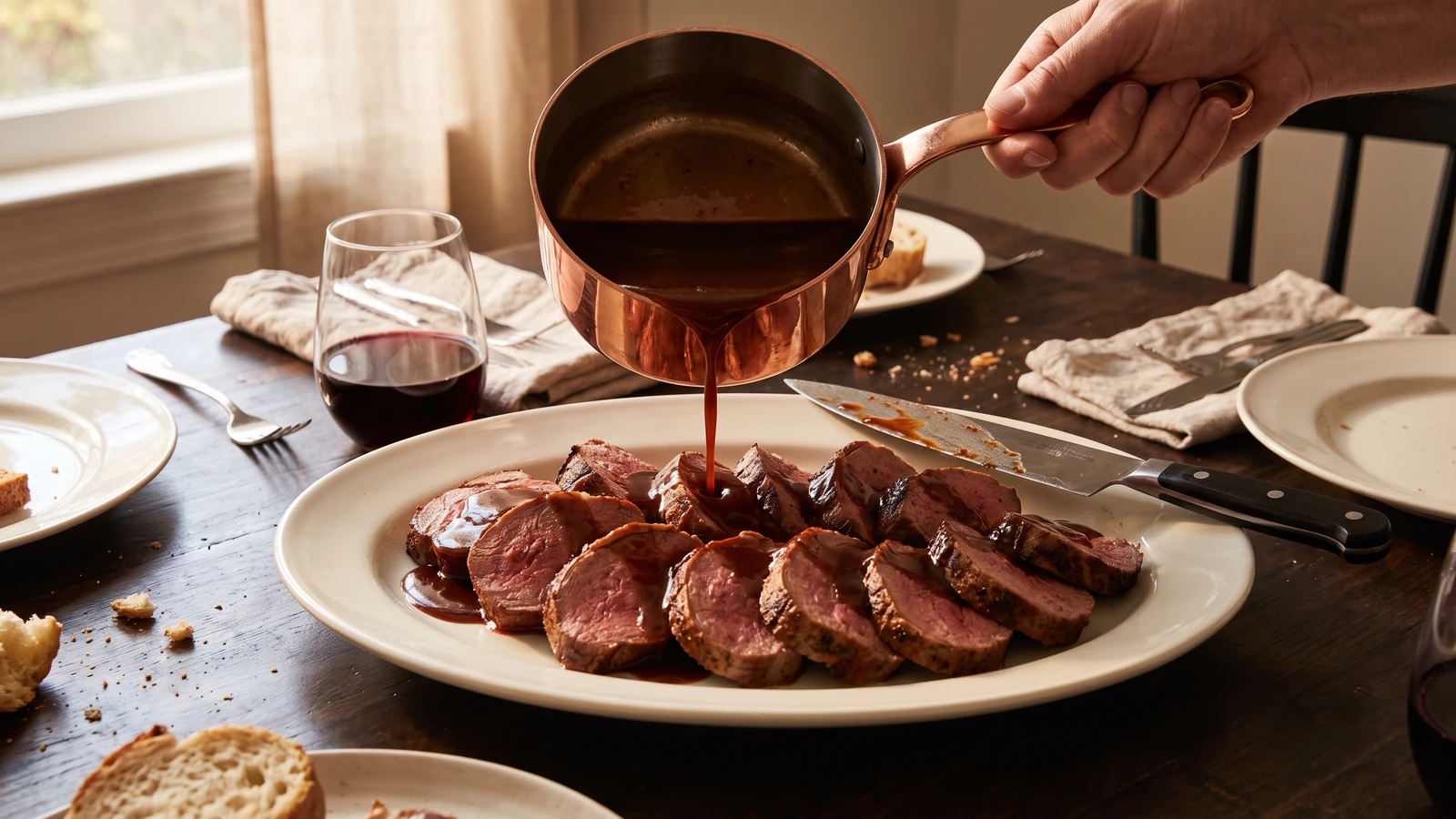
Peppery poivrade and game stock reduce to a glossy ribbon, then red-currant jelly and fresh cream bring the exact sweet-sharp balance that roast venison asks for.
Sauce Grand-Veneur (grand huntsman’s sauce) teaches the finishing order that governs many classical derivatives: reduce first to build body, then add sweetness and cream off the fire. The one true thing to know before you touch the pan is that red-currant jelly and fresh cream are finishes, not reduction ingredients. Boil them and the sauce loses its clean balance, while the cream may turn coarse.
The original formula assumed a saucier on staff, game stock never off the fire, and a finished Ordinary Poivrade Sauce (No. 49) waiting in quantity. At home, a wide heavy saucepan does the saucier’s work. No salamander belongs here, because reduction, not top heat, is the engine. The repeated straining and skimming live inside the referenced Poivrade and are brigade scaffolding, so they aren’t rebuilt here; the reduction by one good third, the jelly off heat, and the quarter-measure of cream are the dish, and they stay. One cook, one stove, one evening.
The finished Grand-Veneur should run from the spoon in a glossy chestnut ribbon, peppery and savory first, with currant brightness just behind it and cream rounding the edges. Watch the volume, not the clock: when the combined base has fallen by one third and coats a spoon in a light veil, pull it from the heat. That is the step that decides the sauce.
Sauce Grand-Veneur belongs to the French hunting table and the grand-kitchen family of poivrade derivatives, where pepper, vinegar, and game juices were built to meet the strength of roasted venison. Its name borrows rank from the grand veneur, the officer charged with directing the royal hunt, but its distinction is practical: game stock lightens the poivrade before reduction, while red-currant jelly and cream soften its sharpness without turning it into a sweet sauce. It traveled to bourgeois holiday tables because the base could wait at the edge of the stove and be finished while the joint rested.
Quantity
4½ cups (1.06 L / about 1.1 kg) Ordinary Poivrade Sauce (No. 49)
fully prepared
Quantity
4½ cups (1.06 L / about 1.06 kg), plus up to ½ cup (120 ml / about 120 g) for rescue
well-degreased; extra kept hot
Quantity
9 tablespoons (135 ml / about 180 g)
Quantity
1½ cups (355 ml / about 355 g)
preferably 35% fat
| Ingredient | Quantity |
|---|---|
| Ordinary Poivrade Saucefully prepared | 4½ cups (1.06 L / about 1.1 kg) Ordinary Poivrade Sauce (No. 49) |
| game stockwell-degreased; extra kept hot | 4½ cups (1.06 L / about 1.06 kg), plus up to ½ cup (120 ml / about 120 g) for rescue |
| clear red-currant jelly | 9 tablespoons (135 ml / about 180 g) |
| fresh heavy creampreferably 35% fat | 1½ cups (355 ml / about 355 g) |
Pour the Ordinary Poivrade Sauce (No. 49) and 4½ cups of game stock into a wide, heavy 5 to 6-quart saucepan. Whisk over medium heat until uniform. Before the sauce boils, stand a clean wooden skewer vertically in the liquid and mark its depth, then make a second mark at two thirds of that depth. This lower line is your destination and is more trustworthy than the clock.
Bring the sauce to a controlled full boil, then boil uncovered for 30 to 45 minutes, whisking occasionally and skimming away any dull foam or visible fat. Stop when the sauce reaches the lower mark, about 6 cups, and coats the back of a spoon with a light, even veil. The reduction is the dish, so don’t rush past it. If the sauce crosses the mark or tastes too concentrated, remove it from the heat and whisk in the reserved hot game stock one tablespoon at a time until the light coating returns.
Take the pan completely off the heat and wait until the boiling subsides. Add the red-currant jelly and whisk until it dissolves without streaks or lumps. If a cold piece clings stubbornly to the whisk, work it smooth with a ladleful of hot sauce in a small bowl, then return it to the pan. Don’t boil the sauce after this point; the currant should brighten the poivrade, not turn jammy.
Reserve 2 tablespoons of the measured cream, then whisk the remainder into the sauce in a slow, steady stream while the pan stays off the fire. The color should soften to deep chestnut-garnet while the surface remains glossy. If it turns grainy or shows an oily rim, stop. Ça se rattrape: put the reserved cool cream in a clean bowl and whisk in the troubled sauce one ladleful at a time until smooth, then return it to the pan.
If necessary, return the pan to the lowest heat and stir only until the sauce is hot enough to serve, with no bubbling. It should coat the spoon, then fall from it in a clean ribbon; loosen an over-tight sauce with a little reserved hot stock. Taste it with a sliver of venison if you can. Pepper and game should lead, the currant should answer, and the cream should round the finish without announcing itself. Pour into a warmed sauceboat or spoon it over carved venison at once. À table!
1 serving (about 60g)
Culinary guides, cultural storytelling, and the editorial depth that makes cooking meaningful.
Discover Culinary ExplorerChef Juliette
Beef shin, lean beef, and fowl begin in cold water and rise slowly toward a tremble. Skim before the boil, and you learn the quiet discipline that gives every clear French broth its backbone.
Chef Juliette
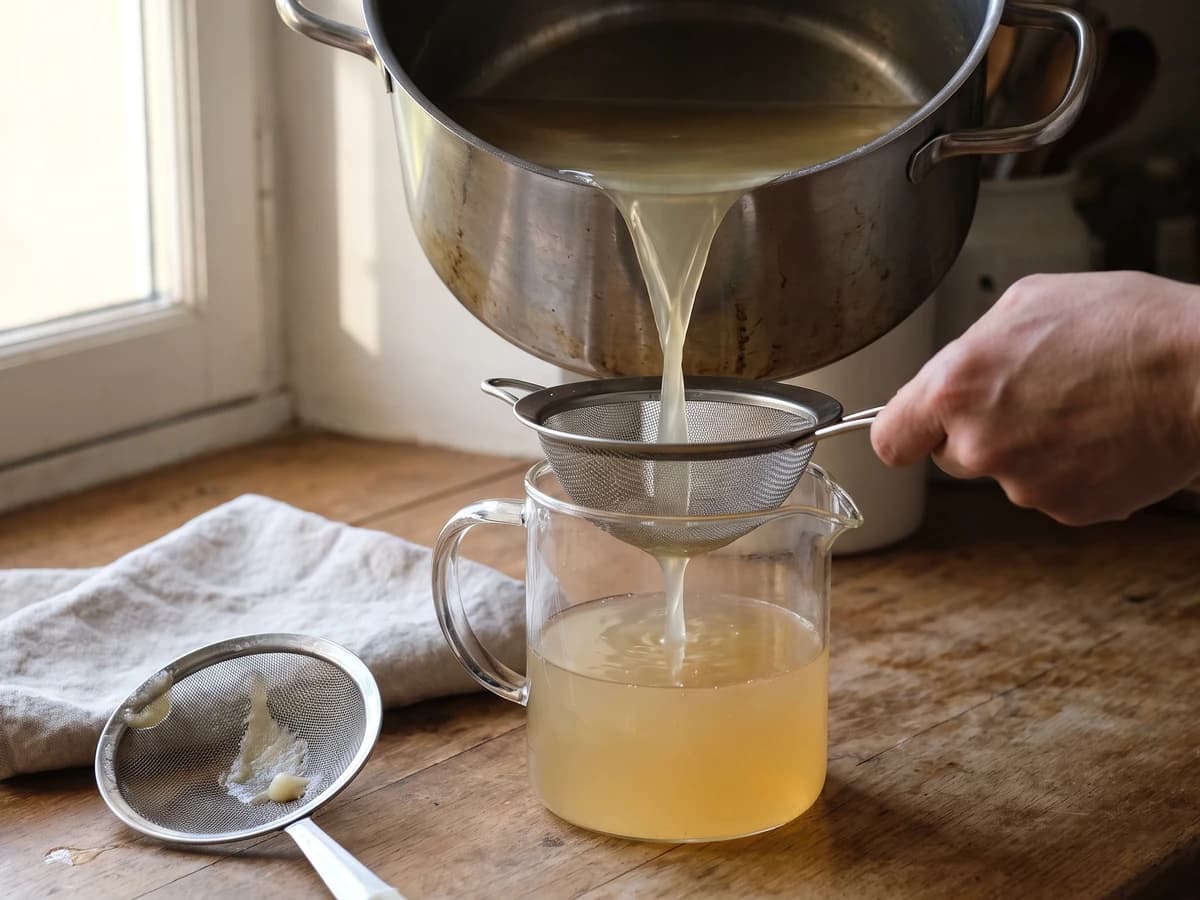
Break the veal bones small, then give them eight hours at a bare tremble. This pale, gelatinous fond becomes the quiet foundation beneath velouté, blanquette, and every sauce that must stay light.
Chef Juliette
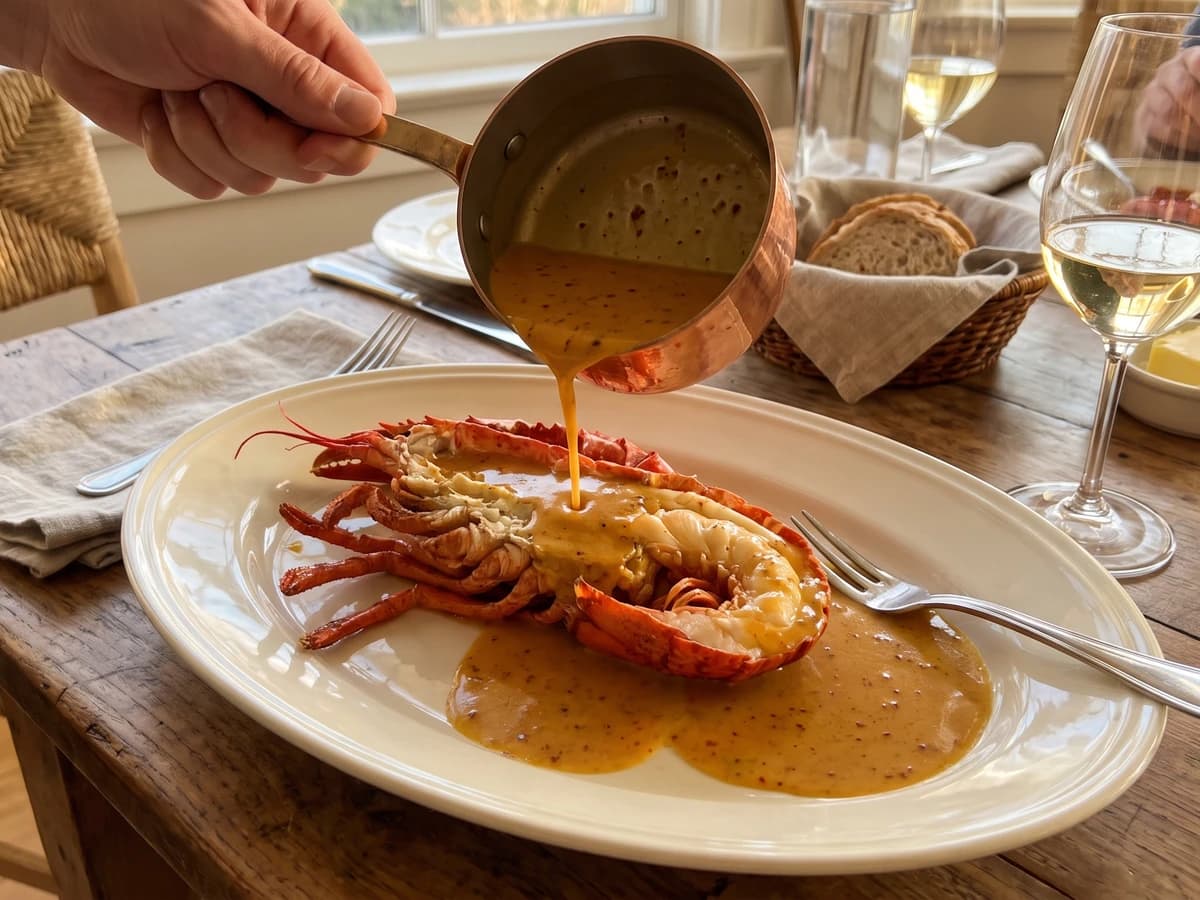
Sauce Orientale concentrates lobster-rich American Sauce with curry, then folds in cream away from the fire: a glossy, gently spiced derivative made for lobster, crayfish, and firm fish.
Chef Juliette
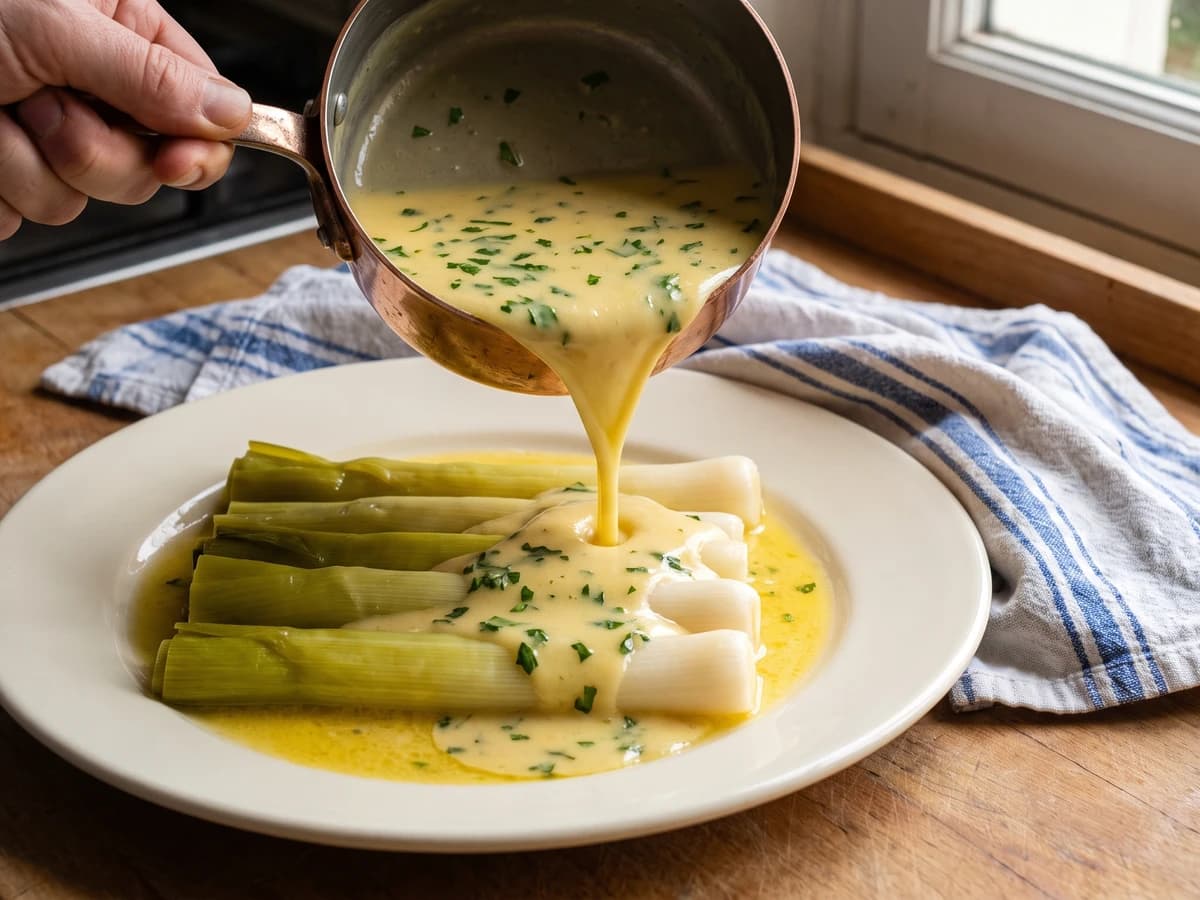
An old lesson in sauce families: Sauce Allemande takes mushroom liquor, then butter, lemon, and parsley, becoming a glossy Poulette for sheep's trotters, leeks, cauliflower, and anything needing gentle richness with a bright edge.