Chef Juliette
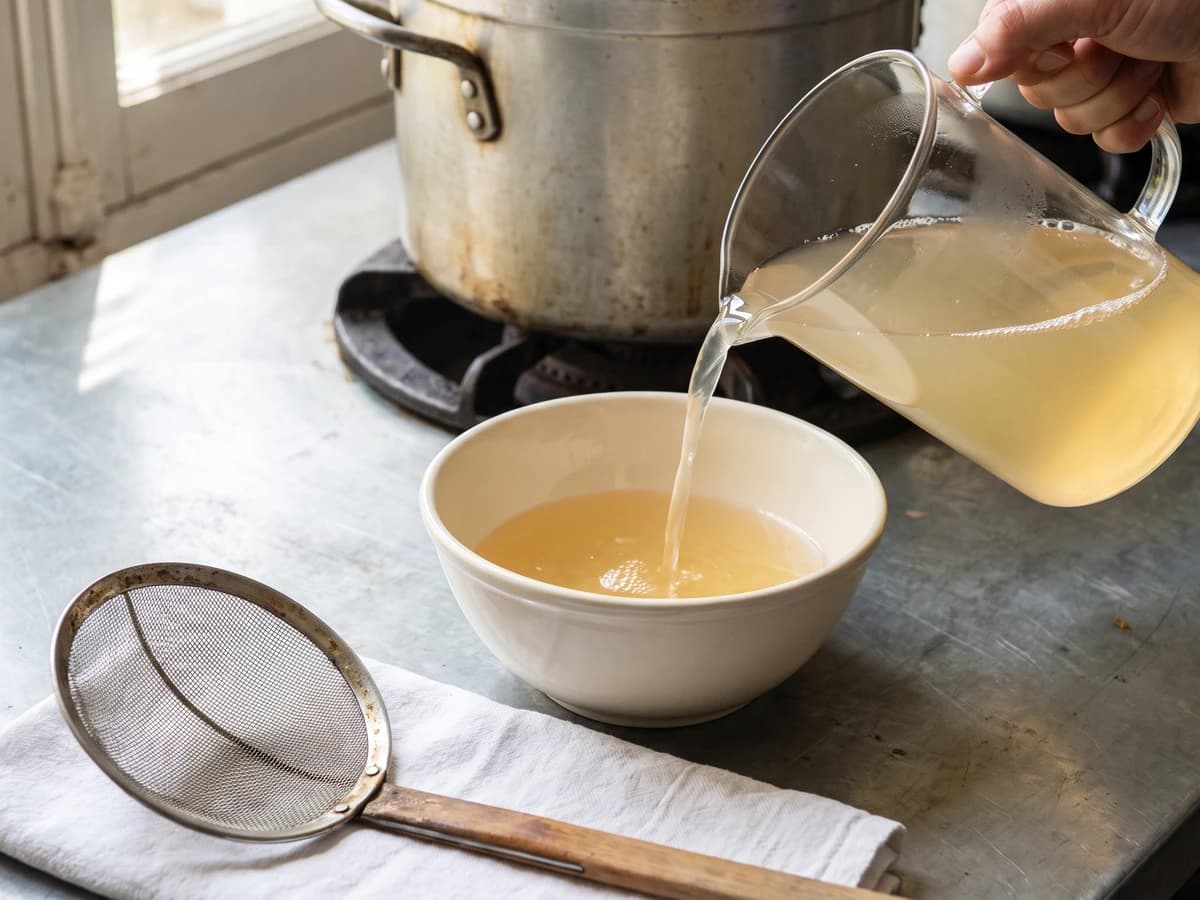
Ordinary or White Consommé
Beef shin, lean beef, and fowl begin in cold water and rise slowly toward a tremble. Skim before the boil, and you learn the quiet discipline that gives every clear French broth its backbone.
A cooking platform built around craft, culture, and the stories behind what we eat.
Created by Chef Juliette
Based on No. 37, “Escoffier” Devilled Sauce, from Le Guide Culinaire (1907) by Auguste Escoffier
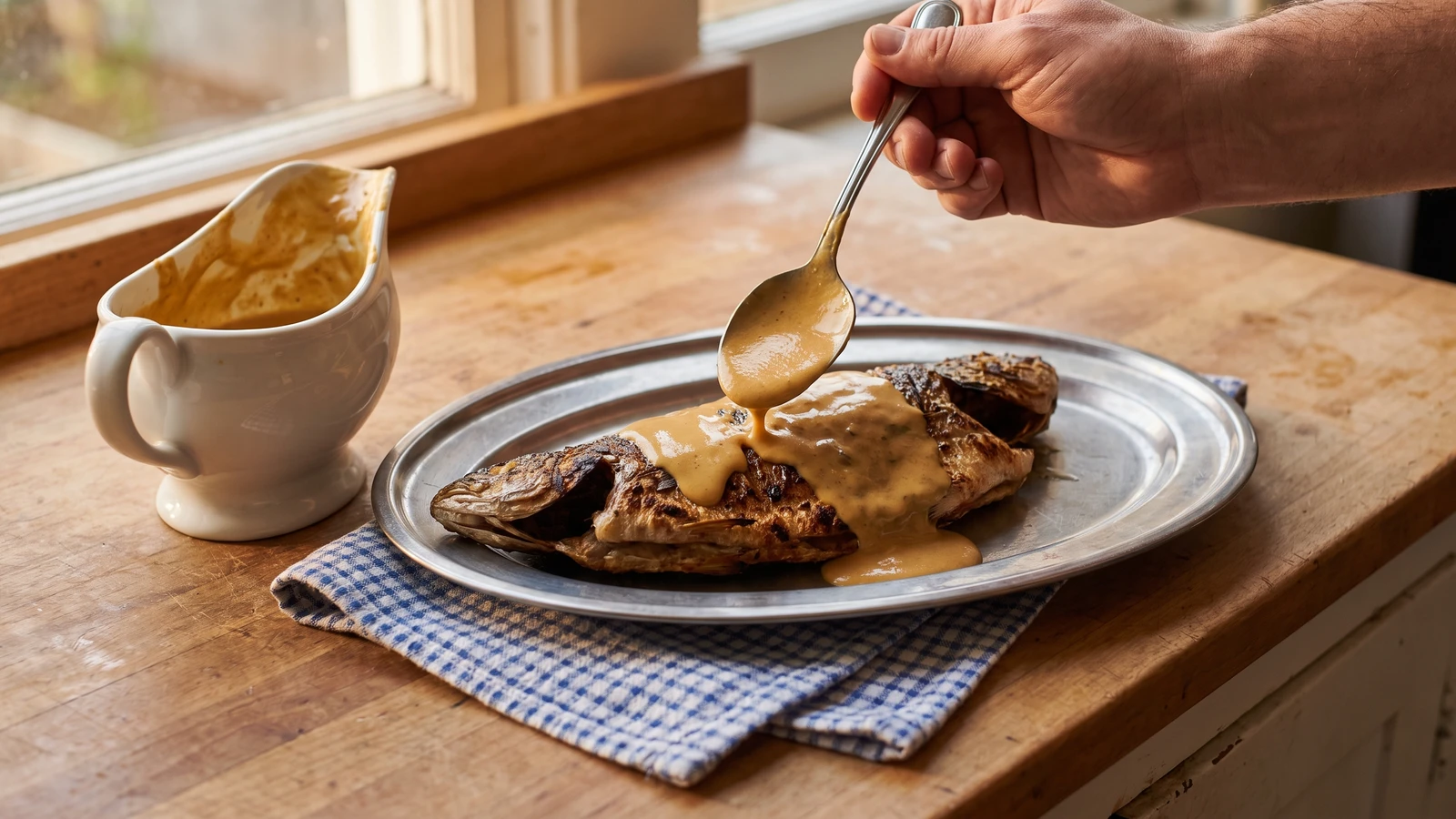
Sauce Diable reduced to its essential lesson: equal volumes of prepared sauce and truly softened butter, beaten into a smooth, piquant finish that melts generously over grilled fish, steaks, and chops.
Sauce Diable « Escoffier » (Escoffier Devilled Sauce) teaches one precise thing: softened butter and melted butter are not interchangeable. The butter must yield completely beneath a finger while remaining cool, opaque, and cohesive. Get that texture right and the sauce becomes satin-smooth; let the butter turn oily and the mixture slumps apart.
This is one old formula that assumed neither a saucier reducing stock nor a salamander waiting above the range. Its scaffolding was commercial: a prepared bottled sauce and a brigade needing a generous bowlful at service. At home, a wide bowl and an electric mixer do the same work. The professional entry supplies a ratio rather than a batch, so that ratio is fixed here at four cups of sauce and four cups of butter, about two quarts altogether. No flavoring has been added, and the sequence remains intact. One cook, one stove, one evening, though the stove can stay cold.
Finished properly, the Sauce Diable is pale rust-gold, piquant beneath the richness, and soft enough to melt across a grilled fish or chop without running away like plain butter. The step that decides everything is tempering both ingredients to the same cool room temperature before beating.
This Sauce Diable belongs to French professional service rather than to a particular regional table: the entry records a ready-made bottled preparation finished in the kitchen with its own volume of fresh butter. Its surprising lesson is that the classical canon accepted commercial mise en place when it served the dish honestly; the cook's responsibility began with the final emulsion and its service beside grilled fish and other grills. It should not be confused with cooked sauces diable built from reductions and brown sauce, because those belong to separate formulas and are not part of this one.
Quantity
4 cups (960 ml / about 1 kg, brand dependent)
brought to cool room temperature
Quantity
4 cups (960 ml / 908 g)
very well softened but not melted
| Ingredient | Quantity |
|---|---|
| prepared bottled Sauce Diablebrought to cool room temperature | 4 cups (960 ml / about 1 kg, brand dependent) |
| fresh unsalted buttervery well softened but not melted | 4 cups (960 ml / 908 g) |
Cut the butter into small pieces and leave it at cool room temperature until a finger presses through easily, about 30 minutes depending on the kitchen. Bring the bottled Sauce Diable to the same temperature. The butter should remain opaque and hold its shape, around 18 to 20°C; shiny edges or a puddle beneath it mean it has gone too warm.
Measure four level cups of Sauce Diable and four level cups of softened butter. The source specifies equal volume, not equal weight, and that distinction stays: the butter weighs 908 g, while the sauce's weight varies with the bottle. This ratio is the dish, not brigade scaffolding, so keep it exact even when making a smaller batch.
Place the Sauce Diable in a large bowl and beat briefly on low speed until smooth. Add the softened butter in eight additions, beating each one in completely and scraping the bowl before adding the next. Keep the speed moderate so the sauce becomes homogeneous without filling with air. If it turns greasy and loose, it is too warm; chill the bowl for 5 to 10 minutes and beat again. If hard butter flecks remain, the mixture is too cold; wrap the outside of the bowl with a warm damp towel for 30 seconds, then continue. Ça se rattrape.
Beat only until the Sauce Diable is uniform, satiny, and able to hold the soft ridge of a spoon. Scrape down to the bottom and fold several times by hand to catch any unmixed butter. Use it immediately while supple, or divide it among covered containers and chill it.
Spoon 1 to 2 tablespoons over each portion of just-grilled fish, steak, chop, or poultry. Let the heat of the food soften the sauce into a glossy coating, and season the grilled food itself before the Sauce Diable goes on. The source asks for nothing further, and neither should you. À table!
1 serving (about 30g)
Culinary guides, cultural storytelling, and the editorial depth that makes cooking meaningful.
Discover Culinary ExplorerChef Juliette
Beef shin, lean beef, and fowl begin in cold water and rise slowly toward a tremble. Skim before the boil, and you learn the quiet discipline that gives every clear French broth its backbone.
Chef Juliette
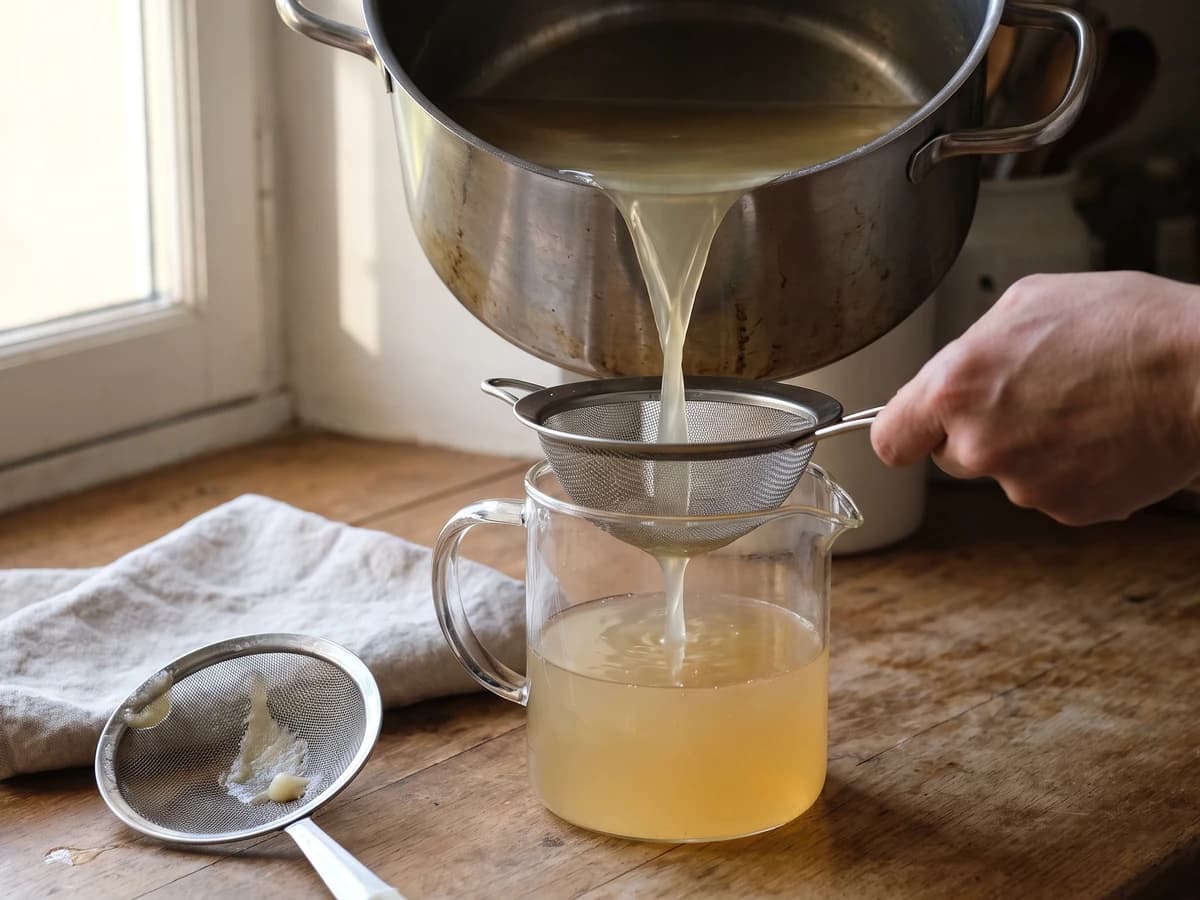
Break the veal bones small, then give them eight hours at a bare tremble. This pale, gelatinous fond becomes the quiet foundation beneath velouté, blanquette, and every sauce that must stay light.
Chef Juliette
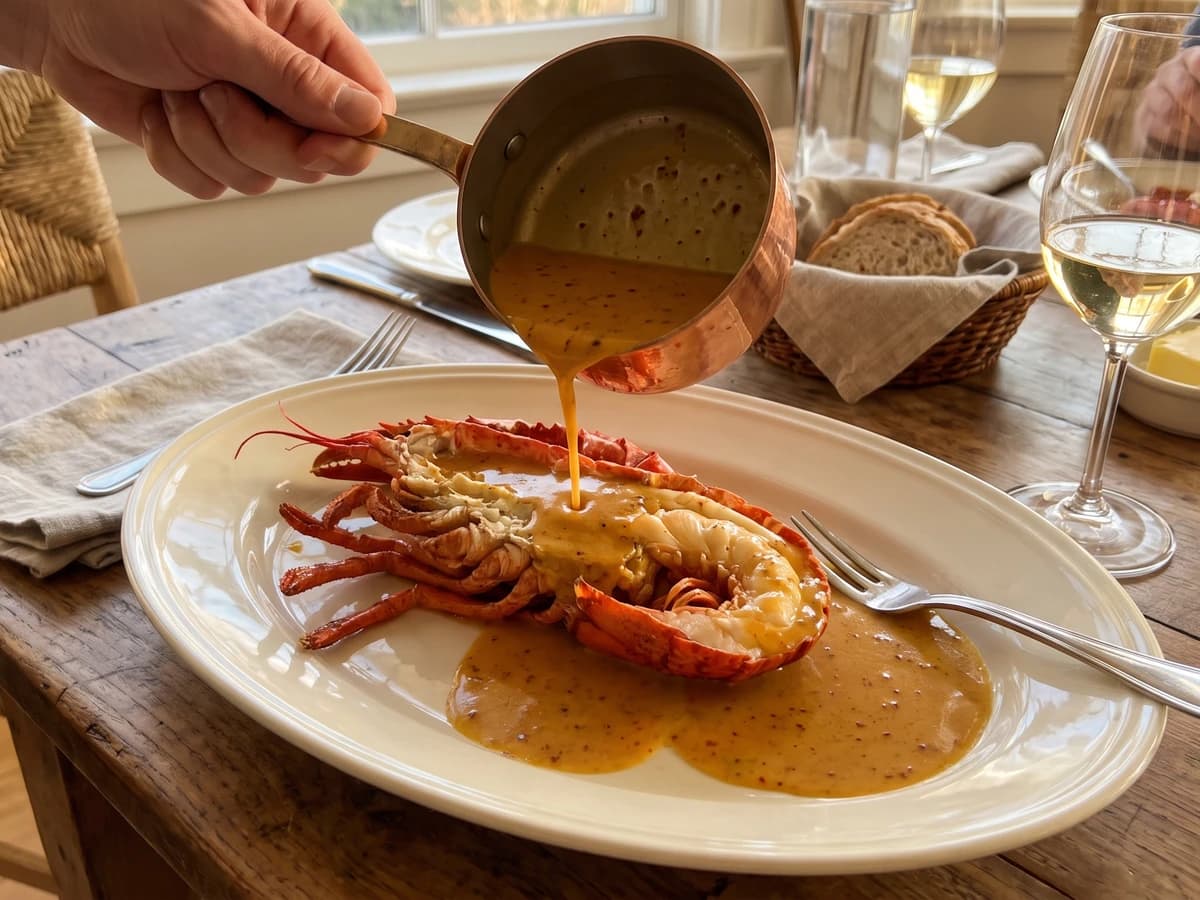
Sauce Orientale concentrates lobster-rich American Sauce with curry, then folds in cream away from the fire: a glossy, gently spiced derivative made for lobster, crayfish, and firm fish.
Chef Juliette
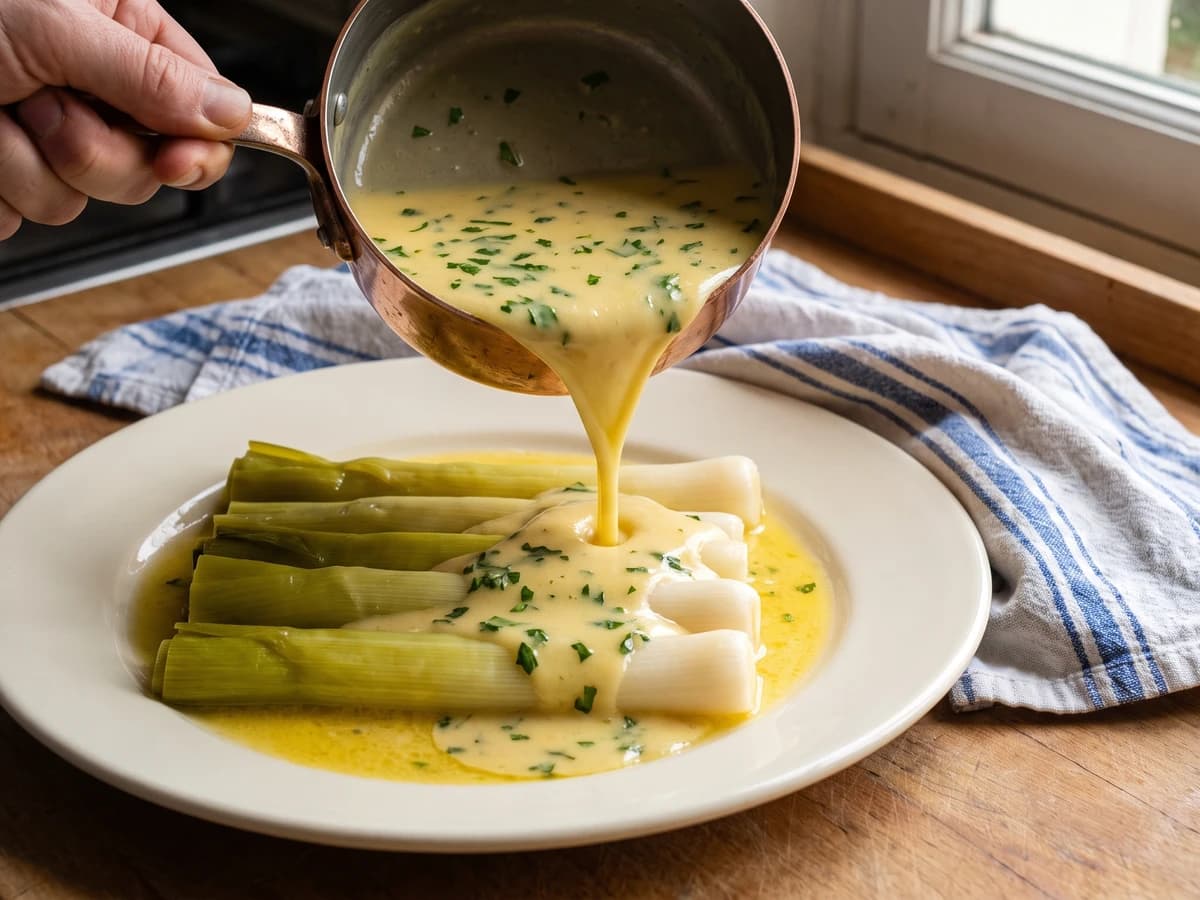
An old lesson in sauce families: Sauce Allemande takes mushroom liquor, then butter, lemon, and parsley, becoming a glossy Poulette for sheep's trotters, leeks, cauliflower, and anything needing gentle richness with a bright edge.