Chef Juliette
Ordinary or White Consommé
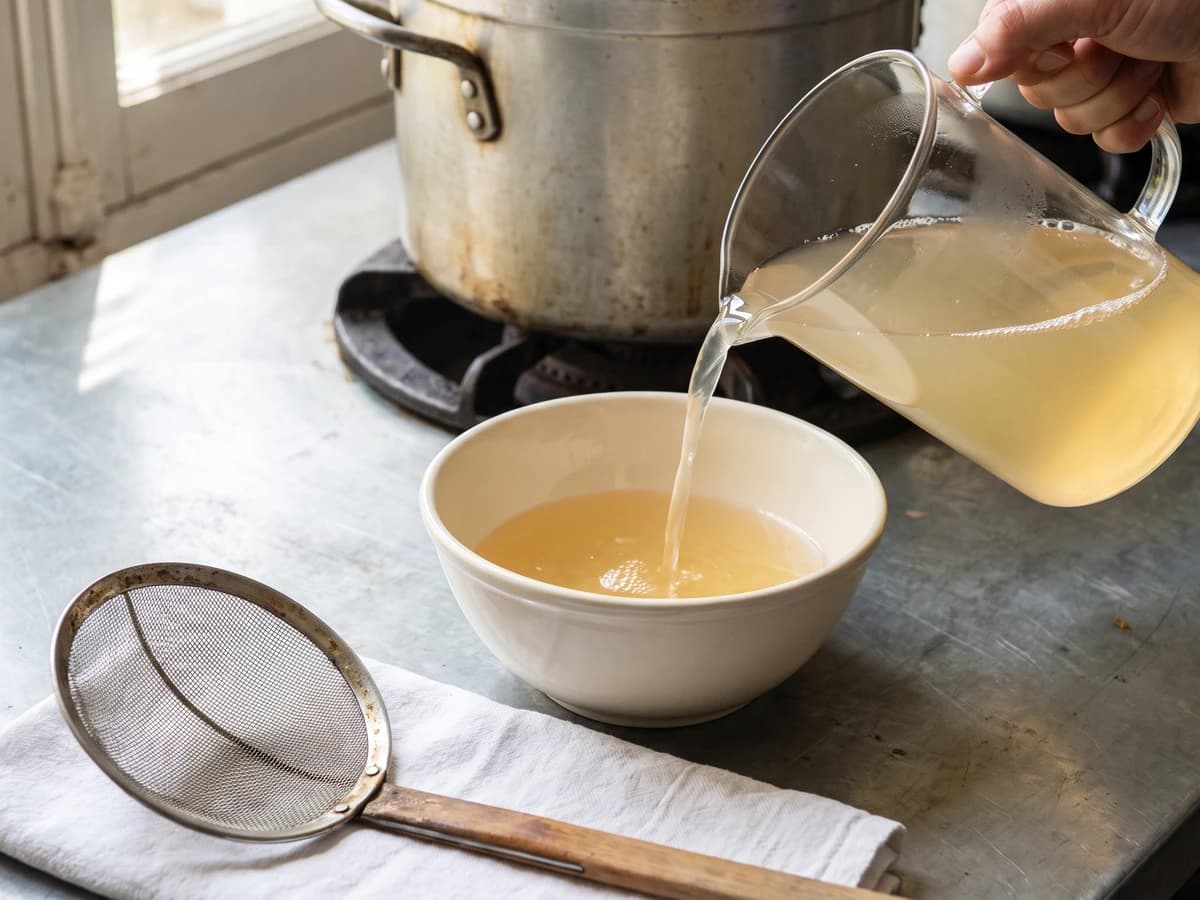
Beef shin, lean beef, and fowl begin in cold water and rise slowly toward a tremble. Skim before the boil, and you learn the quiet discipline that gives every clear French broth its backbone.
A cooking platform built around craft, culture, and the stories behind what we eat.
Created by Chef Juliette
Based on No. 36, Devilled Sauce, from Le Guide Culinaire (1907) by Auguste Escoffier
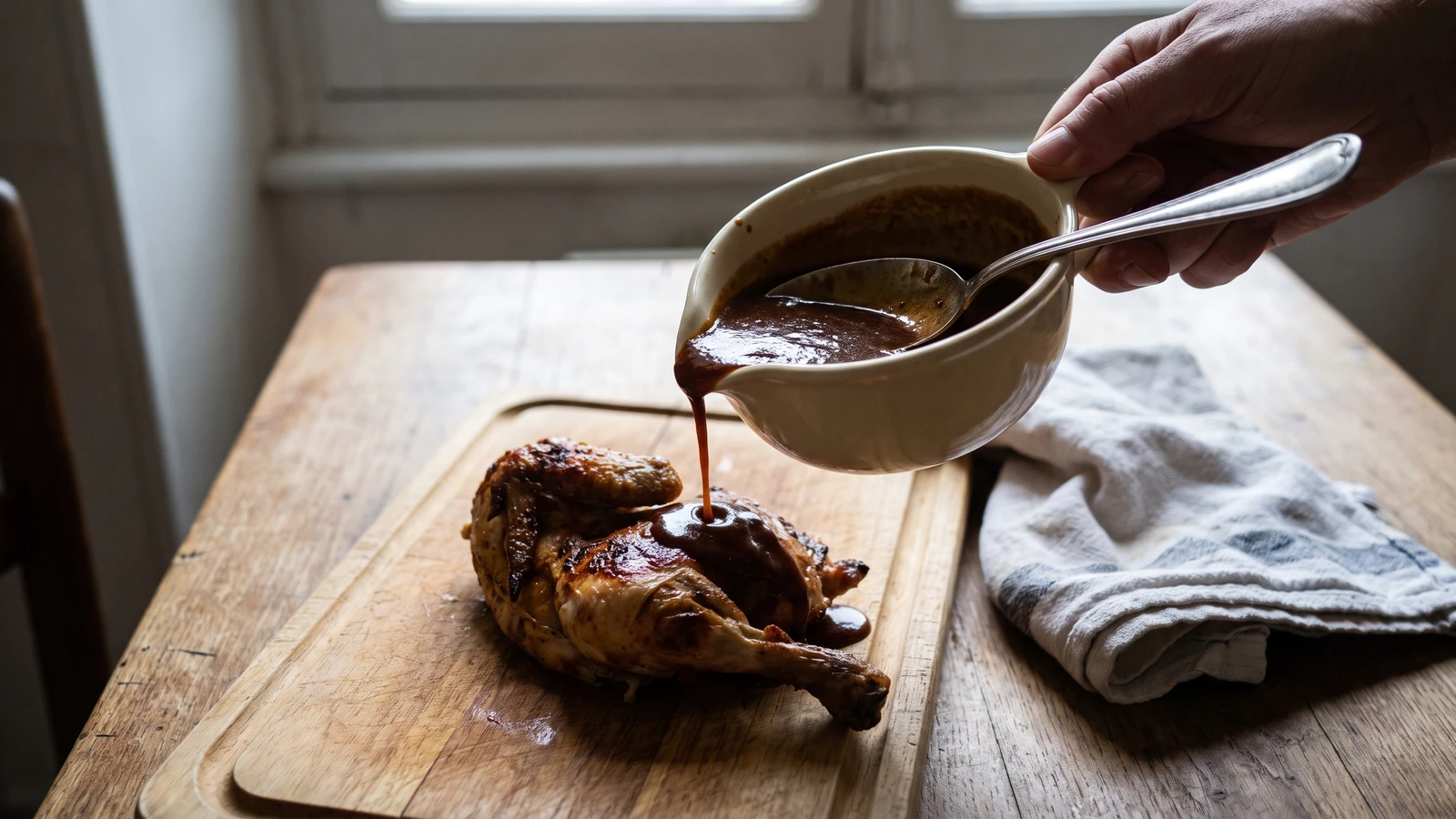
Sauce diable proves that heat needs structure: shallots and white wine reduced into glossy half-glaze, then sharpened with cayenne for grilled poultry, pigeon, or yesterday's roast returned proudly to the table.
Sauce diable (devilled sauce) teaches the discipline of measured reduction. The one true thing to know before touching the pan is that reduce to two-thirds means leave two-thirds behind, not boil away two-thirds. Misread that instruction and the wine turns severe, the half-glaze becomes sticky, and no quantity of cayenne can restore the sauce's balance.
The original kitchen assumed a saucier at the stove and a stockpot never off the fire, so finished half-glaze was simply waiting to be used. At home, begin with prepared half-glaze, replace the dedicated sauce station with one wide saucepan, and exchange muslin for a fine sieve lined with damp cheesecloth. The brigade's service vessel becomes a six-quart pan, and the batch stops at about two quarts, enough to divide among several home meals. One cook, one stove, one evening.
Nothing else has been invited into the pan. No mustard, vinegar, herbs, or finishing butter, because this particular Sauce diable builds its character exactly as the source sets it down: shallots, white wine, half-glaze, and cayenne, in that order. The dedicated saucier is scaffolding and can go; the two measured reductions are the dish and must stay. Mark both levels before the liquid begins to fall.
Sauce diable belongs to the Parisian grand-kitchen repertoire of derivative brown sauces, where finished half-glaze could be turned quickly toward the grill with shallots, wine, and forceful seasoning. It traveled naturally to bistro and bourgeois tables beside grilled poultry, pigeon, and reheated roasts that benefited from a fresh, pointed sauce. In this formula, diable refers specifically to cayenne heat; the mustard and vinegar found in neighboring interpretations are not part of this preparation.
Quantity
3 cups loosely packed (720 ml / 375 g)
thinly sliced
Quantity
5½ cups (1.3 L / 1.29 kg)
Quantity
8¼ cups (2 L / approximately 2.1 kg)
warmed until fluid
Quantity
2 teaspoons (10 ml / 4 g), plus more if needed
Quantity
Up to ½ cup (120 ml / 120 g)
only for correcting an over-reduction
| Ingredient | Quantity |
|---|---|
| shallotsthinly sliced | 3 cups loosely packed (720 ml / 375 g) |
| dry white wine | 5½ cups (1.3 L / 1.29 kg) |
| prepared half-glazewarmed until fluid | 8¼ cups (2 L / approximately 2.1 kg) |
| cayenne pepper | 2 teaspoons (10 ml / 4 g), plus more if needed |
| hot water (optional)only for correcting an over-reduction | Up to ½ cup (120 ml / 120 g) |
Put the sliced shallots and white wine in a wide, straight-sided, heavy saucepan. Hold a clean wooden skewer upright against the pan floor and mark the liquid's starting depth, then make a second mark two-thirds as high. This formula says to reduce to two-thirds, which means evaporating one-third, not two-thirds. Warm the half-glaze gently in a second pan until it pours easily, but don't let it boil.
Bring the shallots and wine to a lively simmer over medium-high heat, then regulate the heat so the surface bubbles steadily without raging. Reduce until the liquid reaches the lower mark, about 3⅔ cups (880 ml) remaining. The shallots should be completely soft and translucent, and the wine should smell concentrated rather than raw. If the pan nearly dries or the shallots begin sticking, pull it from the heat and add hot water a tablespoon (15 ml / 15 g) at a time until the correct level returns. Ça se rattrape.
Pour in the warm half-glaze and stir thoroughly, scraping the pan floor clean. Bring the mixture back to a bare simmer. Mark this new starting depth with the skewer and mark a target two-thirds as high, then reduce gently to that point, about 8 cups (1.9 L). Stir more often as the sauce thickens. It is ready when it coats a spoon in a smooth, glossy film rather than running off like broth.
Watch the pan closely during the final minutes because half-glaze can pass from glossy to sticky with surprising speed. If the sauce reduces below the mark, whisk in hot water little by little until its proper volume and flowing consistency return. If it catches on the bottom, don't scrape the scorched layer into the sauce. Pour the clean sauce into another pan, leaving the burnt film behind, add a spoonful of hot water, and finish gently.
Take the pan off the heat and stir in 1½ teaspoons (7.5 ml / 3 g) of the cayenne. Taste from a cooled spoon, then add the remaining cayenne until the sauce has a clear, confident heat. It should wake the palate without erasing the wine and shallots. Pass the sauce through a fine-mesh sieve lined with damp cheesecloth into a heatproof bowl, pressing the shallots gently but never forcing their pulp through the cloth.
Serve the Sauce diable hot with grilled chicken, other grilled fowl, or pigeon. It is equally useful with re-dished meat, meaning cooked roast meat sliced, warmed gently, and returned to the table with a sauce bold enough to give it a second life. Hold the sauce over the gentlest heat and stir occasionally; if it tightens while waiting, loosen it with a spoonful of hot water. À table!
1 serving (about 60g)
Culinary guides, cultural storytelling, and the editorial depth that makes cooking meaningful.
Discover Culinary ExplorerChef Juliette
Beef shin, lean beef, and fowl begin in cold water and rise slowly toward a tremble. Skim before the boil, and you learn the quiet discipline that gives every clear French broth its backbone.
Chef Juliette
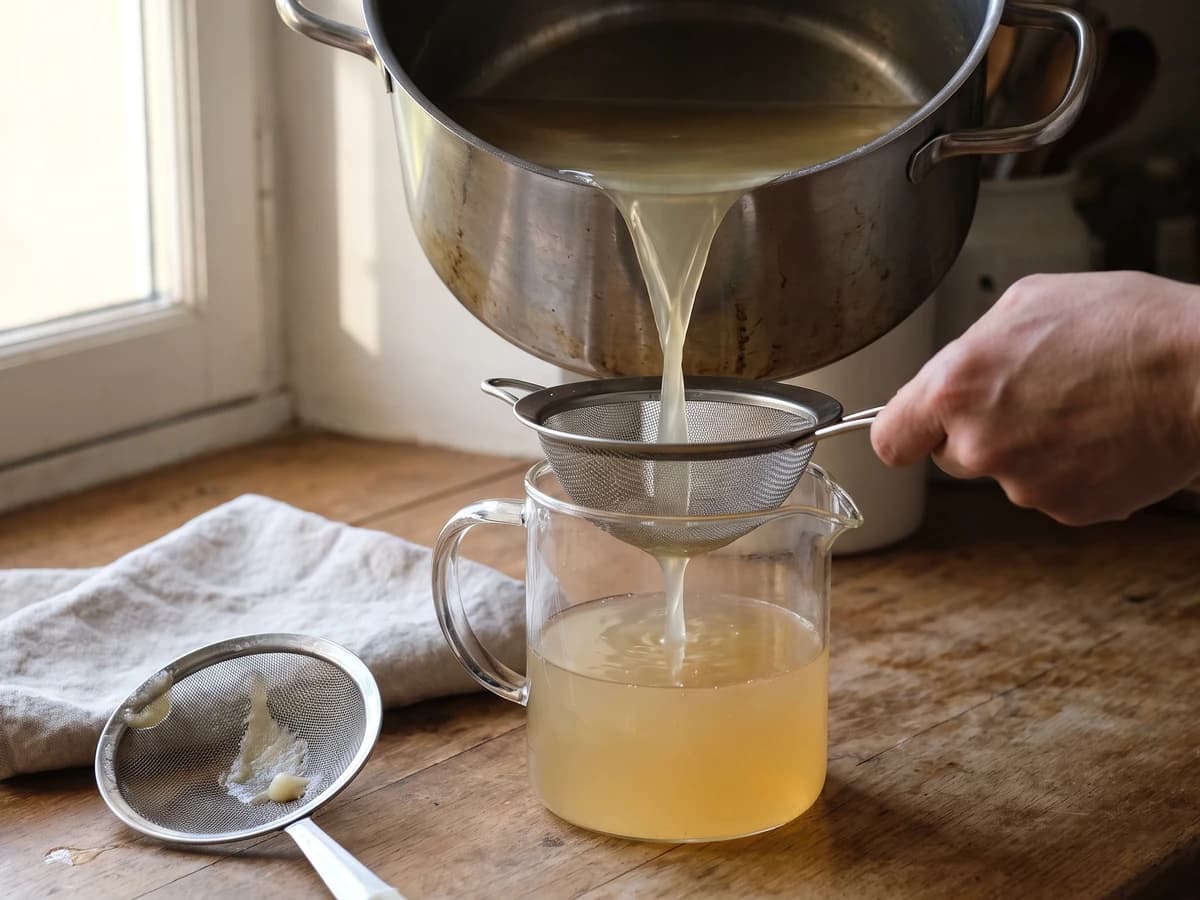
Break the veal bones small, then give them eight hours at a bare tremble. This pale, gelatinous fond becomes the quiet foundation beneath velouté, blanquette, and every sauce that must stay light.
Chef Juliette
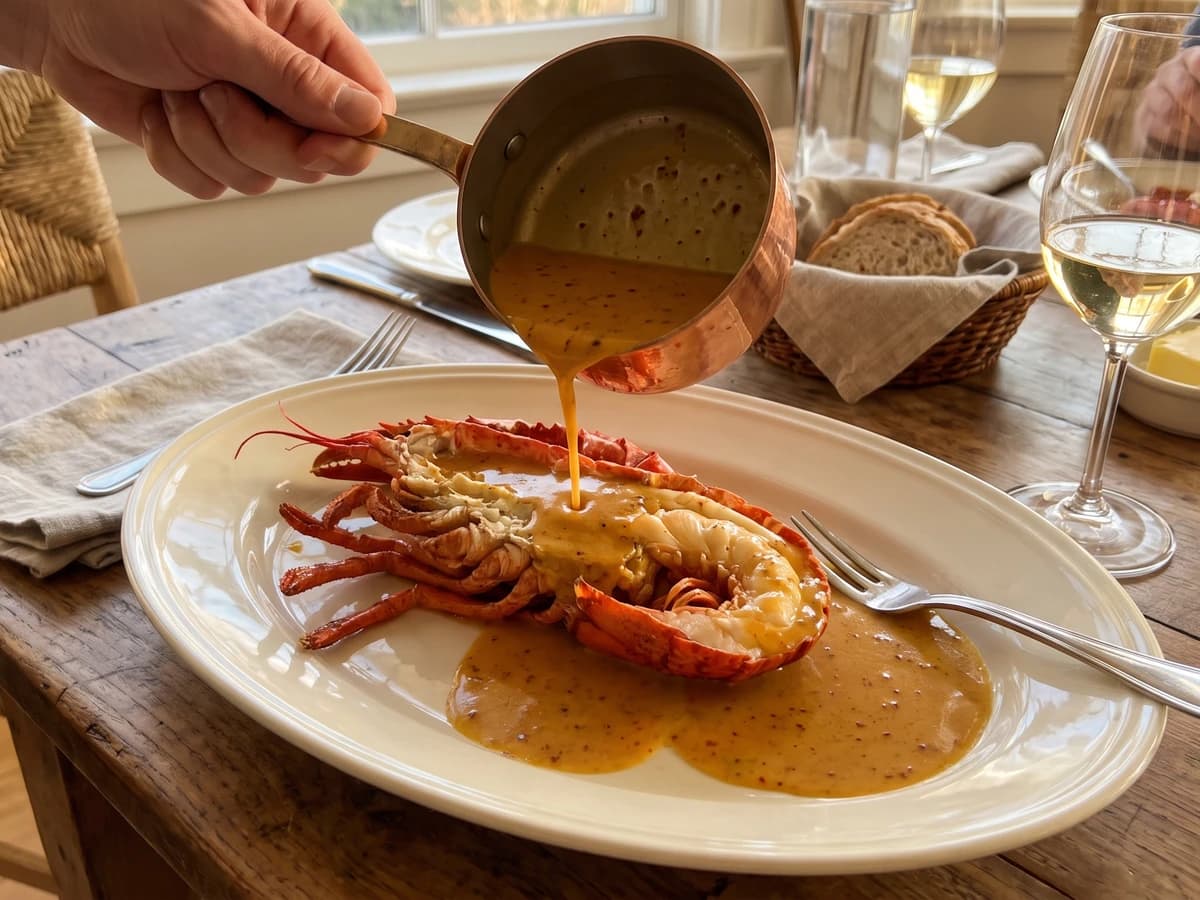
Sauce Orientale concentrates lobster-rich American Sauce with curry, then folds in cream away from the fire: a glossy, gently spiced derivative made for lobster, crayfish, and firm fish.
Chef Juliette
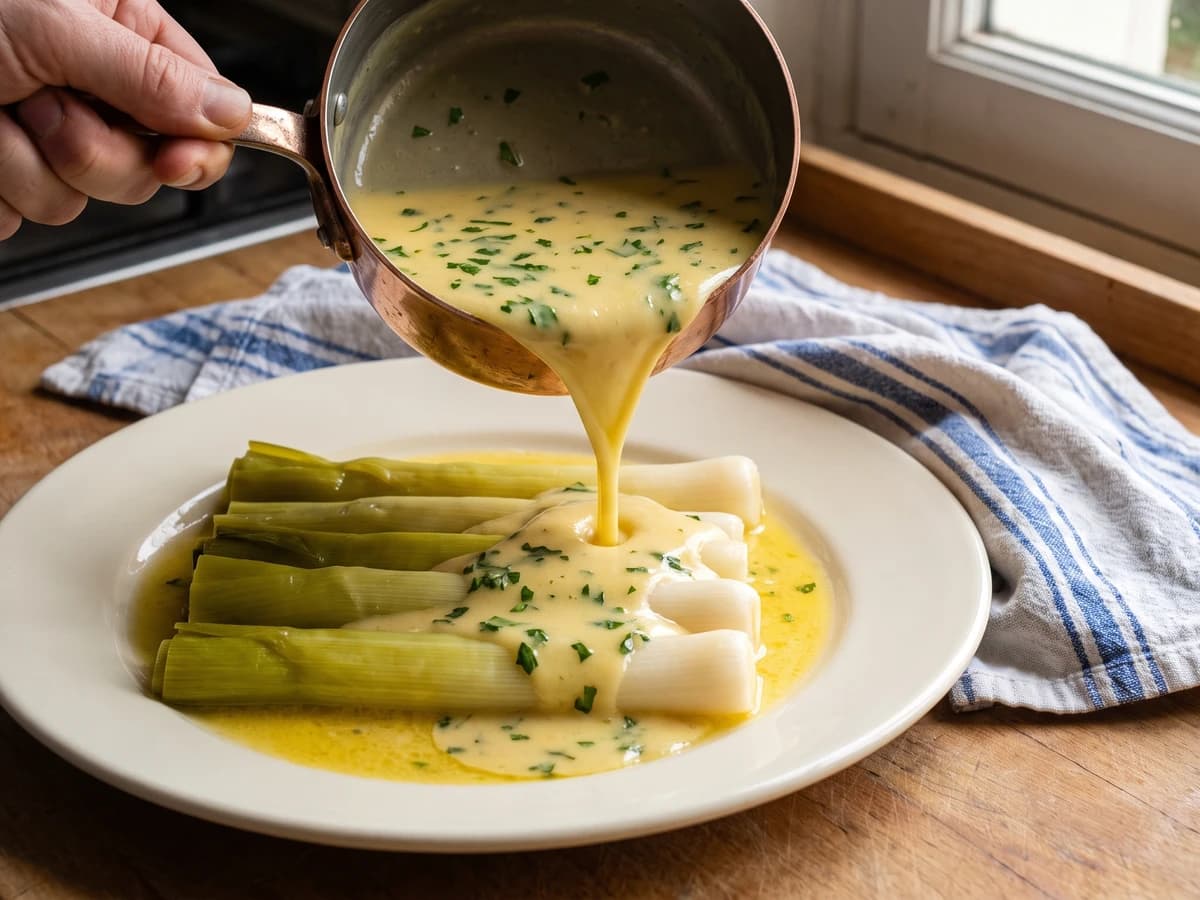
An old lesson in sauce families: Sauce Allemande takes mushroom liquor, then butter, lemon, and parsley, becoming a glossy Poulette for sheep's trotters, leeks, cauliflower, and anything needing gentle richness with a bright edge.