Chef Juliette
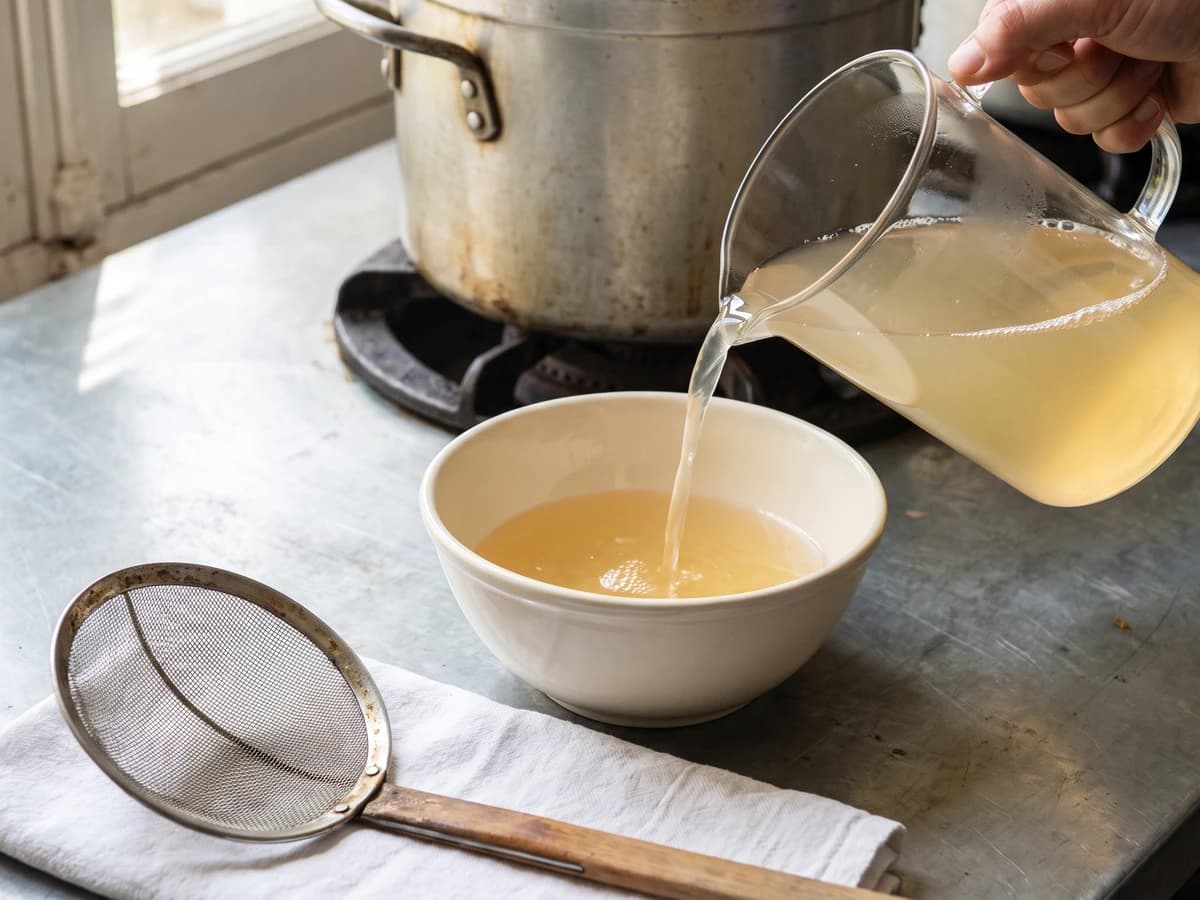
Ordinary or White Consommé
Beef shin, lean beef, and fowl begin in cold water and rise slowly toward a tremble. Skim before the boil, and you learn the quiet discipline that gives every clear French broth its backbone.
A cooking platform built around craft, culture, and the stories behind what we eat.
Created by Chef Juliette
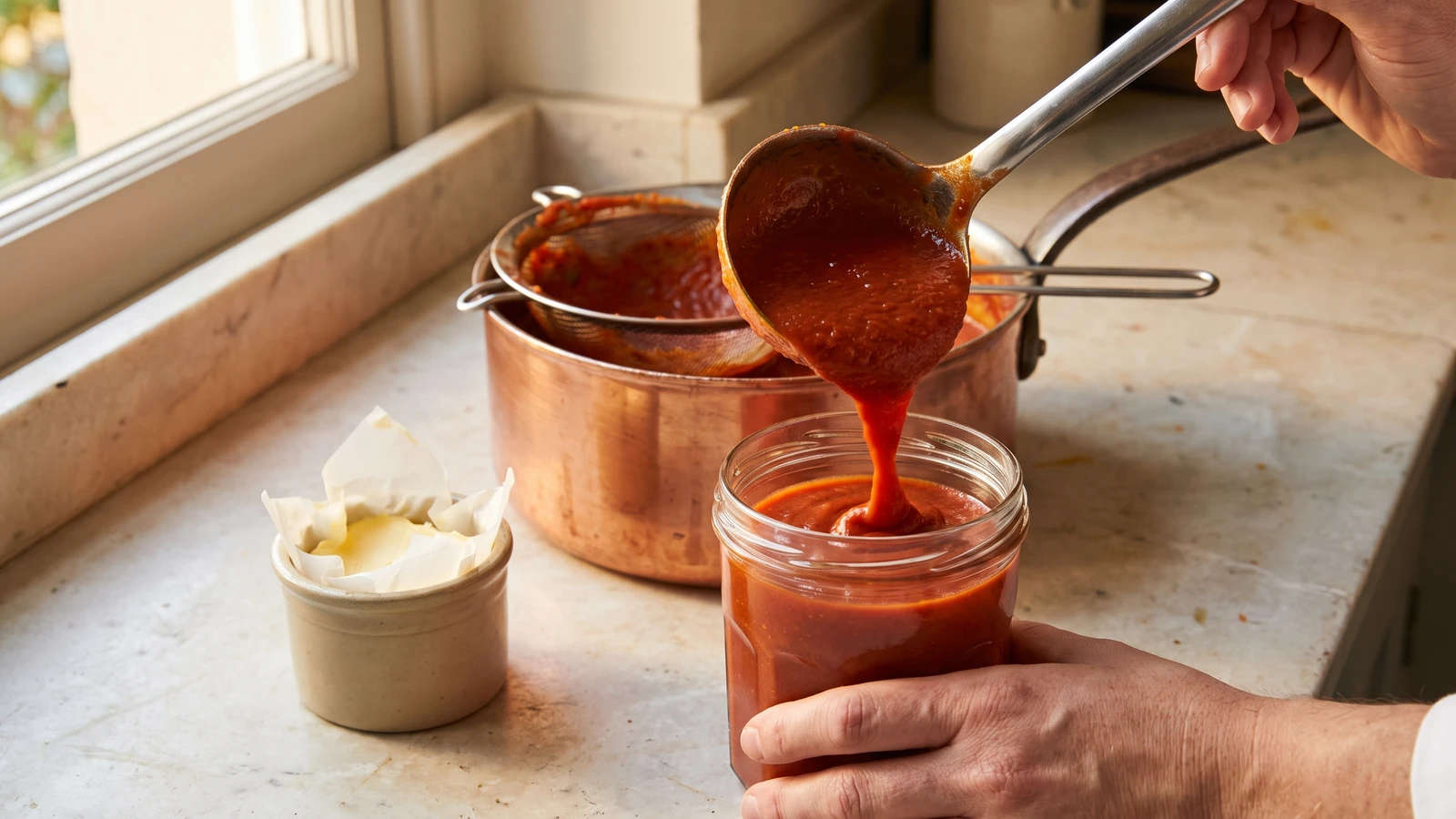
Based on No. 29, Tomato Sauce, from Le Guide Culinaire (1907) by Auguste Escoffier
Salt pork, carrot, onion, blond roux, white stock, and tomatoes become a deep, mellow Sauce Tomate in the oven, proof that a mother sauce is a method before it is a recipe.
Sauce Tomate teaches that tomato depth comes from construction, not brute reduction. The one true thing to know before touching the pan is this: the flour must cook until it only begins to brown. That roux blond gives the finished sauce body and a quiet nuttiness without dulling the tomato.
The original formula assumed a saucier tending four quarts, a pot of white stock never off the fire, and a tammy waiting for the final pass. Here the batch is halved to about two quarts, good unsalted stock replaces the permanent stockpot, and a heavy home pot with a fine-mesh sieve does the brigade's work. Scale and equipment changed because one cook must manage the whole stove. The proportions, flavorings, and sequence did not. One cook, one stove, one evening.
The dedicated sauce station and serving tureen were brigade scaffolding, so they can go. The salt pork foundation, roux blond, covered oven cooking, final sieve, and brief boil are the dish, so they stay. Watch the flour: the moment it smells nutty and only begins to color, stop browning and add the tomato.
Sauce Tomate belongs to the classical sauce kitchens of Paris, which drew the tomato north from the Mediterranean larder and gave it a foundational place through pork, aromatics, stock, and roux. It traveled from professional sauce stations into bourgeois home kitchens because a batch could be prepared ahead and turned toward many suppers. This is not a Provençal tomato sauce built around olive oil: its salt pork, fonds blanc, roux blond, and covered oven cooking place it firmly within the classical national canon.
Quantity
1/2 cup (120 ml / 70 g; 2 1/2 oz)
cut into small cubes
Quantity
2 tablespoons (30 ml / 28 g)
Quantity
about 2/3 cup (160 ml / 85 g; 3 oz)
cut into small cubes
Quantity
about 1/2 cup (120 ml / 85 g; 3 oz)
cut into small cubes
Quantity
1/2 leaf
Quantity
1/2 small sprig
Quantity
1/2 cup plus 1 tablespoon (135 ml / 70 g; 2 1/2 oz)
Quantity
5 pounds (2.27 kg), about 2 quarts (1.9 L) once mashed
cored and crushed
Quantity
1 quart (4 cups / 950 ml / about 950 g)
Quantity
1 1/4 teaspoons (6 ml / 7 g; 1/4 oz)
Quantity
1 tablespoon plus 1/2 teaspoon (17.5 ml / 14 g; 1/2 oz)
Quantity
1/16 teaspoon (0.3 ml / about 0.1 g)
Quantity
1/2 large clove (about 2 g)
crushed
Quantity
1 teaspoon (5 ml / 5 g)
for the surface
| Ingredient | Quantity |
|---|---|
| fat salt porkcut into small cubes | 1/2 cup (120 ml / 70 g; 2 1/2 oz) |
| unsalted butter | 2 tablespoons (30 ml / 28 g) |
| carrotscut into small cubes | about 2/3 cup (160 ml / 85 g; 3 oz) |
| onionscut into small cubes | about 1/2 cup (120 ml / 85 g; 3 oz) |
| bay leaf | 1/2 leaf |
| thyme | 1/2 small sprig |
| all-purpose flour | 1/2 cup plus 1 tablespoon (135 ml / 70 g; 2 1/2 oz) |
| very ripe tomatoescored and crushed | 5 pounds (2.27 kg), about 2 quarts (1.9 L) once mashed |
| unsalted fonds blanc (white stock) | 1 quart (4 cups / 950 ml / about 950 g) |
| fine salt | 1 1/4 teaspoons (6 ml / 7 g; 1/4 oz) |
| granulated sugar | 1 tablespoon plus 1/2 teaspoon (17.5 ml / 14 g; 1/2 oz) |
| freshly ground black pepper | 1/16 teaspoon (0.3 ml / about 0.1 g) |
| garliccrushed | 1/2 large clove (about 2 g) |
| softened unsalted butterfor the surface | 1 teaspoon (5 ml / 5 g) |
Heat the oven to 325°F (165°C). Set a heavy 6-quart pot over medium-low heat, add the salt pork and the 2 tablespoons of butter, and cook for 8 to 10 minutes, stirring occasionally. Let the pork surrender its fat slowly until it looks translucent and nearly melted, with only the faintest gold at its edges. Do not crisp it; the pork is seasoning the sauce, not becoming a garnish.
Add the carrots, onions, bay leaf, and thyme. This is the mirepoix, the diced aromatic base beneath the tomato. Cook for 8 to 10 minutes, stirring and scraping the pot floor, until the vegetables soften and the onions turn translucent. A little color is welcome, but dark browning would pull the sauce away from its mellow character.
Sprinkle in the flour and stir until every grain is coated with fat. Cook for 4 to 6 minutes, stirring constantly, until it becomes a roux blond, a lightly browned flour-and-fat base, and smells faintly nutty rather than raw. Stop when it only begins to color. A dark roux would taste strong and sacrifice the thickening power this sauce needs.
Add the crushed tomatoes in three portions, stirring each one thoroughly into the roux blond, then pour in the fonds blanc in a steady stream while whisking. Add the salt, sugar, pepper, and crushed garlic. If the sauce seizes into floury lumps, take it off the heat and whisk in one ladleful of stock until smooth before continuing. Ça se rattrape. Any stubborn small lumps will be caught by the final sieve.
Raise the heat and bring the sauce to a full boil while stirring across the entire pot floor. Once bubbles rise evenly, cover the pot and move it into the oven. Bringing it properly to the boil first activates the flour and ensures the oven receives one hot, unified sauce rather than a cold mixture that separates before it settles.
Cook, covered, for 1 hour and 30 minutes, stirring once halfway through. The sauce should move at a quiet tremble and deepen to a mellow brick red, with the sharp raw-tomato smell replaced by something round and faintly sweet. If it has caught on the bottom, do not scrape the dark layer into the sauce; transfer the clean portion to another pot and finish the cooking there.
Remove the bay leaf and thyme, then pass the hot sauce through a large fine-mesh sieve into a clean saucepan, pressing firmly with the back of a ladle. The old kitchen used a tammy and a pair of strong arms; the fine sieve is the honest home equivalent. Press enough tomato and vegetable pulp through to give the sauce body, leaving the pork fibers, skins, seeds, and coarse aromatics behind.
Return the strained sauce to a boil and stir constantly for 3 to 5 minutes, until it falls from the spoon in a broad, glossy ribbon. If it is thin, continue boiling gently; if it is too tight, loosen it with a little unsalted stock. Use it at once, or divide it among shallow heatproof containers and rub the softened butter directly over the surface to prevent a skin. The Sauce Tomate is ready. À table!
1 serving (about 130g)
Culinary guides, cultural storytelling, and the editorial depth that makes cooking meaningful.
Discover Culinary ExplorerChef Juliette
Beef shin, lean beef, and fowl begin in cold water and rise slowly toward a tremble. Skim before the boil, and you learn the quiet discipline that gives every clear French broth its backbone.
Chef Juliette
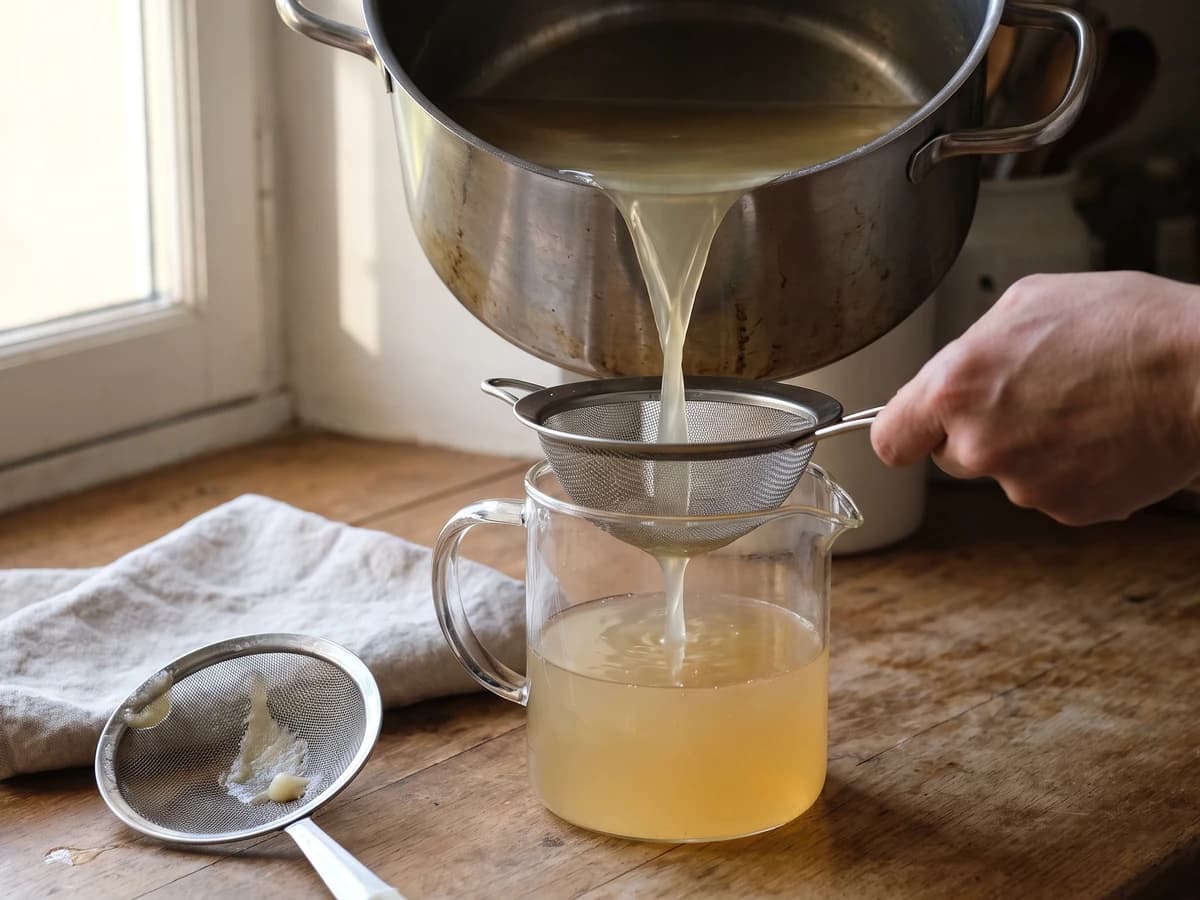
Break the veal bones small, then give them eight hours at a bare tremble. This pale, gelatinous fond becomes the quiet foundation beneath velouté, blanquette, and every sauce that must stay light.
Chef Juliette
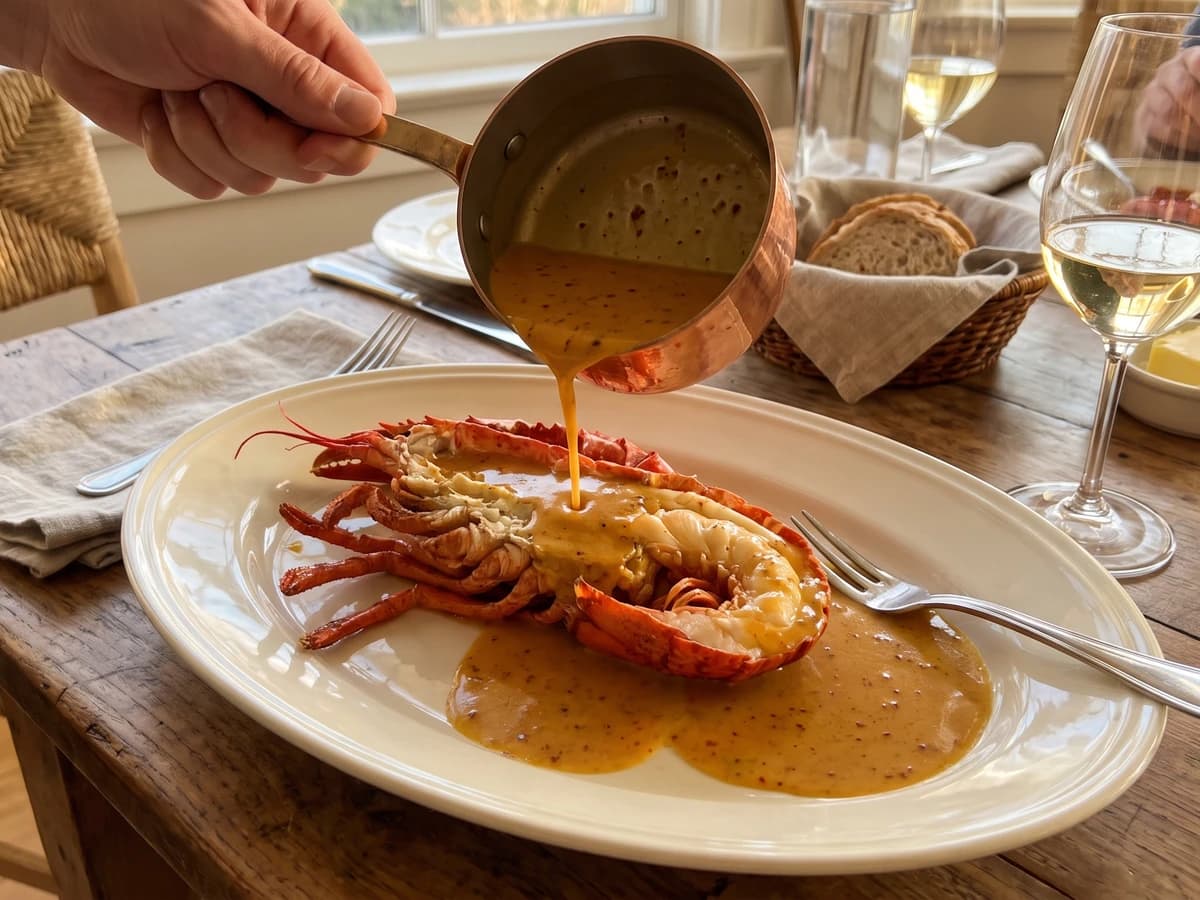
Sauce Orientale concentrates lobster-rich American Sauce with curry, then folds in cream away from the fire: a glossy, gently spiced derivative made for lobster, crayfish, and firm fish.
Chef Juliette
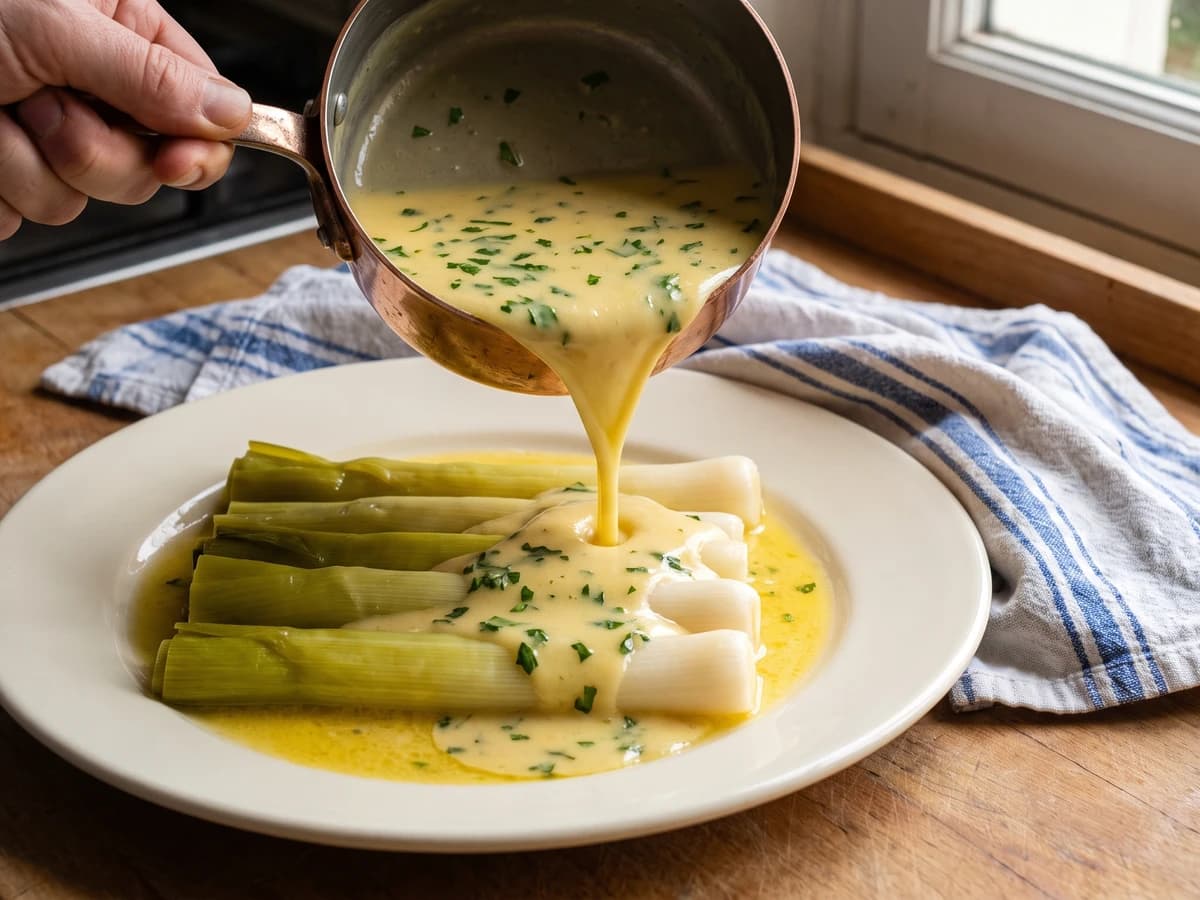
An old lesson in sauce families: Sauce Allemande takes mushroom liquor, then butter, lemon, and parsley, becoming a glossy Poulette for sheep's trotters, leeks, cauliflower, and anything needing gentle richness with a bright edge.