Chef Juliette
Suet Dumpling
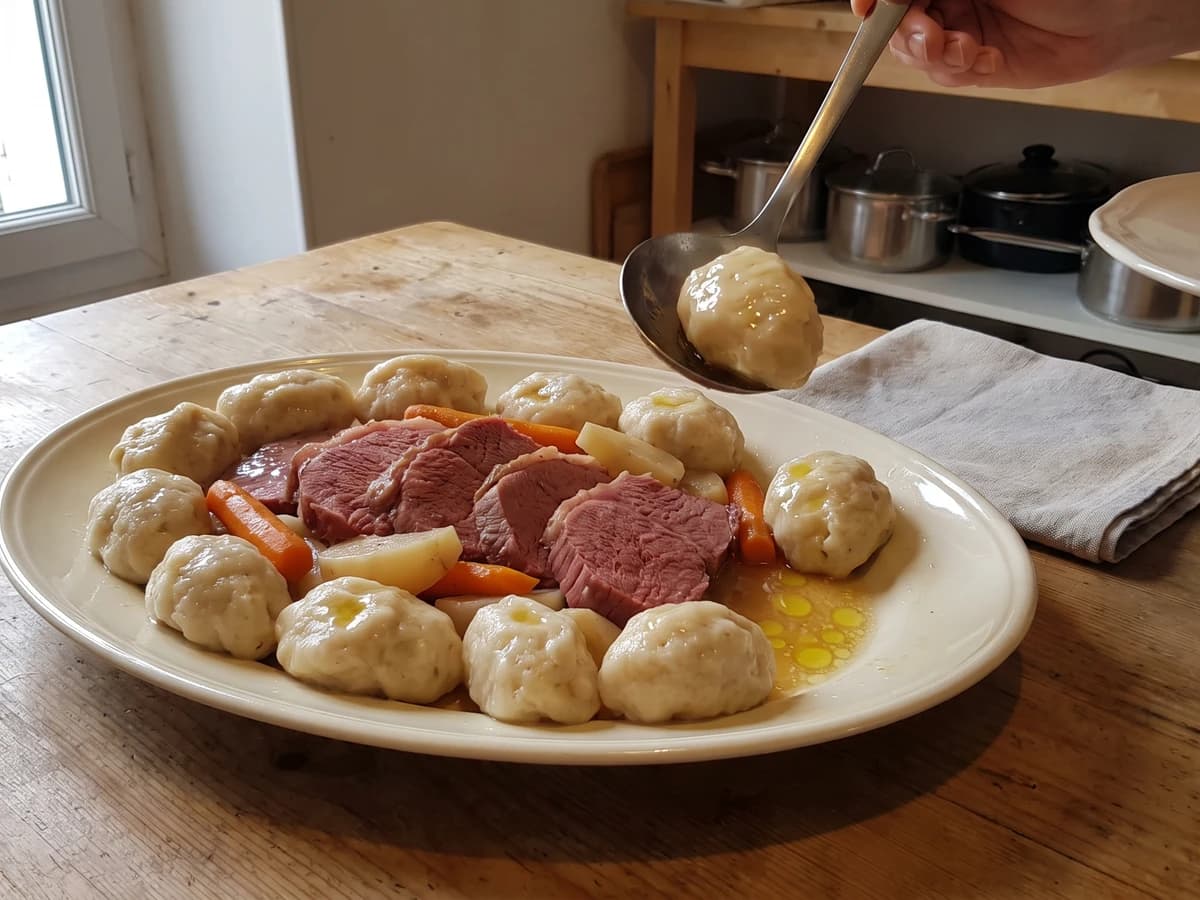
Boulettes au suif, poached beside salt beef, turn equal weights of flour and finely chopped suet into tender, rich dumplings. Keep the beef liquor at a bare tremble and the old garnish works beautifully at home.
A cooking platform built around craft, culture, and the stories behind what we eat.
Created by Chef Juliette
Based on No. 279, Garnishes, from Le Guide Culinaire (1907) by Auguste Escoffier
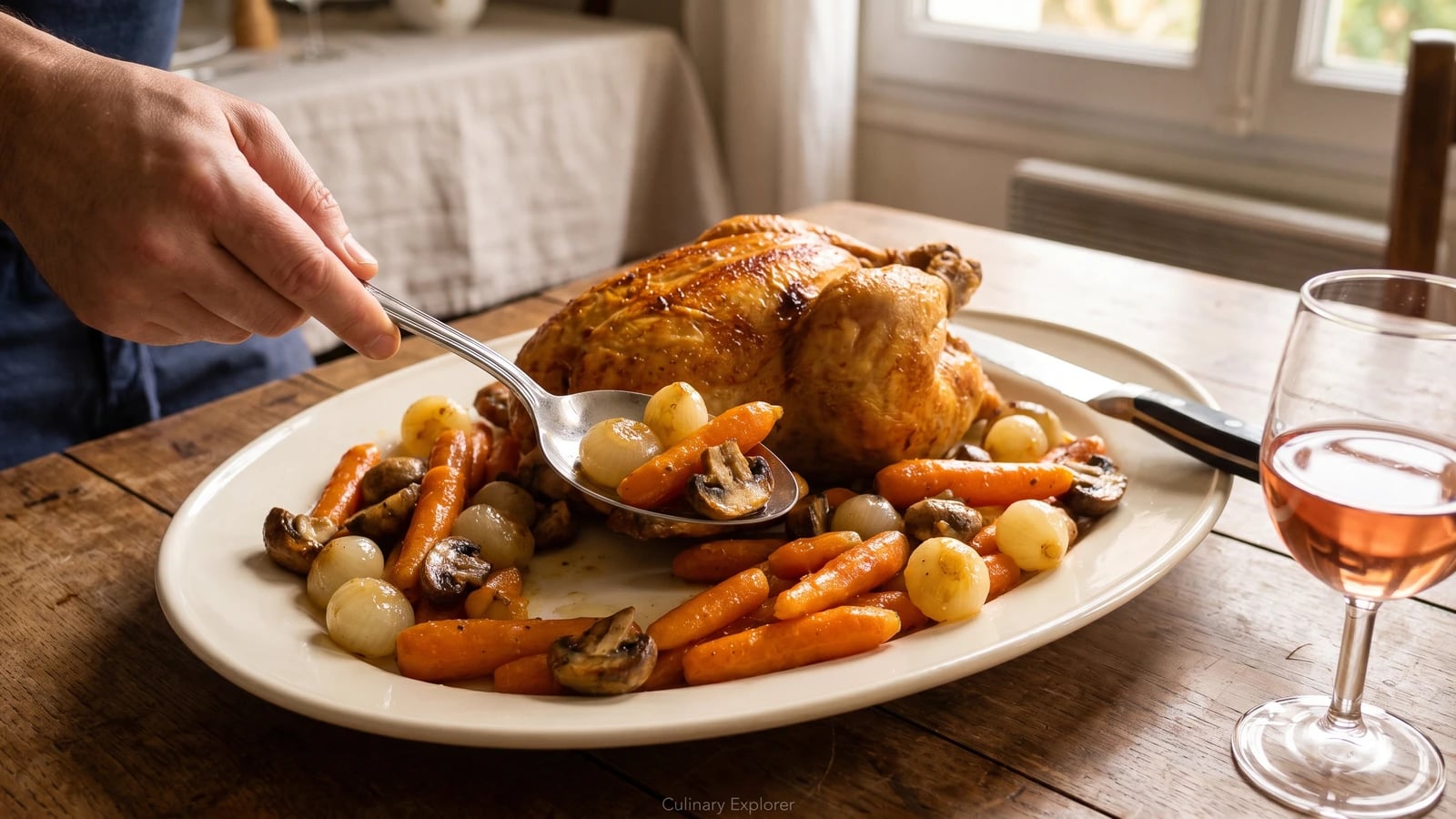
A classical garniture with a clear promise: sweet glazed carrots, pearl onions, and bronzed mushrooms, each cooked on its own terms, then brought together at the final minute beside roast poultry or veal.
Garniture de Carottes, Petits Oignons et Champignons teaches the governing rule of every classical garnish: its name is a promise. What it names must appear, what it does not name stays away, and every component must suit the piece it accompanies. Before touching a pan, know the one thing that decides the result: cook each vegetable on its own terms and bring them together only at the end.
The original entry gives no fixed formula because its subject is the rule itself. It assumed a cook devoted to vegetables, several pans moving at once, and enough hands to turn every carrot into a perfect little shape. This home-scale version names three constituents plainly and makes enough for four, using one saucepan in sequence and one wide skillet. The parade of pans and ornamental knife work is brigade scaffolding and can go; the exact roster, compatible size, separate cooking, and thoughtful arrangement are the dish and must stay. One cook, one stove, one evening.
Done properly, the carrots are sweet and bright, the onions tender but whole, and the mushrooms bronzed at their edges, all held by a fine sheen of real butter. It plays a small part beside a roast, but a real one. The step that matters is separation: glaze the roots gently, sauté the mushrooms hard, then unite them at the final minute.
In Parisian classical kitchens, a garniture was never a decorative afterthought; it was a codified accompaniment whose name fixed its contents, cut, and treatment. The system passed from grand kitchen brigades to the bourgeois table, where carefully prepared vegetables framed a roast or bird and also carried flavour from platter to plate. The common misconception is that garnish means ornament: in the French canon it is part of the dish's identity, and adding a stray ingredient is as misleading as leaving out a named one.
Quantity
12 (about 1 cup / 240 ml / 180 g)
peeled
Quantity
2 (about 1 1/3 cups / 320 ml / 180 g)
peeled and cut into 1/2-inch (1.25-cm) oblique pieces
Quantity
2 1/2 cups (600 ml / 225 g)
wiped, stems trimmed, and quartered
Quantity
4 tablespoons (60 ml / 56 g)
divided
Quantity
1 cup (240 ml / 240 g)
divided
Quantity
1 teaspoon (5 ml / 4 g)
divided
Quantity
3/4 teaspoon (3.75 ml / 4.5 g)
divided
Quantity
1/4 teaspoon (1.25 ml / 0.6 g)
| Ingredient | Quantity |
|---|---|
| small pearl onionspeeled | 12 (about 1 cup / 240 ml / 180 g) |
| medium carrotspeeled and cut into 1/2-inch (1.25-cm) oblique pieces | 2 (about 1 1/3 cups / 320 ml / 180 g) |
| small cremini or button mushroomswiped, stems trimmed, and quartered | 2 1/2 cups (600 ml / 225 g) |
| unsalted butterdivided | 4 tablespoons (60 ml / 56 g) |
| waterdivided | 1 cup (240 ml / 240 g) |
| granulated sugardivided | 1 teaspoon (5 ml / 4 g) |
| fine saltdivided | 3/4 teaspoon (3.75 ml / 4.5 g) |
| freshly ground black pepper | 1/4 teaspoon (1.25 ml / 0.6 g) |
Keep the onions whole, cut the carrots into even oblique pieces, and quarter the mushrooms so all three components look proportionate beside a slice of roast poultry or veal. Do not mix them yet. A garnish is not a pan of vegetables cooked indiscriminately; each constituent keeps its proper shape, texture, and treatment.
Put the carrots in a 2-quart saucepan with 1 tablespoon of the butter, 1/4 cup of the water, 1/2 teaspoon of the sugar, and 1/4 teaspoon of the salt. Cover and simmer gently for 6 to 8 minutes, then uncover and roll the pan as the liquid reduces to a thin, buttery glaze. The carrots should yield to a knife while retaining a little resistance. If the water disappears before they are tender, add a tablespoon from the reserved water; if they soften before the liquor becomes glossy, lift them out, reduce the liquor, and return them briefly. Transfer the glazed carrots and their liquor to a warm bowl.
In the same saucepan, combine the pearl onions with 1 tablespoon of the butter, 1/2 cup of the water, the remaining 1/2 teaspoon of sugar, and another 1/4 teaspoon of salt. Cover and cook at a bare simmer for 10 to 12 minutes, shaking the pan occasionally so the onions stay whole. Uncover and reduce until they are tender, ivory-coloured, and coated in a clear glaze. This is glacer à blanc, glazing without browning. If the sugar begins catching at the edge, lower the heat and add a spoonful of reserved water before it burns. Transfer the onions and their glaze to the bowl with the carrots.
Heat a wide skillet over medium-high heat, then add the remaining 2 tablespoons of butter. When the foaming subsides, add the mushrooms in one uncrowded layer. Leave them untouched for 2 minutes so their first surface can bronze, then sauté for another 4 to 6 minutes until their edges are deeply coloured. Season with the remaining 1/4 teaspoon salt and the pepper. If the mushrooms release a pool of liquid, raise the heat and spread them out; keep cooking until the water evaporates and browning resumes.
Add 1 tablespoon of the reserved water to the mushroom skillet and scrape up the browned fond. Return the glazed carrots and onions with their liquor, then toss everything over moderate heat for 1 to 2 minutes, just until the separate glazes become one fine butter sheen. The vegetables should glisten without sitting in a puddle. If the butter separates, take the skillet off the heat, add a teaspoon of water, and roll the pan until it comes together. Ça se rattrape. If the garnish is wet, lift out the vegetables, reduce the liquor briskly, and return them for one final toss.
Spoon the garniture beside roast poultry or veal while it is glossy and hot, allowing a generous quarter of the vegetables for each person. On a serving platter, arrange it in a low border that follows the roast without covering browned skin or the carving area. Add no parsley, peas, or decorative truffle simply for colour; the name states what belongs, and the finished garniture keeps that promise. À table!
1 serving (about 140g)
Culinary guides, cultural storytelling, and the editorial depth that makes cooking meaningful.
Discover Culinary ExplorerChef Juliette
Boulettes au suif, poached beside salt beef, turn equal weights of flour and finely chopped suet into tender, rich dumplings. Keep the beef liquor at a bare tremble and the old garnish works beautifully at home.

Chef Juliette
Bread, flour, frangipane, and rice become four cool, supple panades for binding forcemeats, each changing body and flavor while preserving tenderness. The finest Mousselines need none, and knowing that distinction is the lesson.

Chef Juliette
Panade au pain is bread, milk, salt, heat, and attention: stir until the paste releases cleanly, butter it against a skin, and you have the quiet binder behind tender French farces.

Chef Juliette
Panade de farine teaches the drying stroke behind pâte à choux: flour meets boiling buttered water, then stays over the fire until the paste gathers, smooths, and quits the pan cleanly.