Chef Juliette
Suet Dumpling
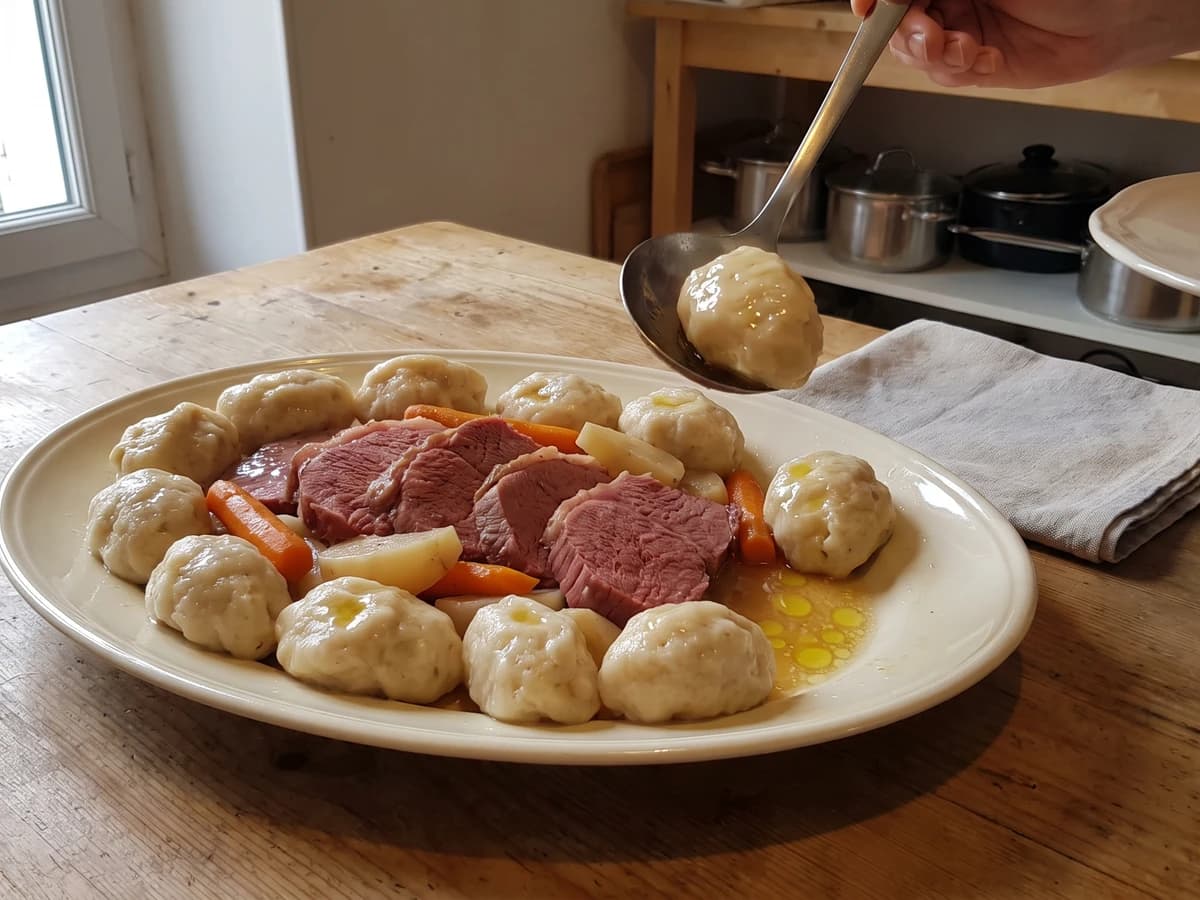
Boulettes au suif, poached beside salt beef, turn equal weights of flour and finely chopped suet into tender, rich dumplings. Keep the beef liquor at a bare tremble and the old garnish works beautifully at home.
A cooking platform built around craft, culture, and the stories behind what we eat.
Created by Chef Juliette
Based on No. 271, Light Gratin, from Le Guide Culinaire (1907) by Auguste Escoffier
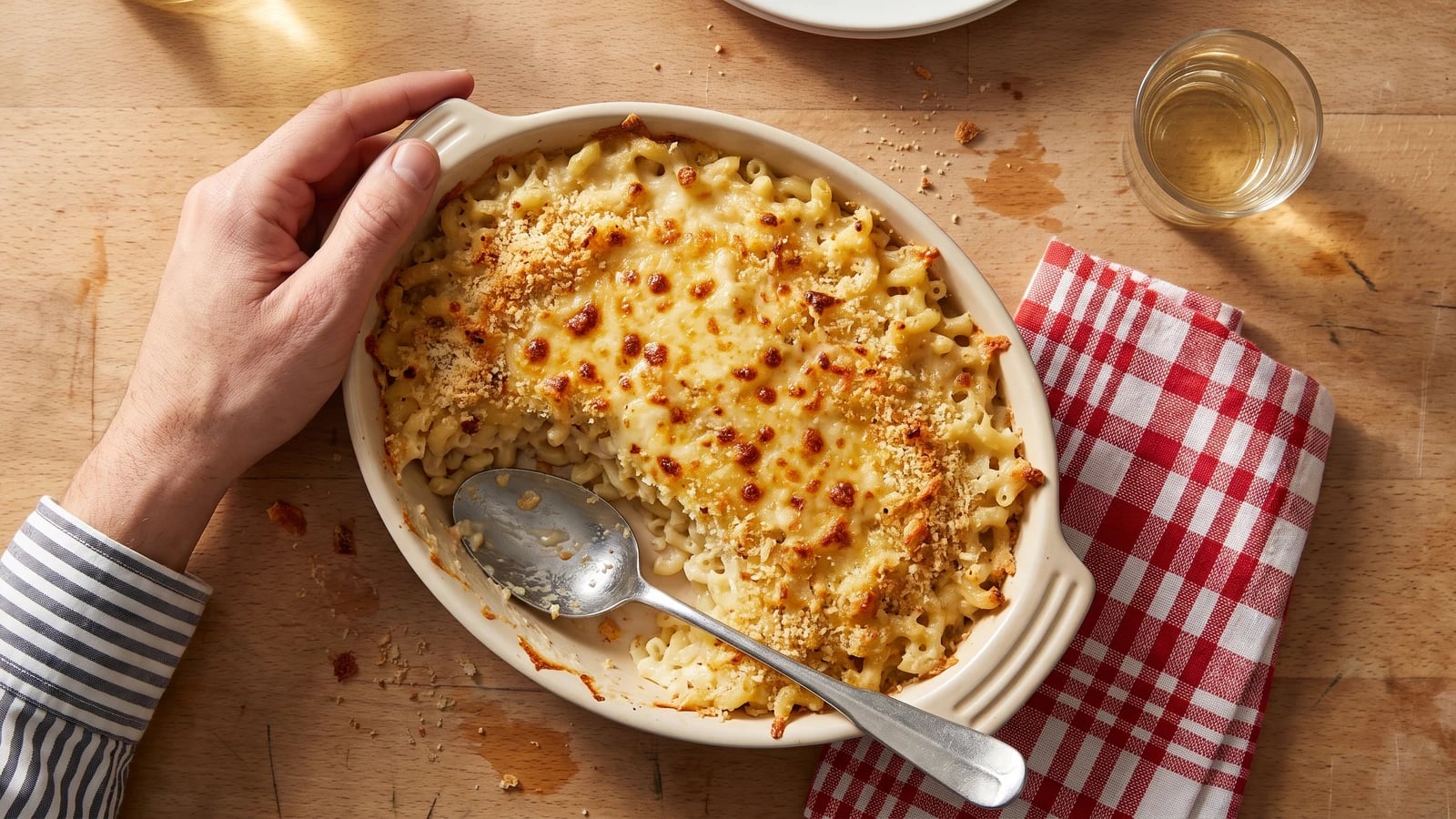
Gratin léger proves that a gratin is first a crust: macaroni, Gruyère, fine crumbs, and butter browned gently until the cheese melts into one even, crisp-edged golden lid.
Gratin léger (light gratin) teaches the cleanest meaning of gratiner, to give a dish an evenly browned surface. Before you touch a pan, know the one thing that decides it: moderate heat lets the grated cheese melt through the crumbs before either one scorches. The crust should be thin, level, and continuous, not a rubble heap.
The source assumes a prepared farinaceous base and a salamander watched by a cook who did nothing else for that moment. A classical brigade might have a saucier and stock never off the fire, but this formula reaches for neither; sauce would change its intent. For one cook, one stove, one evening, a shallow dish on the upper rack of a moderate oven is the honest equivalent, and fine dry breadcrumbs stand in for bread raspings. The dedicated station was scaffolding, and it can go. Cheese, crumbs, real butter, and controlled heat are the dish, and they stay.
Here the method is scaled to one small dish of macaroni, enough for four generous side servings. Done correctly, the top is butter-gold with deeper bronze freckles, the edges are crisp, and the cheese binds the crumbs into a single delicate coat. Spread that coat evenly before the dish enters the oven. This is the step that matters most.
The gratin léger belongs less to one province than to the classical French kitchen and the bourgeois table, where gratin named a browned surface before it came to suggest a whole family of casseroles. Cooks used this light coating on macaroni, lasagnes, noodles, gnocchi, and stuffed vegetables because grated cheese, bread raspings, butter, and top heat finished a prepared dish without building another sauce. Here, light describes the thinness of the coating, not the absence of richness; melted cheese is what gives the crust its even colour.
Quantity
3 quarts (2.8 L / 2.8 kg)
Quantity
1 tablespoon (15 ml / 18 g)
for the cooking water
Quantity
2 cups (480 ml / 225 g)
Quantity
3 tablespoons (45 ml / 42 g)
softened and divided
Quantity
¾ cup (180 ml / 75 g)
finely grated
Quantity
⅓ cup (80 ml / 30 g)
| Ingredient | Quantity |
|---|---|
| water | 3 quarts (2.8 L / 2.8 kg) |
| fine saltfor the cooking water | 1 tablespoon (15 ml / 18 g) |
| dried small macaroni | 2 cups (480 ml / 225 g) |
| unsalted buttersoftened and divided | 3 tablespoons (45 ml / 42 g) |
| Gruyèrefinely grated | ¾ cup (180 ml / 75 g) |
| fine dry breadcrumbs | ⅓ cup (80 ml / 30 g) |
Set a rack in the upper third of the oven and heat it to 375°F (190°C). Coat a shallow 1½-quart (1.4 L) gratin dish with 1 teaspoon (5 ml / 5 g) of the butter, paying attention to the corners where macaroni likes to catch. The upper rack supplies measured top heat without the violence of a broiler.
Bring the water to a full boil, add the salt, and cook the macaroni until just tender all the way through. Don't leave a chalky centre, because this dry gratin coating supplies no liquid to finish cooking the pasta. Drain thoroughly, shake the colander well, and toss the hot macaroni with 2 teaspoons (10 ml / 9 g) of the butter. If water still clings inside the tubes, ça se rattrape: return the macaroni to the hot, dry saucepan for 30 seconds and toss until the moisture disappears. Spread it evenly in the prepared dish.
Mix the grated Gruyère and fine breadcrumbs, then scatter them from edge to edge in one loose, even layer. Don't press the topping down. Dot it uniformly with the remaining 2 tablespoons (30 ml / 28 g) butter, making small pieces rather than a few large islands. Look across the dish before it enters the oven: if you see bare patches or mounds, redistribute the coating now. Evenness is the technique.
Bake for 15 to 20 minutes, until the cheese has melted through the crumbs and the entire surface is butter-gold with small bronze freckles. The rim should bubble lightly, but the crumbs must not blacken. If one side colours first, rotate the dish; if a corner threatens to burn, cover only that spot with a small piece of foil. Don't reach immediately for the broiler. Moderate heat is what allows the cheese to form an even crust.
Let the gratin stand for 3 to 5 minutes so the melted cheese settles around the crumbs and the coating cuts cleanly under the serving spoon. Bring it to the table in its baking dish and serve while the edges retain their crisp bite. Cooking well is not cooking fancy. À table!
1 serving (about 165g)
Culinary guides, cultural storytelling, and the editorial depth that makes cooking meaningful.
Discover Culinary ExplorerChef Juliette
Boulettes au suif, poached beside salt beef, turn equal weights of flour and finely chopped suet into tender, rich dumplings. Keep the beef liquor at a bare tremble and the old garnish works beautifully at home.

Chef Juliette
Bread, flour, frangipane, and rice become four cool, supple panades for binding forcemeats, each changing body and flavor while preserving tenderness. The finest Mousselines need none, and knowing that distinction is the lesson.

Chef Juliette
Panade au pain is bread, milk, salt, heat, and attention: stir until the paste releases cleanly, butter it against a skin, and you have the quiet binder behind tender French farces.

Chef Juliette
Panade de farine teaches the drying stroke behind pâte à choux: flour meets boiling buttered water, then stays over the fire until the paste gathers, smooths, and quits the pan cleanly.