Chef Juliette
Suet Dumpling
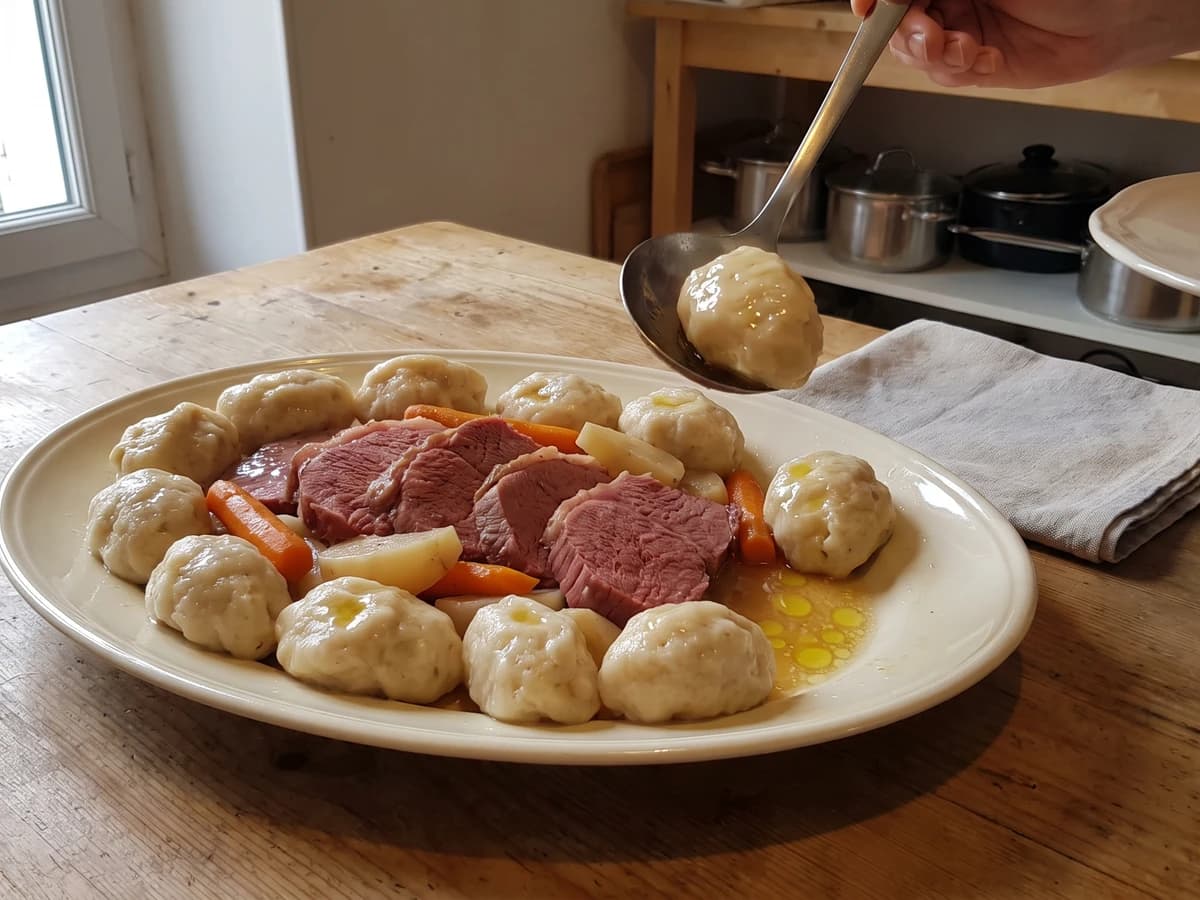
Boulettes au suif, poached beside salt beef, turn equal weights of flour and finely chopped suet into tender, rich dumplings. Keep the beef liquor at a bare tremble and the old garnish works beautifully at home.
A cooking platform built around craft, culture, and the stories behind what we eat.
Created by Chef Juliette
Based on No. 270, Rapid Gratin, from Le Guide Culinaire (1907) by Auguste Escoffier
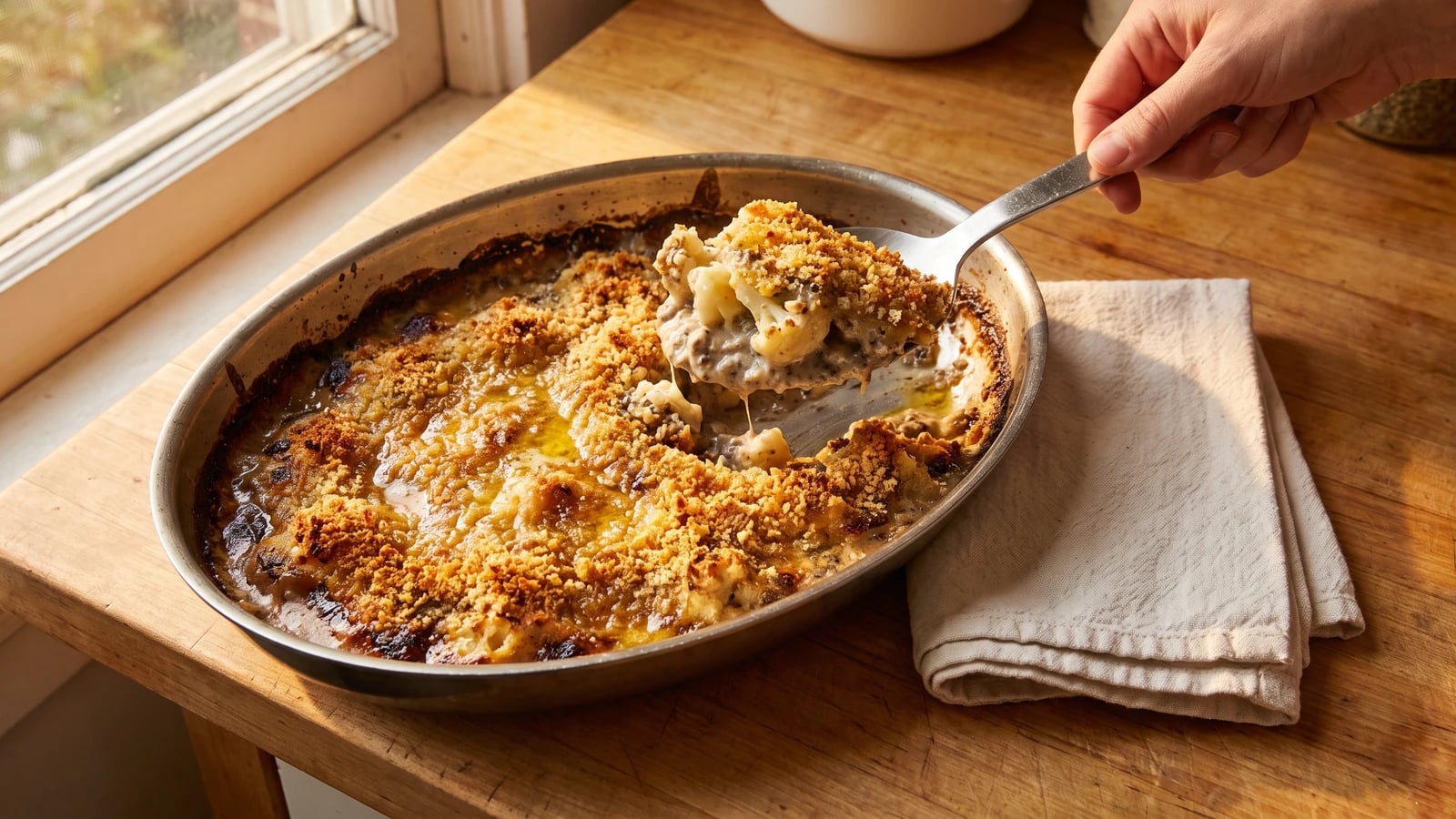
Gratin rapide proves that gratin is the crust, not the casserole: hot cauliflower, mushroom-rich duxelle sauce, fine bread raspings, and butter, bronzed under fierce heat in minutes.
Gratin rapide (rapid gratin) teaches one true thing: the food is already cooked, so the only cooking left is the crust. Before you touch a pan, know that both the cauliflower and the duxelle sauce must enter the gratin dish hot. Fierce heat can bronze crumbs quickly, but it cannot warm a cold middle without burning the top.
The old formula assumed a saucier with duxelle sauce ready, cooked ingredients held warm, and a fierce service oven, often with a salamander close by. At home, a fully heated broiler and a shallow gratin dish provide the same concentrated heat. The separate production is brigade scaffolding, so it goes. The essential sequence stays intact: warm the cooked food, season it, cover it with hot sauce, scatter bread raspings and real butter, then form the gratin quickly. One cook, one stove, one evening.
The source permits cooked meat, fish, or vegetables. Cauliflower gives that general method a generous four-person side dish without changing its intent or sequence. Drain it thoroughly and warm it through before assembly. That dry, hot foundation is the step that decides everything.
Gratin rapide belongs to the classical service kitchens of Paris, where a finished meat, fish, or vegetable could be sauced and sent beneath fierce top heat at the last moment. It moved naturally onto bourgeois home tables because it transformed cooked food already on hand without recooking it into submission. The term gratin properly names the browned crust and the act of forming it, not a particular casserole or filling.
Quantity
4 cups (950 ml / 500 g)
cooked until just tender and thoroughly drained
Quantity
1¼ cups (300 ml / 300 g)
heated
Quantity
½ teaspoon (2.5 ml / 3 g)
Quantity
⅓ cup (80 ml / 30 g)
Quantity
2 tablespoons (30 ml / 28 g)
cut into small pieces
| Ingredient | Quantity |
|---|---|
| cooked cauliflower floretscooked until just tender and thoroughly drained | 4 cups (950 ml / 500 g) |
| duxelle sauceheated | 1¼ cups (300 ml / 300 g) |
| fine salt | ½ teaspoon (2.5 ml / 3 g) |
| fine fresh bread raspings | ⅓ cup (80 ml / 30 g) |
| unsalted buttercut into small pieces | 2 tablespoons (30 ml / 28 g) |
Set an oven rack 5 to 6 inches (13 to 15 cm) below the broiler and heat the broiler on high. If your oven has no broiler, heat it to 500°F (260°C) with the rack in the upper third. Have a shallow 1½-quart (1.4 L) broiler-safe gratin dish ready. Concentrated top heat is not decoration here; forming the crust quickly is the dish.
Put the cooked cauliflower in a wide skillet over medium heat and turn it gently for 3 to 4 minutes, until each floret is hot at its centre. Season with the salt. If moisture gathers in the pan, drain it away and continue uncovered for another minute. Wet cauliflower dilutes the sauce and softens the crumbs, but ça se rattrape: keep it over moderate heat just until the surface dries, without cooking the florets further.
Arrange the hot cauliflower snugly in the gratin dish. Bring the duxelle sauce to a bare simmer in a small saucepan, stirring so it does not catch, then spoon it evenly over the florets. Cover the food rather than flooding it; small peaks of cauliflower may remain visible, but every serving should carry sauce.
Scatter the fine bread raspings evenly from edge to edge, then dot the surface with the butter. Keep this order. The crumbs make the dry crust and the butter bronzes it; stirring them into the sauce would produce paste instead of gratin.
Set the dish beneath the broiler for 3 to 5 minutes, watching continuously, until the sauce bubbles around the rim and the crumbs turn butter-gold with deeper bronze patches. Rotate the dish once if your broiler colours unevenly. If the crumbs brown before the rim bubbles, turn off the broiler, shield the surface loosely with foil, and finish at 450°F (230°C) for 3 to 5 minutes. The components went in too cool, but the dish is saved. Rest for 2 minutes, then serve from the gratin dish. À table!
1 serving (about 200g)
Culinary guides, cultural storytelling, and the editorial depth that makes cooking meaningful.
Discover Culinary ExplorerChef Juliette
Boulettes au suif, poached beside salt beef, turn equal weights of flour and finely chopped suet into tender, rich dumplings. Keep the beef liquor at a bare tremble and the old garnish works beautifully at home.

Chef Juliette
Bread, flour, frangipane, and rice become four cool, supple panades for binding forcemeats, each changing body and flavor while preserving tenderness. The finest Mousselines need none, and knowing that distinction is the lesson.

Chef Juliette
Panade au pain is bread, milk, salt, heat, and attention: stir until the paste releases cleanly, butter it against a skin, and you have the quiet binder behind tender French farces.

Chef Juliette
Panade de farine teaches the drying stroke behind pâte à choux: flour meets boiling buttered water, then stays over the fire until the paste gathers, smooths, and quits the pan cleanly.