Chef Juliette
Ordinary or White Consommé
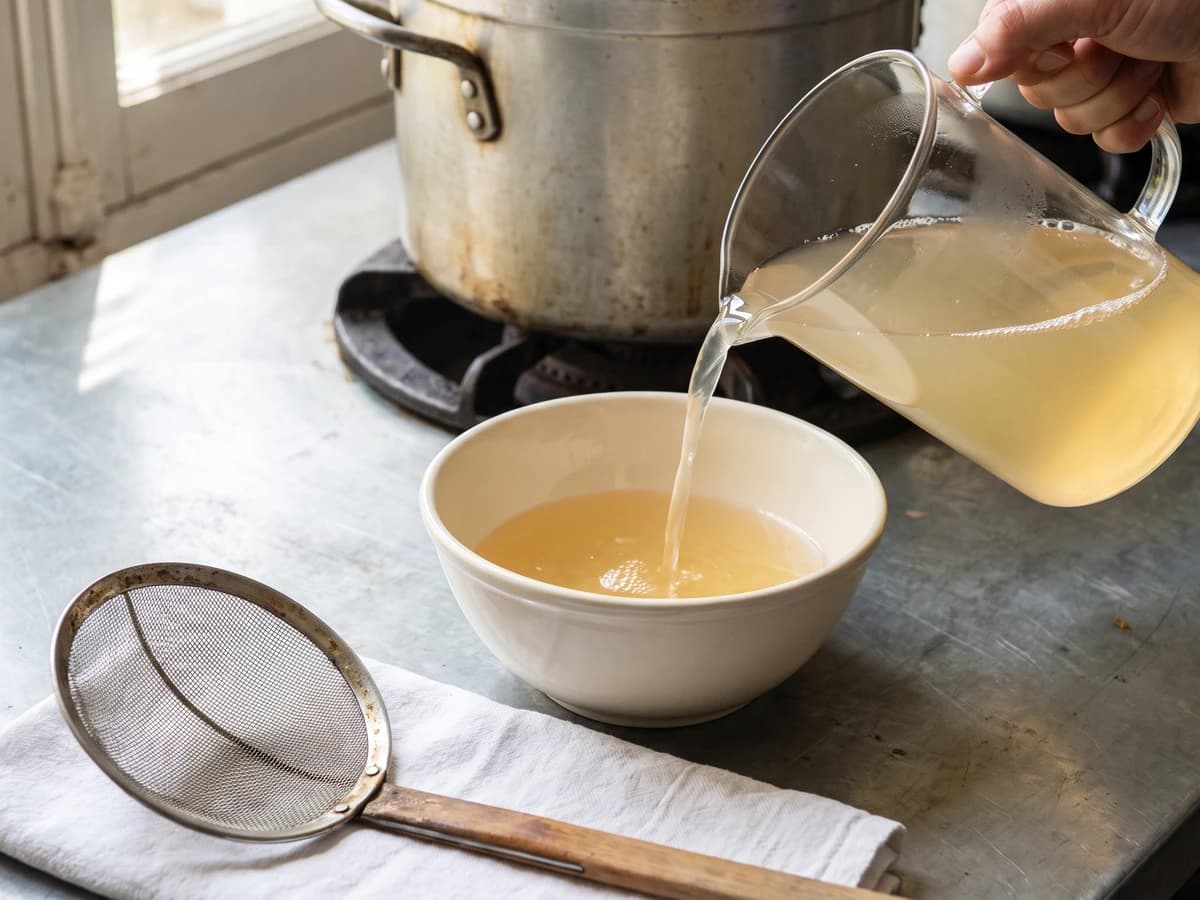
Beef shin, lean beef, and fowl begin in cold water and rise slowly toward a tremble. Skim before the boil, and you learn the quiet discipline that gives every clear French broth its backbone.
A cooking platform built around craft, culture, and the stories behind what we eat.
Created by Chef Juliette
Based on No. 27, Allemande Sauce or Thickened Velouté, from Le Guide Culinaire (1907) by Auguste Escoffier
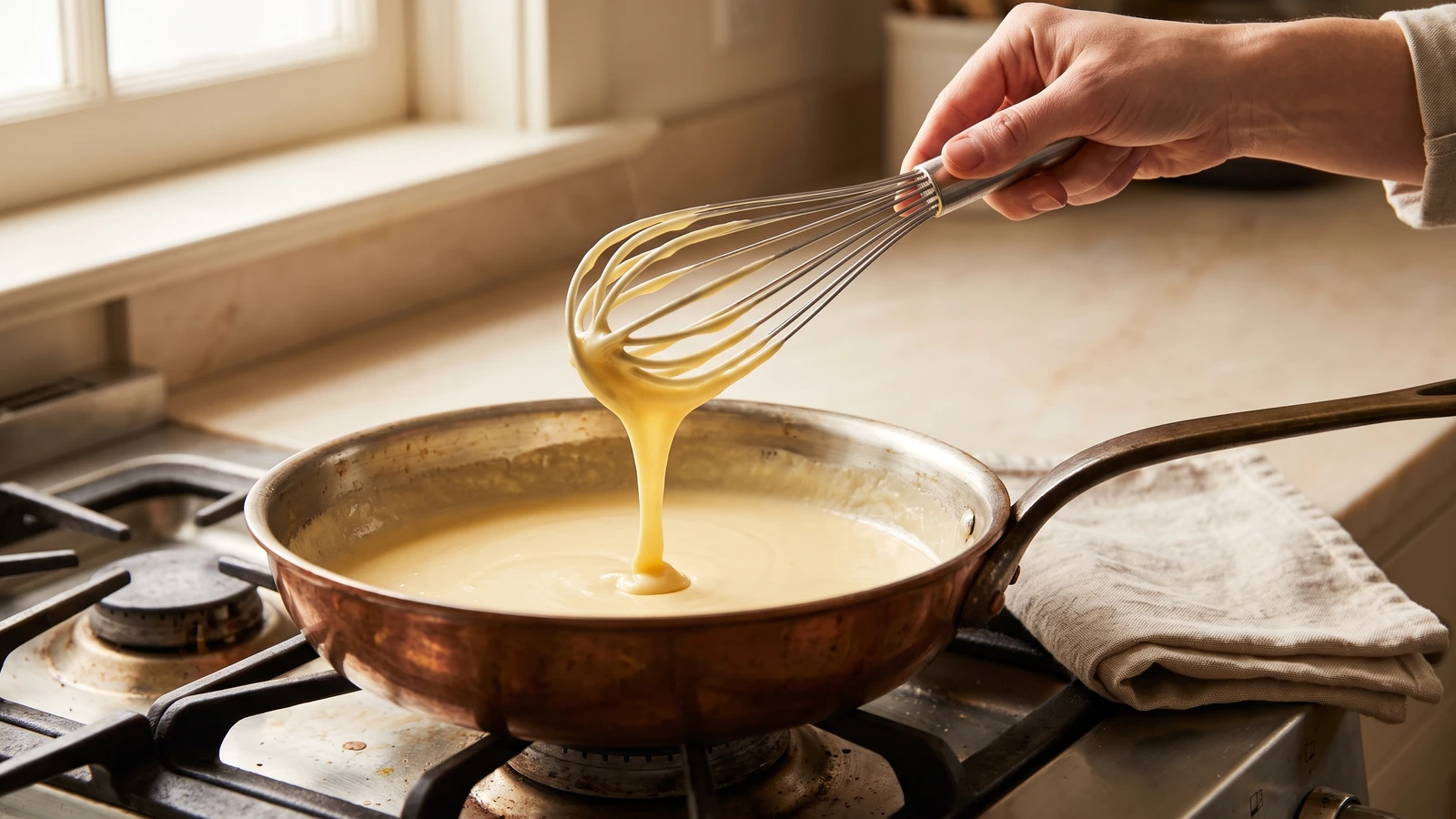
A lesson in liaison and restraint: velouté, yolks, cream, lemon, and mushroom liquor reduced to a silken nappe, then mounted with butter off the fire so its gloss holds.
Sauce allemande (velouté thickened with egg yolks and cream) teaches liaison, the egg-yolk-and-cream thickening that gives a sauce body without heaviness. Know one thing before you touch the pan: the butter enters only at the last moment, completely off the fire. Once it is in, the sauce must never cross 140°F, or its ivory gloss can turn oily and break.
The original formula assumed a saucier on staff, a pot of white stock always ready, a thick sauté pan over an open fire, and enough service to justify stirring the sauce until cold. Your equivalents are a wide, heavy-bottomed saucepan, a flat-edged whisk, a fine strainer, and an ice bath. The exact ratios remain, made as a finite two-quart foundation batch for one cook. Cooling and reheating are service scaffolding, so you may omit that loop when serving at once; the reduction, liaison, straining, and last-minute buttering are the dish and must stay.
When it is right, the allemande falls from a spoon in a smooth ivory ribbon and leaves a clean track when you draw a finger through its coating. Give your attention to the bottom of the pan during reduction, then to the temperature during the final buttering. If the emulsion turns, don't pour it away. Ça se rattrape.
Sauce allemande belongs to the Parisian classical kitchen despite its name: it is a French derivative of velouté, not the sauce of a particular German region. Its liaison of yolks and cream, sharpened with lemon and mushroom liquor, made it both a finished accompaniment for pale meats and vegetables and a foundation for smaller sauces. Some French manuals call it sauce parisienne, but the family relation never changes: allemande is a daughter of velouté, not a basic mother sauce in its own right.
Quantity
2 quarts (8 cups / 1.9 L / about 1.95 kg)
well skimmed and cold
Quantity
1 quart (4 cups / 950 ml / about 950 g)
cold
Quantity
10 (about 3/4 cup / 180 ml / 180 g)
Quantity
1 cup (240 ml / 240 g)
finely strained
Quantity
3 tablespoons (45 ml / 45 g)
Quantity
1 1/3 cups (315 ml / 315 g)
for the first enrichment
Quantity
1/2 cup (120 ml / 120 g)
for final service
Quantity
1/2 cup (8 tablespoons / 113 g)
cubed, for final service
| Ingredient | Quantity |
|---|---|
| finished Veloutéwell skimmed and cold | 2 quarts (8 cups / 1.9 L / about 1.95 kg) |
| white stockcold | 1 quart (4 cups / 950 ml / about 950 g) |
| large egg yolks | 10 (about 3/4 cup / 180 ml / 180 g) |
| mushroom liquorfinely strained | 1 cup (240 ml / 240 g) |
| fresh lemon juice | 3 tablespoons (45 ml / 45 g) |
| heavy creamfor the first enrichment | 1 1/3 cups (315 ml / 315 g) |
| heavy creamfor final service | 1/2 cup (120 ml / 120 g) |
| cold unsalted buttercubed, for final service | 1/2 cup (8 tablespoons / 113 g) |
Pour 2 quarts of water into the clean saucepan and mark its depth on a clean wooden skewer. Empty and dry the pan. This mark is your honest home measure for the reduction; the flour and yolks make the sauce coat a spoon before enough water has evaporated, so appearance alone can mislead you. If making the sauce ahead, prepare a large bowl of ice water now.
Put the yolks in the cold saucepan and whisk in a little of the cold white stock until perfectly smooth. Add the remaining stock, mushroom liquor, and lemon juice, then whisk in the cold, well-skimmed Velouté until no streaks remain. Everything begins cold so the yolks disperse before they meet heat; warm sauce poured over bare yolks would seize them into threads.
Set the pan over medium-low heat and stir continuously with a flat-edged whisk or spatula, reaching across the entire bottom and into every corner. Bring the sauce gradually to a steady tremble with occasional lazy bubbles, then keep stirring until it falls to the 2-quart mark, about 35 to 45 minutes. If the bottom begins to catch, stop scraping immediately and pour the clean upper sauce into another heavy pan, leaving the scorched layer behind; catch it early and ça se rattrape.
Stir in the 1 1/3 cups of cream and continue reducing for 5 to 8 minutes, still scraping the bottom, until the sauce is nappant, thick enough to coat the back of a spoon while remaining fluid. Draw a finger through the coating: the track should stay clean without the sauce standing like paste. Do not add the butter here. Early buttering is the failure the original formula warns against, and no amount of convenience improves it.
Pass the sauce through a fine strainer into a clean bowl. For immediate service, let it fall to about 135°F while stirring, then proceed directly to the finish. For advance preparation or use in smaller sauces, nest the bowl in the ice bath and stir until thoroughly cold, refreshing the ice as needed; cover the surface closely and refrigerate. The ice bath replaces the saucier who once kept the tureen moving until service.
Finish only the quantity you need. For each 1 cup of allemande, reheat the unbuttered base gently to 135°F, then remove the pan completely from the fire. Whisk in 1 tablespoon of the finishing cream followed by 1 tablespoon of cold butter, adding the butter a few cubes at a time until the sauce turns satiny. Once butter enters, keep the sauce below 140°F and serve it at once. If a greasy film appears, stop: put 1 tablespoon of cold cream in a clean bowl and whisk in the broken sauce one spoonful at a time until it gathers again. Ça se rattrape. À table!
1 serving (about 60g)
Culinary guides, cultural storytelling, and the editorial depth that makes cooking meaningful.
Discover Culinary ExplorerChef Juliette
Beef shin, lean beef, and fowl begin in cold water and rise slowly toward a tremble. Skim before the boil, and you learn the quiet discipline that gives every clear French broth its backbone.
Chef Juliette
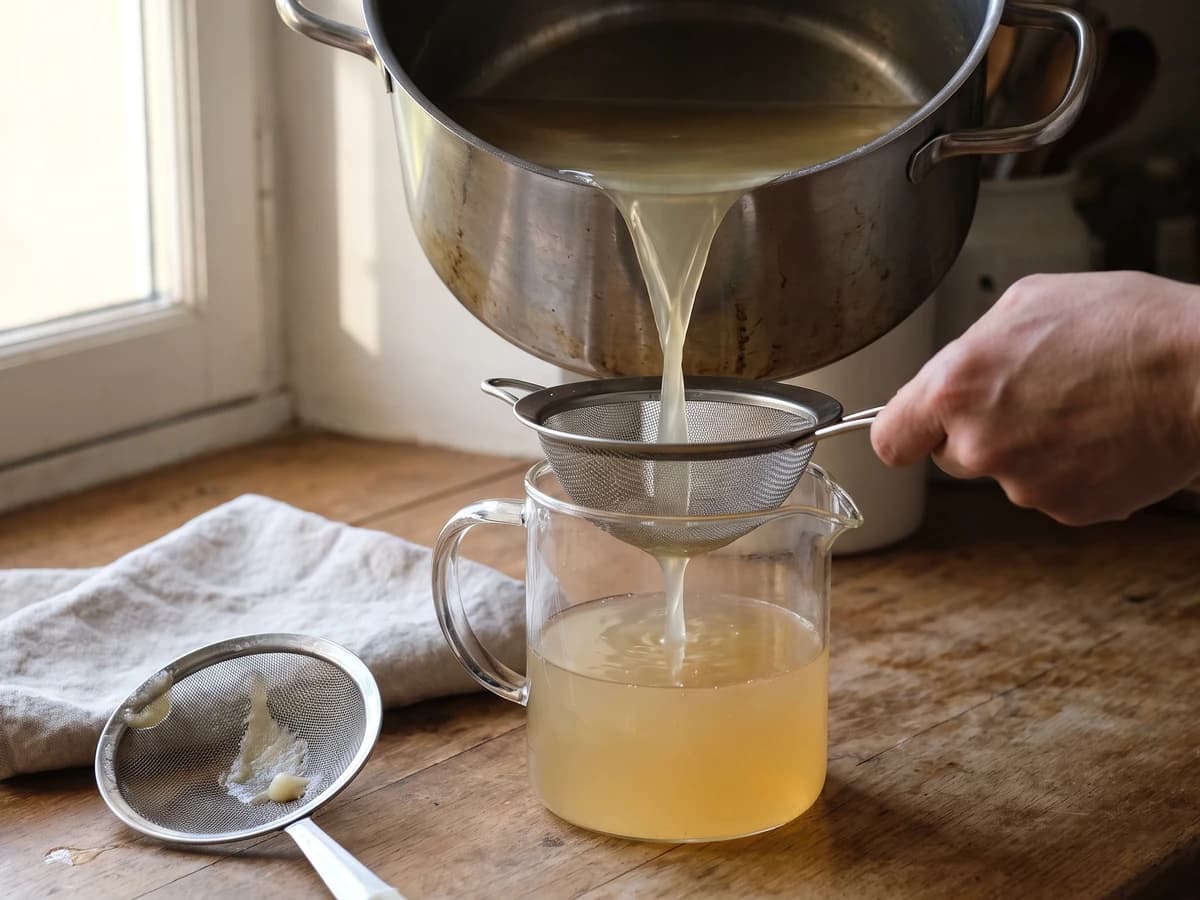
Break the veal bones small, then give them eight hours at a bare tremble. This pale, gelatinous fond becomes the quiet foundation beneath velouté, blanquette, and every sauce that must stay light.
Chef Juliette
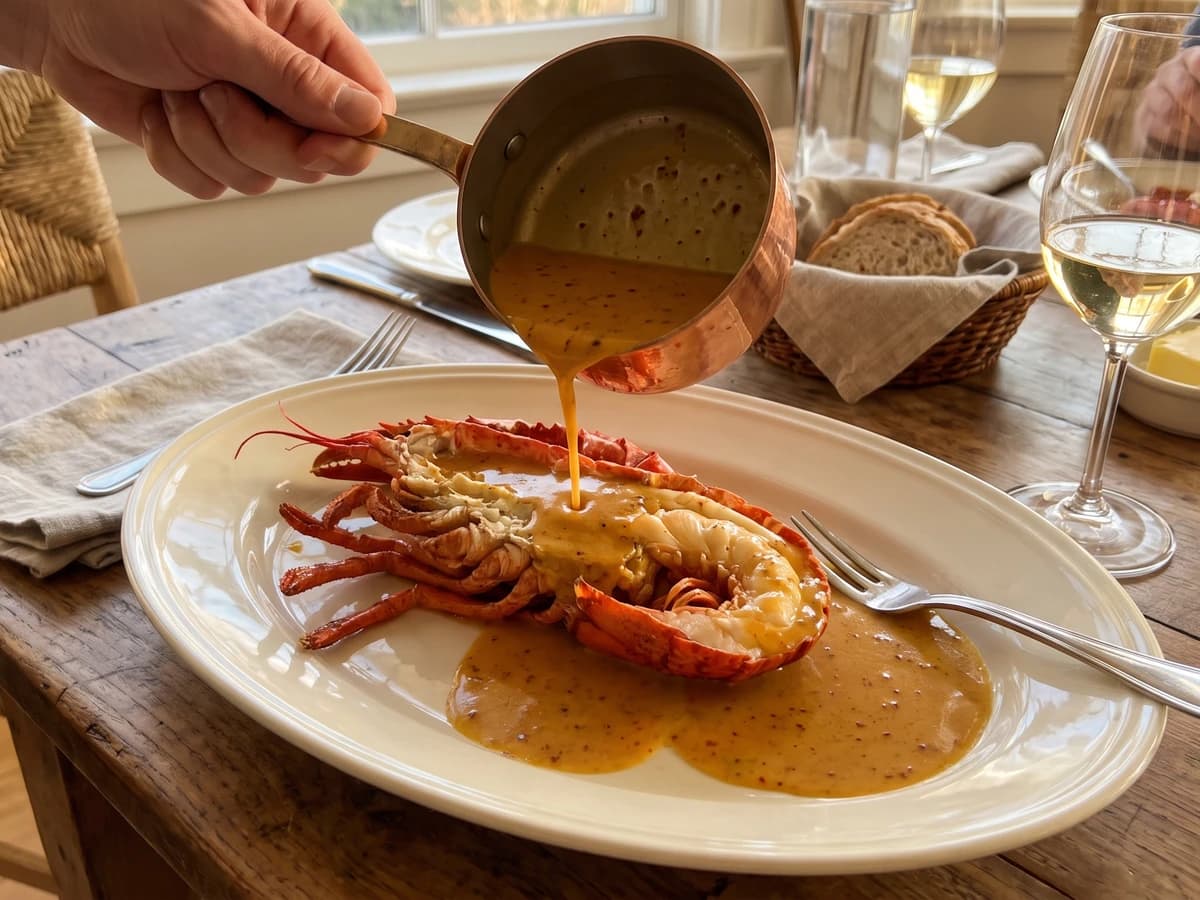
Sauce Orientale concentrates lobster-rich American Sauce with curry, then folds in cream away from the fire: a glossy, gently spiced derivative made for lobster, crayfish, and firm fish.
Chef Juliette
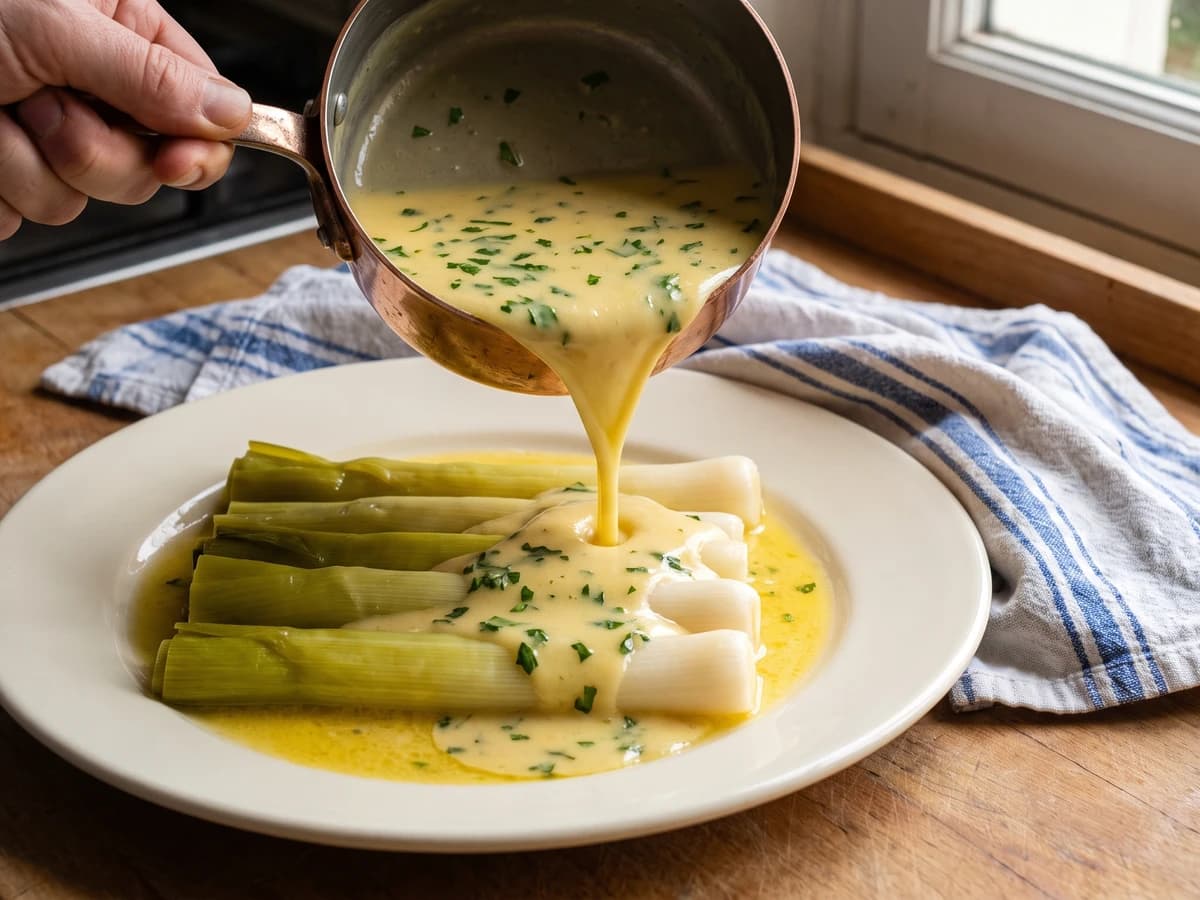
An old lesson in sauce families: Sauce Allemande takes mushroom liquor, then butter, lemon, and parsley, becoming a glossy Poulette for sheep's trotters, leeks, cauliflower, and anything needing gentle richness with a bright edge.