
Chef Juliette
John Dory (St. Pierre)
John Dory has the delicacy of sole and the firmness of turbot. A light flouring, a quick butter sauté, and nut-brown beurre noisette show exactly why looks never mattered.
A cooking platform built around craft, culture, and the stories behind what we eat.
Created by Chef Juliette
Based on No. 261, The Grilling of Products Coated with Butter and Bread-crumbs, from Le Guide Culinaire (1907) by Auguste Escoffier
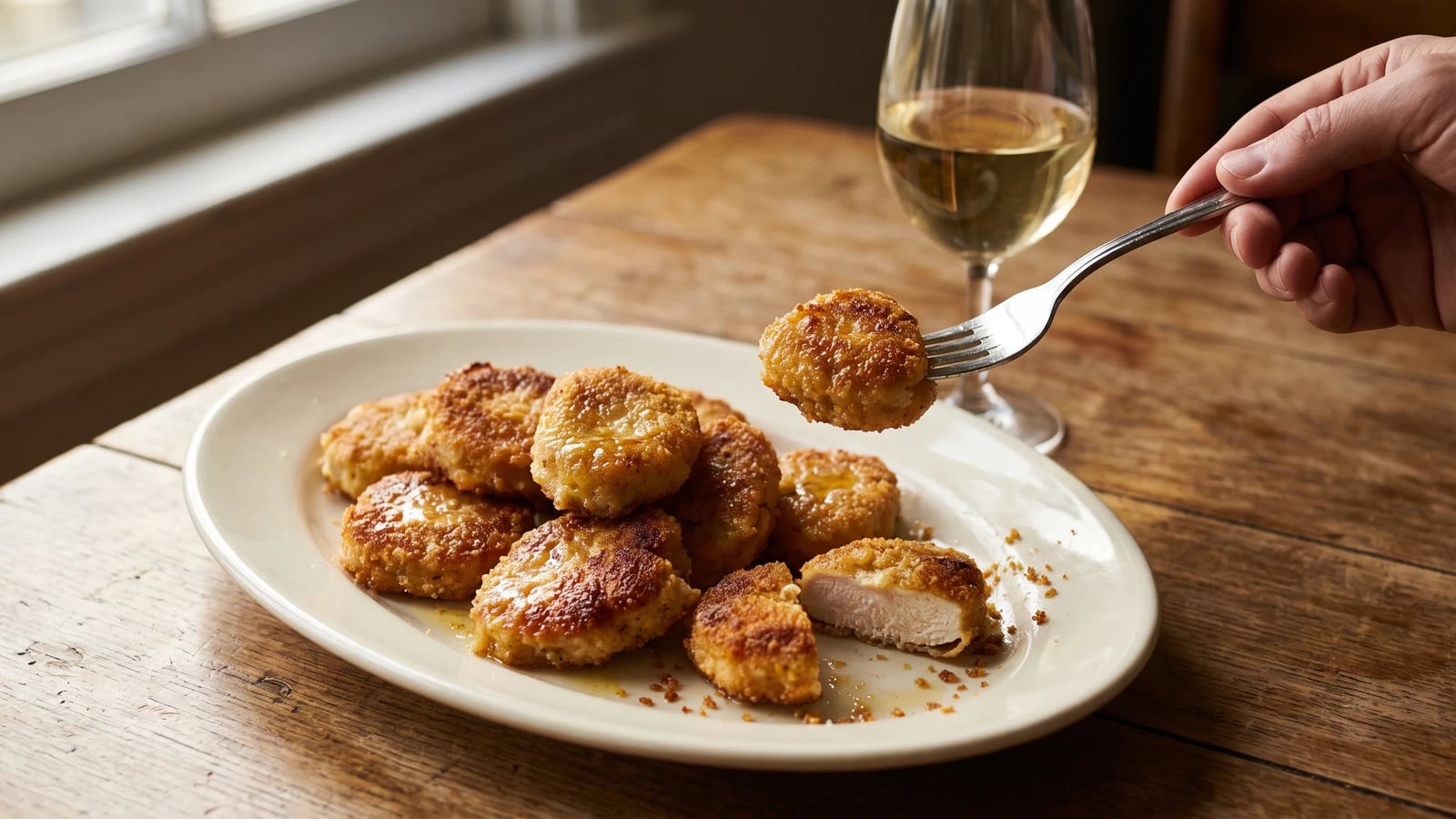
Fine crumbs, clarified butter, and patient heat turn small chicken pieces bronze while the meat stays succulent. The lesson is simple and exact: colour and cooking must arrive together.
Petites pièces de volaille grillées au beurre et à la chapelure (butter-and-crumb grilled chicken) teach control, not force. The panure au beurre, the butter-bound crumb coat, is a thin protective jacket rather than heavy armour. The one true thing is this: the heat must be moderate enough for the chicken to cook at precisely the pace the crumbs colour.
The old entry is a method rather than a composed poultry dish, and it supplies neither a garnish nor a brigade quantity. Here it is applied to twelve chicken tenderloins for four people because these small, even pieces can cook through as their coating bronzes. Unlike a sauced dish, it needed neither a saucier nor a stockpot; its brigade luxury was a grillardin, the cook assigned to the grill, tending a charcoal fire with clarified butter ready at hand. A low home broiler, a rack, and a spoonful of attention replace that dedicated station. The heat source and quantity changed because they had to. The fine crumbs, repeated butter basting, and careful turn are the dish and must stay.
Done properly, each piece arrives butter-gold and close-coated, with a fine crisp surface protecting succulent meat. The coating is fragile, but not precious, and any small break can be patched where it happens. Before the tray approaches the heat, set the distance correctly; moderate fire decides everything that follows.
Grillades au beurre et à la chapelure belong to the working repertory of the Parisian classical grill station, where small poultry pieces and cutlets were cooked over a controlled charcoal fire. The method passed easily into cuisine bourgeoise because butter and saved bread turned modest portions into a generous supper without requiring a separate sauce. It is sometimes mistaken for ordinary fried breading, but its identity lies in moderate radiant heat, repeated clarified-butter basting, and a delicate panure intended to protect the juices rather than form a thick shell.
Quantity
12, about 1½ pounds (680 g)
tough white tendons removed
Quantity
¾ cup (180 ml / 170 g)
clarified and kept warm
Quantity
1½ cups (360 ml / 135 g)
Quantity
1½ teaspoons (7.5 ml / 9 g)
Quantity
½ teaspoon (2.5 ml / 1 g)
| Ingredient | Quantity |
|---|---|
| chicken tenderloinstough white tendons removed | 12, about 1½ pounds (680 g) |
| unsalted butterclarified and kept warm | ¾ cup (180 ml / 170 g) |
| fine dry white breadcrumbs | 1½ cups (360 ml / 135 g) |
| fine sea salt | 1½ teaspoons (7.5 ml / 9 g) |
| freshly ground white or black pepper | ½ teaspoon (2.5 ml / 1 g) |
Melt the butter slowly in a small saucepan without stirring. Skim off the white foam, then pour the clear golden fat into a warm bowl, leaving the milky sediment behind. Keep it fluid over the gentlest heat. Clarified butter matters here because ordinary melted butter contains milk solids that scorch before the chicken cooks.
Set an oven-safe wire rack over a rimmed sheet pan and brush the rack lightly with clarified butter. Position it 8 to 10 inches (20 to 25 cm) beneath the broiler and preheat on low. If your broiler has only one fierce setting, use the greater distance. This arrangement is the home equivalent of a carefully tended gridiron: radiant heat strong enough to colour, but far enough away to cook the poultry at the same pace.
Pat the tenderloins thoroughly dry. If any piece is much thicker than its neighbours, place it between two sheets of baking paper and tap it gently to an even ½-inch (1.25 cm) thickness. Mix the salt and pepper, then season both sides evenly. Small, equal pieces are essential because the coating and the centre must finish together.
Spread the breadcrumbs in a shallow dish, holding a small handful aside for repairs. Brush each tenderloin generously with warm clarified butter, lay it in the crumbs, and press lightly so a thin, even panure clings to every side. Do not pack on a thick coat; it will loosen under its own weight. Set the coated pieces on the prepared rack and let them stand for 10 minutes so the butter settles into the crumbs.
Place the tray beneath the broiler and cook the first side for 5 to 6 minutes. Every 2 minutes, let a few droplets of clarified butter fall over each piece without dragging a brush across the fragile crumbs. The panure should deepen gradually from pale gold to an even butter bronze. If dark spots appear early, move the tray farther from the element at once.
Slide a thin metal spatula completely beneath each piece and turn it once, supporting the whole coating rather than gripping it with tongs. If the panure cracks, don't pull it away. Ça se rattrape: dab the exposed place with clarified butter, press on some reserved crumbs, and return it gently to the heat. Besprinkle the second side with butter and cook for another 4 to 6 minutes, until the coating is bronze and the thickest centre reaches 165°F (74°C). If the colour arrives first, lower the tray and continue cooking gently.
Transfer the chicken to a warm platter and leave it uncovered for 3 minutes. Covering traps moisture and softens the panure you have worked to preserve. Serve at once, while the crumb coat is crisp at the surface, tender beneath, and visibly glossy from its final butter basting. À table!
1 serving (about 190g)
Culinary guides, cultural storytelling, and the editorial depth that makes cooking meaningful.
Discover Culinary ExplorerChef Juliette
John Dory has the delicacy of sole and the firmness of turbot. A light flouring, a quick butter sauté, and nut-brown beurre noisette show exactly why looks never mattered.

Chef Juliette
Fresh haddock proves its delicacy in the meunière pan: a fine flour crust, moist pearly flakes, and beurre noisette sharpened with lemon and parsley, ready from one skillet in half an hour.

Chef Juliette
Éperlans à l’Anglaise turns small fish into a lesson in disciplined coating: boned smelts under a close, crisp crumb, pan-fried in clarified butter and finished with bright, half-melted maître d’hôtel butter.

Chef Juliette
Tiny smelts, shallot, mushrooms, white wine, gratin sauce, and fine bread raspings meet a fierce oven, where the fish must turn tender in the same breath the buttered crust bronzes.