Culinary Explorer
A cooking platform built around craft, culture, and the stories behind what we eat.
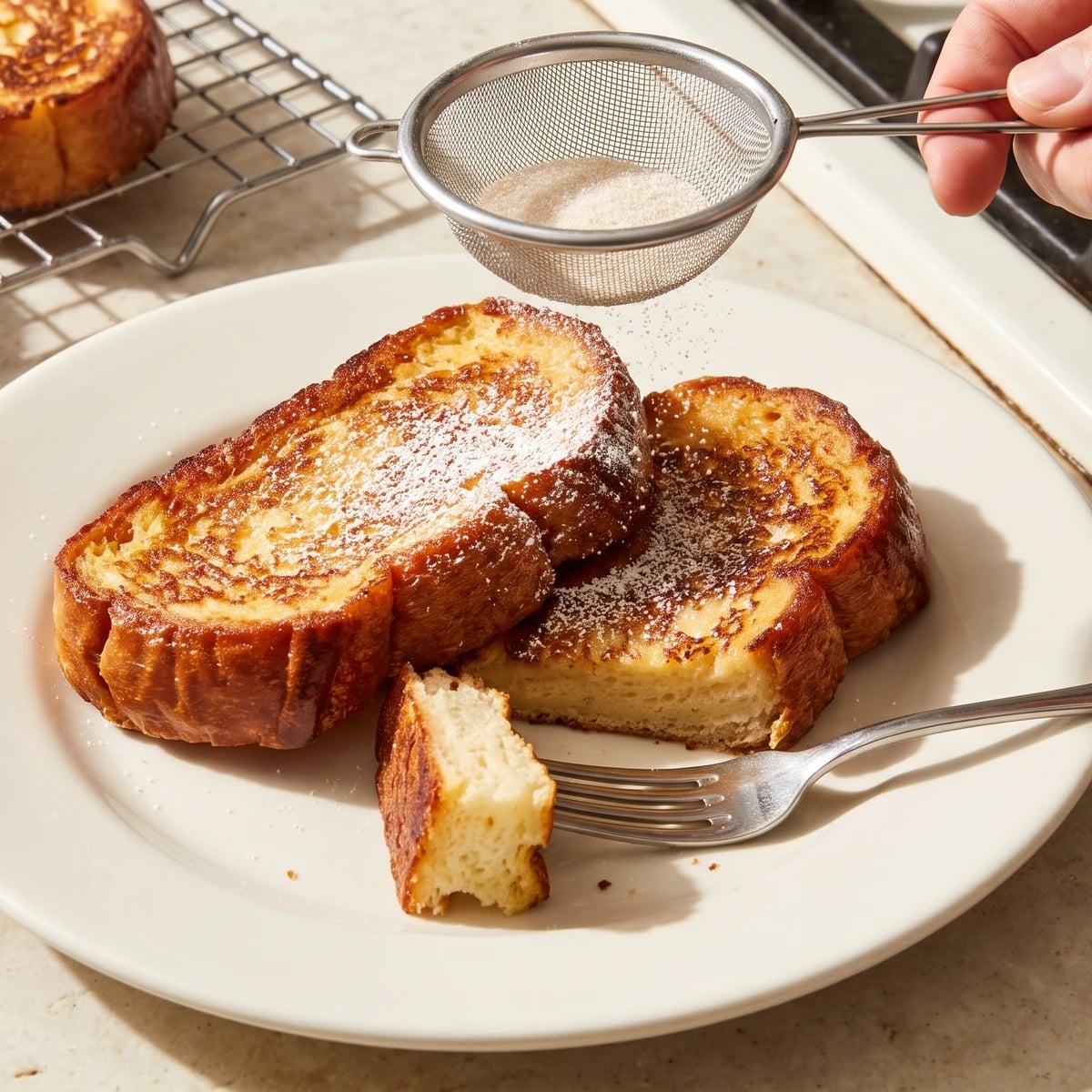
Pain Perdu or Gilded Crust
Created by Chef Juliette
Pain perdu proves that thrift and precision belong in the same pan: stale brioche, two separate dips, and clarified butter yielding a tender vanilla centre beneath a deeply gilded crust.
Pain perdu (lost bread), named Gilded Crust beside its French title in the source, teaches thrift through control. Stale brioche drinks cold vanilla milk, receives a second coat of lightly sweetened egg, then browns in clear butter until the outside is deep gold and the middle stays tender. Keep those two dips separate. The milk restores the bread; the egg builds the crust.
There was no saucier, stockpot, or salamander at work here. The professional convenience was simpler: clarified butter and vanilla sugar were already waiting, with a napkin ready to receive each fried slice. Your home equivalent is eight slices for four people, butter clarified in a small saucepan, a wire rack for draining, and a warm platter. The napkin is service scaffolding and can go. The cold milk, the egg dip, and the clarified butter are the dish, so they stay. One cook, one stove, one evening.
The step that decides the pain perdu is the heat. The pan must be hot enough to set the egg immediately, yet controlled enough for the centre to warm before bronze turns black. Clarify the butter completely before you meet that moment.
Ingredients
stale brioche
Quantity
8 slices, each 1/2 inch (1.25 cm) thick, about 14 ounces (400 g) total
cold whole milk
Quantity
1 1/2 cups (360 ml / 370 g)
superfine sugar
Quantity
2 tablespoons (30 ml / 25 g)
for the milk
| Ingredient | Quantity |
|---|---|
| stale brioche | 8 slices, each 1/2 inch (1.25 cm) thick, about 14 ounces (400 g) total |
| cold whole milk | 1 1/2 cups (360 ml / 370 g) |
| superfine sugarfor the milk | 2 tablespoons (30 ml / 25 g) |
Where cooking meets culture.
Culinary guides, cultural storytelling, and the editorial depth that makes cooking meaningful.
Discover Culinary Explorer