Chef Juliette
Ordinary or White Consommé
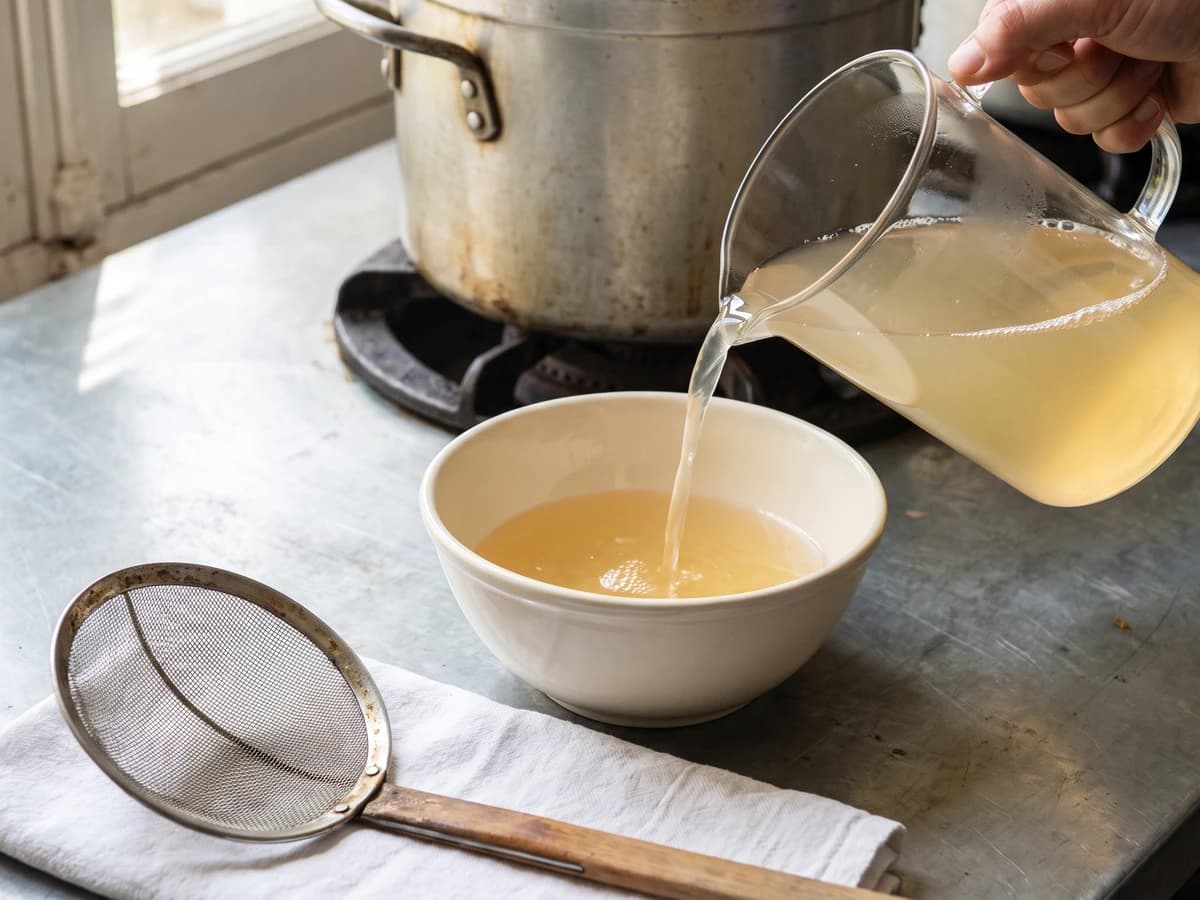
Beef shin, lean beef, and fowl begin in cold water and rise slowly toward a tremble. Skim before the boil, and you learn the quiet discipline that gives every clear French broth its backbone.
A cooking platform built around craft, culture, and the stories behind what we eat.
Created by Chef Juliette
Based on No. 26, Velouté de Volaille, from Le Guide Culinaire (1907) by Auguste Escoffier
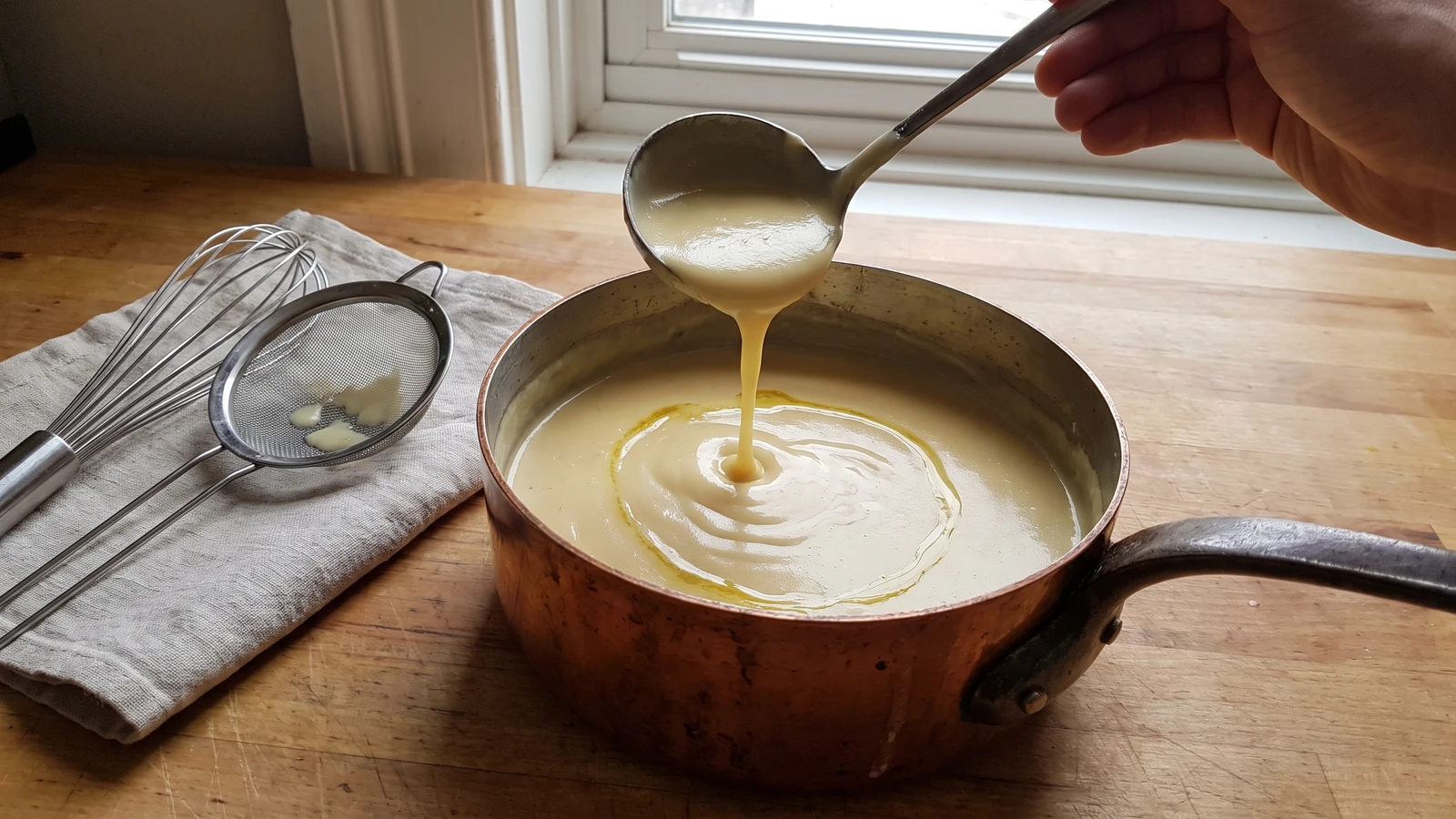
A pale poultry velouté that teaches the mother-sauce grammar: keep the roux white, add stock without lumps, then simmer gently until flour and butter disappear into one glossy, supple whole.
Velouté de Volaille (silken poultry-stock sauce) teaches the cleanest rule in the sauce canon: change the stock and the sauce changes its character, while the method remains exactly the same. C'est la même grammaire. The one true thing to know before you touch the pan is that the roux must cook without coloring. Done properly, white poultry stock turns ivory, supple, and glossy, with a rounder flavor than the veal-stock original.
The original kitchen assumed a saucier on staff, a stockpot never off the fire, and brigade quantities large enough to justify constant tending at the corner of the range. A salamander has no work here, because browning would defeat the sauce. The honest home equivalent is two saucepans, a whisk, a fine sieve, and a batch scaled to about two quarts. Continuous attendance is brigade scaffolding and can go; the pale roux, gradual dilution, and full gentle cooking are the dish and must stay. One cook, one stove, one evening.
The sauce receives its stock slowly at first, because that is where lumps are born. If they appear, stop adding liquid and take the pan off the heat. Ça se rattrape, and the method below gives you the way back. The decisive step comes before all of that: cook the roux blanc until its raw smell fades while its color remains pale.
The real home of Velouté de Volaille is the sauce station of the French classical kitchen, where velouté is a family method rather than one finished flavor: a pale roux is diluted with an equally pale stock. The poultry version follows the canon's exact logic, replacing white veal stock with white poultry stock and providing the round, quiet foundation for finished chicken sauces. It is not cream that makes a sauce velouté; the silk comes from roux, stock, skimming, and patient cooking.
Quantity
10 cups (2.4 L / 2.4 kg)
Quantity
1/2 cup (120 ml / 113 g)
Quantity
Scant 1 cup (225 ml / 113 g)
Quantity
Up to 1 cup (240 ml / 240 g)
only if needed to correct excess evaporation
| Ingredient | Quantity |
|---|---|
| finished, unsalted white poultry stock | 10 cups (2.4 L / 2.4 kg) |
| unsalted butter | 1/2 cup (120 ml / 113 g) |
| all-purpose flour | Scant 1 cup (225 ml / 113 g) |
| just-boiled water (optional)only if needed to correct excess evaporation | Up to 1 cup (240 ml / 240 g) |
Bring the white poultry stock to a gentle simmer in one saucepan, then lower the heat and keep it hot without letting it boil hard. Taste a spoonful. It should be clean, pale, and only lightly seasoned, because both salt and flavor will concentrate as the velouté cooks.
Melt the butter in the heavy saucepan over low heat. When the foam settles, add the flour all at once and stir steadily with a whisk or heatproof spatula. Cook the roux blanc (white roux) for 4 to 5 minutes, reaching into every corner of the pan. It should loosen slightly and lose the smell of raw flour while remaining ivory. If tan flecks appear, the heat is too high; move the pan off the burner at once and keep stirring.
Take the roux blanc off the heat. Whisk in about 1 cup of hot stock in a thin stream. The mixture will tighten into a thick paste before it relaxes, which is exactly right. Add a second cup gradually, whisking until perfectly smooth, then incorporate the remaining stock in three or four larger additions. If lumps appear, stop. Ça se rattrape: take the pan off the heat, whisk vigorously, and pass the mixture through the fine sieve before continuing with the remaining stock.
Return the pan to medium heat and bring the sauce just to a boil, whisking and scraping the bottom and corners continuously. The velouté will thicken before it boils, so do not mistake that early resistance for completion. Let one or two bubbles break the surface, then immediately lower the heat to the barest simmer.
Dépouiller (gently cook and skim) the velouté uncovered for 90 minutes. Keep only a quiet tremble at the surface. Every 10 to 15 minutes, skim away the pale foam or butter that gathers at the edges and sweep a spatula across the bottom so the flour cannot settle. You needn't stand over every bubble, but do not abandon the pan. If the sauce begins to catch, do not scrape the scorched layer into it; pour the clean sauce immediately into another saucepan and continue over lower heat.
Pass the velouté through a fine-mesh sieve into a clean saucepan or heatproof bowl. Do not force any cooked film from the bottom of the pan through the sieve. Measure the sauce; it should yield about 8 cups and coat the back of a spoon in a thin, even film while still pouring freely. If it is too thick or has reduced below that volume, whisk in just-boiled water a little at a time. If it is thin, return it to a bare simmer until it reaches the proper body.
Use the velouté at once as the foundation of a finished poultry sauce, seasoning only when that final sauce is assembled. For storage, set the bowl in an ice bath and stir until the velouté is no longer hot, then transfer it to shallow containers and press parchment directly against the surface. Refrigerate within 2 hours. If a skin forms despite your care, whisk it smooth during gentle reheating and strain once more.
1 serving (about 240g)
Culinary guides, cultural storytelling, and the editorial depth that makes cooking meaningful.
Discover Culinary ExplorerChef Juliette
Beef shin, lean beef, and fowl begin in cold water and rise slowly toward a tremble. Skim before the boil, and you learn the quiet discipline that gives every clear French broth its backbone.
Chef Juliette
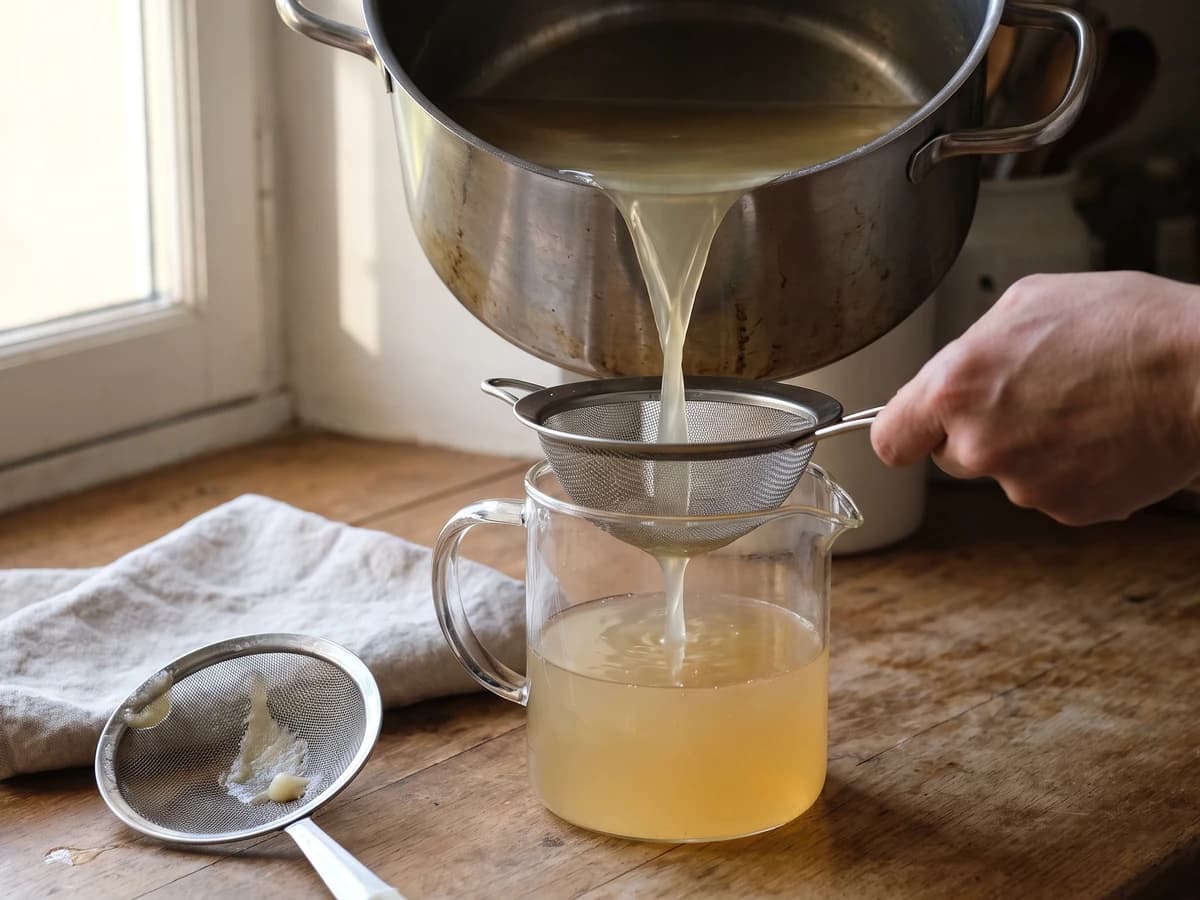
Break the veal bones small, then give them eight hours at a bare tremble. This pale, gelatinous fond becomes the quiet foundation beneath velouté, blanquette, and every sauce that must stay light.
Chef Juliette
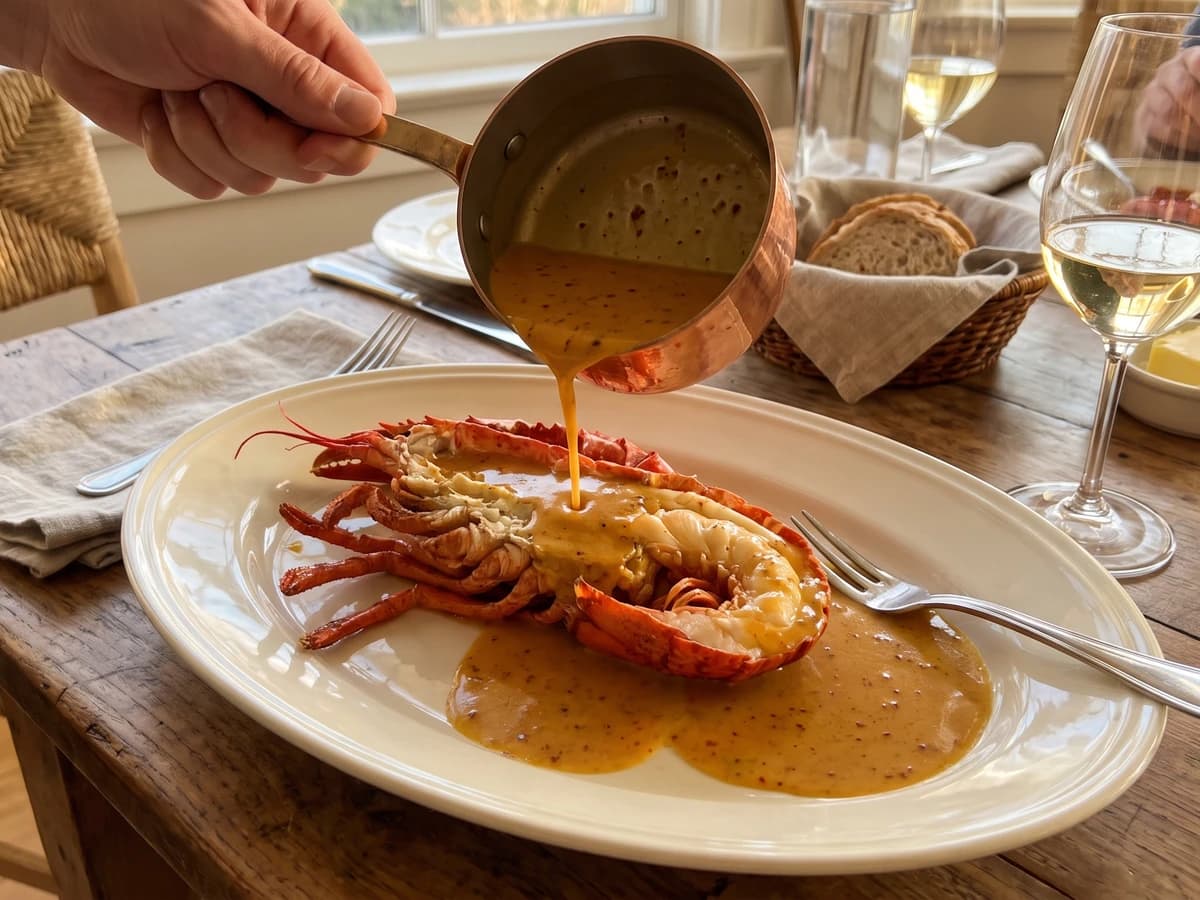
Sauce Orientale concentrates lobster-rich American Sauce with curry, then folds in cream away from the fire: a glossy, gently spiced derivative made for lobster, crayfish, and firm fish.
Chef Juliette
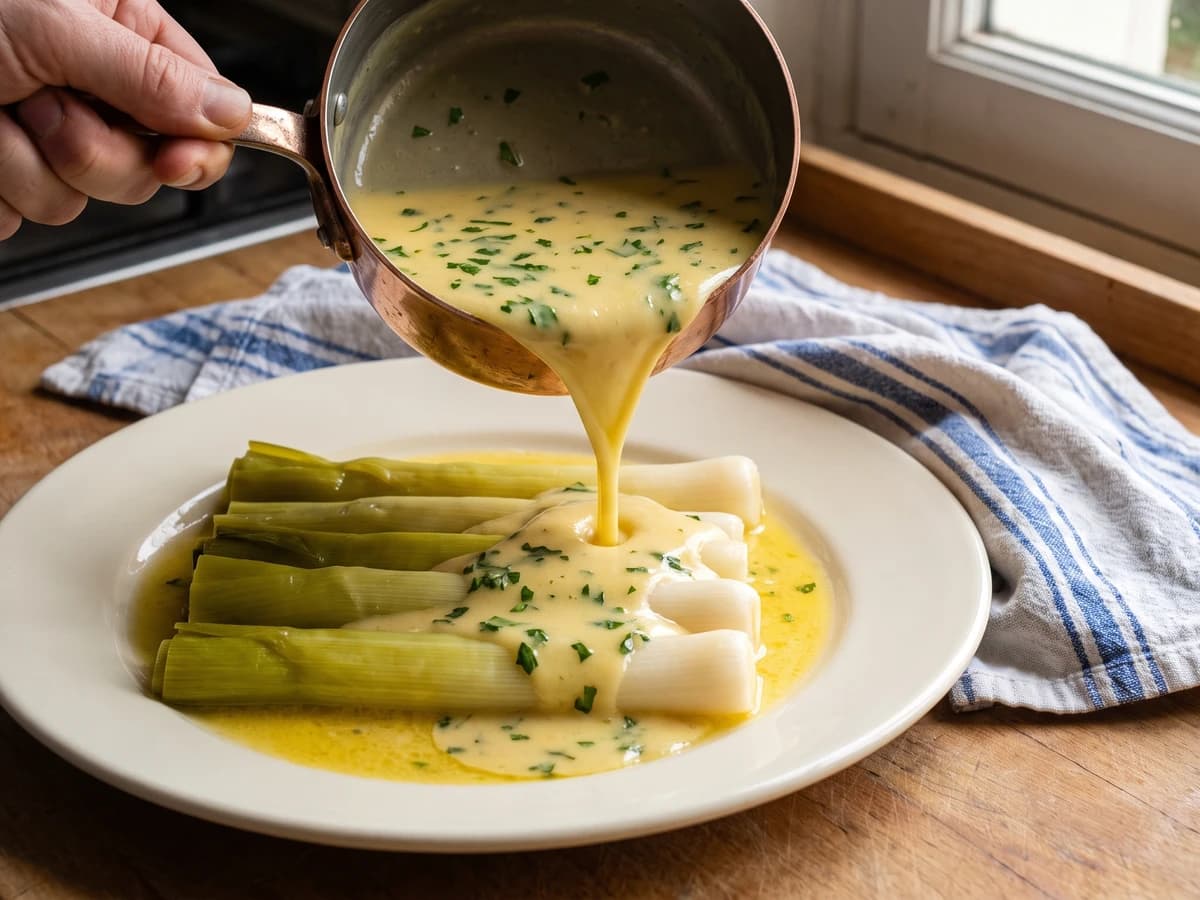
An old lesson in sauce families: Sauce Allemande takes mushroom liquor, then butter, lemon, and parsley, becoming a glossy Poulette for sheep's trotters, leeks, cauliflower, and anything needing gentle richness with a bright edge.