
Chef Juliette
John Dory (St. Pierre)
John Dory has the delicacy of sole and the firmness of turbot. A light flouring, a quick butter sauté, and nut-brown beurre noisette show exactly why looks never mattered.
A cooking platform built around craft, culture, and the stories behind what we eat.
Created by Chef Juliette
Based on No. 257, Grills, from Le Guide Culinaire (1907) by Auguste Escoffier
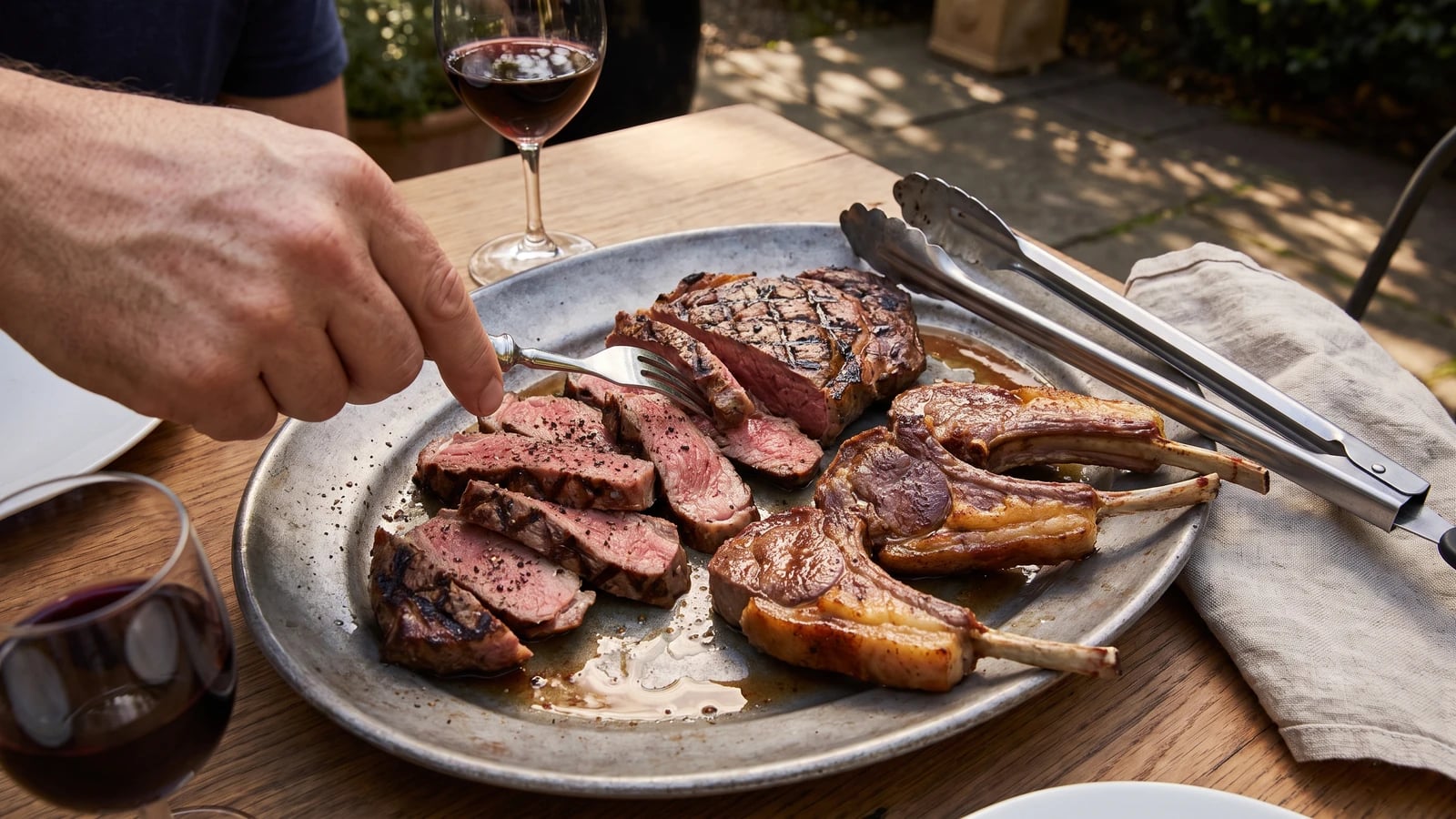
Beef and lamb over fierce, clean charcoal, bronzed outside and juicy within. The lesson is concentration: heat the bars first, control the embers, and turn only when the crust releases.
Grillades de Bœuf et d’Agneau teach cuisson par concentration (cooking by concentration). Fierce direct heat browns the surface before the centre loses its juice. The crust doesn't form an impermeable seal, but it does create flavour quickly, which lets you stop cooking while the meat remains succulent. The one true thing to know before meat touches metal is this: the bars must already be fiercely hot.
The original instruction assumed a built charcoal hearth, a grate heated permanently over live fuel, adjustable draughts, and powerful ventilation. A home charcoal grill answers honestly with a chimney starter, a shaped bed of fully lit coals, and a clear safety zone for flare-ups. The source gives a method rather than brigade portions, so here it becomes two strip steaks and eight lamb chops for four, enough variety to use the graduated fire exactly as intended. The blowers and permanent hearth are scaffolding; smokeless embers, an even bed, and a thoroughly heated grate are the dish.
Keep the seasoning spare. Beef, lamb, salt, pepper, and clean charcoal have quite enough to say. Heat the grate before you oil and season the meat, then never force a piece that clings to the bars. Give it another half-minute and the browned crust will release intact.
Within the classical French table, grillades belong to no single province: open-hearth cooking passed into inn yards, bistros, and grand kitchens, where a grillardin tended the grate as a distinct responsibility. The method was classified as cuisson par concentration because fierce heat browned the exterior while the centre cooked quickly. The claim that this crust literally traps every drop is an image rather than physics, but its practical lesson survives: dry meat, clean-burning fuel, hot bars, and short cooking preserve succulence.
Quantity
2 steaks, 10 oz (280 g) each
about 1 inch (2.5 cm) thick
Quantity
8 chops, about 2½ oz (70 g) each
about 1 inch (2.5 cm) thick
Quantity
1 tablespoon (15 ml / 14 g)
Quantity
2 teaspoons (10 ml / 12 g)
Quantity
1 teaspoon (5 ml / 2 g)
freshly cracked
| Ingredient | Quantity |
|---|---|
| boneless beef strip steaksabout 1 inch (2.5 cm) thick | 2 steaks, 10 oz (280 g) each |
| lamb rib chopsabout 1 inch (2.5 cm) thick | 8 chops, about 2½ oz (70 g) each |
| high-heat neutral oil | 1 tablespoon (15 ml / 14 g) |
| fine sea salt | 2 teaspoons (10 ml / 12 g) |
| black pepperfreshly cracked | 1 teaspoon (5 ml / 2 g) |
Trim any heavy exterior fat to about ¼ inch (6 mm), leaving enough to baste the meat without feeding constant flare-ups. Pat every surface thoroughly dry and set the meat on a tray while you prepare the fire. Moisture turns to vapour against the grate and delays browning; a dry surface begins forming its crust at once.
Light enough charcoal to fill a large chimney starter and use the grill outdoors in open air. Wait until the pieces glow beneath a light coat of ash and any first smoke has cleared. Pour the coals into a bed two pieces deep beneath the centre, thinning to one layer around the edge and leaving one quarter of the grill empty. If wind enters strongly from one side, raise the bed slightly there so the whole cooking area radiates more evenly.
Set the grate over the coals, open the lower vents, and heat it for 8 to 10 minutes before cooking. Scrape the bars clean. Blot the meat once more, brush it with the thinnest film of oil, and season all sides evenly with the salt. Oil the meat, not the fire; excess fat dripping onto the coals gives the grillades an acrid taste.
Lay the beef over the thick central bed and leave at least 1 inch (2.5 cm) between the pieces. After 2 minutes, arrange the lamb chops around the slightly gentler shoulder of the fire, pointing their bare bones toward the cooler rim. Don't press the meat and don't shuffle it about. If dripping fat raises flames, move the offending piece to the empty zone immediately; once the flame subsides, return it to clean heat. Never spray the coals with water, which scatters ash onto dinner.
Turn the beef after 4 to 5 minutes and the lamb after 2 to 3 minutes, once their undersides are deeply bronzed. If a piece clings, don't tear it loose. Ça se rattrape: leave it undisturbed for another 30 to 60 seconds while the crust finishes forming, then lift it cleanly with tongs. Cook the second sides for roughly the same time, shifting any rapidly browning piece toward the edge.
Check through the side of each piece with an instant-read thermometer. For medium-rare, remove the beef at 130 to 135°F (54 to 57°C) and the lamb at 135 to 140°F (57 to 60°C). For medium, or when following the standard whole-cut safety target, cook to 145°F (63°C) and rest for at least 3 minutes. Rest the steaks for 8 minutes and the chops for 5 minutes, loosely sheltered rather than tightly wrapped. If a cut proves too rare when checked, return it to the gentler edge for 30 seconds per side; underdone meat can be rescued, overdone meat cannot.
Crack the pepper over the rested meat, keeping it off the fierce fire where it would scorch. Slice the beef across the grain and leave the lamb chops whole, then arrange both on a warm platter and spoon over every resting juice from the tray. Taste one cut edge and add a final pinch of salt if needed. One cook, one grill, one evening. À table!
1 serving (about 215g)
Culinary guides, cultural storytelling, and the editorial depth that makes cooking meaningful.
Discover Culinary ExplorerChef Juliette
John Dory has the delicacy of sole and the firmness of turbot. A light flouring, a quick butter sauté, and nut-brown beurre noisette show exactly why looks never mattered.

Chef Juliette
Fresh haddock proves its delicacy in the meunière pan: a fine flour crust, moist pearly flakes, and beurre noisette sharpened with lemon and parsley, ready from one skillet in half an hour.

Chef Juliette
Éperlans à l’Anglaise turns small fish into a lesson in disciplined coating: boned smelts under a close, crisp crumb, pan-fried in clarified butter and finished with bright, half-melted maître d’hôtel butter.

Chef Juliette
Tiny smelts, shallot, mushrooms, white wine, gratin sauce, and fine bread raspings meet a fierce oven, where the fish must turn tender in the same breath the buttered crust bronzes.