Chef Juliette
Omelette à l’Écossaise
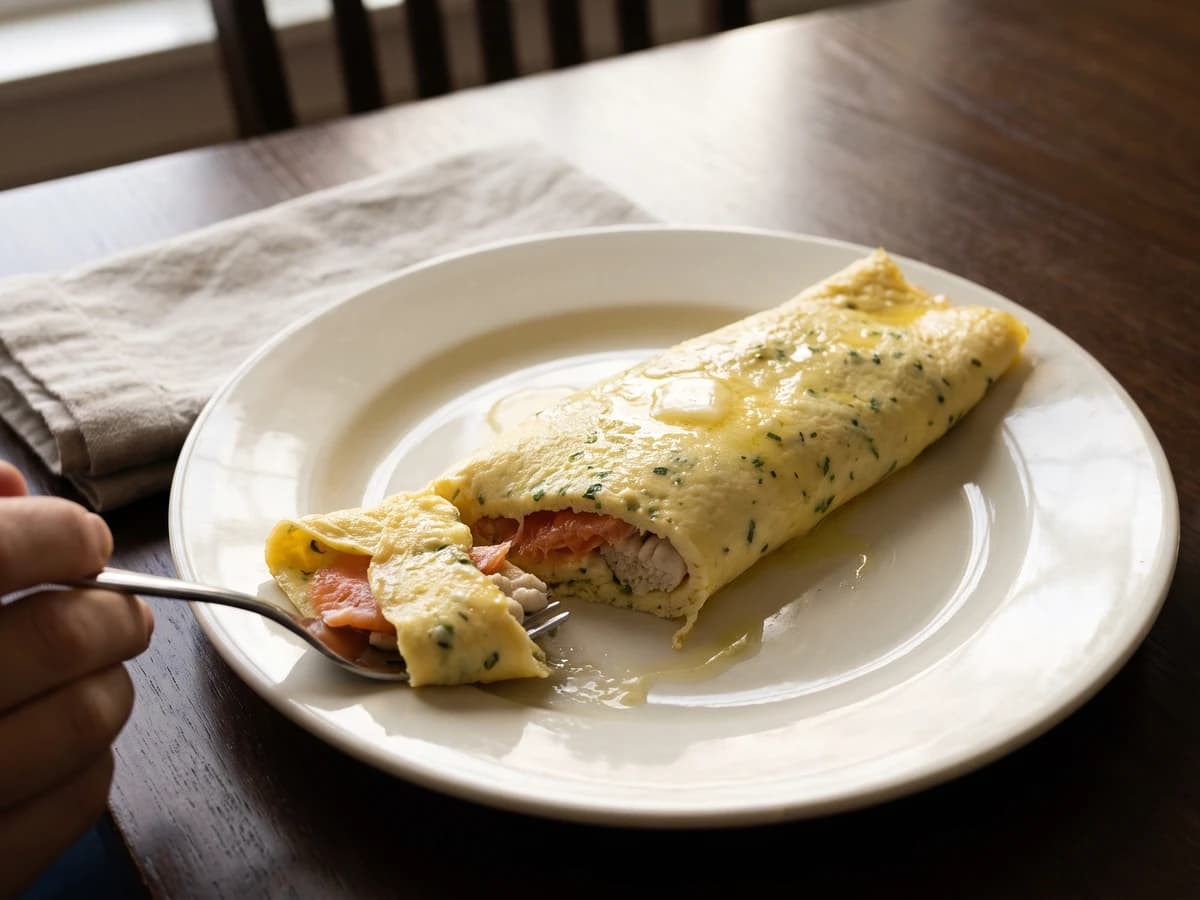
A creamy omelette aux fines herbes closes around smoked-salmon-wrapped herring milts, gently poached in butter. Have the filling ready, then roll the eggs while they still shine.
A cooking platform built around craft, culture, and the stories behind what we eat.
Created by Chef Juliette
Based on No. 2449, Pancakes à la Russe, from Le Guide Culinaire (1907) by Auguste Escoffier
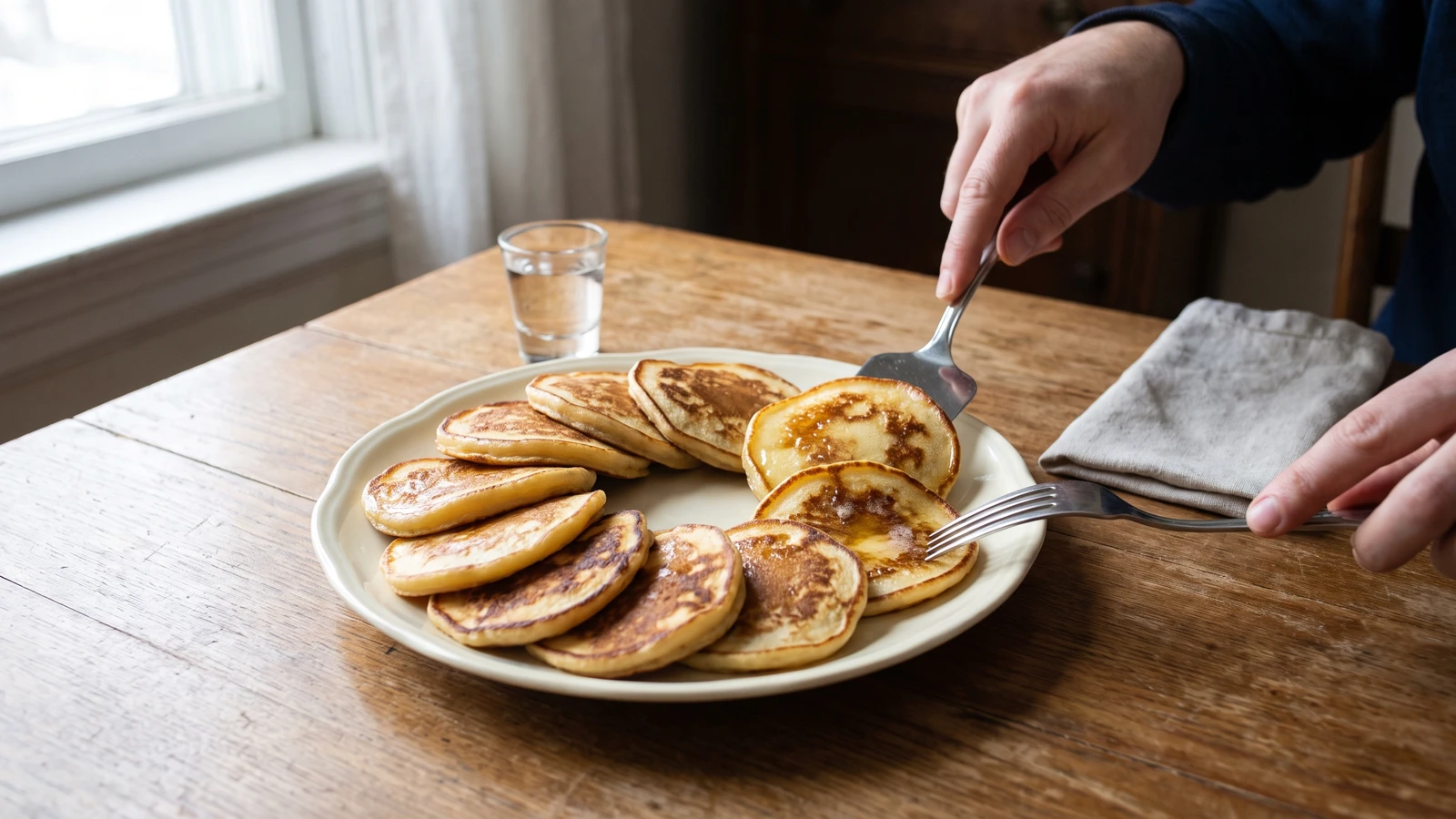
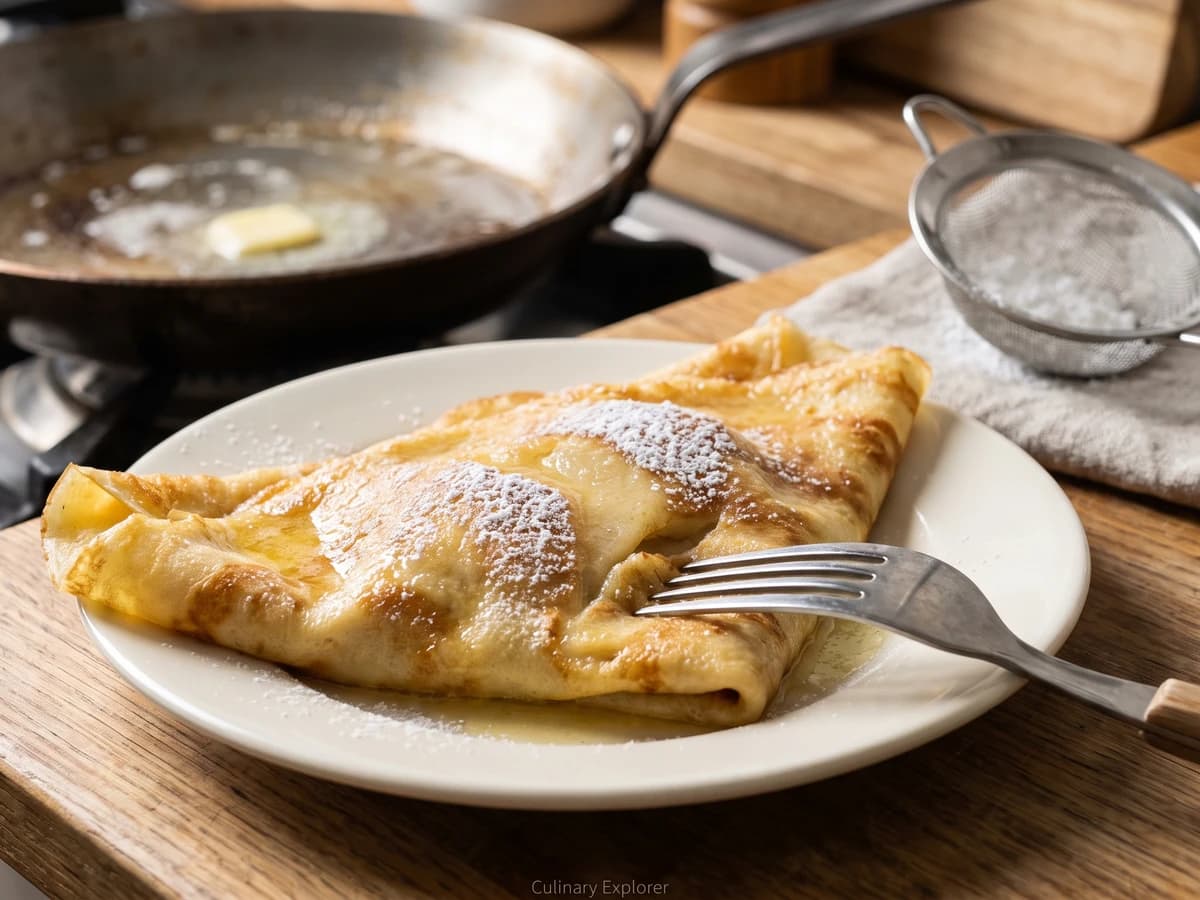
Preparation C carries liqueur-soaked biscuit pieces into a buttered pan, where careful draining preserves a tender crumb and caramel-flecked edge in every small Pancake à la Russe.
Pancakes à la Russe (French pancakes with kümmel-and-brandy-soaked biscuit pieces) teach one exact lesson: saturation is not sogginess. Before you touch the pan, let the broken biscuits drink their liqueurs completely, then drain them until not another drop falls. Fold them in wet and the batter goes to porridge. Drain them properly and they remain tender little pockets inside a bronzed pancake.
The original entry is brief because it assumes Preparation C is already waiting at the pastry station, with a cook free to judge the soaking by touch and make pancakes continuously for service. At home, that becomes 2 cups of the finished Preparation C, a fine-mesh sieve, and one small skillet. The ready batter and brigade quantity are scaffolding; the quarter-volume measure of broken biscuits, their saturation with kümmel and liqueur brandy, and gentle pan-cooking are the dish and must stay. Equal measures of the two spirits give one cook enough soaking liquor for an even result, and the excess is drained away rather than added to the batter.
Fold lightly and cook at once. The finished pancakes should be butter-gold at the edges, softly set within, and fragrant with caraway, warm spice, and brandy when you cut them. One cook, one stove, one evening. The draining is the step that decides everything.
Pancakes à la Russe belong to the Parisian classical repertoire of named sweet entremets, where a familiar pancake preparation could take on a distinct identity through one carefully chosen addition. Here, à la Russe points to kümmel, the caraway-led liqueur associated with northern and eastern European tables, rather than to a Russian household pancake such as a blini. The formula traveled easily from the pastry station to the home kitchen because it transformed finished batter and dry biscuits already at hand without altering the underlying pancake method.
Quantity
2 cups (480 ml / about 500 g)
finished and pourable
Quantity
1/2 cup (120 ml / 45 g)
broken into 1/2-inch (1.25 cm) pieces
Quantity
1/4 cup (60 ml / 62 g)
Quantity
1/4 cup (60 ml / 57 g)
Quantity
2 tablespoons (30 ml / 28 g)
melted, for the pan
| Ingredient | Quantity |
|---|---|
| Preparation Cfinished and pourable | 2 cups (480 ml / about 500 g) |
| dry sponge biscuits, such as ladyfingersbroken into 1/2-inch (1.25 cm) pieces | 1/2 cup (120 ml / 45 g) |
| kümmel | 1/4 cup (60 ml / 62 g) |
| liqueur brandy | 1/4 cup (60 ml / 57 g) |
| unsalted buttermelted, for the pan | 2 tablespoons (30 ml / 28 g) |
Place the finished Preparation C in a wide mixing bowl. Measure the broken biscuits loosely, without pressing them into the cup: 1/2 cup is exactly one quarter of the batter's 2-cup volume. Keep the pieces around 1/2 inch so they can absorb the liqueurs while retaining enough shape to remain distinct in the cooked pancakes.
Combine the kümmel and liqueur brandy in a shallow bowl. Add the broken biscuits and turn them gently until every piece is moistened, then leave them for 3 to 5 minutes, just until no dry centre remains. Saturation is the point, but agitation is not; stirring hard reduces the biscuits to paste.
Transfer the saturated biscuits to a fine-mesh sieve set over a bowl and drain for at least 5 minutes. Lift and turn them once, but don't press. They are ready when they look thoroughly soaked yet release no liquor when the sieve is tapped. If some pieces begin collapsing, ça se rattrape: chill the sieve for 5 minutes, then use the pieces that still hold and leave the wet sediment behind. A slightly lighter addition is better than pouring biscuit paste into the batter.
Scatter the drained biscuits over the Preparation C and fold with a broad spatula only until they are distributed. Don't whisk and don't scrape in the drained liquor. The batter should remain pourable, with recognizable biscuit pieces suspended through it; if the pieces settle while you cook, lift them gently from the bottom before measuring each pancake.
Heat a heavy 8-inch skillet over medium heat and brush it with a thin film of melted butter. Drop in a teaspoon of batter. It should begin setting promptly with a quiet sizzle while the butter stays golden; if the butter darkens before the batter sets, lower the heat and wipe the pan clean before continuing.
Pour in about 1/4 cup (60 ml / about 65 g) batter and tilt the skillet only enough to form a small, even round. Cook for 1 to 2 minutes, until the edge looks dry, small bubbles appear near the centre, and the underside is butter-gold. Turn with a thin spatula and cook the second side for 45 to 60 seconds. If a pancake tears as you lift it, don't force the turn: lower it, give it another 20 seconds, and try again. Ça se rattrape. Brush the pan lightly with butter between pancakes and repeat with the remaining batter.
Arrange the pancakes slightly overlapping on a warm platter rather than piling them into a tall stack, which traps moisture and softens their bronzed edges. Serve them as written, while the butter still gleams and the kümmel and brandy remain fragrant. They need no syrup or ornamental garnish. À table!
1 serving (about 150g)
Culinary guides, cultural storytelling, and the editorial depth that makes cooking meaningful.
Discover Culinary ExplorerChef Juliette
A creamy omelette aux fines herbes closes around smoked-salmon-wrapped herring milts, gently poached in butter. Have the filling ready, then roll the eggs while they still shine.
Chef Juliette
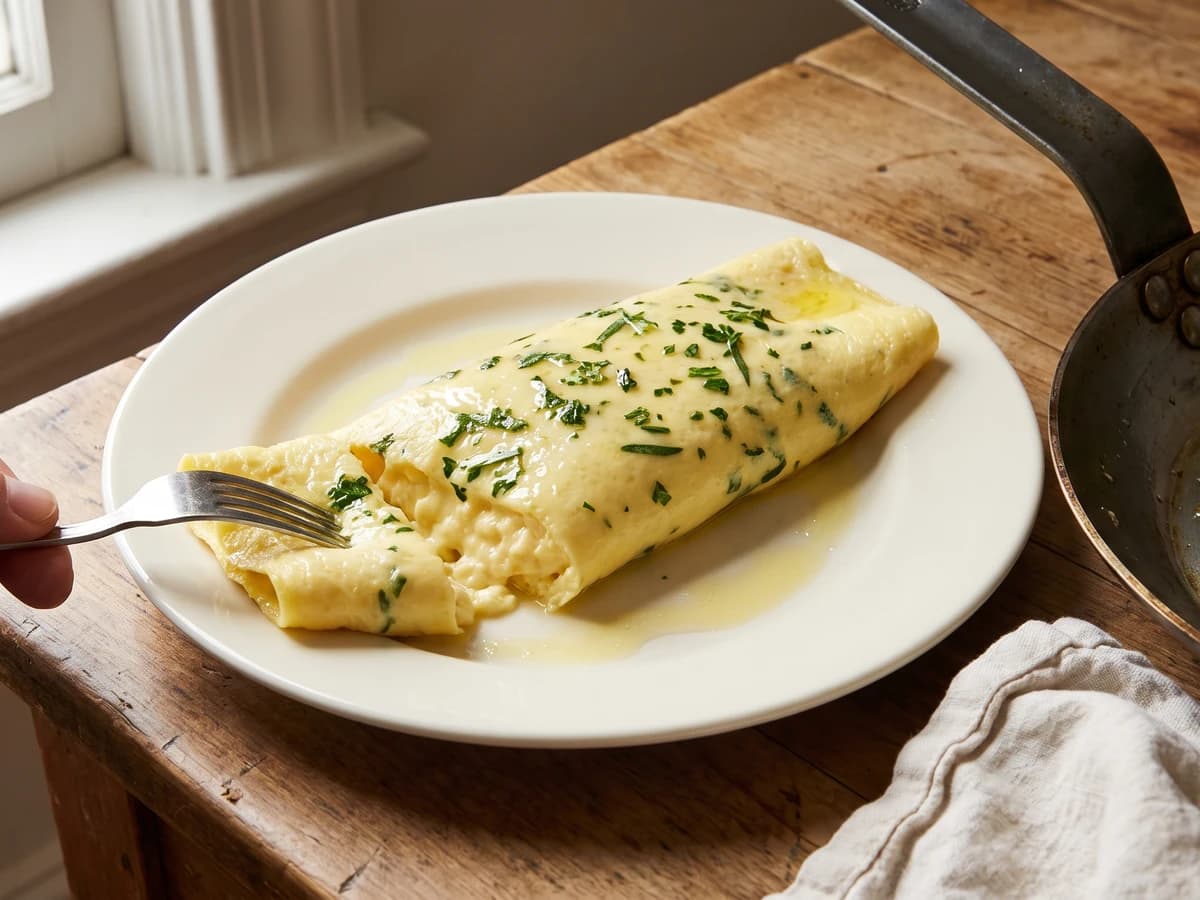
Four tender herbs, hot butter, and two eggs per pan: this rolled omelette teaches the quick hand and good judgment that keep the outside pale and the center creamy.
Chef Juliette
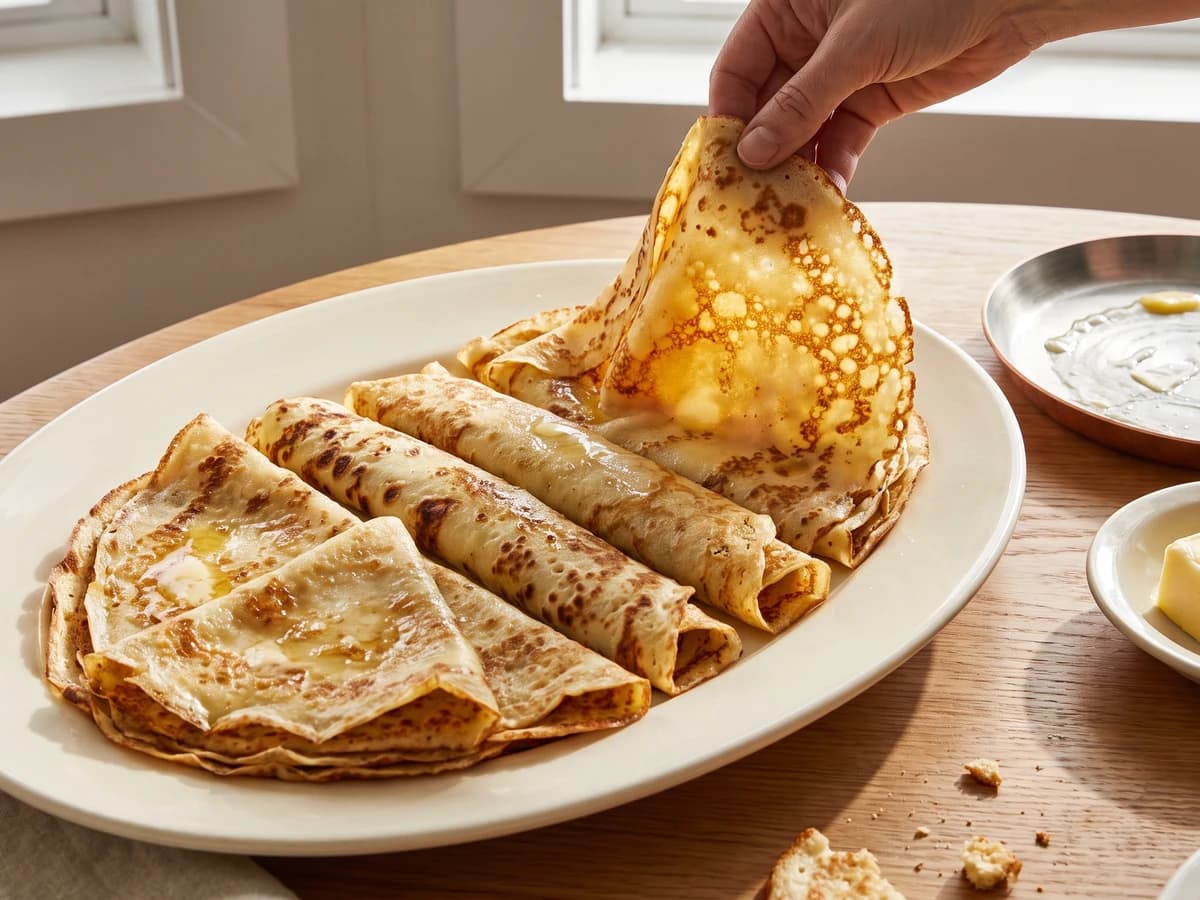
Four batters, one lesson: let the flour drink deeply before cooking, then spread the batter thinly in butter for crêpes and pannequets that bend without becoming tough.
Chef Juliette
Crêpes au Couvent trap ripe Williams pear dice between two thin pours of sweet batter, then turn in one clean toss and reach the table butter-gold, powdered, and burning hot.