Chef Juliette
Omelette à l’Écossaise
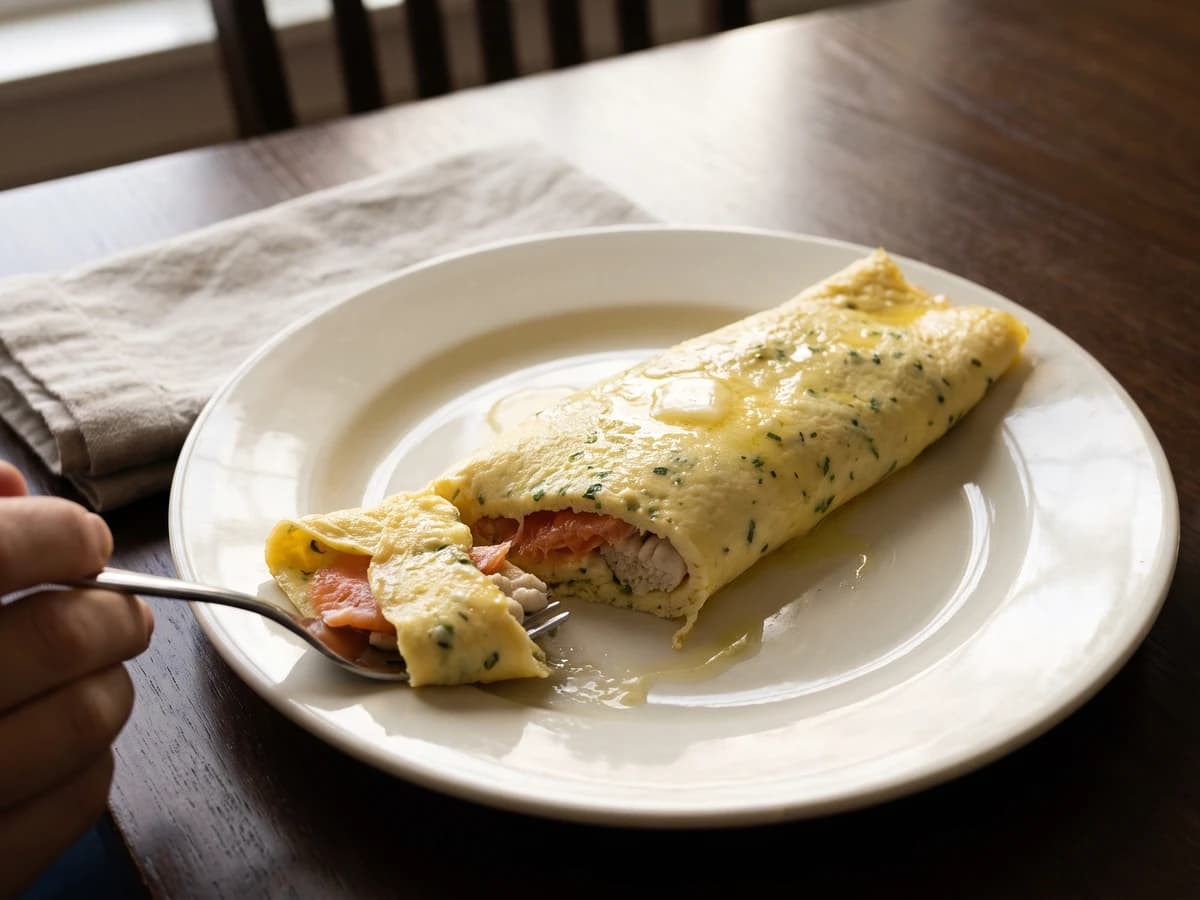
A creamy omelette aux fines herbes closes around smoked-salmon-wrapped herring milts, gently poached in butter. Have the filling ready, then roll the eggs while they still shine.
A cooking platform built around craft, culture, and the stories behind what we eat.
Created by Chef Juliette
Based on No. 2447, Pancakes à la Parisienne, from Le Guide Culinaire (1907) by Auguste Escoffier
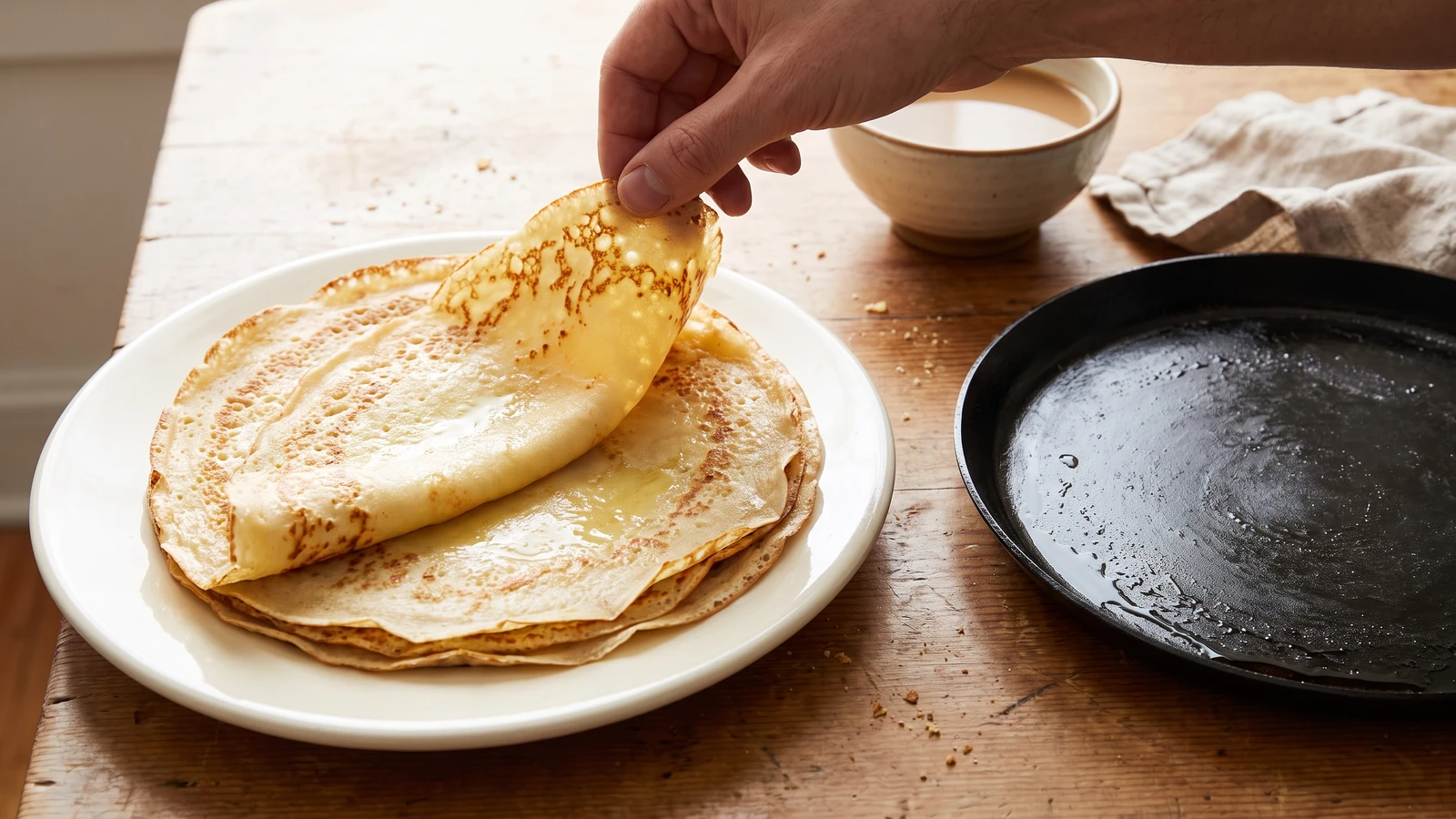
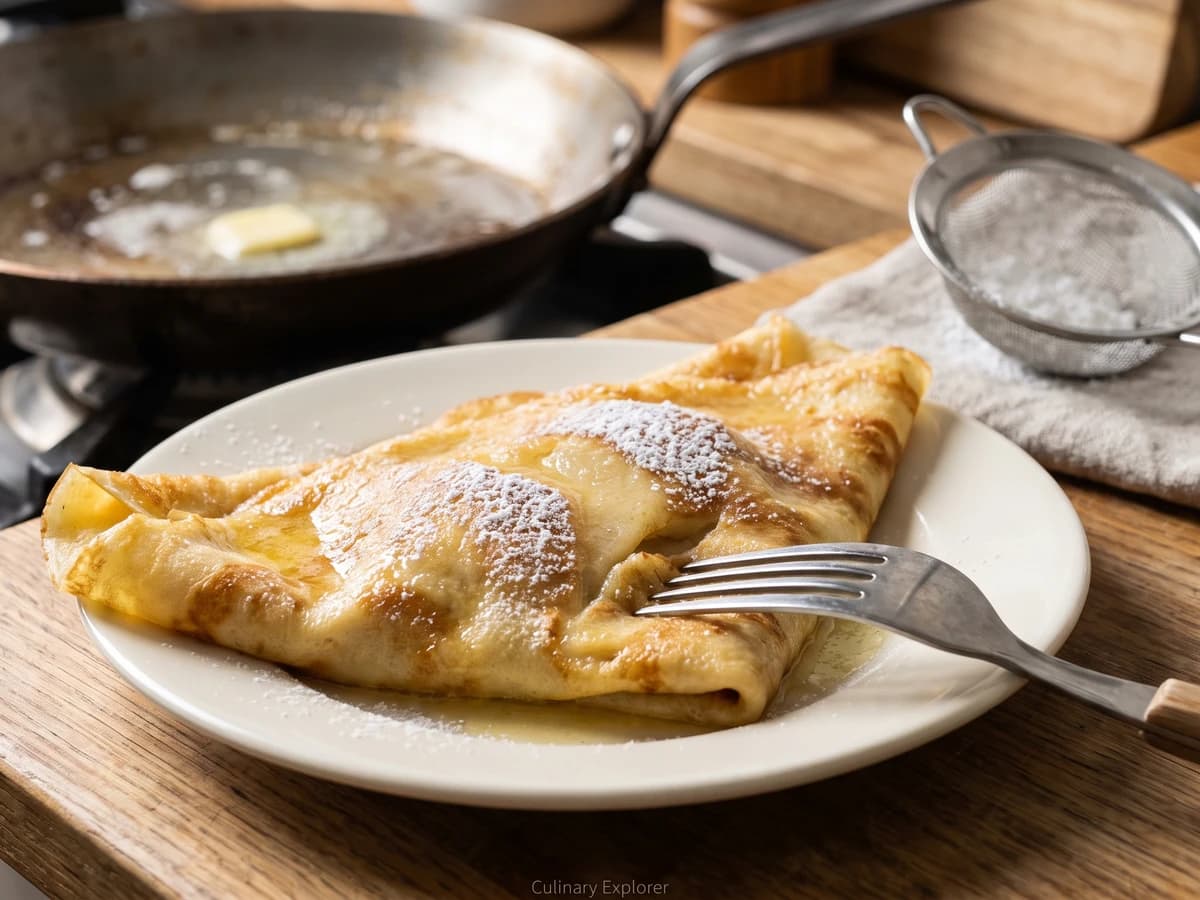
Parisienne crêpes make richness answer for itself: a rested, lightly sweetened batter of eggs, milk, cream, and butter, spread thin and cooked until each edge turns fine and gold.
Crêpes à la Parisienne (Parisian pancakes) teach the first law of crêpe-making: the batter must rest before the pan does any work. That pause lets the flour drink in the milk and cream, relaxes what whisking tightened, and gives you thin crêpes that bend without turning rubbery. Here they are deliberately ungarnished. Preparation B must answer for itself, tender at the centre, lightly sweet, and butter-gold at the rim.
The original kitchen assumed Preparation B mixed in brigade quantity and several seasoned crêpe pans moving through service. For one cook, the formula is reduced to twelve crêpes while its proportions and method stay intact; one 20 cm carbon-steel or nonstick skillet is the honest home equivalent. Multiple pans and a warming station were service scaffolding, so they go. The rested batter and the hot, lightly buttered pan are the dish, so they stay.
The first crêpe measures your heat and the batter's flow. Let it do that job without drama. Before you touch the pan, give the batter its full thirty-minute rest; this is the step that decides whether the crêpes spread thinly and turn cleanly.
Crêpes are cooked throughout France, while Brittany keeps its distinct tradition of buckwheat galettes and Paris favors fine wheat-flour crêpes at café and home tables. À la Parisienne here names a classical presentation rather than a filling: Preparation B is cooked and served ungarnished, its enriched batter carrying the plate. The common idea that every French crêpe needs sugar, lemon, jam, or liqueur misses this deliberately plain Parisian form.
Quantity
1 cup (240 ml / 125 g)
Quantity
2 tablespoons (30 ml / 25 g)
Quantity
1/4 teaspoon (1.25 ml / 1.5 g)
Quantity
3
Quantity
1 1/4 cups (300 ml / 309 g)
divided
Quantity
1/4 cup (60 ml / 60 g)
Quantity
2 tablespoons (30 ml / 28 g)
melted and cooled
Quantity
1 tablespoon (15 ml / 14 g)
softened
| Ingredient | Quantity |
|---|---|
| all-purpose flour | 1 cup (240 ml / 125 g) |
| superfine sugar | 2 tablespoons (30 ml / 25 g) |
| fine salt | 1/4 teaspoon (1.25 ml / 1.5 g) |
| large eggs | 3 |
| whole milkdivided | 1 1/4 cups (300 ml / 309 g) |
| heavy cream | 1/4 cup (60 ml / 60 g) |
| unsalted buttermelted and cooled | 2 tablespoons (30 ml / 28 g) |
| unsalted butter for the pansoftened | 1 tablespoon (15 ml / 14 g) |
Whisk the flour, sugar, and salt together in a bowl, then make a well in the centre. Add the eggs and whisk from the centre outward, drawing in the flour gradually. Reserve 2 tablespoons of the milk, then add the remainder in several pours, followed by the cream. A gradual dilution keeps the batter smooth. If small lumps remain, don't beat the batter senseless. Ça se rattrape: pass it through a fine sieve into a clean bowl.
Whisk the melted, cooled butter into the batter until no oily streaks remain. Cover and rest it for 30 minutes at room temperature. After resting, it should flow like light cream and leave only a thin coating on a spoon. If it has thickened enough to resist pouring, whisk in the reserved milk a teaspoon at a time. The rest is not brigade ceremony; hydrated flour makes a tender crêpe.
Set a 20 cm skillet over medium to medium-high heat for 2 minutes. Rub it with a very thin film of the softened butter, using folded kitchen paper or a pastry brush. The butter should foam briskly and settle without scorching. Stir the batter once, pour in about 3 tablespoons, and immediately tilt the pan in a full circle so the batter runs into a thin, even layer.
Cook until the surface loses its wet shine, the edge turns fine and golden, and the crêpe releases when the pan is shaken, 40 to 60 seconds. Slip a thin spatula underneath, turn it, and cook the second side for 15 to 25 seconds. If it tears, the surface was still wet, so give the next one a few seconds longer. If the batter sets before it can spread, lower the heat slightly and loosen it with a little reserved milk; if the crêpe lies pale and greasy, raise the heat. The first one is your gauge, not a verdict.
Continue with the remaining batter, stirring it gently before every two or three crêpes and renewing the pan with only a trace of butter when it looks dry. Stack the finished crêpes on a warm plate and cover them loosely with a clean towel so they remain supple. Serve them at once, plain and ungarnished, exactly as the Parisienne preparation intends. À table!
1 serving (about 150g)
Culinary guides, cultural storytelling, and the editorial depth that makes cooking meaningful.
Discover Culinary ExplorerChef Juliette
A creamy omelette aux fines herbes closes around smoked-salmon-wrapped herring milts, gently poached in butter. Have the filling ready, then roll the eggs while they still shine.
Chef Juliette
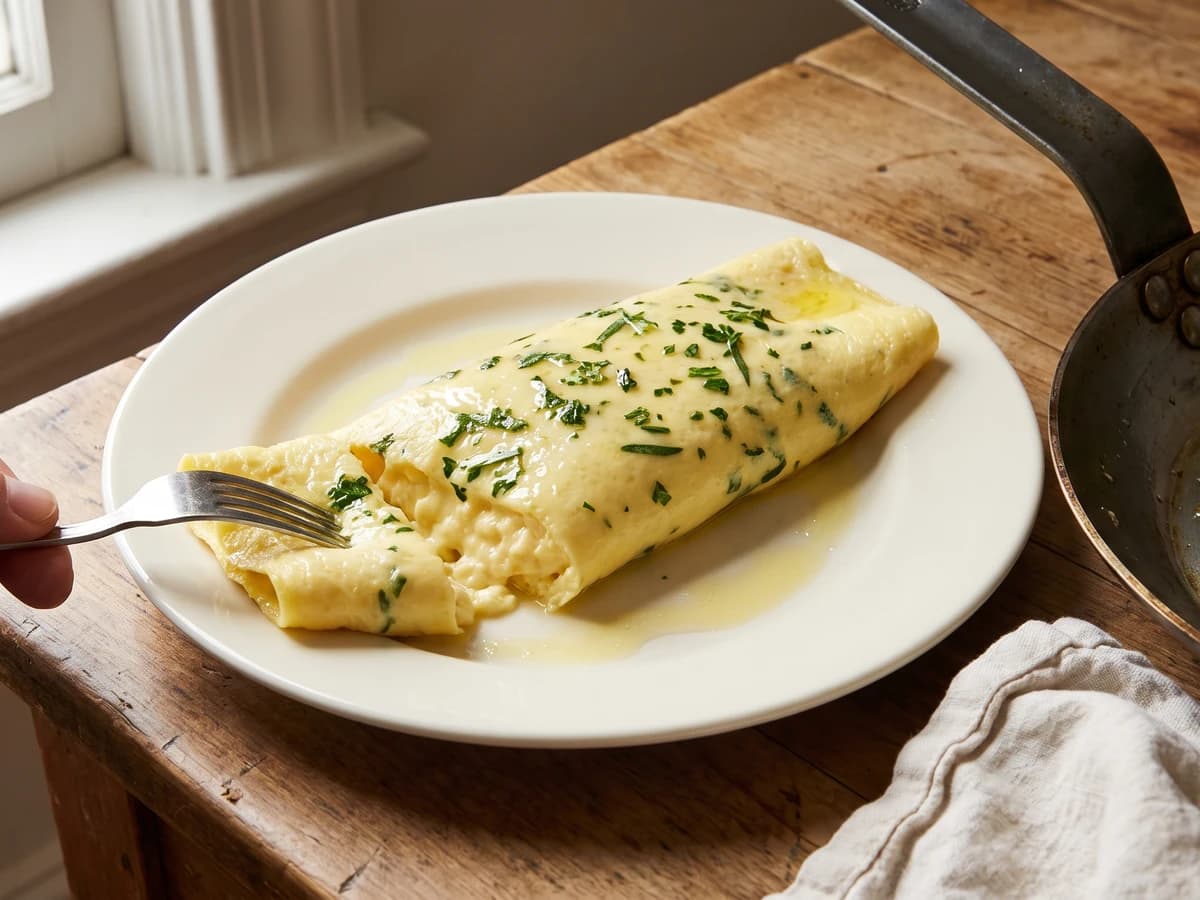
Four tender herbs, hot butter, and two eggs per pan: this rolled omelette teaches the quick hand and good judgment that keep the outside pale and the center creamy.
Chef Juliette
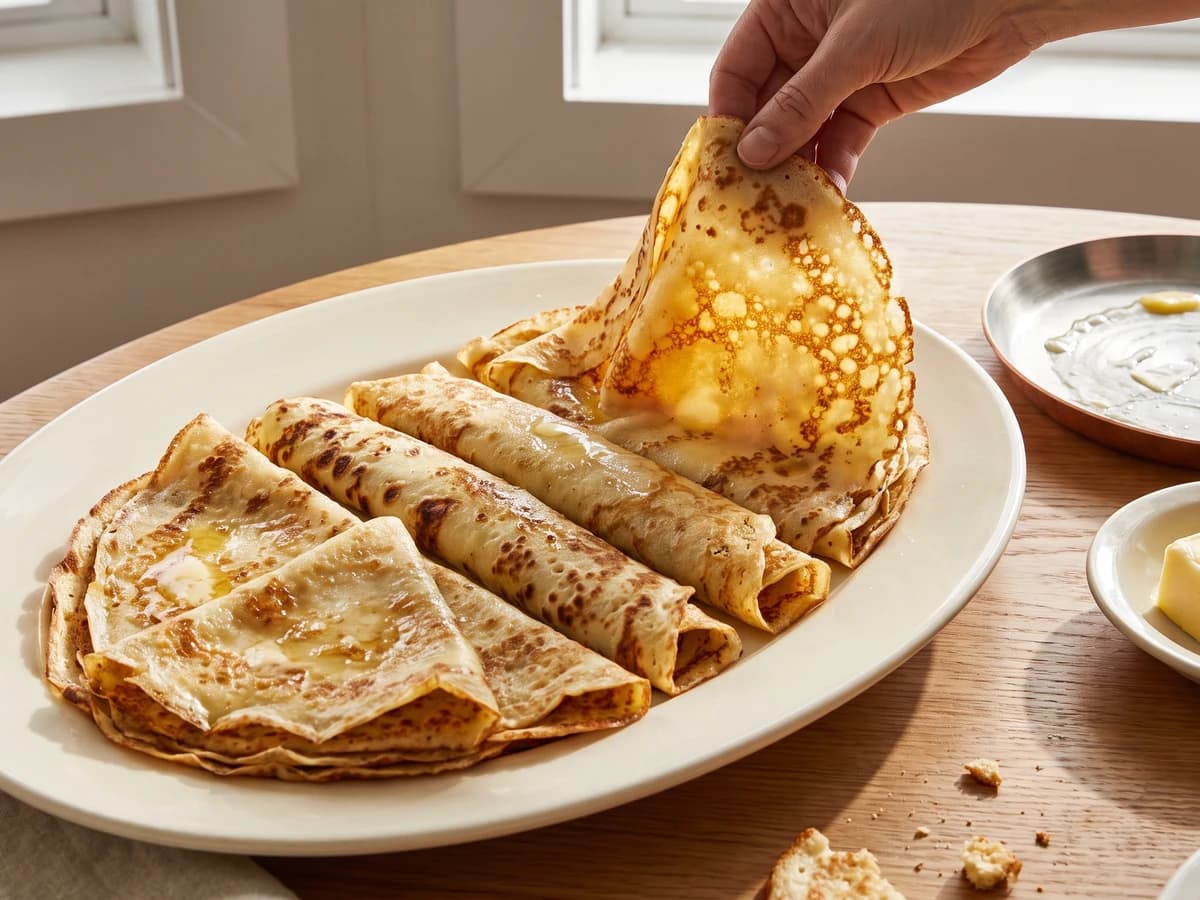
Four batters, one lesson: let the flour drink deeply before cooking, then spread the batter thinly in butter for crêpes and pannequets that bend without becoming tough.
Chef Juliette
Crêpes au Couvent trap ripe Williams pear dice between two thin pours of sweet batter, then turn in one clean toss and reach the table butter-gold, powdered, and burning hot.