Chef Juliette
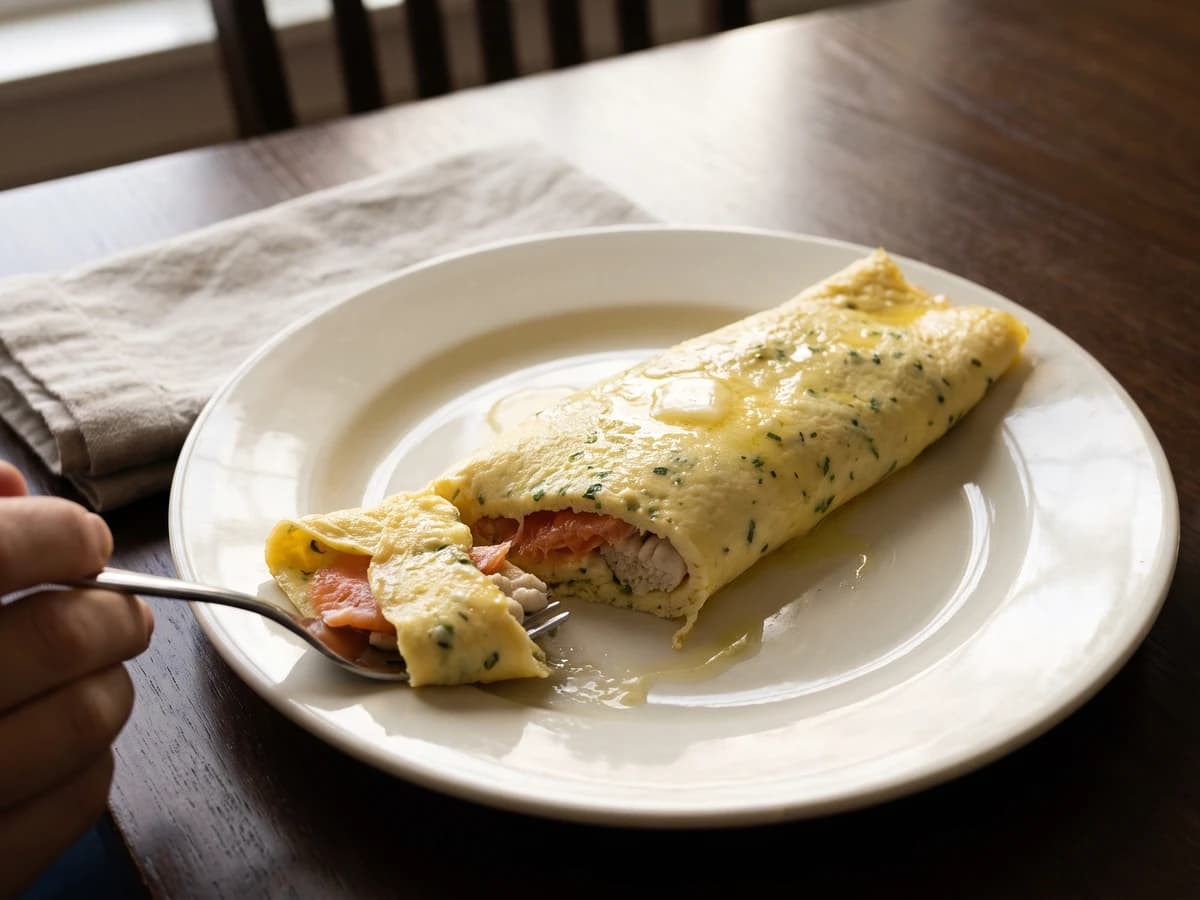
Omelette à l’Écossaise
A creamy omelette aux fines herbes closes around smoked-salmon-wrapped herring milts, gently poached in butter. Have the filling ready, then roll the eggs while they still shine.
A cooking platform built around craft, culture, and the stories behind what we eat.
Created by Chef Juliette
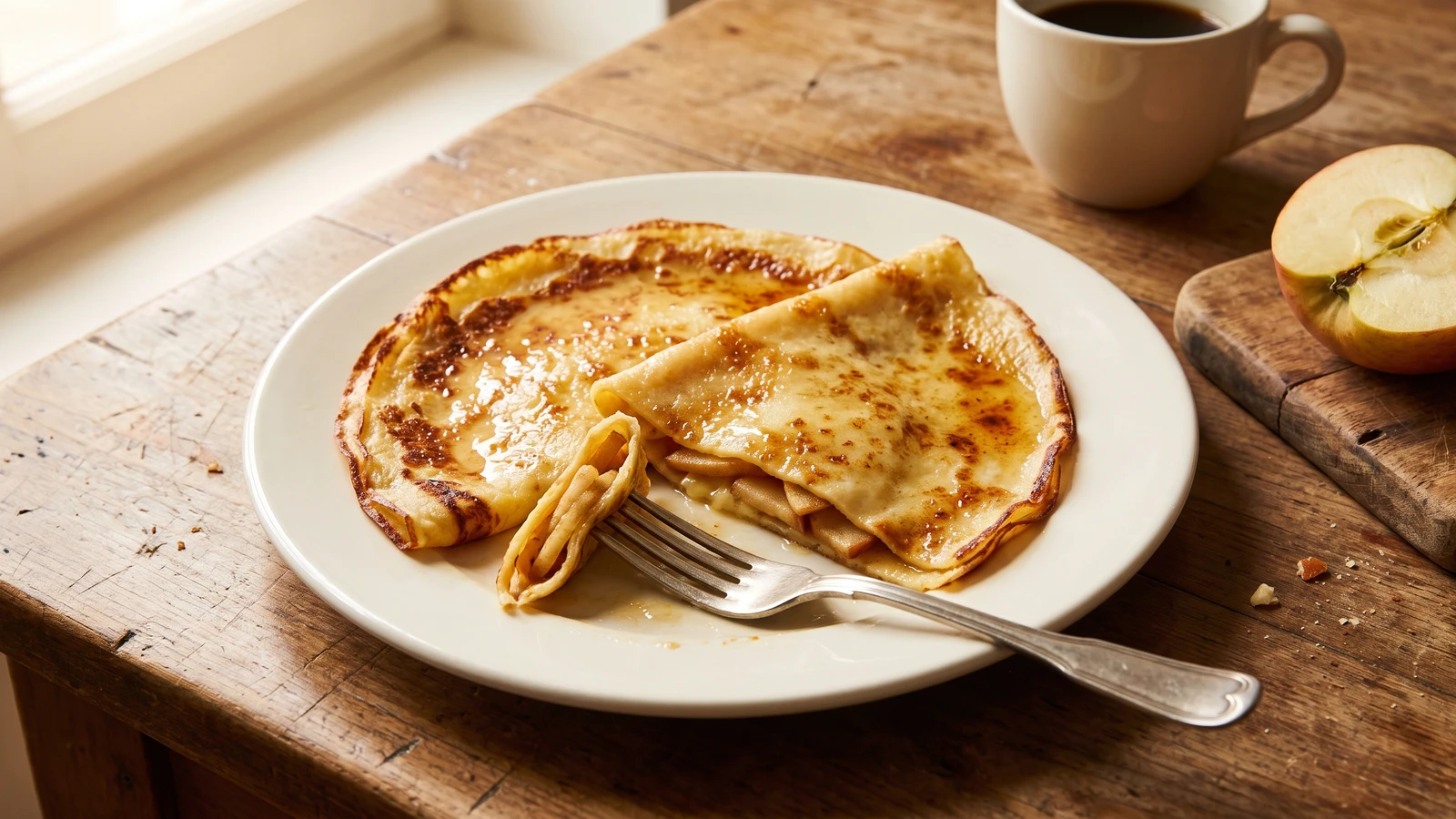
Based on No. 2446, Pancakes à la Normande, from Le Guide Culinaire (1907) by Auguste Escoffier
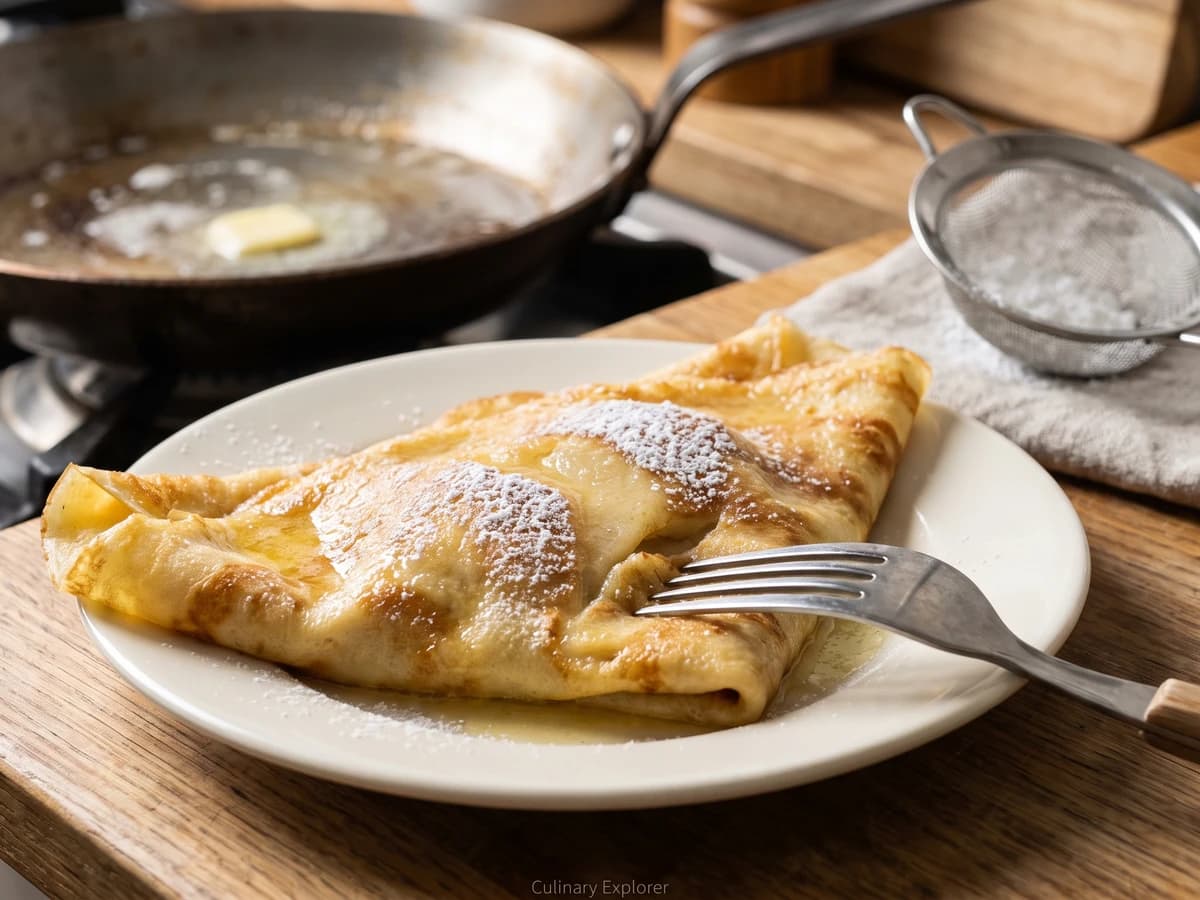
Fine apple slices browned in butter, sealed between two tender layers of crêpe batter, and glazed with sugar: a Norman lesson in driving off moisture before it can soften the pancake.
Crêpes à la Normande (Norman apple pancakes) teach one rule before anything meets the pan: fruit must lose its loose water before batter encloses it. Sauté the apple slices until butter clings and their broad faces take bronze. Leave them pale and they leak from within, softening the very crêpe meant to hold them.
The book proceeds from Convent Pancakes and changes one thing: fine apple slices sautéed in butter stand where pear dice did. A service kitchen assumed a fruit pan, a crêpe pan, cooks turning several at once, and a salamander for the final glaze. Here one well-seasoned or nonstick skillet does both pan jobs, and a hot broiler gives the sugar its quick finish. This version scales the brigade run to eight small crêpes for four. The separate pans are service scaffolding; the sautéed fruit, two batter layers, and sugar glaze are the dish and must stay. One cook, one stove, one evening.
Cooked properly, each crêpe arrives butter-gold and lightly crisp at the edge, with tender apple held inside rather than leaking through it. The decisive work happens before the first ladle of batter: colour the apples and leave the pan dry.
Crêpes à la Normande belong to Normandy's orchard-and-dairy table, where apples and butter carry the regional signature. The classical repertoire turned that pairing into a variation on the filled Convent Pancake: pear dice gave way to fine apple slices sautéed in butter, then the finished crêpe was sugared and glazed. Despite the name, Normande does not always mean cream; in this dish, properly browned apple and butter make the whole regional argument.
Quantity
1 cup (240 ml / 125 g)
Quantity
¼ teaspoon (1.25 ml / 1.5 g)
Quantity
2
Quantity
1¼ cups (300 ml / 305 g)
Quantity
5 tablespoons (75 ml / 70 g)
divided
Quantity
2 medium, about 3 cups (720 ml / 340 g) when sliced
peeled, cored, and cut into ⅛-inch (3 mm) slices
Quantity
3 tablespoons (45 ml / 38 g)
for glazing
| Ingredient | Quantity |
|---|---|
| all-purpose flour | 1 cup (240 ml / 125 g) |
| fine sea salt | ¼ teaspoon (1.25 ml / 1.5 g) |
| large eggs | 2 |
| whole milk | 1¼ cups (300 ml / 305 g) |
| unsalted butterdivided | 5 tablespoons (75 ml / 70 g) |
| firm cooking applespeeled, cored, and cut into ⅛-inch (3 mm) slices | 2 medium, about 3 cups (720 ml / 340 g) when sliced |
| caster sugarfor glazing | 3 tablespoons (45 ml / 38 g) |
Whisk the flour and salt together, make a well in the centre, and add the eggs with half the milk. Whisk from the centre outward until smooth, then gradually work in the remaining milk. Melt 1 tablespoon (15 ml / 14 g) of the butter and whisk it into the batter. Let the batter rest for 30 minutes so the flour hydrates and the crêpes cook tender rather than rubbery. It should fall from the ladle in a thin, continuous ribbon; if stubborn lumps remain, pass it through a fine sieve.
Melt 2 tablespoons (30 ml / 28 g) of the butter in a 10-inch (25 cm) skillet over medium-high heat. Sauté means cooking quickly in butter over lively heat so the food takes colour rather than stews. Add the apple slices in two batches, keeping them as close to one layer as possible, and cook until their broad faces are bronzed and the centres are just tender, about 3 minutes per batch. Transfer them to a plate. If the apples flood the pan with juice, lift them out and boil the liquid until only glossy butter remains, then return the slices for 30 seconds. Ça se rattrape. The pan must be dry before batter enters it.
Wipe the skillet clean without washing away its buttered seasoning. Set an oven rack about 6 inches (15 cm) below the broiler and heat the broiler on high. Brush a bare metal baking sheet lightly with some of the remaining butter, then return the skillet to medium heat.
Brush the skillet with a thin film of butter and pour in 2 tablespoons (30 ml) of batter, tilting the pan just enough to form a round about 6 inches (15 cm) across. Arrange a single layer of browned apple over the batter, leaving a ½-inch (1 cm) border. Spoon another 2 tablespoons (30 ml) of batter over the fruit, coaxing it to meet the lower layer around the edge. Cook until the border looks set and the underside is deep butter-gold, about 2 minutes. This enclosure is the structure borrowed from the Convent Pancake, so keep the fruit between the layers rather than scattering it on top.
Loosen the crêpe completely with a thin spatula, slide a broad spatula underneath, and turn it in one confident movement. Cook the second side for 1 to 2 minutes, until golden and sealed, then transfer it to the prepared baking sheet. If it tears, lay it flat, spoon a teaspoon of batter across the tear, and return that side to the pan until the patch sets. Ça se rattrape. Repeat with the remaining batter, apples, and butter to make 8 crêpes, arranging them in one layer on the sheet.
Sprinkle the caster sugar evenly over the crêpes and place them beneath the broiler until the sugar melts and freckles amber, 30 to 90 seconds. Watch without wandering off; sugar moves from gold to bitter black with very little ceremony. If one edge colours faster, rotate the sheet or lower it by one rack. Serve two crêpes per person while the glazed tops and buttered edges are still crisp. À table!
1 serving (about 195g)
Culinary guides, cultural storytelling, and the editorial depth that makes cooking meaningful.
Discover Culinary ExplorerChef Juliette
A creamy omelette aux fines herbes closes around smoked-salmon-wrapped herring milts, gently poached in butter. Have the filling ready, then roll the eggs while they still shine.
Chef Juliette
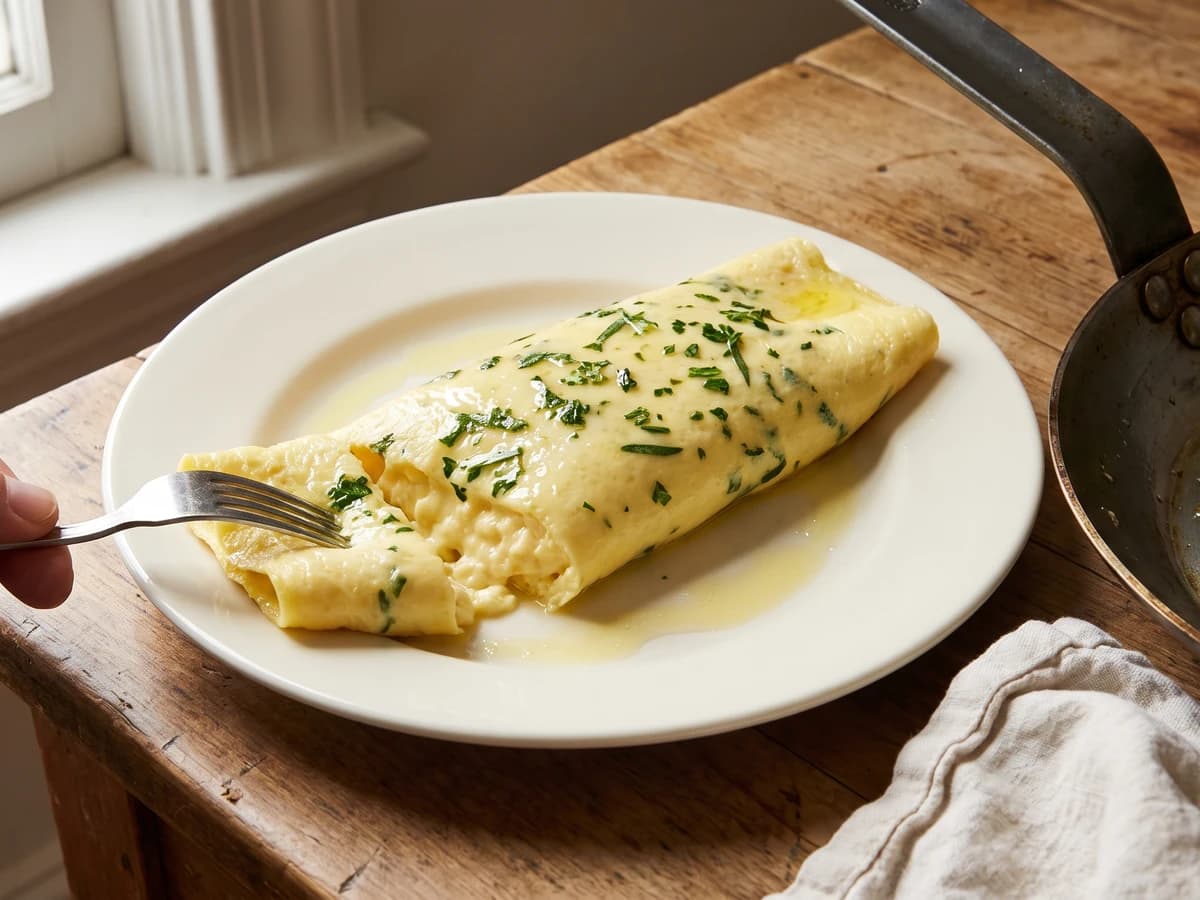
Four tender herbs, hot butter, and two eggs per pan: this rolled omelette teaches the quick hand and good judgment that keep the outside pale and the center creamy.
Chef Juliette
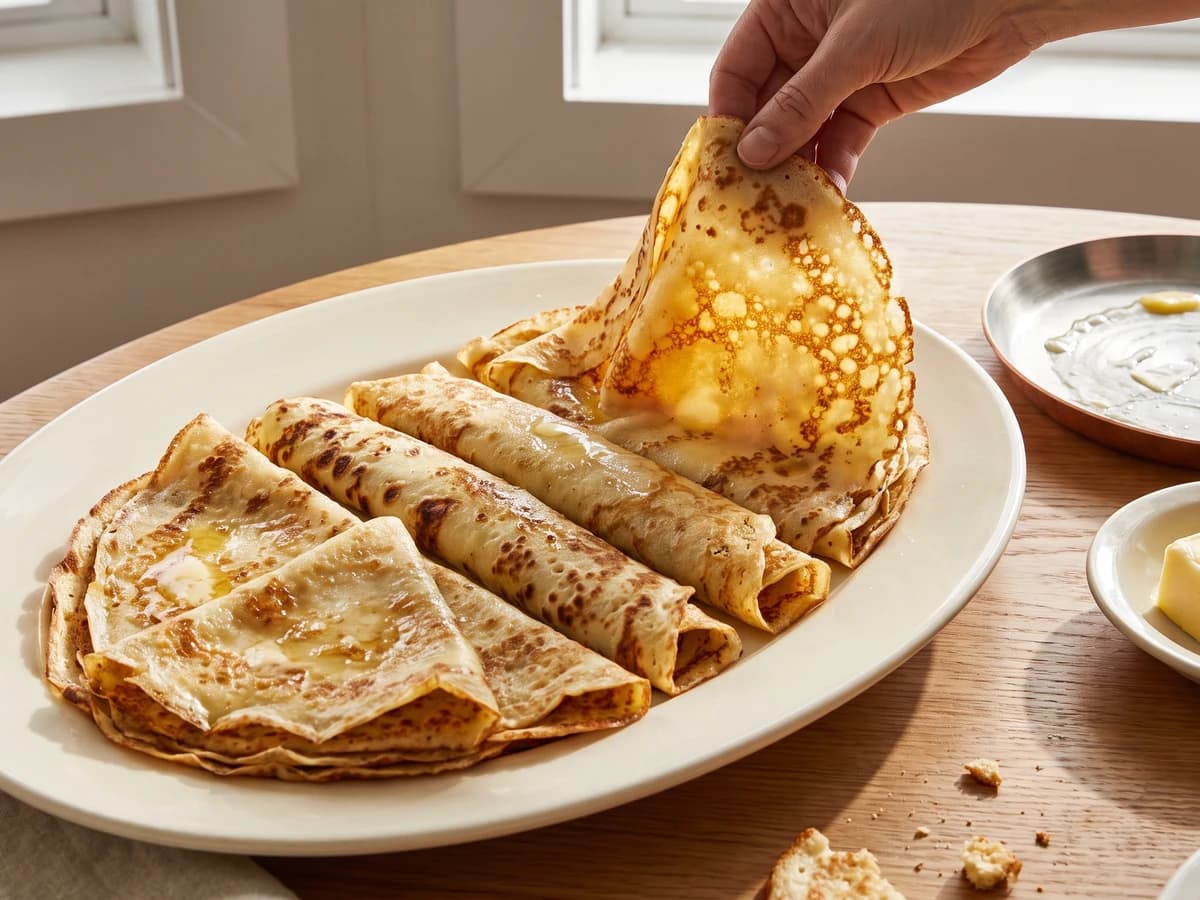
Four batters, one lesson: let the flour drink deeply before cooking, then spread the batter thinly in butter for crêpes and pannequets that bend without becoming tough.
Chef Juliette
Crêpes au Couvent trap ripe Williams pear dice between two thin pours of sweet batter, then turn in one clean toss and reach the table butter-gold, powdered, and burning hot.