Chef Juliette
Omelette à l’Écossaise
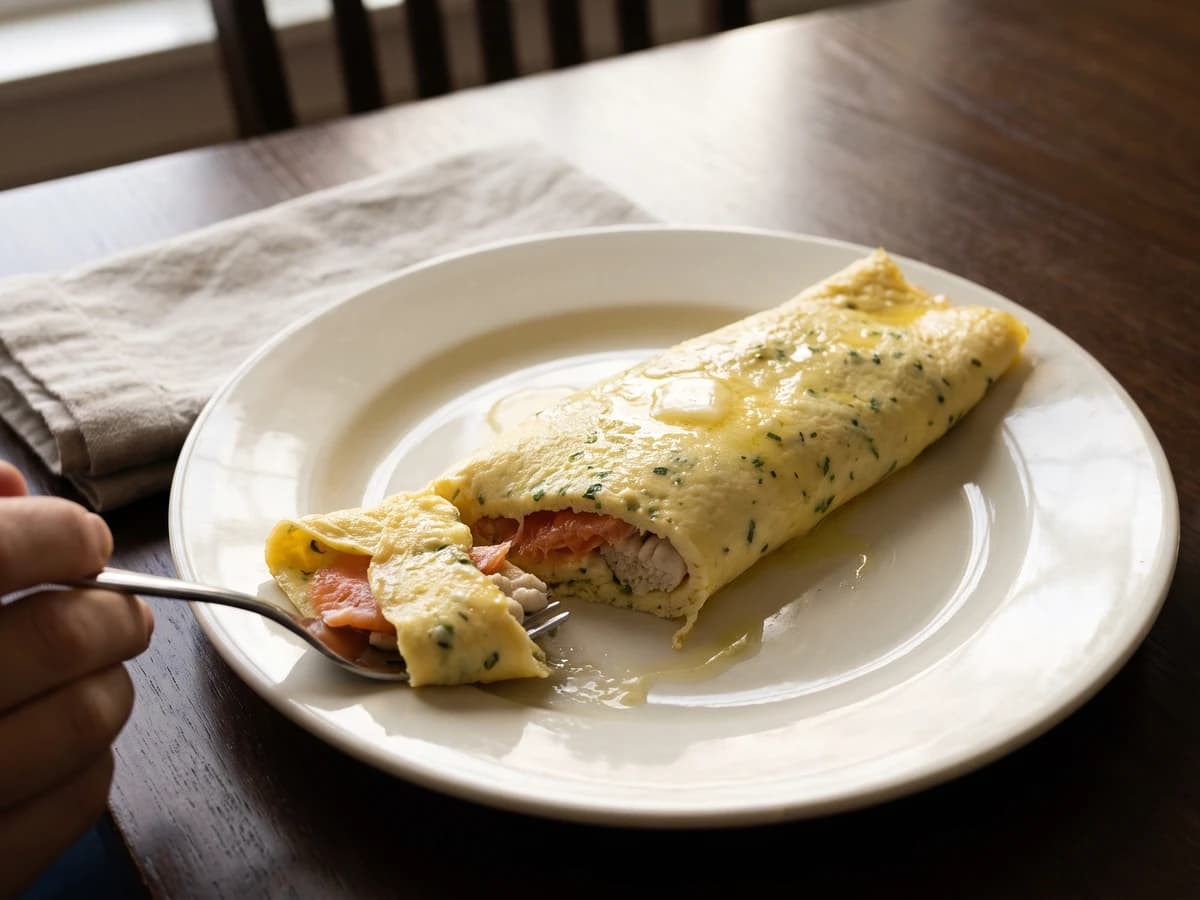
A creamy omelette aux fines herbes closes around smoked-salmon-wrapped herring milts, gently poached in butter. Have the filling ready, then roll the eggs while they still shine.
A cooking platform built around craft, culture, and the stories behind what we eat.
Created by Chef Juliette
Based on No. 2445, Gil-Blas Pancakes, from Le Guide Culinaire (1907) by Auguste Escoffier
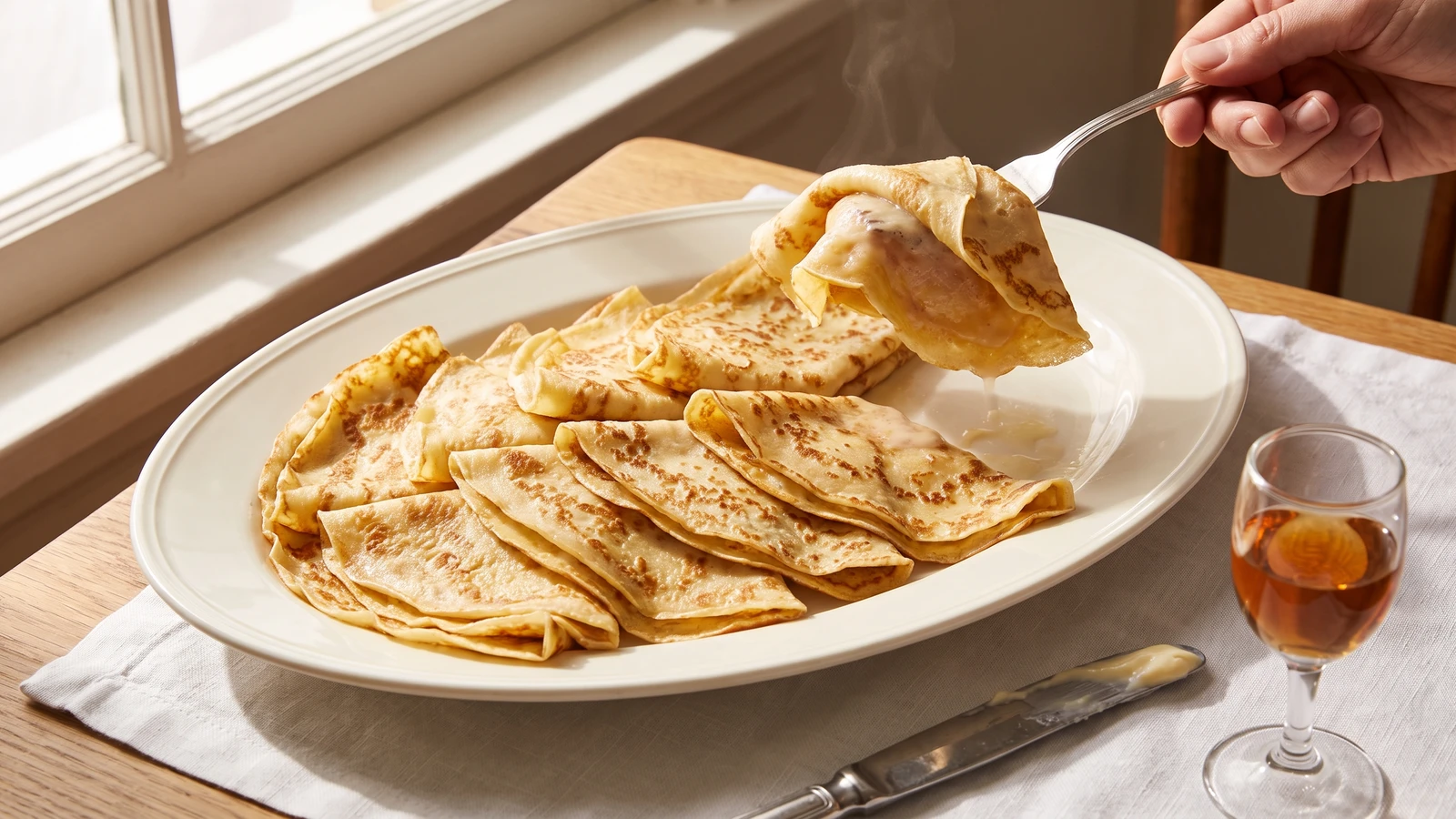
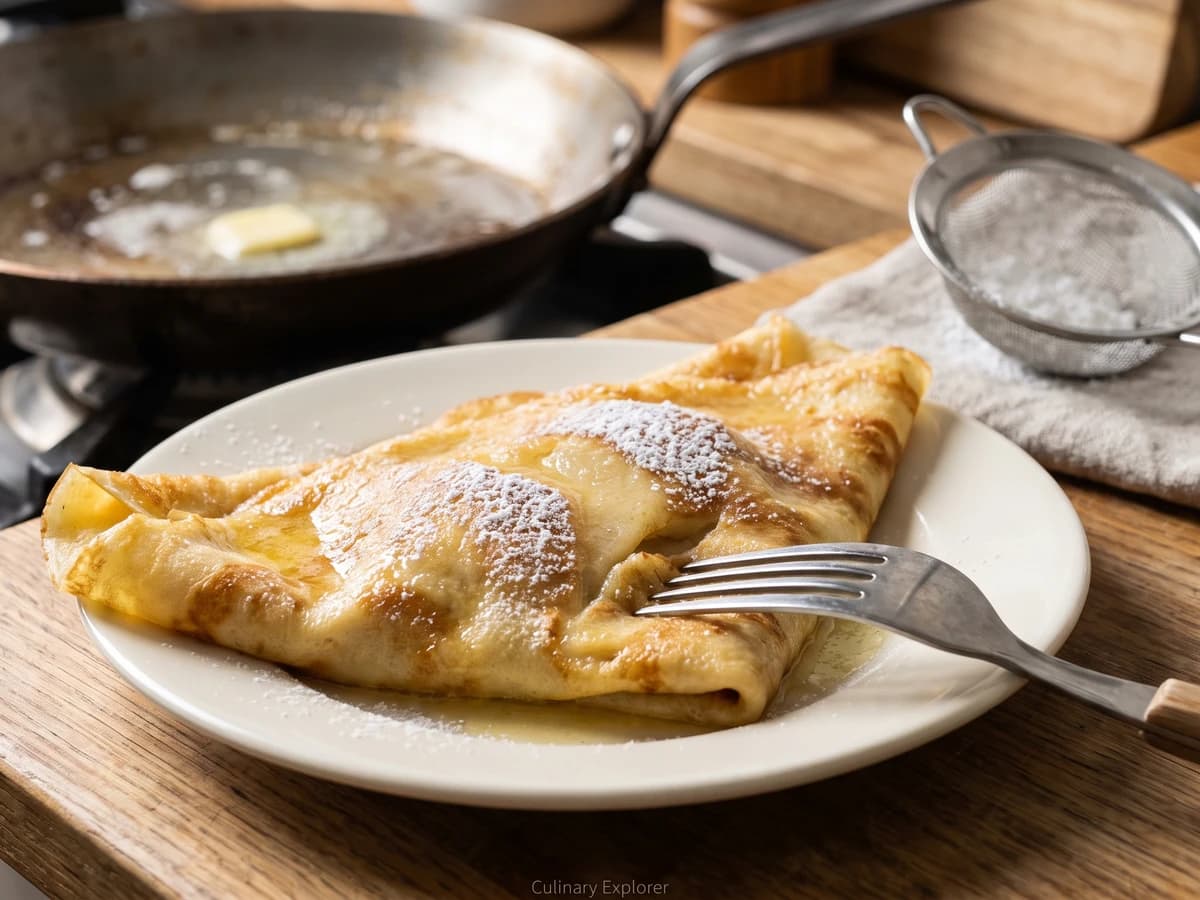
Crêpes Gil-Blas teach the discipline of beurre en pommade: cool butter, sugar, liqueur brandy, and lemon held in a creamy emulsion, spread over tender crêpes and folded twice.
Crêpes Gil-Blas (Gil-Blas pancakes) teach beurre en pommade (butter worked to the consistency of a soft cream). The one true thing is temperature: the butter must bend beneath the spoon while staying cool enough to hold the sugar and liqueur brandy. Melt it and the filling turns greasy; keep it near 64°F (18°C) and it stays pale, smooth, and ready to soften inside the folded crêpe.
The book's entry assumes preparation C is already at hand, one cook is turning crêpes while another finishes the butter, and a service napkin waits on the platter. There is no saucier, stockpot, or salamander to imitate here, only the brigade's division of labor. At home, eight 8-inch crêpes, one bowl, and a room-temperature platter do the work. The napkin moves under the platter so it cannot drink the filling. One cook, one stove, one evening.
The proportions stay faithful: three ounces each of butter and powdered sugar, three tablespoons of liqueur brandy, the extra filbert-sized piece of butter, and a few drops of lemon. Only the vague measures have changed, to 5 grams of butter and one-eighth teaspoon of juice, so you can repeat the result. Add the brandy slowly. That incorporation is the step that decides the dish.
Crêpes Gil-Blas belong to the Parisian repertory of named sweet entremets, not to a regional farmhouse tradition. Gil Blas is the wandering hero of Alain-René Lesage's picaresque novel, a French literary name that also circulated through Parisian newspaper life and suited the canon's habit of naming composed dishes after familiar cultural figures. Unlike crêpes Suzette, Crêpes Gil-Blas are neither orange-sauced nor flambéed: their identity is butter worked cool with sugar, liqueur brandy, and lemon.
Quantity
enough for 8 thin crêpes, each 8 inches (20 cm)
Quantity
6 tablespoons (90 ml / 85 g)
softened to 64°F (18°C) but still cool
Quantity
¾ cup (180 ml / 85 g)
sifted
Quantity
3 tablespoons (45 ml / 42 g)
Quantity
1 teaspoon (5 ml / 5 g)
a filbert-sized piece, softened but cool
Quantity
⅛ teaspoon (0.6 ml / 0.6 g)
just a few drops
| Ingredient | Quantity |
|---|---|
| preparation C pancake batter | enough for 8 thin crêpes, each 8 inches (20 cm) |
| best-quality unsalted buttersoftened to 64°F (18°C) but still cool | 6 tablespoons (90 ml / 85 g) |
| powdered sugarsifted | ¾ cup (180 ml / 85 g) |
| liqueur brandy | 3 tablespoons (45 ml / 42 g) |
| unsalted buttera filbert-sized piece, softened but cool | 1 teaspoon (5 ml / 5 g) |
| fresh lemon juicejust a few drops | ⅛ teaspoon (0.6 ml / 0.6 g) |
Put the 6 tablespoons of butter in a medium bowl at about 64°F (18°C). Press and smear it firmly against the bowl with a wooden spoon for 2 to 3 minutes, until it is smooth, pale, and as supple as face cream. This is beurre en pommade. If the butter shines, puddles, or feels warm, stop and chill it for 5 minutes, then work it again. Ça se rattrape. Melted butter cannot hold the filling properly.
Add the sifted powdered sugar in three additions, pressing each completely into the pommade before adding the next. Work until no dry streaks or sugar lumps remain. Keep the motion deliberate rather than vigorous; the filling should be creamy and close-textured, not whipped full of air.
Add the liqueur brandy 1 teaspoon at a time, stirring each addition completely into the butter before the next. When all the brandy is incorporated, work in the filbert-sized teaspoon of soft butter, then the few drops of lemon juice. The finished filling should be smooth, pale, and spreadable. If it separates into greasy streaks, set the bowl in cold water and press the mixture firmly against its side until it comes together; if necessary, chill it for 5 minutes and begin working again. Do not add heat.
Cook the preparation C pancake batter according to its own method in an 8-inch (20 cm) crêpe pan, making 8 thin, supple crêpes. Give them only light golden mottling; crisp crêpes crack when folded. Stack them beneath an inverted plate as they leave the pan, then let them cool until barely warm. A hot crêpe melts the pommade before you can fold it.
Lay one barely warm crêpe flat and spread about 2 tablespoons (30 ml / 27 g) of the brandy butter over it in a thin, even layer, stopping ½ inch (1 cm) from the edge. Fold the crêpe in half, then fold it once more into a quarter. Repeat with the remaining crêpes. Work steadily so the filling remains creamy rather than liquid.
Overlap the folded crêpes on a room-temperature platter. Set the platter over a clean folded linen napkin rather than placing the buttered crêpes directly on cloth; the napkin was service presentation, and direct contact would wick away the filling. Serve promptly while the crêpes are tender and the pommade is just beginning to soften. À table!
1 serving (about 135g)
Culinary guides, cultural storytelling, and the editorial depth that makes cooking meaningful.
Discover Culinary ExplorerChef Juliette
A creamy omelette aux fines herbes closes around smoked-salmon-wrapped herring milts, gently poached in butter. Have the filling ready, then roll the eggs while they still shine.
Chef Juliette
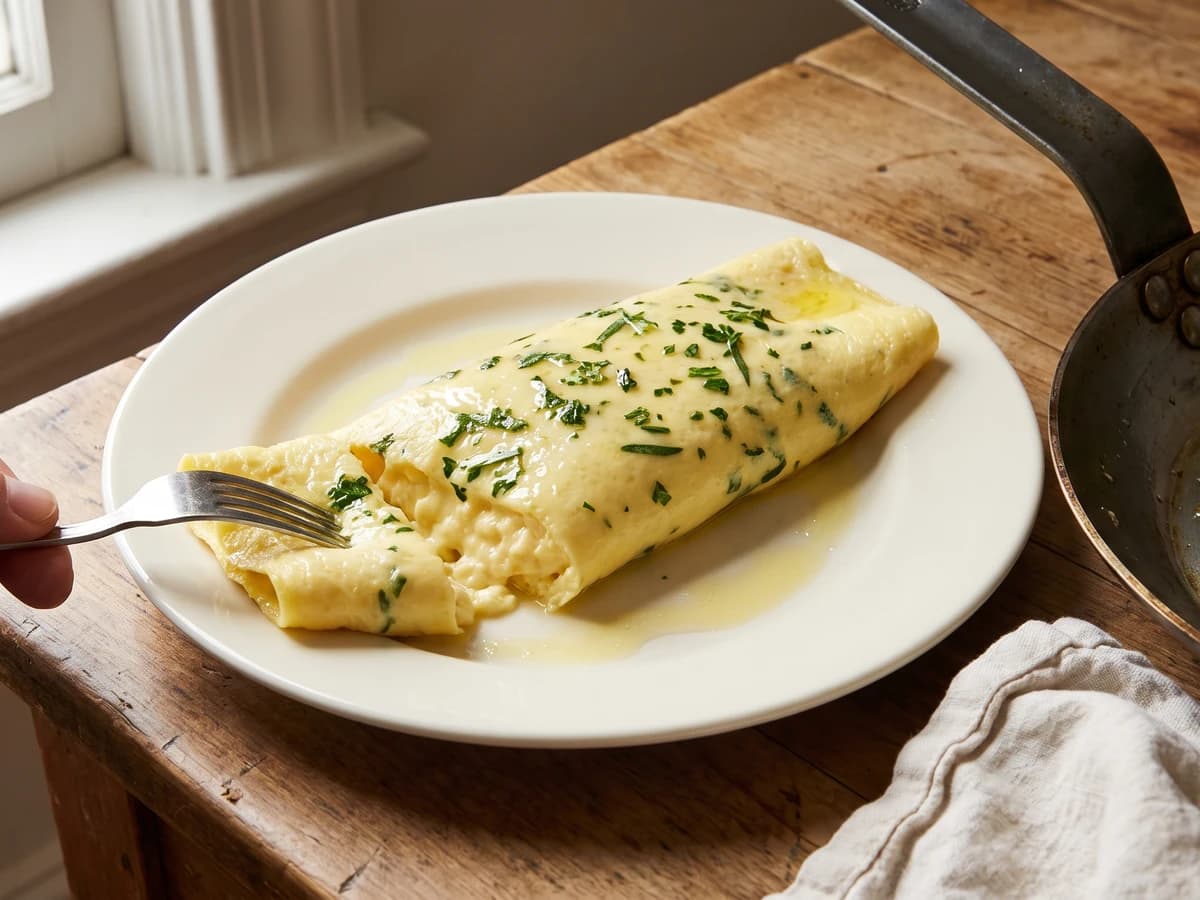
Four tender herbs, hot butter, and two eggs per pan: this rolled omelette teaches the quick hand and good judgment that keep the outside pale and the center creamy.
Chef Juliette
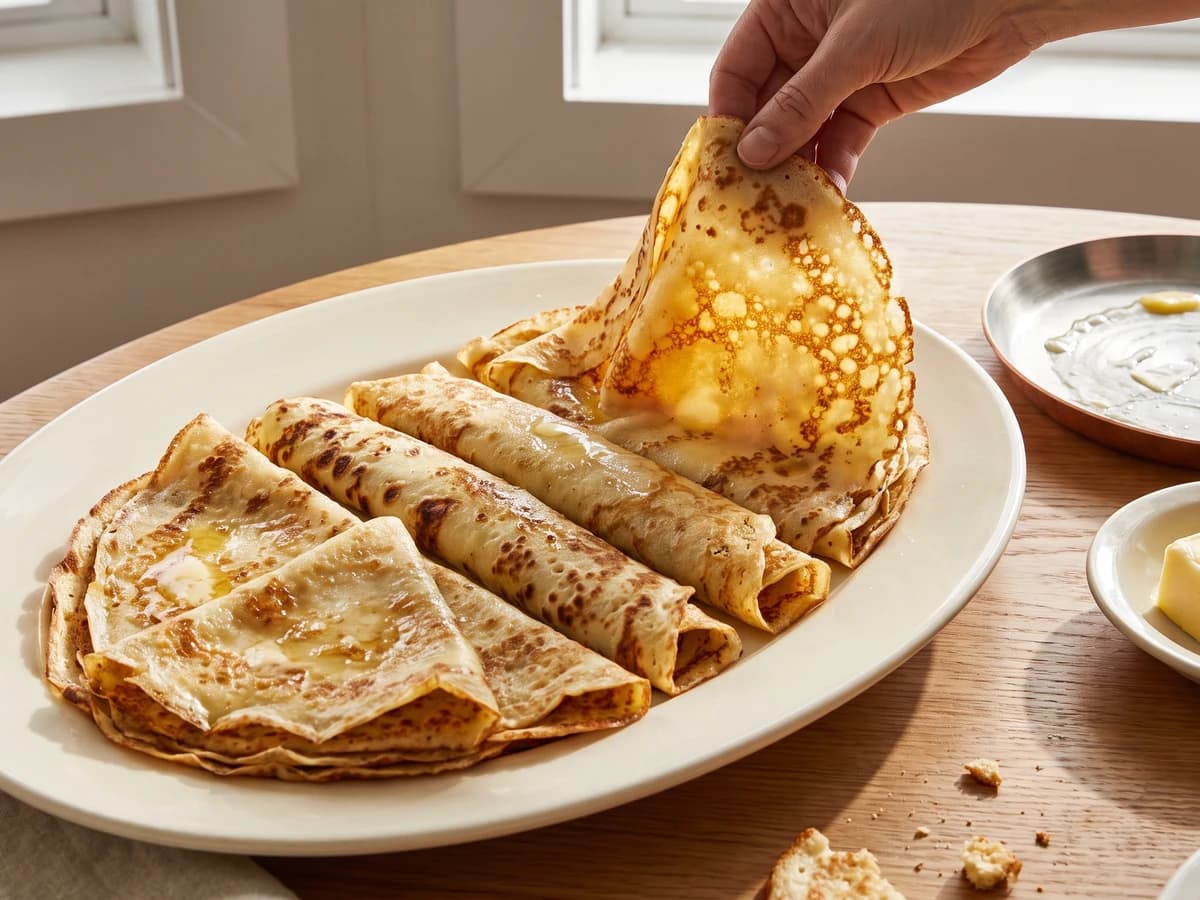
Four batters, one lesson: let the flour drink deeply before cooking, then spread the batter thinly in butter for crêpes and pannequets that bend without becoming tough.
Chef Juliette
Crêpes au Couvent trap ripe Williams pear dice between two thin pours of sweet batter, then turn in one clean toss and reach the table butter-gold, powdered, and burning hot.