Chef Juliette
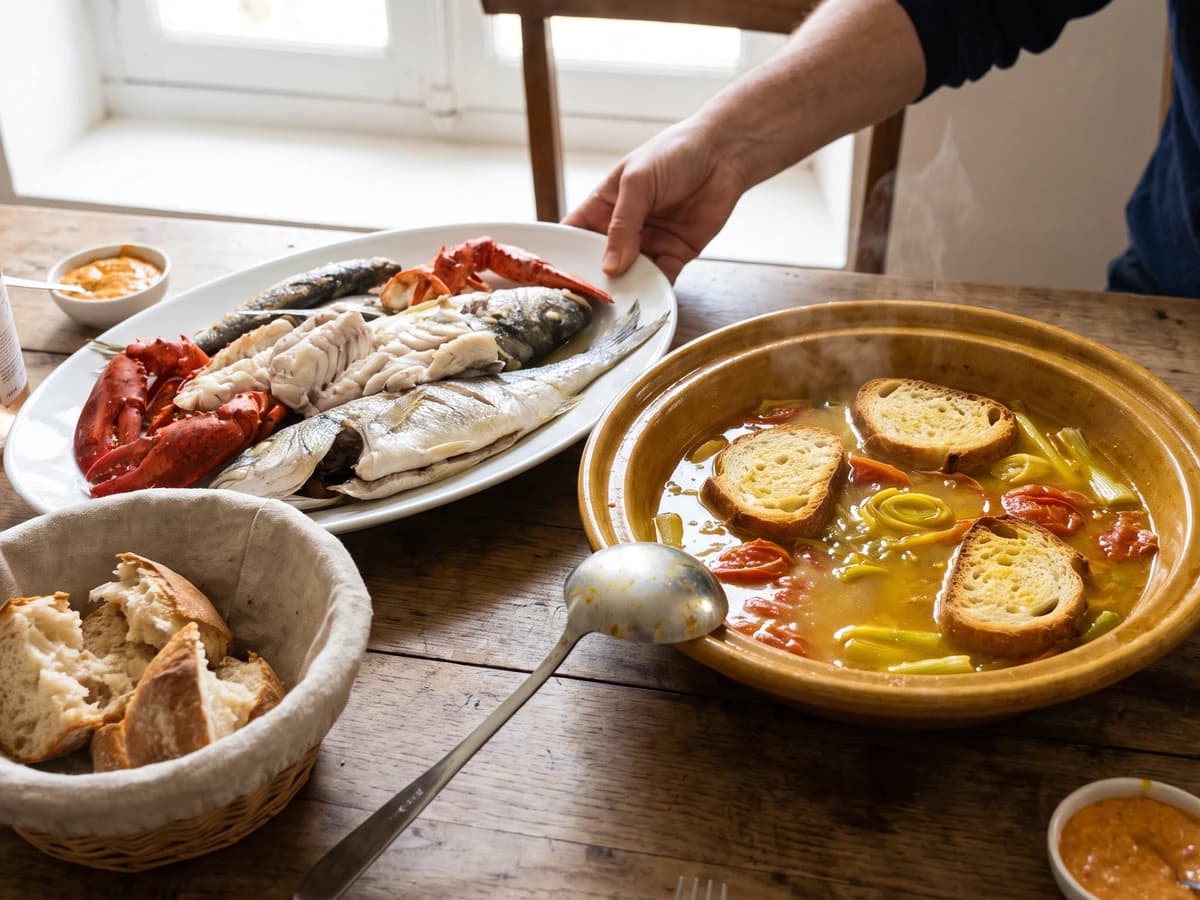
Bouillabaisse à la Marseillaise
Marseille's great fish stew, saffron-gold and garlic-scented, proves that a hard boil can be the careful choice: it binds olive oil into broth before the whole pot meets bread.
A cooking platform built around craft, culture, and the stories behind what we eat.
Created by Chef Juliette
Based on No. 243, The Creams, from Le Guide Culinaire (1907) by Auguste Escoffier
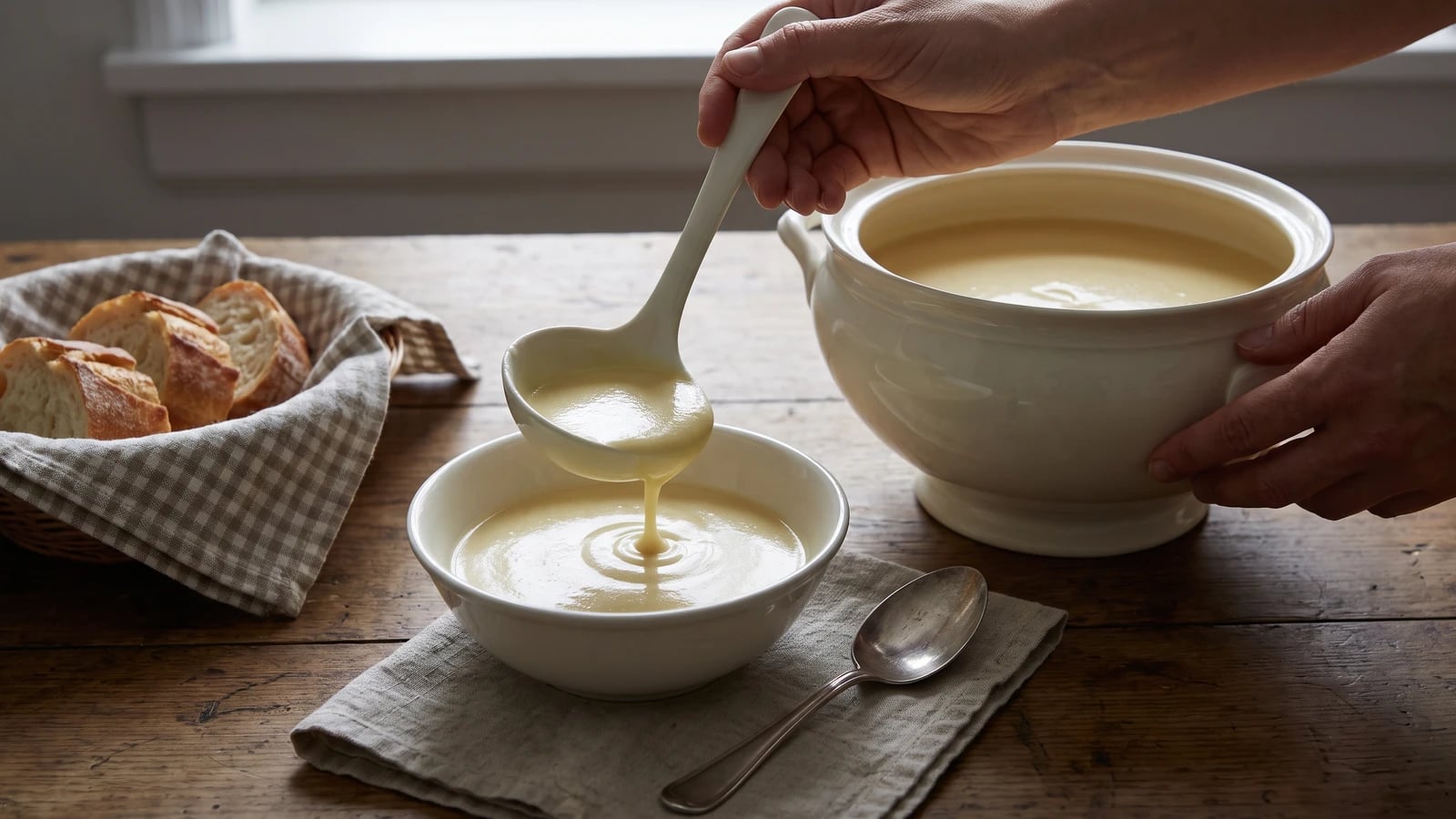
Crèmes teach the clean distinction between velouté and cream soup: clear béchamel supplies the binding, milk sets the body, and fresh cream finishes it, with no yolks and no final butter.
Crèmes (French cream soups) teach one precise distinction: milk makes the body, while fresh cream supplies the finish. Unlike a velouté, a crème begins with béchamel claire (light béchamel), reaches its proper consistency with milk rather than consommé, and takes neither a liaison (egg-yolk binding) nor finishing butter.
This is a family method, not one flavored potage. The ingredient that names a particular crème and its garnish come from the corresponding velouté; this preparation governs the binding and finish. The classical kitchen assumed a saucier with clear Béchamel already beside the range and quantities meant for a dining room. At home, you build the pale roux and milk base in one saucepan. The separate sauce pot was brigade scaffolding and can go. The pale roux, milk adjustment, absence of yolks and final butter, and measured fresh cream are the dish and must stay. One cook, one stove, one evening.
When it is right, a crème falls from the spoon in a smooth ivory ribbon, rich without heaviness and glossy without a slick of fat. Guard the roux from color and add the first milk patiently. That is the step that decides the soup.
Crèmes belong to the classical potage service of Parisian grand kitchens and bourgeois dining rooms, where soups were organized by their binder and finish as carefully as by their principal ingredient. Named versions borrowed asparagus, poultry, mushrooms, or another foundation and garnish from the corresponding velouté family, then replaced its velouté base, consommé adjustment, yolk liaison, and butter finish with béchamel, milk, and fresh cream. Despite the name, cream does not provide the soup's main structure; the béchamel and milk do that work.
Quantity
6 tablespoons (90 ml / 85 g)
Quantity
¾ cup (180 ml / 90 g)
Quantity
7 cups (1.65 L / 1.70 kg)
divided and warmed
Quantity
200 to 400 ml (200 to 400 g)
Quantity
2 teaspoons (10 ml / 12 g)
plus more to taste
Quantity
¼ teaspoon (1.25 ml / 0.5 g)
plus more to taste
| Ingredient | Quantity |
|---|---|
| unsalted butter | 6 tablespoons (90 ml / 85 g) |
| plain flour | ¾ cup (180 ml / 90 g) |
| whole milkdivided and warmed | 7 cups (1.65 L / 1.70 kg) |
| heavy cream, 35 to 40 percent fat | 200 to 400 ml (200 to 400 g) |
| fine saltplus more to taste | 2 teaspoons (10 ml / 12 g) |
| finely ground white pepperplus more to taste | ¼ teaspoon (1.25 ml / 0.5 g) |
Warm the milk in the heavy saucepan until it feels hot and small bubbles gather at the rim, but do not let it boil. Transfer it to a heatproof jug, setting aside about 1 cup for the final consistency adjustment, then wipe the saucepan dry. Warm milk joins the roux readily and shortens the time the flour spends waiting to thicken.
Melt the butter over low heat without letting it brown. Add the flour and stir steadily for 3 to 4 minutes, working into every corner, until the roux looks smooth and chalky and no longer smells of raw flour. It must remain pale. A golden roux belongs to another sauce and cannot be turned white again, so keep the heat gentle.
Take the pan off the heat and whisk in about 1 cup of the warm milk a few spoonfuls at a time. Let each addition become completely smooth before adding the next. Once the mixture loosens into a thick cream, whisk in the remaining milk in a steady stream, holding back the reserved cup. If lumps appear, stop pouring and whisk firmly off the heat. If they persist, blend briefly or pass the mixture through the fine-mesh sieve. Ça se rattrape.
Return the pan to medium-low heat and bring the béchamel to the barest simmer, whisking until it first thickens. Continue cooking for 15 to 20 minutes, stirring frequently with a spatula and scraping the corners so nothing catches. The raw flour taste must disappear completely. If the base begins sticking, do not scrape the browned layer into the soup; pour the unscorched portion into a clean pan and continue gently.
Pass the béchamel through the fine-mesh sieve into the cleaned pan. Add the reserved warm milk a little at a time until the soup coats the back of a spoon with a light, even film and falls in a continuous ribbon. Milk, not consommé, makes this adjustment. Leave it slightly fuller than the final texture because the cream will loosen it. If it is already too thin, reduce it gently now; adding raw flour at this stage only brings lumps and a pasty taste.
Stir in 200 ml of cream for a delicate crème, or as much as 400 ml for a richer principal ingredient, preserving the classical finishing range at this home scale. Heat only until the soup is glossy and thoroughly hot, then season with the salt and white pepper. Do not add yolks, and do not monter au beurre (whisk in finishing butter). The butter belongs in the roux; fresh cream owns the finish.
For a named crème, use the same garnish as its corresponding velouté, heated separately and added to the warmed bowls at service so it remains distinct. This master preparation specifies no single garnish, so do not scatter herbs or croutons over it merely for decoration. Ladle the crème while its surface still holds a satin sheen. À table!
1 serving (about 245g)
Culinary guides, cultural storytelling, and the editorial depth that makes cooking meaningful.
Discover Culinary ExplorerChef Juliette
Marseille's great fish stew, saffron-gold and garlic-scented, proves that a hard boil can be the careful choice: it binds olive oil into broth before the whole pot meets bread.
Chef Juliette
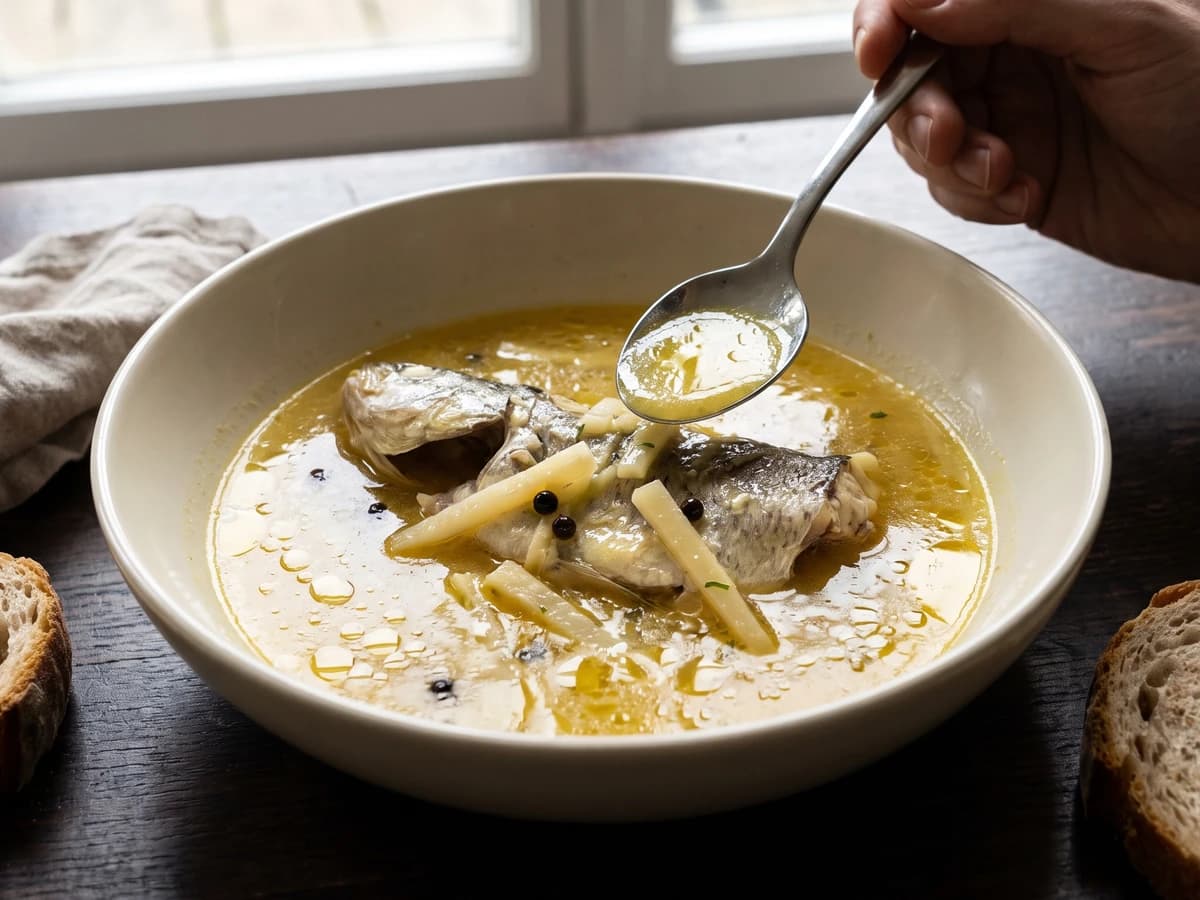
Waterzoi asks fresh, bone-in river fish to thicken its own buttery broth, with parsley root and pepper for company. No flour, no stockpot, just a brisk simmer watched closely.
Chef Juliette
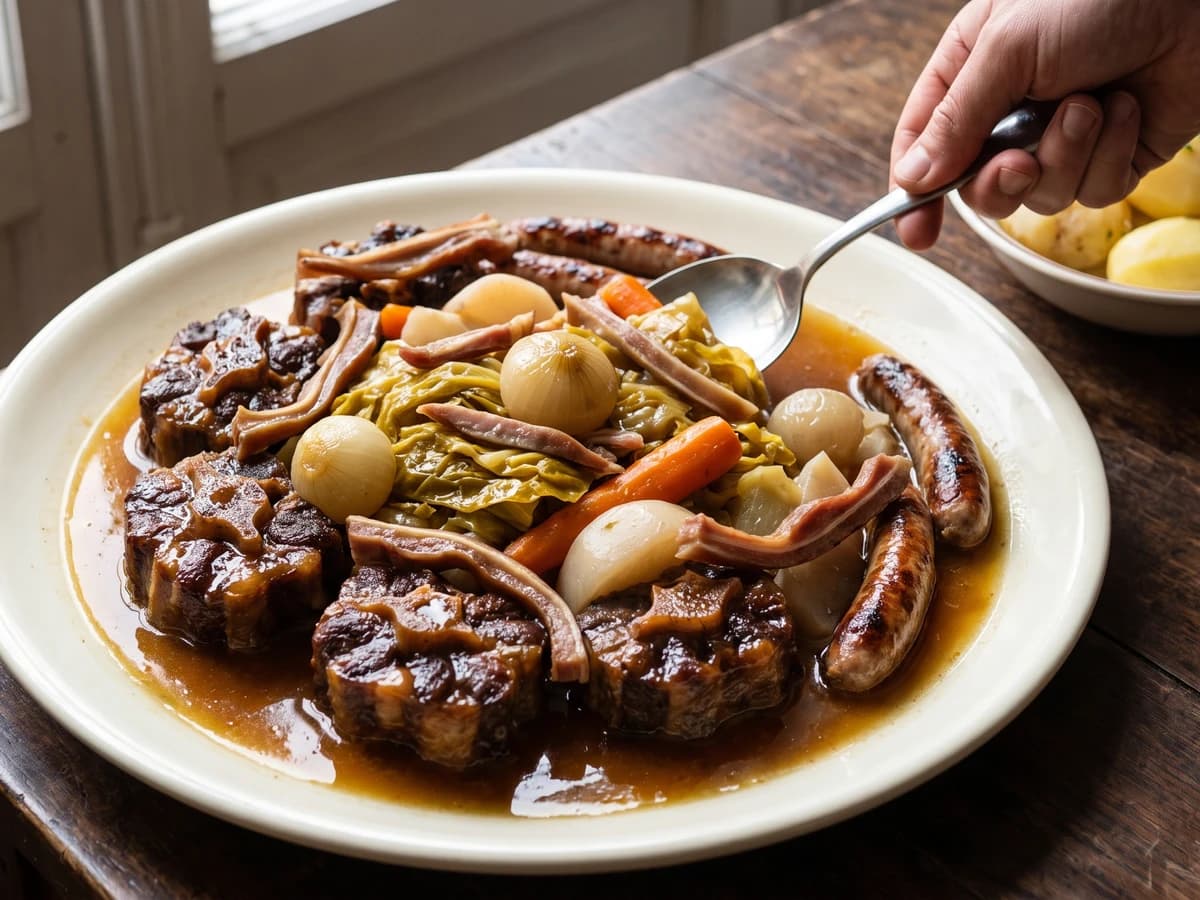
Queue de Bœuf en Hochepot gathers oxtail, pig's trotter and ear, cabbage, roots, and grilled chipolatas around a clear, gelatin-rich broth whose quiet simmer keeps every piece tender and distinct.
Chef Juliette
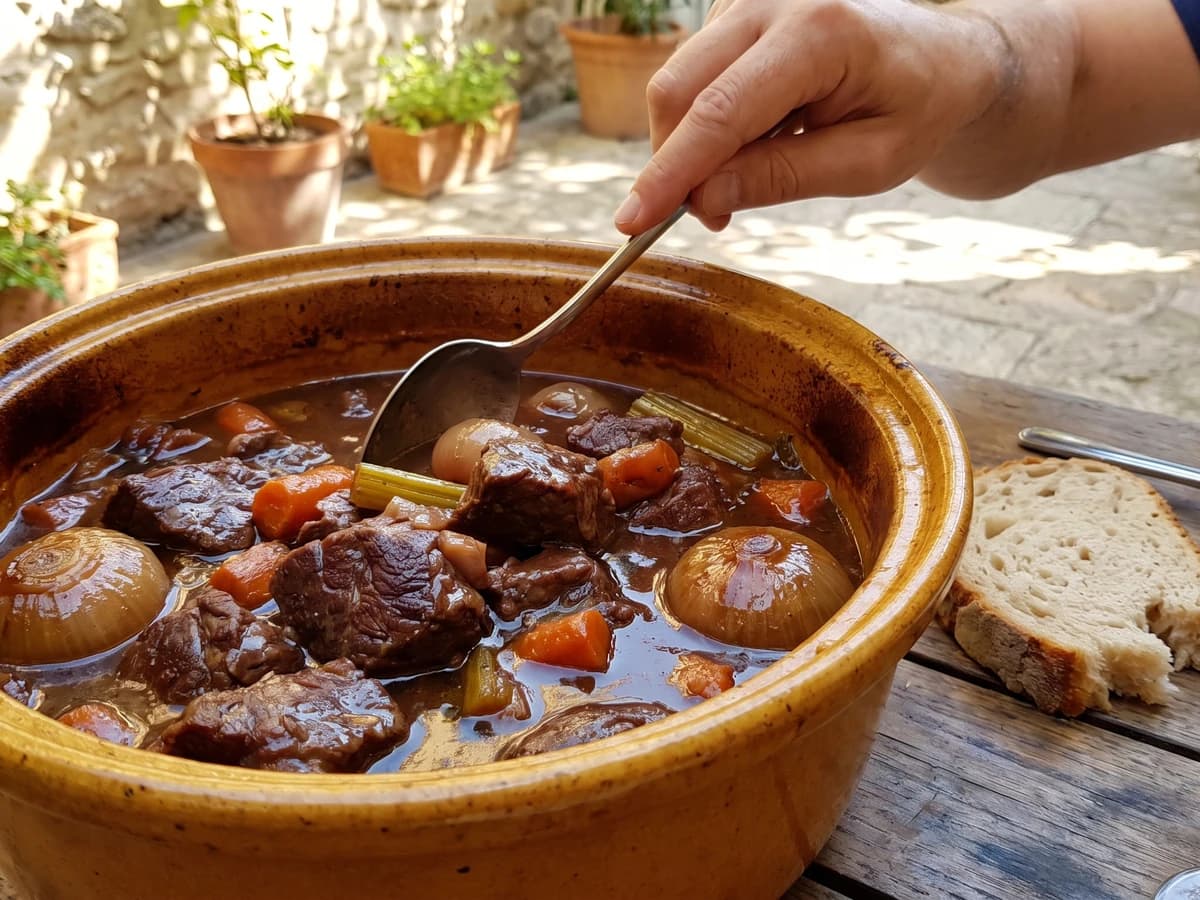
Beef shoulder larded with bacon, sharpened by red wine and vinegar, then sealed with garlic, vegetables, and dry lemon peel until the low oven turns it yielding and the gravy darkly glossy.