Chef Juliette
Bouillabaisse à la Marseillaise
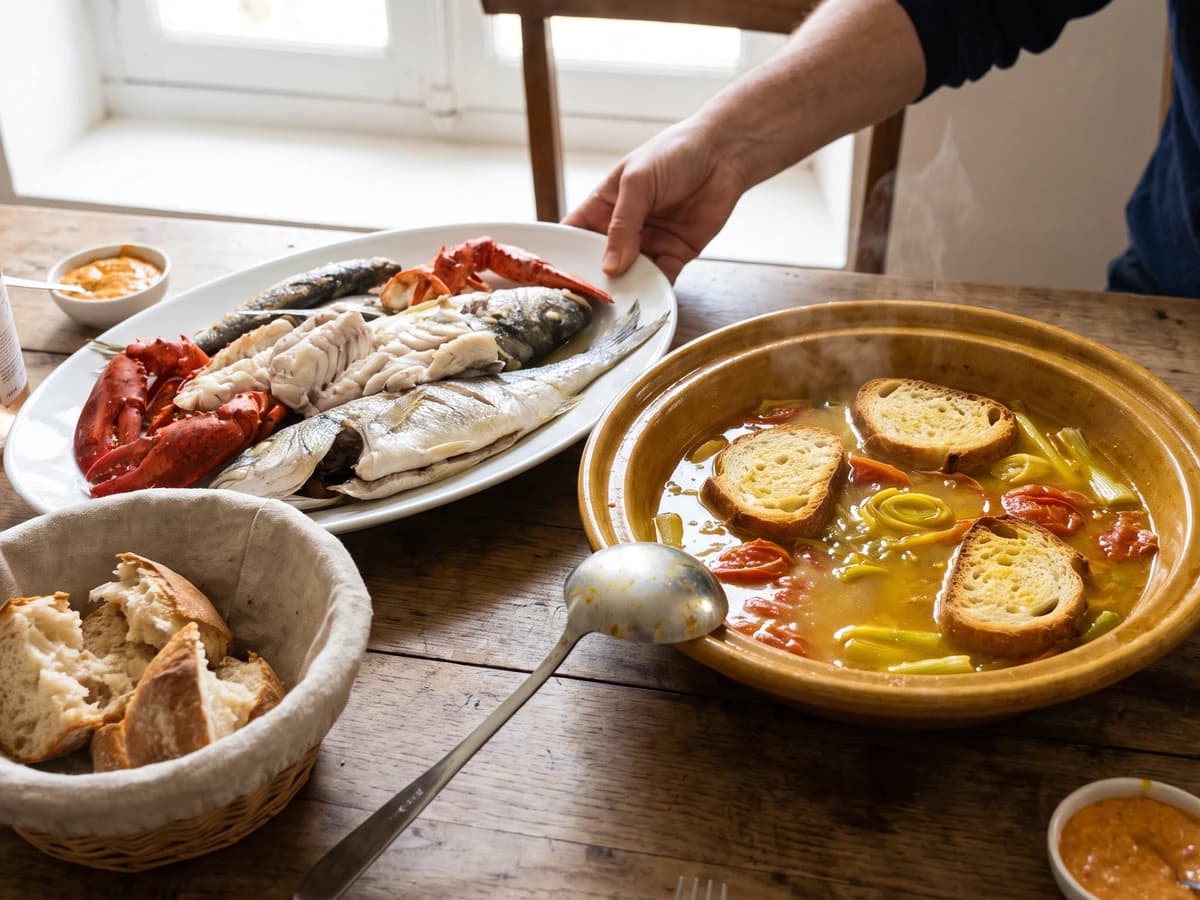
Marseille's great fish stew, saffron-gold and garlic-scented, proves that a hard boil can be the careful choice: it binds olive oil into broth before the whole pot meets bread.
A cooking platform built around craft, culture, and the stories behind what we eat.
Created by Chef Juliette
Based on No. 240, Cullises, from Le Guide Culinaire (1907) by Auguste Escoffier
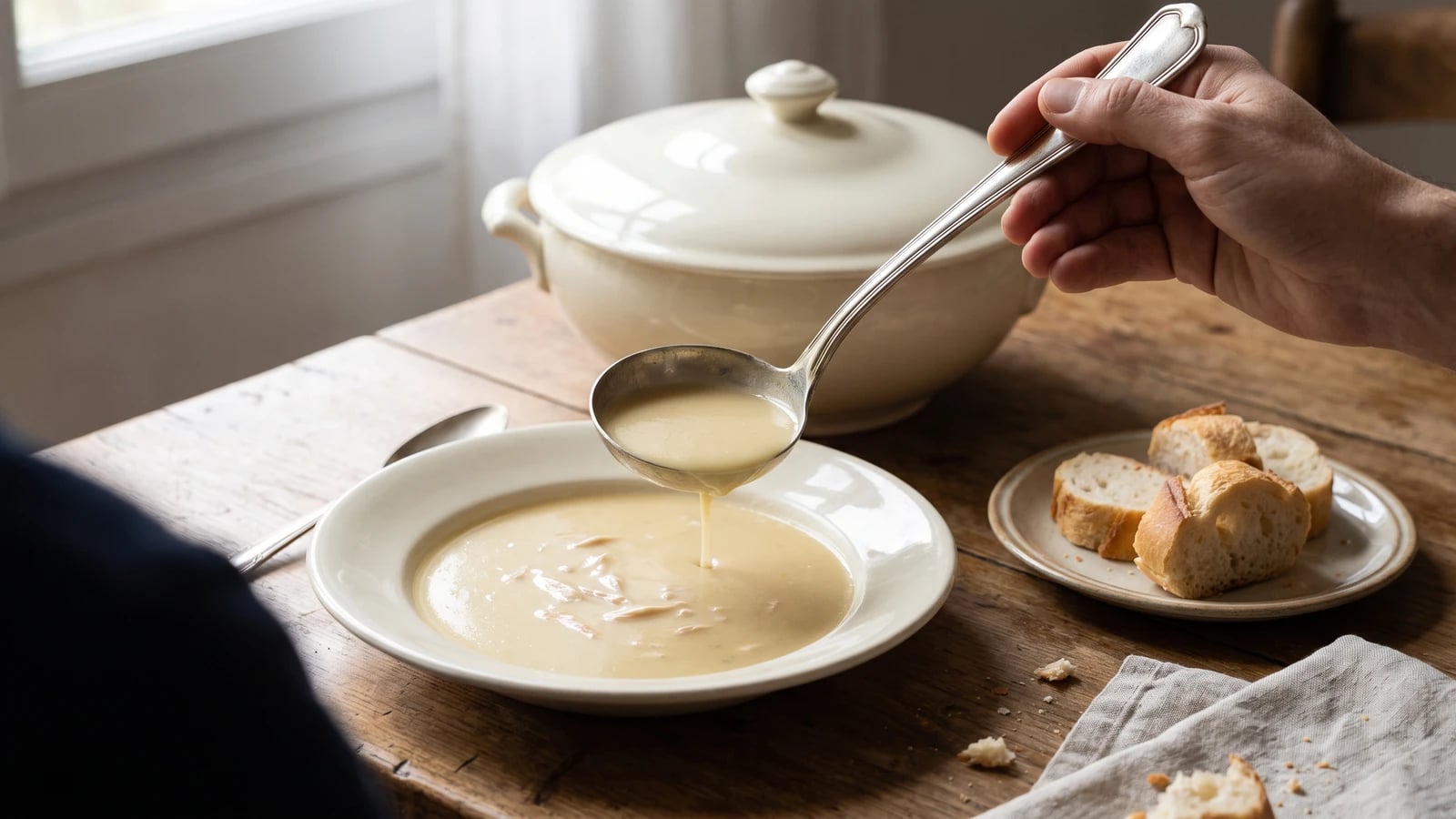
Coulis de volaille turns poultry, rice, broth, and butter into a silken soup with no cream: strain finely, hold it gently, and mount with cold butter only when the table is ready.
Coulis de volaille (poultry cullis) teaches the difference between thickness and body. Rice thickens, but the poultry gives body, and the final monter au beurre, whisking in cold butter, gives the surface its satin gleam. Before touching a pan, know the one true thing: the cullis must be perfectly smooth and hot, but no longer boiling, when that butter goes in.
The old formula assumed a saucier, a hot bain-marie waiting through service, and either rice or a finished sauce already at hand in professional quantity. Here the rice route keeps the book's proportion, 2 to 3 ounces per pound of fowl, while a blender and fine sieve replace repeated pounding and straining. Making a separate finished sauce is brigade scaffolding and goes; the measured rice, fine straining, buttered surface, and last-minute butter are the dish and stay. One cook, one stove, one evening.
The finished cullis is pale ivory, deep with chicken, soft on the spoon without becoming stodgy, and threaded with breast meat cut julienne-fashion. The decisive step is the monter au beurre: take the pot off the heat, whisk in cold butter piece by piece, and never let the soup boil afterward.
Coulis, rendered as cullis in English-language classical books, belongs to the national repertoire centered in the grand kitchens of Paris rather than to one French region. Its name is tied to couler, to strain, which corrects a common misconception: cream did not define the preparation, since rice, lentils, panada, or finished sauces supplied body according to the chosen base. Poultry and game versions could be boiled after straining, while fish cullises demanded immediate service and gentler heat.
Quantity
1¾ pounds (795 g)
cut into 1-inch (2.5 cm) pieces
Quantity
¼ pound (115 g)
cut julienne-fashion into 1½-inch by ⅛-inch (4 cm by 3 mm) strips
Quantity
8 cups (1.9 L / 1.9 kg), plus up to 2 cups (480 ml / 480 g) as needed
divided
Quantity
¾ cup (180 ml / 140 g)
left unrinsed
Quantity
1½ teaspoons (7.5 ml / 9 g), plus more to taste
divided
Quantity
1 tablespoon (15 ml / 14 g)
softened, for protecting the surface
Quantity
10 tablespoons (150 ml / 142 g)
cut into small pieces
| Ingredient | Quantity |
|---|---|
| boneless, skinless chicken thighscut into 1-inch (2.5 cm) pieces | 1¾ pounds (795 g) |
| boneless, skinless chicken breast filletcut julienne-fashion into 1½-inch by ⅛-inch (4 cm by 3 mm) strips | ¼ pound (115 g) |
| unsalted poultry brothdivided | 8 cups (1.9 L / 1.9 kg), plus up to 2 cups (480 ml / 480 g) as needed |
| short-grain white riceleft unrinsed | ¾ cup (180 ml / 140 g) |
| fine saltdivided | 1½ teaspoons (7.5 ml / 9 g), plus more to taste |
| unsalted buttersoftened, for protecting the surface | 1 tablespoon (15 ml / 14 g) |
| cold unsalted buttercut into small pieces | 10 tablespoons (150 ml / 142 g) |
Bring 2 cups (480 ml) of the poultry broth to the barest simmer in a small saucepan. Season the chicken breast strips with a pinch of the measured salt, add them to the broth, and poach for 2 to 3 minutes, stirring once, until opaque and cooked through to 165°F (74°C). Lift them out with a slotted spoon and keep them covered. Reserve the poaching broth.
Put the chicken thighs and the remaining 6 cups (1.4 L) broth in a heavy saucepan and bring them slowly to a simmer. Skim away any grey froth, then stir in the unrinsed rice and 1 teaspoon (5 ml / 6 g) salt. Partly cover and cook at a quiet simmer for 40 to 45 minutes, stirring across the bottom every few minutes, until the chicken yields completely and the rice grains have burst. The rice is the thickening, so its surface starch belongs in the pot.
Let the mixture settle off the heat for 5 minutes. Purée it with some of the reserved poaching broth until entirely smooth, working in half-full blender batches if necessary. Press the purée through a fine-mesh sieve into a clean saucepan, using the back of a ladle and scraping the smooth cullis from the underside. Measure it, then add enough reserved or additional broth to make 8 cups (1.9 L). If the texture still feels grainy on the tongue, strain it once more. Cooking well is not cooking fancy, but this fine texture is the dish.
Bring the strained poultry cullis to a full boil while stirring constantly along the bottom and into the corners. Boil for 1 minute, still stirring, then lower the heat. It should coat a spoon in an even veil while remaining pourable. If it is too thick, add hot broth a spoonful at a time; if it is thin, continue cooking and stirring until it gains body. If the bottom catches, do not scrape it. Pour the unburned cullis into a clean pan and strain again. Ça se rattrape.
Set the saucepan inside a wider pan of hot water that reaches halfway up its sides, keeping the water below a simmer. This bain-marie, a hot-water bath, holds the cullis gently without scorching its rice-thickened base. Dot the surface with the softened butter and let it spread into a continuous film, then cover the pan. Hold for no more than 30 minutes, keeping the soup at or above 140°F (60°C); the buttered surface prevents a skin.
Lift the cullis from the bain-marie and take it completely off the heat. Whisk in the cold butter a few pieces at a time, adding the next only when the last has disappeared, until the soup is glossy and softly thickened. If butter beads on the surface, stop adding it and whisk in 1 tablespoon (15 ml) cool broth; once the cullis is smooth, continue. Ça se rattrape. Taste for salt, fold in the poached chicken julienne, and serve immediately. Never boil the cullis after the butter is mounted. À table!
1 serving (about 240g)
Culinary guides, cultural storytelling, and the editorial depth that makes cooking meaningful.
Discover Culinary ExplorerChef Juliette
Marseille's great fish stew, saffron-gold and garlic-scented, proves that a hard boil can be the careful choice: it binds olive oil into broth before the whole pot meets bread.
Chef Juliette
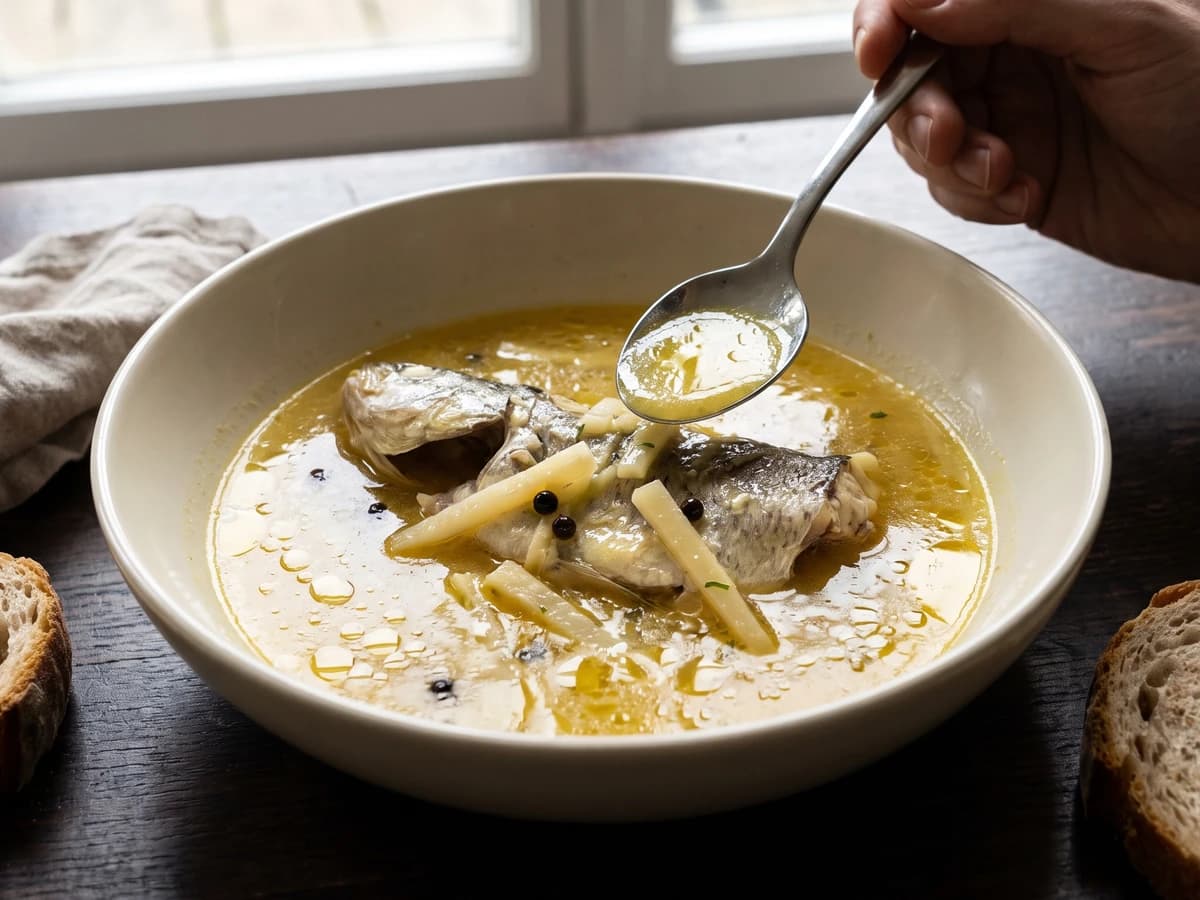
Waterzoi asks fresh, bone-in river fish to thicken its own buttery broth, with parsley root and pepper for company. No flour, no stockpot, just a brisk simmer watched closely.
Chef Juliette
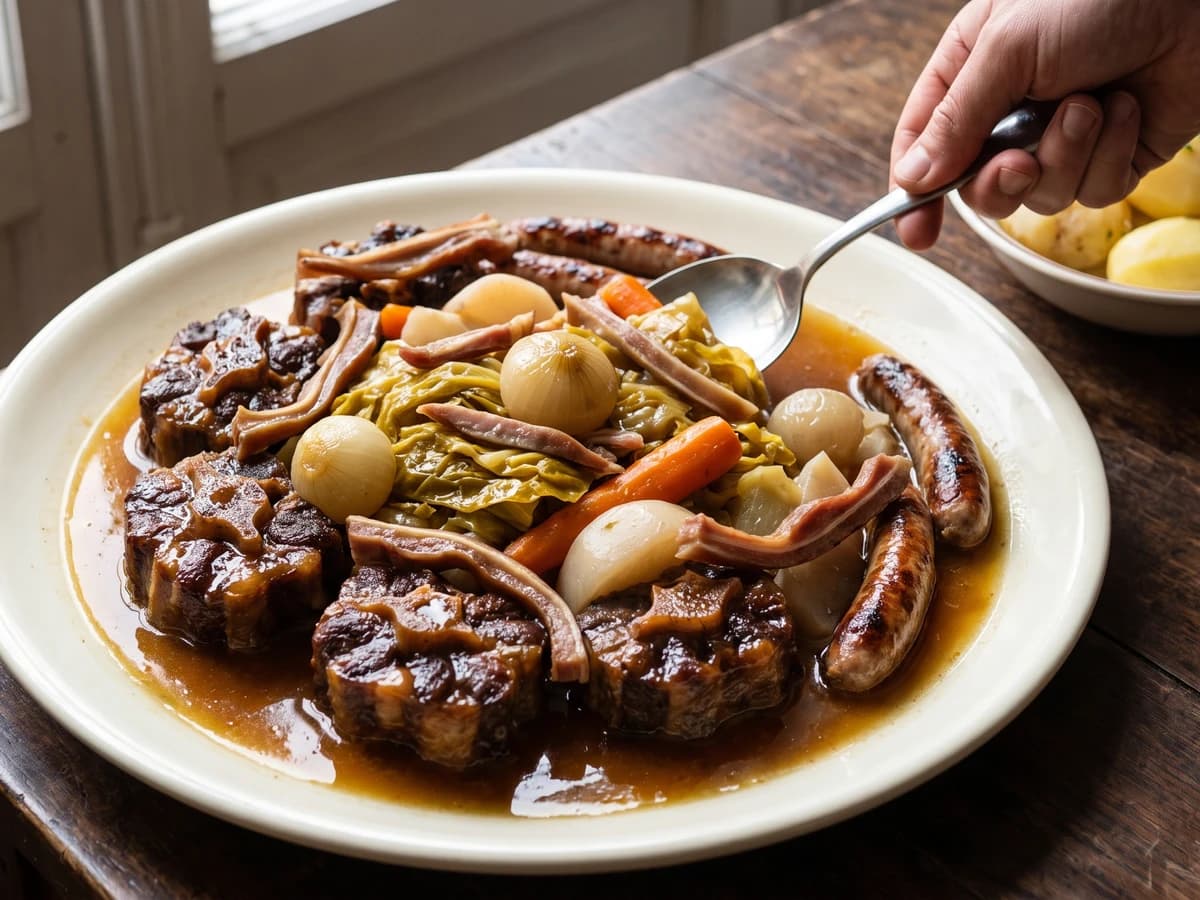
Queue de Bœuf en Hochepot gathers oxtail, pig's trotter and ear, cabbage, roots, and grilled chipolatas around a clear, gelatin-rich broth whose quiet simmer keeps every piece tender and distinct.
Chef Juliette
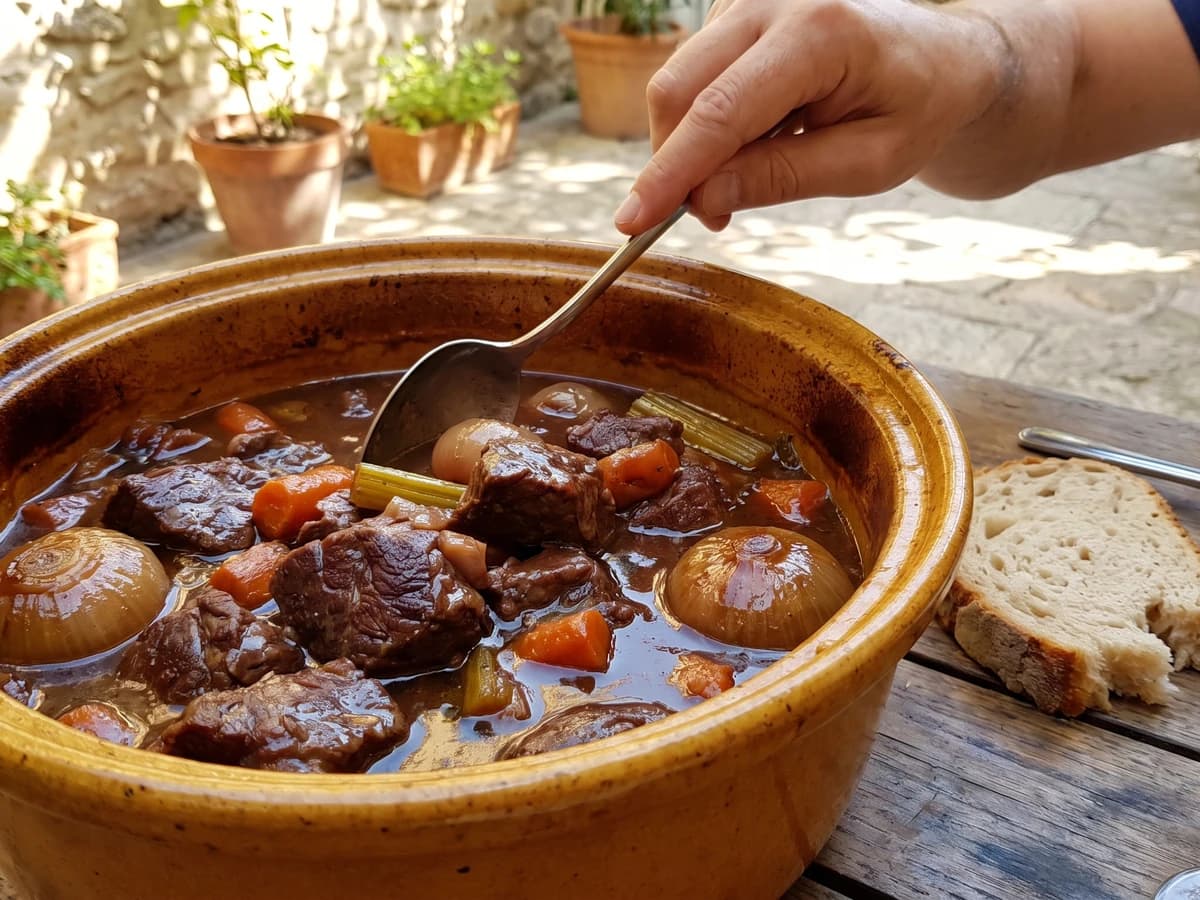
Beef shoulder larded with bacon, sharpened by red wine and vinegar, then sealed with garlic, vegetables, and dry lemon peel until the low oven turns it yielding and the gravy darkly glossy.