Chef Juliette
Bouillabaisse à la Marseillaise
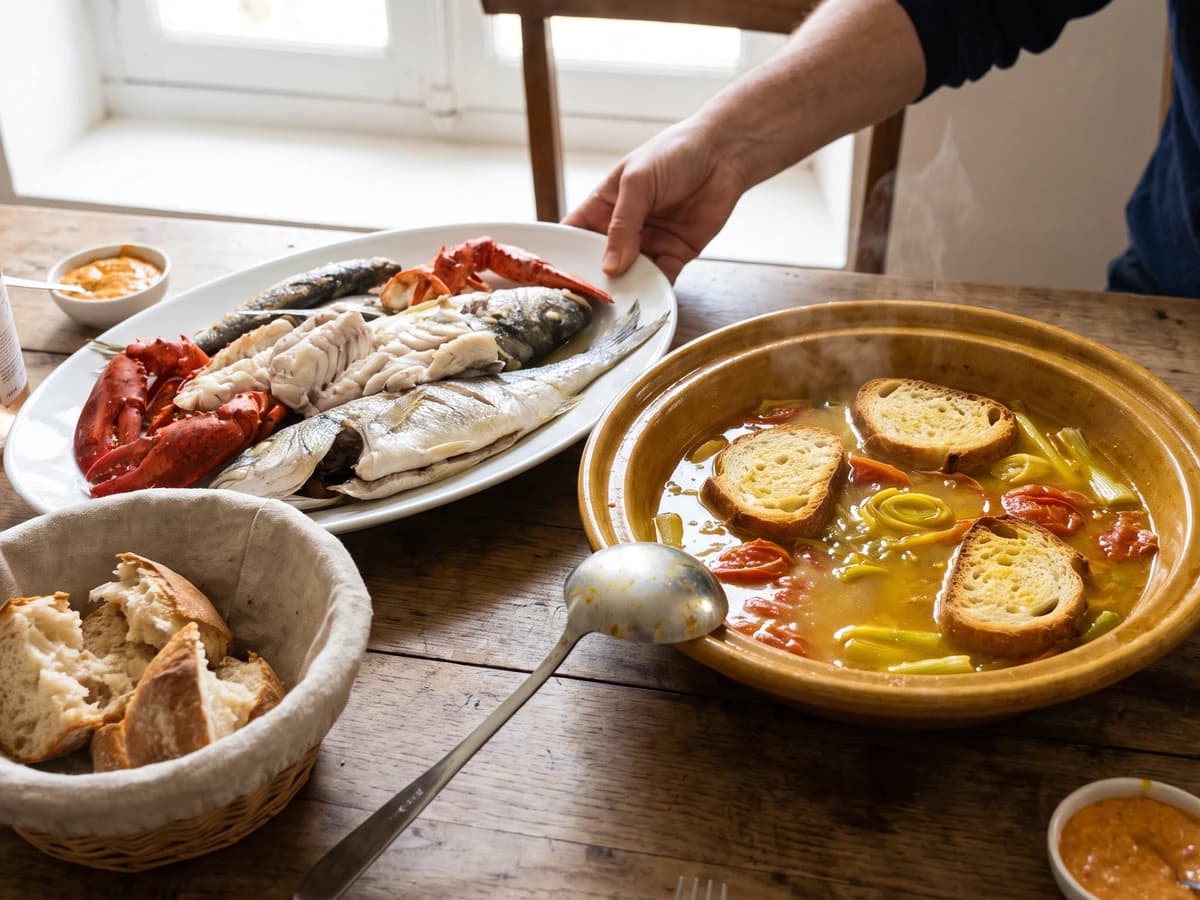
Marseille's great fish stew, saffron-gold and garlic-scented, proves that a hard boil can be the careful choice: it binds olive oil into broth before the whole pot meets bread.
A cooking platform built around craft, culture, and the stories behind what we eat.
Created by Chef Juliette
Based on No. 237, Clear Soups, from Le Guide Culinaire (1907) by Auguste Escoffier
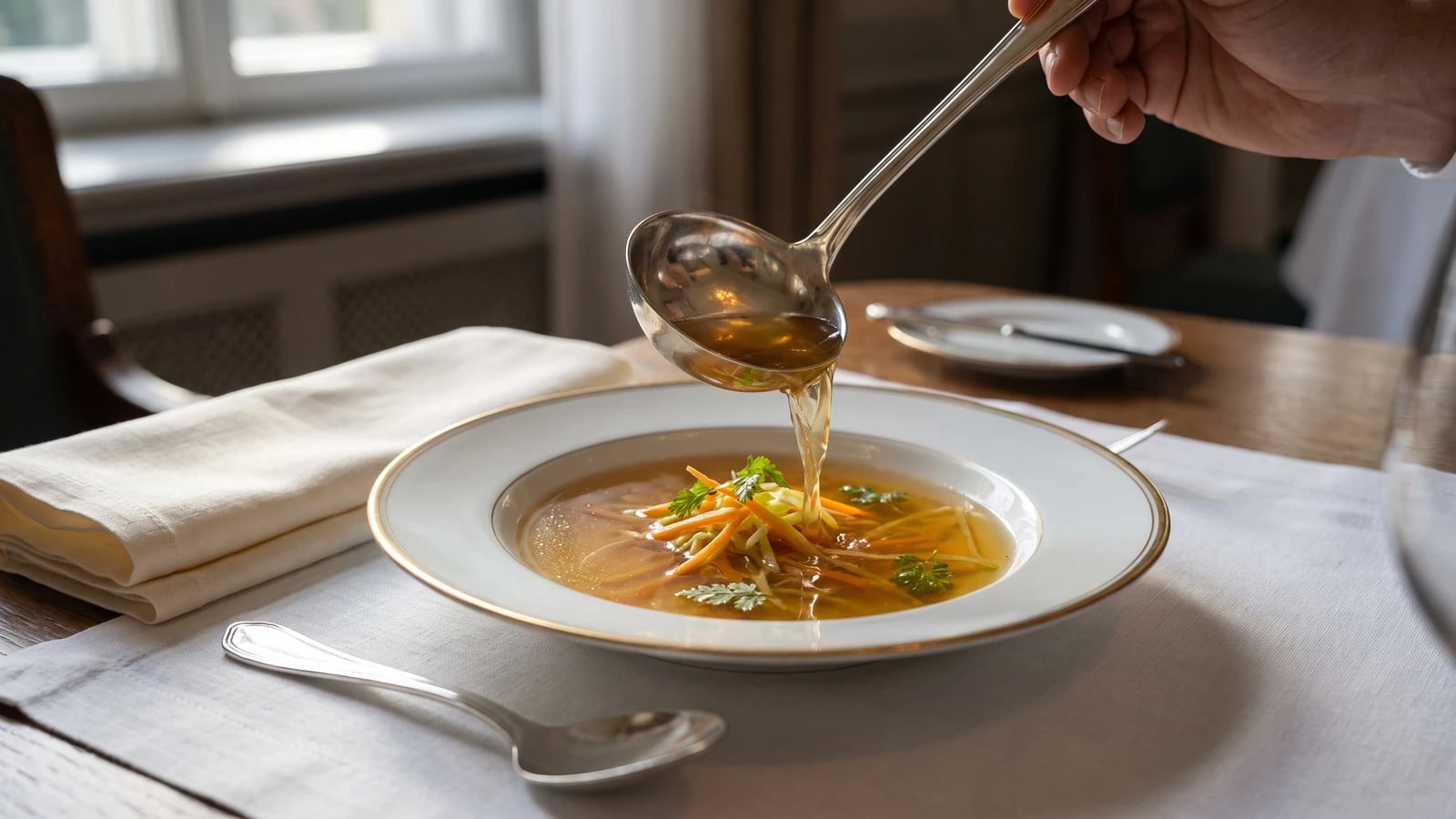
A true clear soup is one method, not one flavor: clarify a powerful stock until limpid, add a restrained garnish, and serve it brilliant enough to reflect the spoon.
Consommé clair (clear soup) teaches the law behind every broth-based first course: the liquid must taste complete before the garnish touches it, and once the clarification sets, stillness makes clarity. This is not pale, timid stock. It should be amber, deeply savory, and limpid enough to reveal every fine strip of vegetable beneath its surface.
The original entry assumed a finished consommé from a stockpot never off the fire, a saucier watching its clarification, and enough service to justify repeated transfers between pots. Your honest equivalent is three quarts of cold beef stock, one heavy pot, a damp cloth, and an hour of close but peaceful attention. Repeated transfers and prolonged holding are brigade scaffolding, so they go. The cold clarification, nearly motionless simmer, unpressed filtration, and slight garnish are the dish, so they stay. One cook, one stove, one evening.
This home version uses beef because its color and strength show the method plainly, then finishes with julienne de légumes (fine vegetable strips), kept small enough to support the consommé rather than crowd it. Poultry, game, fish, and shellfish change the broth's identity, but not the governing principle. C'est la même grammaire. The first rise to heat decides the dish: stir until the proteins gather, then stop completely.
Consommé clair belongs to the French bourgeois and grand service table, especially the Paris dining room where a limpid broth traditionally opened a formal dinner. Its method grew from the same stockpot logic as pot-au-feu, then passed into the grand kitchen, where clarification and a precisely chosen garnish defined whole families of clear soup. Clarity never meant weakness: a proper consommé is concentrated in flavor and restrained only in appearance.
Quantity
3 quarts (2.8 L / 2.8 kg)
thoroughly defatted
Quantity
1 pound (454 g)
Quantity
5 large (about 2/3 cup / 150 ml / 150 g)
Quantity
2 large (about 1/4 cup / 60 ml / 60 g)
reserved for reclarifying if needed
Quantity
1 medium (about 1 cup / 240 ml / 150 g)
minced
Quantity
1 medium (about 2/3 cup / 160 ml / 90 g)
minced
Quantity
1 rib (about 1/2 cup / 120 ml / 60 g)
minced
Quantity
1 tablespoon (15 ml / 16 g)
Quantity
1
parsley stems, thyme, and bay leaf
Quantity
1 teaspoon (5 ml / 3 g)
lightly crushed
Quantity
1 quart (950 ml / 950 g)
for blanching the garnish
Quantity
1 small (about 1/2 cup / 120 ml / 60 g)
cut into fine julienne
Quantity
1 small (about 1/2 cup / 120 ml / 50 g)
cut into fine julienne
Quantity
2 tablespoons (30 ml / 4 g)
Quantity
1 tablespoon (15 ml / 18 g)
divided and used as needed
| Ingredient | Quantity |
|---|---|
| cold, well-flavored unsalted beef stockthoroughly defatted | 3 quarts (2.8 L / 2.8 kg) |
| very lean ground beef | 1 pound (454 g) |
| large egg whites | 5 large (about 2/3 cup / 150 ml / 150 g) |
| additional large egg whites (optional)reserved for reclarifying if needed | 2 large (about 1/4 cup / 60 ml / 60 g) |
| onionminced | 1 medium (about 1 cup / 240 ml / 150 g) |
| carrot for the clarificationminced | 1 medium (about 2/3 cup / 160 ml / 90 g) |
| celeryminced | 1 rib (about 1/2 cup / 120 ml / 60 g) |
| tomato paste | 1 tablespoon (15 ml / 16 g) |
| bouquet garniparsley stems, thyme, and bay leaf | 1 |
| black peppercornslightly crushed | 1 teaspoon (5 ml / 3 g) |
| waterfor blanching the garnish | 1 quart (950 ml / 950 g) |
| carrot for the garnishcut into fine julienne | 1 small (about 1/2 cup / 120 ml / 60 g) |
| leek, white and pale green parts onlycut into fine julienne | 1 small (about 1/2 cup / 120 ml / 50 g) |
| chervil leaves | 2 tablespoons (30 ml / 4 g) |
| fine sea saltdivided and used as needed | 1 tablespoon (15 ml / 18 g) |
Begin with stock that is refrigerator-cold and firm enough for every trace of surface fat to be lifted away. Fat can slip through the clarification and leave bright beads on the finished consommé, so take your time here. Taste the stock cold: it should already be deeply savory but slightly under-salted, since the clarification and final reduction will concentrate it. Dampen a double layer of muslin or cheesecloth and arrange it inside a fine strainer over a clean saucepan, ready for later.
Put the ground beef, onion, minced carrot, celery, tomato paste, bouquet garni, and peppercorns into an 8-quart heavy pot. Beat the five egg whites only until fluid, not frothy, and work them thoroughly into the meat and vegetables. Add about one-third of the cold stock and mix until loose, then stir in the remainder. This cold mixture is the clarification raft: as its proteins coagulate, they will rise together while collecting the particles that make stock cloudy.
Set the pot over medium-low heat and stir continuously with a flat wooden spoon, sweeping the floor and corners so the meat cannot catch. As the liquid warms, pale curds will gather and begin rising into a single cap. The instant that cap forms, stop stirring. Make one opening about 2 inches wide near the side with the back of a ladle, then lower the heat. If the pot boils or the raft tears and the liquid clouds, take it off the heat at once. Ça se rattrape: rest it for 10 minutes, ladle the liquid through damp muslin without pressing, cool it below 110°F (43°C), whisk the two reserved egg whites with 1 cup (240 ml / 240 g) of the cooled broth, and repeat the gentle rise in a clean pot.
Keep the consommé at the faintest tremble, about 185°F to 190°F (85°C to 88°C), for 50 to 60 minutes. A rolling boil will tear the raft apart, so adjust the burner whenever the chimney becomes lively. Every 15 minutes, dip clear liquid from the chimney and trickle it gently over the top of the raft without piercing it. The meat reinforces the stock while the egg whites hold its impurities. Patience, not agitation.
Remove the pot from the heat and let it stand undisturbed for 10 minutes. Ladle the consommé slowly through the prepared damp muslin, drawing from the chimney and leaving the raft and bottom sediment behind. Never press or squeeze the cloth; that forces the captured particles straight back into the soup. If a few droplets of fat remain, touch a clean sheet of absorbent kitchen paper briefly to the surface and lift it away. Reduce the strained consommé at a quiet simmer until you have about 2 quarts and the flavor is concentrated, then season carefully with salt.
Bring the measured water to a simmer with about 2 teaspoons (10 ml / 12 g) of the salt. Add the carrot julienne and cook for 2 minutes, then add the leek and continue for 1 minute, just until both are tender but still distinct. Drain them thoroughly. Cooking the garnish separately keeps its starch, stray vegetable fibers, and strong leek aroma out of the clarified broth.
Warm 6 to 8 shallow soup plates. Bring the consommé back to the barest simmer and taste once more for salt. Divide the carrot and leek julienne among the plates, ladle the brilliant broth around it, and finish with a few chervil leaves. The garnish should appear suspended, never piled, and every spoonful should remain more consommé than vegetable. Serve immediately. À table!
1 serving (about 250g)
Culinary guides, cultural storytelling, and the editorial depth that makes cooking meaningful.
Discover Culinary ExplorerChef Juliette
Marseille's great fish stew, saffron-gold and garlic-scented, proves that a hard boil can be the careful choice: it binds olive oil into broth before the whole pot meets bread.
Chef Juliette
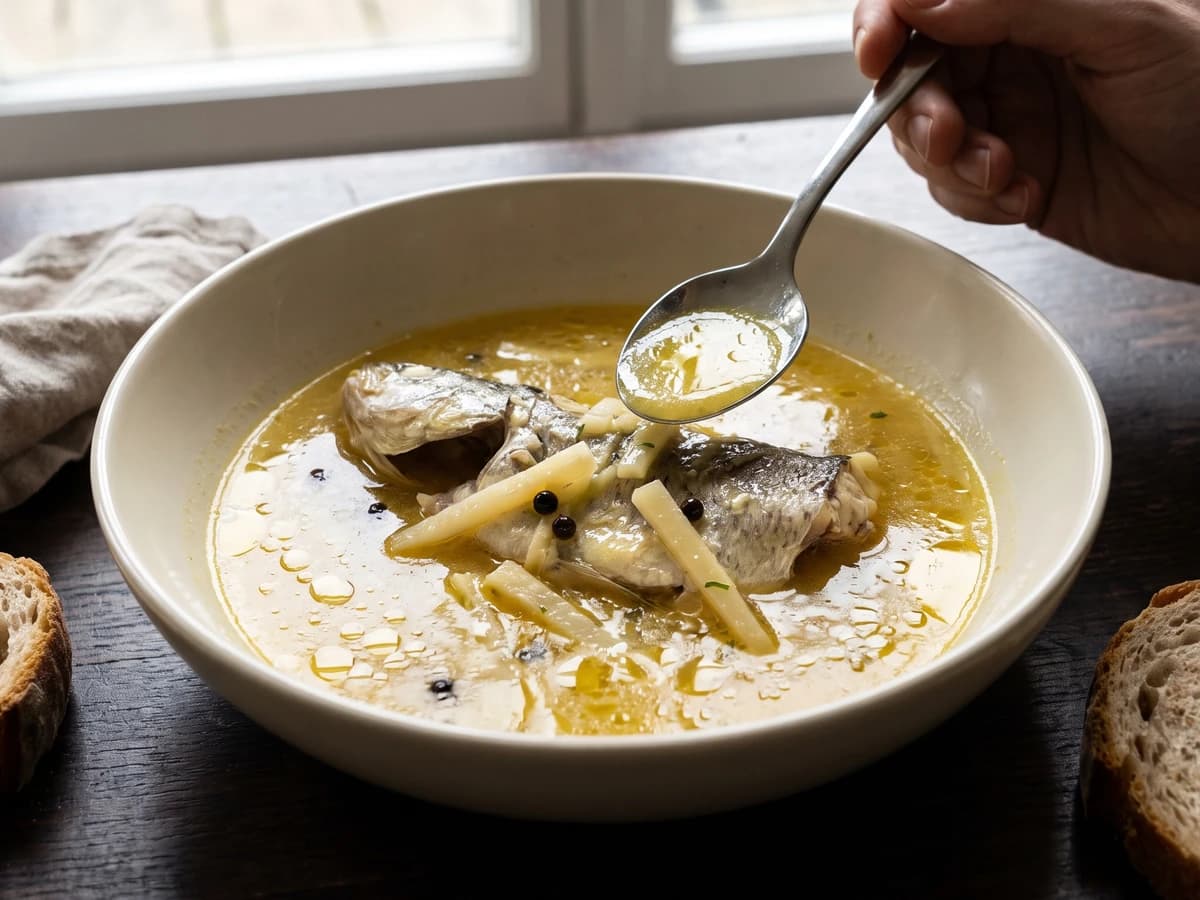
Waterzoi asks fresh, bone-in river fish to thicken its own buttery broth, with parsley root and pepper for company. No flour, no stockpot, just a brisk simmer watched closely.
Chef Juliette
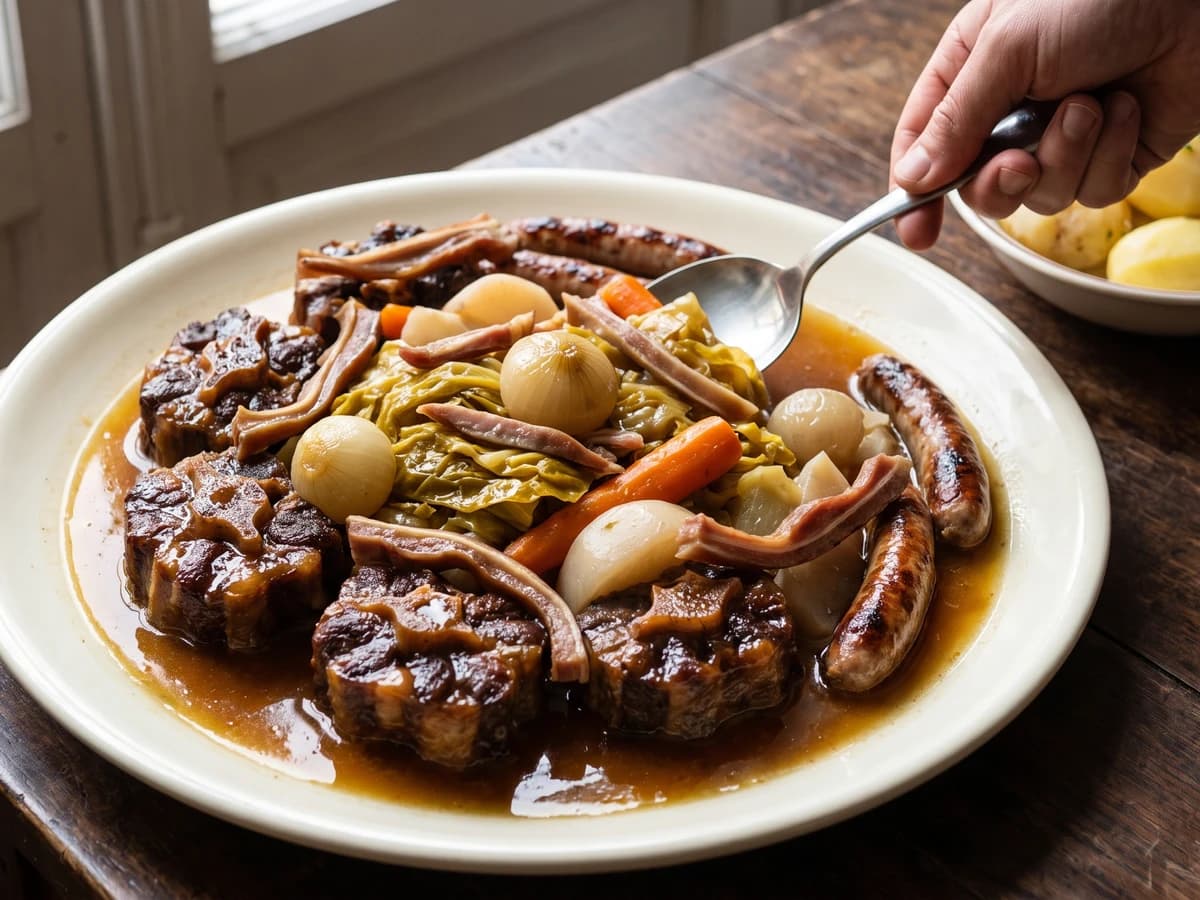
Queue de Bœuf en Hochepot gathers oxtail, pig's trotter and ear, cabbage, roots, and grilled chipolatas around a clear, gelatin-rich broth whose quiet simmer keeps every piece tender and distinct.
Chef Juliette
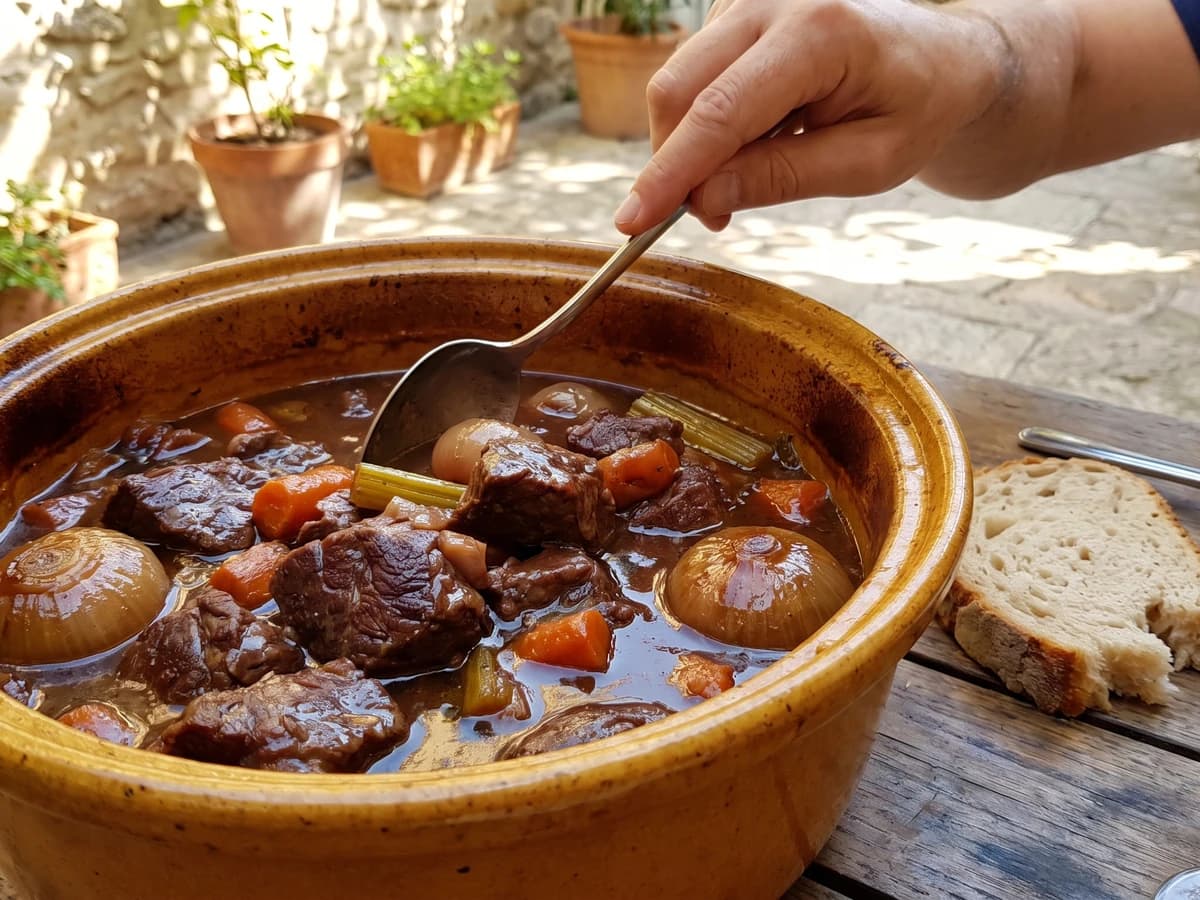
Beef shoulder larded with bacon, sharpened by red wine and vinegar, then sealed with garlic, vegetables, and dry lemon peel until the low oven turns it yielding and the gravy darkly glossy.