Chef Juliette
Bouillabaisse à la Marseillaise
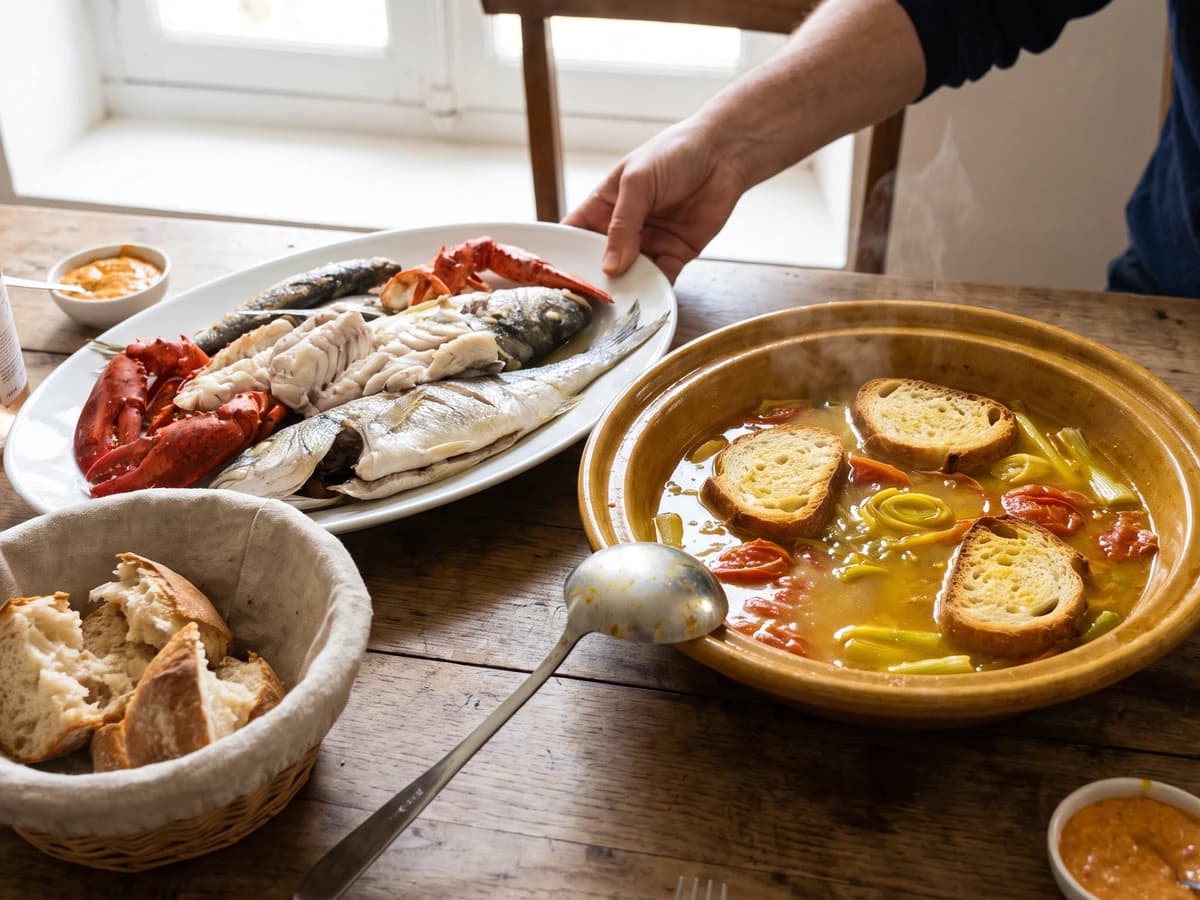
Marseille's great fish stew, saffron-gold and garlic-scented, proves that a hard boil can be the careful choice: it binds olive oil into broth before the whole pot meets bread.
A cooking platform built around craft, culture, and the stories behind what we eat.
Created by Chef Juliette
Based on No. 236, The Preparation of Soups, from Le Guide Culinaire (1907) by Auguste Escoffier
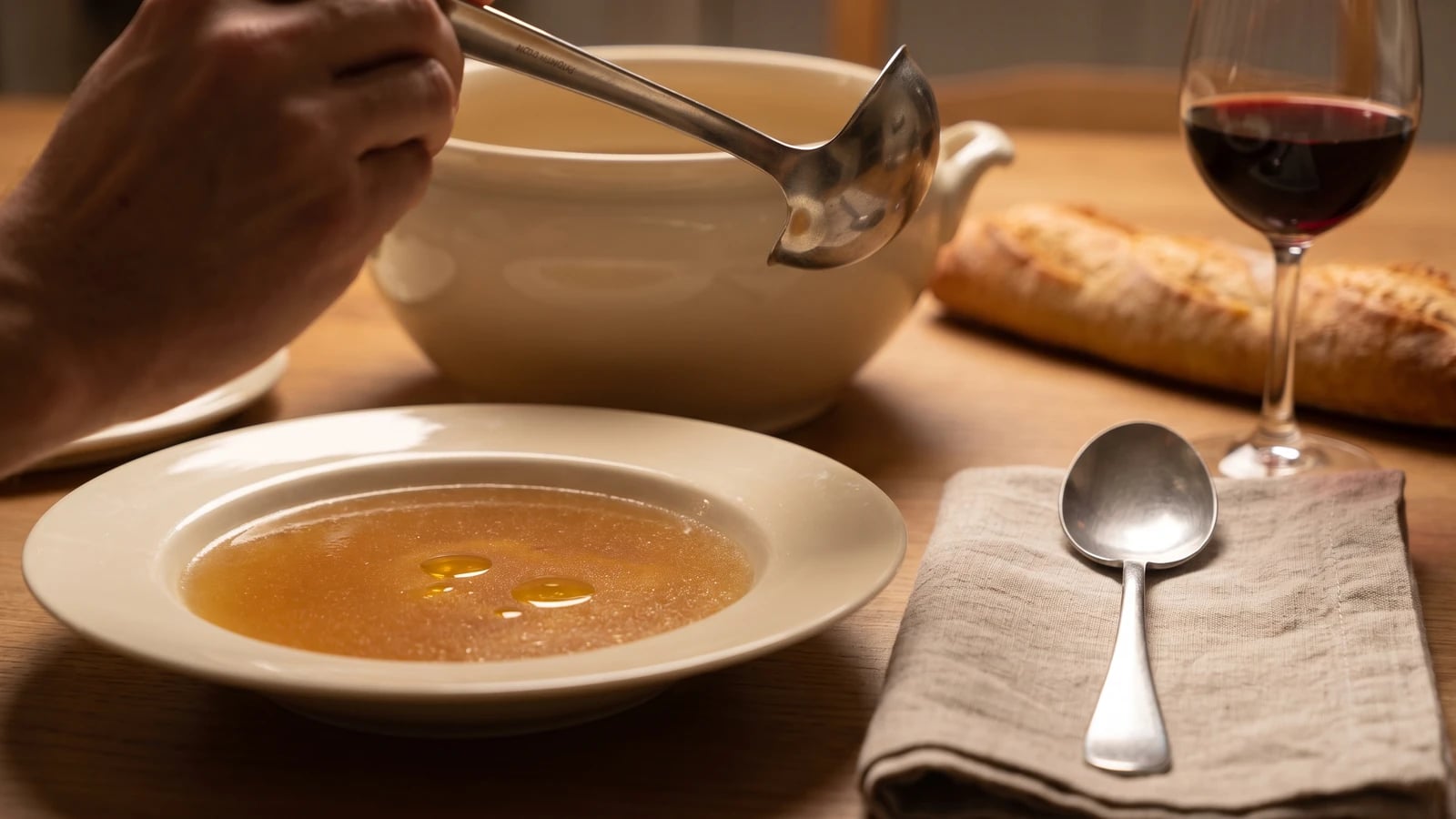
Préparation des Potages teaches the first obligation of soup: it must announce the dinner in one clear, savory spoonful, then reach every guest fiercely hot in a properly warmed bowl.
Préparation des Potages (The Preparation of Soups) teaches the discipline shared by every French soup. A potage opens the meal like an overture, giving the table its first promise of what follows. The one true thing to know before touching the pan is this: the soup must taste complete before it enters the bowl, then arrive as hot as possible. Tepid consommé is not delicate. It is simply cold.
The grand kitchen assumed a saucier watching the pot, stock never far from the fire, and a brigade warming plates by the dozen. Your honest equivalent is a finished broth-based potage, one heavy saucepan with a lid, a fine sieve, and bowls warmed just before service. The source gives no universal soup formula because bisque, velouté, crème, purée, and consommé are different preparations, not decorative names for the same thing. I have scaled the service to about two quarts, enough for eight first-course portions, and removed the brigade machinery while keeping the attention that matters. One cook, one stove, one evening.
The last five minutes decide everything. Warm the vessels, bring the potage just to the boil, and serve it without waiting for conversation to settle. If the soup boils hard or reduces too far, pull it from the heat and correct it immediately. Ça se rattrape. Temperature is not ceremony here; it is part of the seasoning.
Préparation des potages belongs not to one French region but to the ordered French dinner table, shaped most visibly in the grand kitchens and dining rooms of Paris. Earlier soups commonly arrived as complete pot dishes, with their meats, vegetables, and liquid assembled together; across generations, the potage moved to the opening of the meal and separated into clearer, lighter families with distinct methods. Bisque, purée, crème, velouté, and consommé are not interchangeable labels: each word carries its own technique, while every one bears the same duty of announcing the dinner.
Quantity
2 quarts (1.9 L / about 1.9 kg)
fully seasoned and strained according to its own formula
Quantity
Up to 1 teaspoon (5 ml / 6 g)
Quantity
Up to 1 cup (240 ml / 240 g)
only for correcting evaporation
| Ingredient | Quantity |
|---|---|
| finished clear French potage or consomméfully seasoned and strained according to its own formula | 2 quarts (1.9 L / about 1.9 kg) |
| fine salt (optional) | Up to 1 teaspoon (5 ml / 6 g) |
| freshly boiled water (optional)only for correcting evaporation | Up to 1 cup (240 ml / 240 g) |
Serve the potage as the first substantial course. Do not place smoked or oil-preserved fish, heavily dressed salads, or another aggressively seasoned cold starter immediately before it; those flavors remain on the palate and make a careful broth seem flat. If oysters are part of the evening, choose them or the soup as the opening rather than marching both across the table.
Begin with the finished potage cold if possible. Lift away any set surface fat, then pass the liquid through a clean fine-mesh sieve into a heavy 3-quart saucepan. Do not press sediment through the sieve. This entry governs the final preparation and service of soup, not the separate formula inside the pot, so keep the chosen consommé or potage whole and faithful to its own method.
Cover the saucepan and warm the potage over medium-low heat, stirring occasionally and scraping the bottom so nothing catches. When small movements begin around the edge, taste a spoonful at serving temperature. Add salt only if the broth truly needs it; hot liquid carries seasoning differently from cold, and guessing before it warms is how a clear soup becomes too salty.
While the soup heats, warm the soupière and eight shallow soup bowls. Place heatproof porcelain in an 80°C conventional or 70°C fan oven (175°F conventional or 160°F fan) for about 10 minutes. If the vessels are not oven-safe, fill them with freshly boiled kettle water for 5 minutes, then empty and dry them at the last possible moment. A cold bowl steals heat from the first ladleful before it reaches the table.
Increase the heat and bring the potage just to a full boil, then remove it from the burner immediately. Do not leave it rolling while guests find their chairs. If it boils hard and throws up foam, pull the pan aside, let it settle for 30 seconds, skim the surface, and pass it once more through the clean sieve. If evaporation has made it too strong or salty, add freshly boiled water one tablespoon at a time until its original balance returns. Ça se rattrape.
Pour the potage into the warmed soupière or ladle it directly into the hot bowls, allowing about 1 cup (240 ml) per guest. Carry it to the table at once. If service is delayed, keep the saucepan covered and off the heat for no more than 10 minutes, then bring the soup just back to the boil before ladling. Soup waits for nobody. À table!
1 serving (about 240g)
Culinary guides, cultural storytelling, and the editorial depth that makes cooking meaningful.
Discover Culinary ExplorerChef Juliette
Marseille's great fish stew, saffron-gold and garlic-scented, proves that a hard boil can be the careful choice: it binds olive oil into broth before the whole pot meets bread.
Chef Juliette
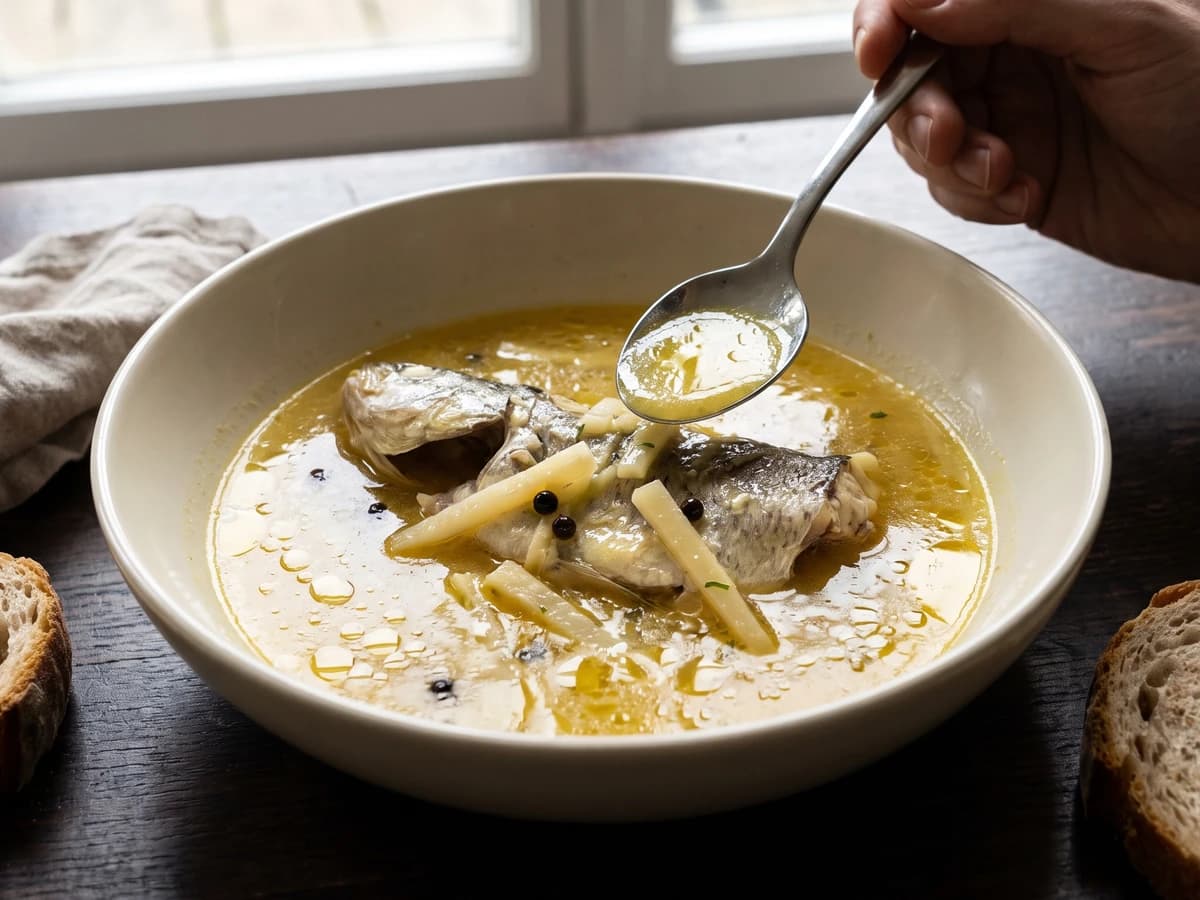
Waterzoi asks fresh, bone-in river fish to thicken its own buttery broth, with parsley root and pepper for company. No flour, no stockpot, just a brisk simmer watched closely.
Chef Juliette
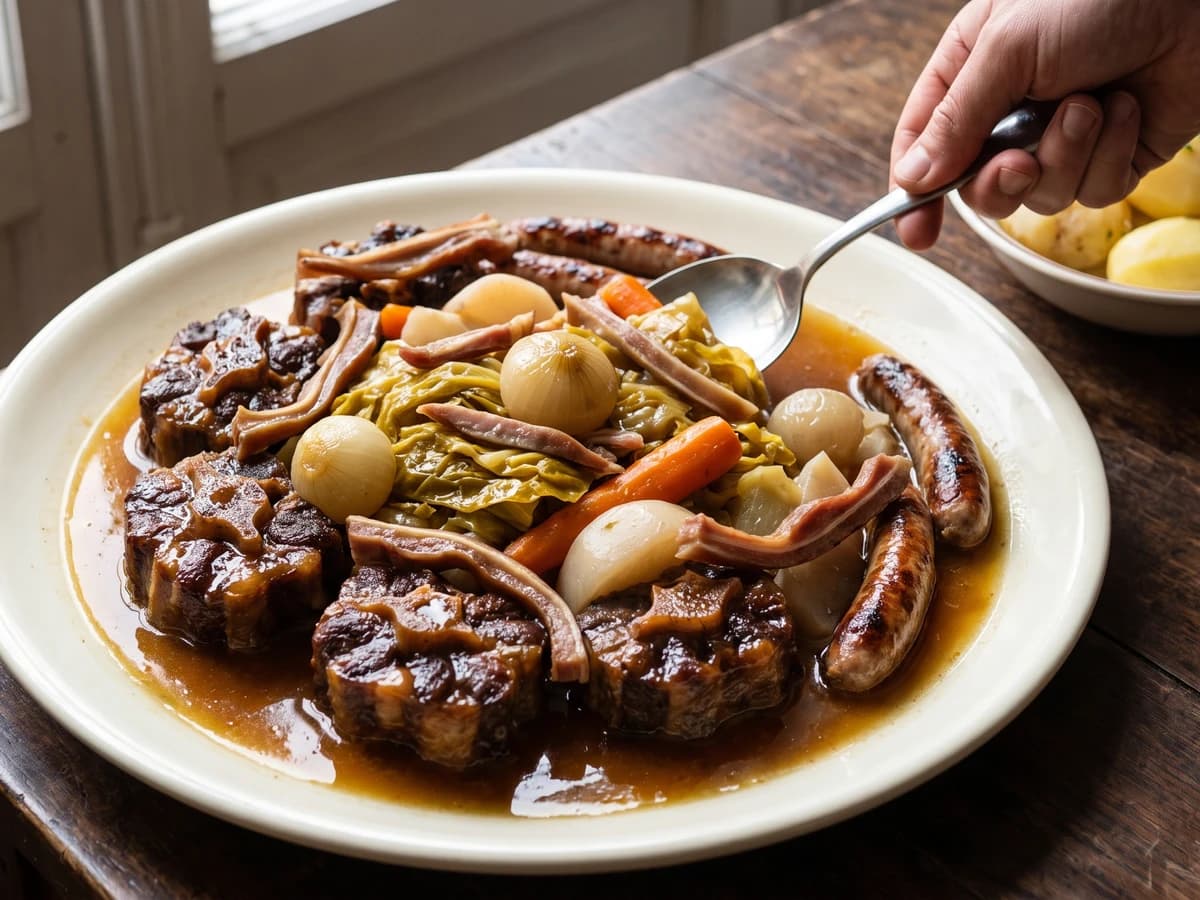
Queue de Bœuf en Hochepot gathers oxtail, pig's trotter and ear, cabbage, roots, and grilled chipolatas around a clear, gelatin-rich broth whose quiet simmer keeps every piece tender and distinct.
Chef Juliette
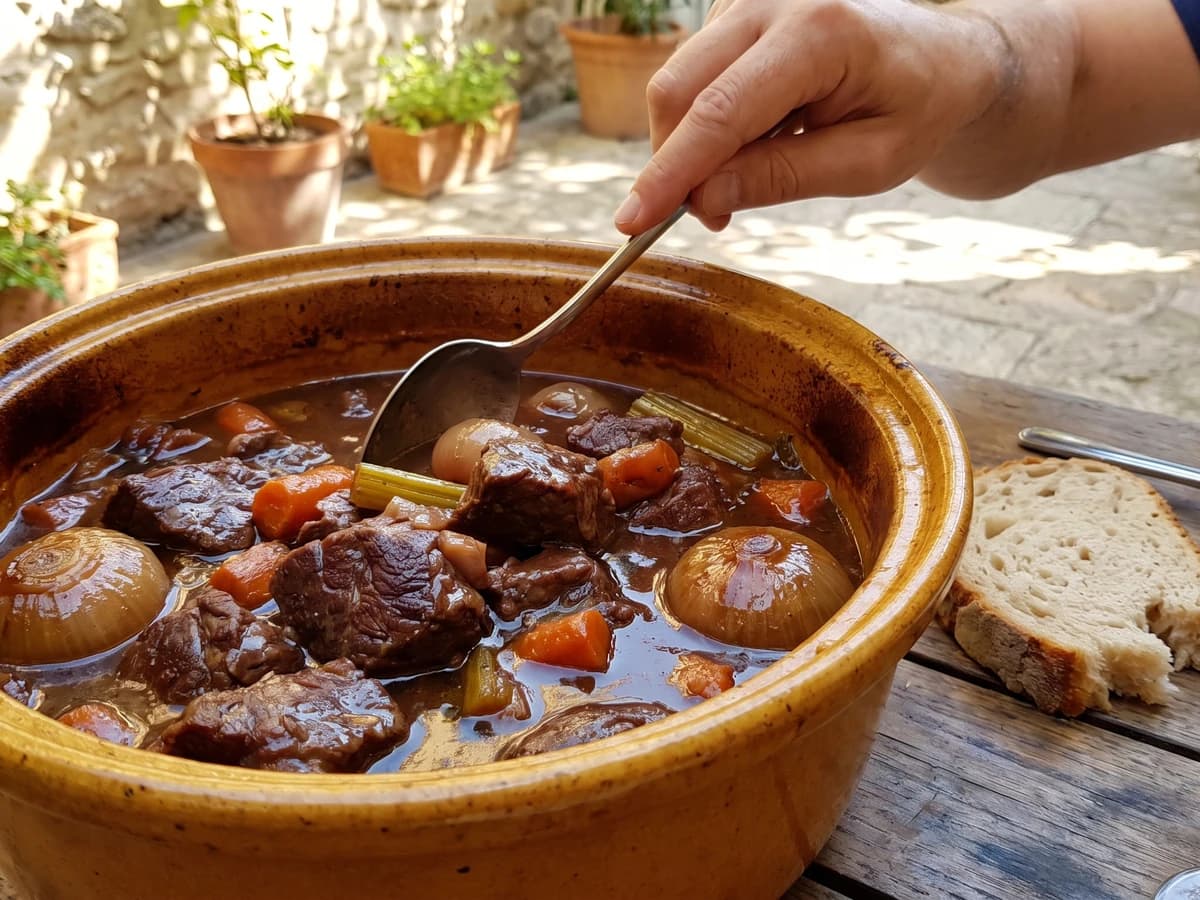
Beef shoulder larded with bacon, sharpened by red wine and vinegar, then sealed with garlic, vegetables, and dry lemon peel until the low oven turns it yielding and the gravy darkly glossy.