Chef Juliette
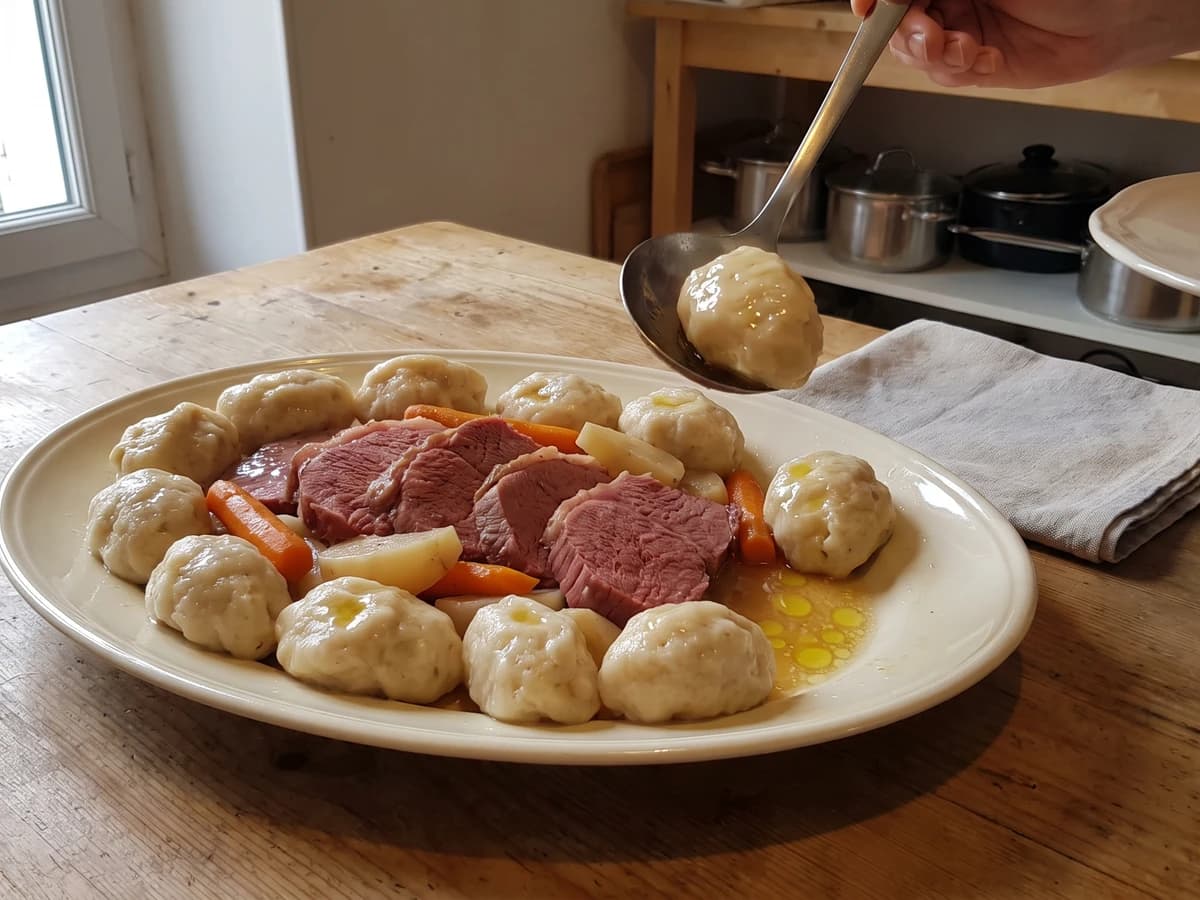
Suet Dumpling
Boulettes au suif, poached beside salt beef, turn equal weights of flour and finely chopped suet into tender, rich dumplings. Keep the beef liquor at a bare tremble and the old garnish works beautifully at home.
A cooking platform built around craft, culture, and the stories behind what we eat.
Created by Chef Juliette
Based on No. 2324, Pudding de Fromage au Pain, from Le Guide Culinaire (1907) by Auguste Escoffier
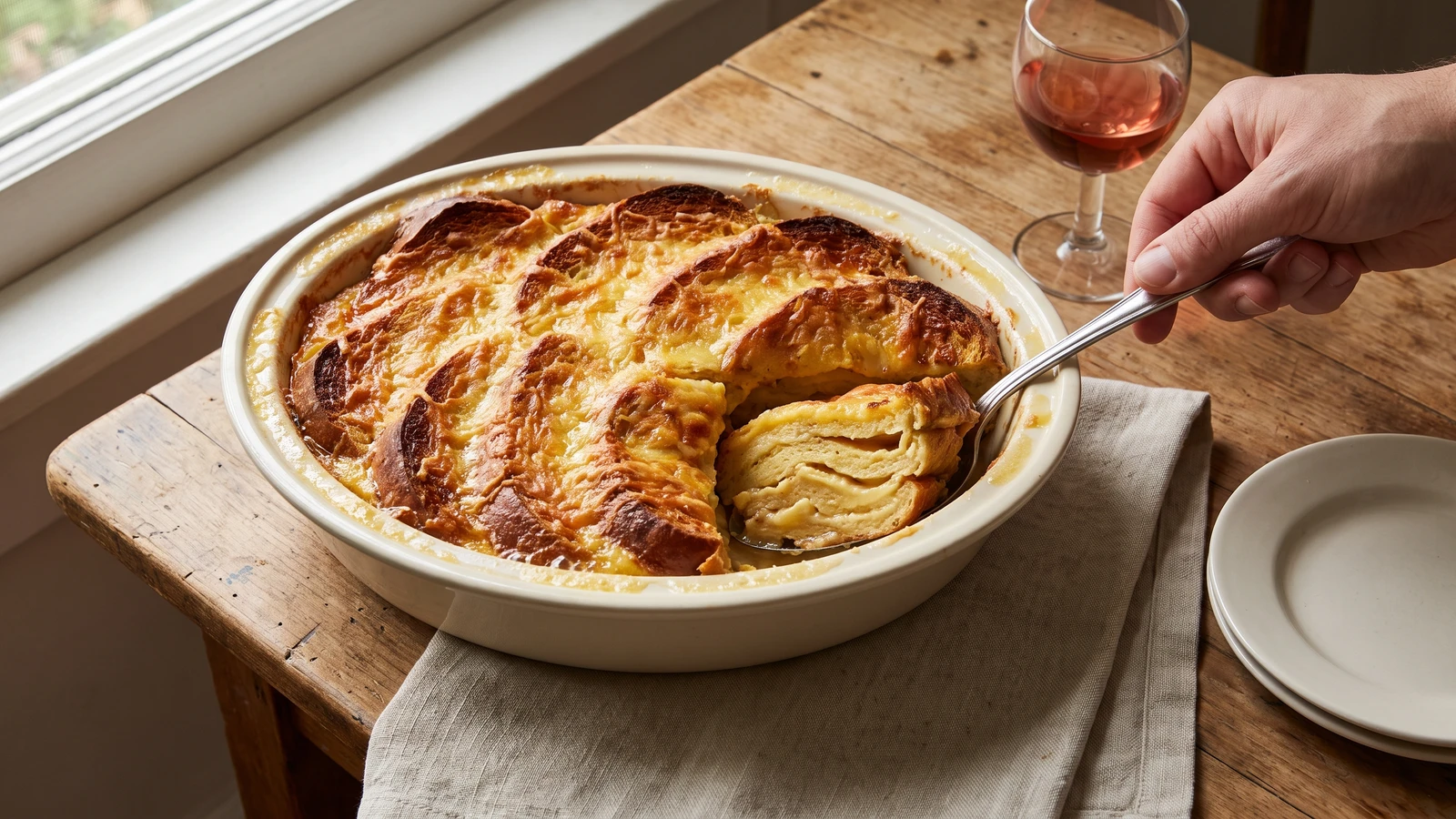
Pudding de Fromage au Pain turns stale bread, butter, Comté, yolks, and broth into a bronzed weeknight gratin, proving that thrift at the French table is a discipline, not a compromise.
Pudding de Fromage au Pain (savory bread-and-cheese pudding) teaches a hard, useful truth: stale bread is not a compromise here, it is the structure. Its dry crumb drinks the yolk-rich broth while keeping distinct layers; fresh bread collapses into paste before the dish can set. Butter, not margarine, and a firm grated cheese give the soft center its savory backbone.
The classical formula assumed a saucier on staff, a stock never off the fire, and a salamander waiting to glaze the top. At home, a good light chicken broth, an ordinary oven, and a closely watched broiler do the same work. The formula is already built for a pint dish, so this version retains its four yolks to one-quarter imperial pint of broth, translated to 140 ml, and uses a 600 ml gratin dish. Holding stock and staffing the glaze were brigade scaffolding; thin stale bread, butter between the slices, the three-quarter fill, and the final glaze are the dish, so they stay. One cook, one stove, one evening.
The finished pudding should be tender but distinctly layered beneath a generous crust of blistered Comté, with broth and yolks bound around the bread rather than turning it to porridge. The one step that decides everything comes first: make certain the bread is dry and firm before it meets the liaison.
Pudding de fromage au pain belongs to the economical cuisine bourgeoise table rather than to one French province. Classical kitchens took a household practice, reviving stale bread with liquid, and gave it a savory form through yolks, broth, grated cheese, and a glazed finish. The borrowed word pudding can mislead: this is neither a dessert nor a boiled pudding, but a small baked gratin whose disciplined thrift carried it from the home table into the professional canon.
Quantity
6 to 8 thin slices (about 4 oz / 115 g)
cut ¼ inch / 6 mm thick
Quantity
2 tbsp (30 ml / 28 g)
softened
Quantity
1 cup (240 ml / 100 g)
finely grated and divided
Quantity
4 large (¼ cup / 60 ml / 68 g)
Quantity
½ cup plus 1 tbsp (140 ml / 140 g)
cooled to room temperature
| Ingredient | Quantity |
|---|---|
| stale close-crumb white breadcut ¼ inch / 6 mm thick | 6 to 8 thin slices (about 4 oz / 115 g) |
| unsalted buttersoftened | 2 tbsp (30 ml / 28 g) |
| Comté cheesefinely grated and divided | 1 cup (240 ml / 100 g) |
| large egg yolks | 4 large (¼ cup / 60 ml / 68 g) |
| light chicken brothcooled to room temperature | ½ cup plus 1 tbsp (140 ml / 140 g) |
The bread must feel dry, firm, and slightly rigid. If a slice bends softly or springs back under a finger, arrange the slices on a tray and dry them in a 250°F / 120°C oven for 15 to 20 minutes without browning, then cool them completely. Ça se rattrape now; once fresh crumb has absorbed the liaison, its paste-like texture cannot be reversed.
Heat the oven to 350°F / 180°C. Use a little butter to coat a shallow, broiler-safe 1-pint / 600 ml gratin dish. Spread the remaining butter thinly over one side of each bread slice. Arrange the slices in overlapping layers, buttered sides up, sprinkling about two-thirds of the Comté between them. Stop when the dish is three-quarters full and do not compress the bread. Cover the surface copiously with most of the remaining cheese, holding back 2 tbsp for a possible repair after glazing.
Make the liaison, the yolk-and-broth binder: whisk the yolks just until smooth, then add the room-temperature broth gradually without beating in air. Hot broth starts cooking the yolks before they reach the oven. If you see a few yellow strands, strain the liaison through a fine sieve; ça se rattrape, and the finished pudding will still set smoothly.
Pour the liaison slowly over the bread, working around the edges and across the center so every layer receives some. Press once, very gently, with the back of a spoon, then leave the dish for 10 minutes. The bread should become saturated while its outlines remain visible; a spoonful of liquid at the bottom is harmless, but the slices must not dissolve into one mass.
Bake on the middle rack for 25 to 30 minutes, until the edges are firm, the center trembles slightly without sloshing, and the pudding reaches at least 160°F / 71°C in the middle. If the cheese colors before the center sets, cover the dish loosely with foil and continue baking. Do not bake until dry; the liaison will settle further while the pudding rests.
Move the dish about 6 inches / 15 cm beneath a hot broiler and watch without turning away. Glaze for 30 to 90 seconds, rotating once if necessary, until the cheese blisters and takes patches of deep bronze. If one small patch burns, lift it away with a teaspoon, cover the spot with the reserved cheese, and glaze again briefly. Rest for 5 minutes, then serve generous spoonfuls directly from the dish. À table!
1 serving (about 100g)
Culinary guides, cultural storytelling, and the editorial depth that makes cooking meaningful.
Discover Culinary ExplorerChef Juliette
Boulettes au suif, poached beside salt beef, turn equal weights of flour and finely chopped suet into tender, rich dumplings. Keep the beef liquor at a bare tremble and the old garnish works beautifully at home.

Chef Juliette
Bread, flour, frangipane, and rice become four cool, supple panades for binding forcemeats, each changing body and flavor while preserving tenderness. The finest Mousselines need none, and knowing that distinction is the lesson.

Chef Juliette
Panade au pain is bread, milk, salt, heat, and attention: stir until the paste releases cleanly, butter it against a skin, and you have the quiet binder behind tender French farces.

Chef Juliette
Panade de farine teaches the drying stroke behind pâte à choux: flour meets boiling buttered water, then stays over the fire until the paste gathers, smooths, and quits the pan cleanly.