
Chef Juliette
John Dory (St. Pierre)
John Dory has the delicacy of sole and the firmness of turbot. A light flouring, a quick butter sauté, and nut-brown beurre noisette show exactly why looks never mattered.
A cooking platform built around craft, culture, and the stories behind what we eat.
Created by Chef Juliette
Based on No. 2279, Timbale de Truffes, from Le Guide Culinaire (1907) by Auguste Escoffier
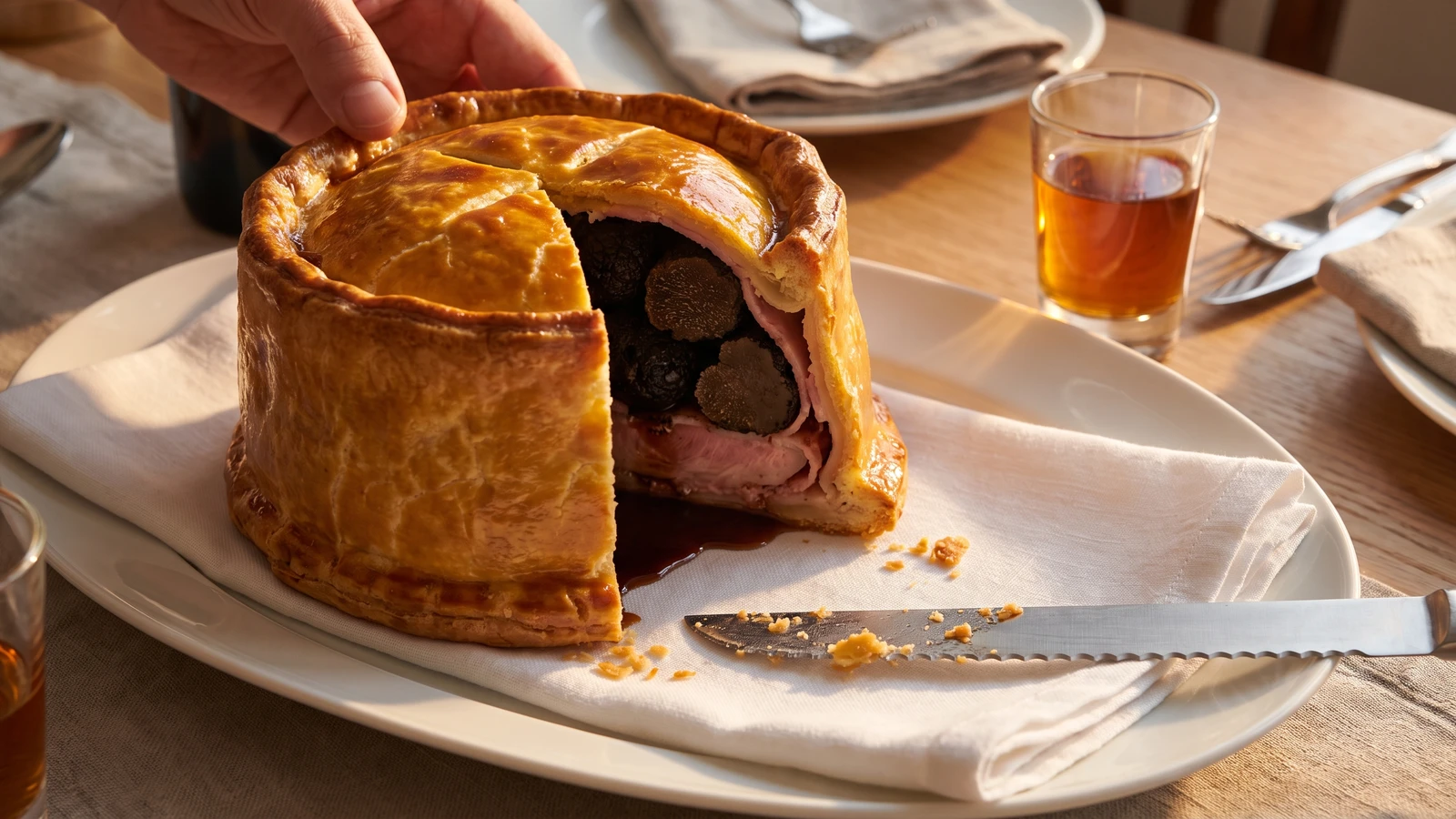
A sealed pastry timbale packed with whole black truffles, unsmoked bacon, Madeira, and pale glaze, baked until burnished, then opened at the table where its captured perfume finally has somewhere to go.
Timbale de Truffes (truffle timbale) teaches the discipline of enclosure. The pastry is not decoration; it is an aromatic chamber, holding the truffles, bacon, Madeira, and glaze together while the oven draws their perfumes into one another. The one true thing to know before touching a pan is simple: if the seal leaks, the soul of the dish leaves with it.
The original formula assumed a pastry bench producing ordinary patty paste, whole boxes of winter truffles, and a saucier drawing pale glaze from stock never off the fire. Here the honest home equivalent is a 1 litre mould, one compact batch of pâte à foncer, and a measured spoonful of true pale chicken or veal glaze. Only the brigade abundance has been reduced. The bacon lining, Madeira, glaze, fifty-minute hot bake, and unvented pastry lid are the dish, and every one remains. One cook, one stove, one evening.
When the timbale is right, the gilded crust arrives deep gold and intact, then releases whole black truffles wrapped in tender bacon with a little glossy Madeira glaze gathering at the cut. Before the mould meets the oven, give your full attention to the final seal. Clean pastry, beaten egg, firm pressure, no vent.
Timbales belong to the grand Parisian table, where cooks used deep, drum-shaped moulds to carry pastry cases and rich fillings intact from kitchen to dining room. The name comes from the timbale, a small kettledrum, and describes the moulded form rather than any single filling, which is why other timbales may contain rice, macaroni, or forcemeat. This version turns winter black truffles from Périgord or Vaucluse into the whole filling, bound by bacon, Madeira, and glaze rather than scattered as a garnish.
Quantity
2 1/2 cups (600 ml / 300 g)
for the ordinary patty paste
Quantity
1 teaspoon (5 ml / 6 g)
for the pastry
Quantity
2/3 cup (160 ml / 150 g)
cubed
Quantity
1
for the pastry
Quantity
1/4 cup (60 ml / 60 g)
as needed
Quantity
2 teaspoons (10 ml / 10 g)
for the mould
Quantity
12 slices (225 g)
Quantity
about 3 cups (710 ml / 450 g)
scrubbed, peeled, and left whole
Quantity
3/4 teaspoon (3.75 ml / 4.5 g)
for seasoning the truffles
Quantity
1/2 teaspoon (2.5 ml / 1 g)
Quantity
1/3 cup (80 ml / 80 g)
Quantity
2 tablespoons (30 ml / 40 g)
gently warmed until spoonable
Quantity
1 large egg plus 1 teaspoon (5 ml / 5 g) water
beaten together for sealing and gilding
| Ingredient | Quantity |
|---|---|
| all-purpose flourfor the ordinary patty paste | 2 1/2 cups (600 ml / 300 g) |
| fine sea saltfor the pastry | 1 teaspoon (5 ml / 6 g) |
| cold unsalted buttercubed | 2/3 cup (160 ml / 150 g) |
| large eggfor the pastry | 1 |
| ice wateras needed | 1/4 cup (60 ml / 60 g) |
| softened unsalted butterfor the mould | 2 teaspoons (10 ml / 10 g) |
| thin-cut unsmoked streaky bacon | 12 slices (225 g) |
| fresh black winter trufflesscrubbed, peeled, and left whole | about 3 cups (710 ml / 450 g) |
| fine sea saltfor seasoning the truffles | 3/4 teaspoon (3.75 ml / 4.5 g) |
| freshly ground black pepper | 1/2 teaspoon (2.5 ml / 1 g) |
| dry or medium-dry Madeira | 1/3 cup (80 ml / 80 g) |
| pale chicken or veal glazegently warmed until spoonable | 2 tablespoons (30 ml / 40 g) |
| large egg and waterbeaten together for sealing and gilding | 1 large egg plus 1 teaspoon (5 ml / 5 g) water |
Mix the flour and pastry salt, then rub in the cold butter until the mixture resembles coarse crumbs with a few small, flattened pieces of butter remaining. Beat the egg with 3 tablespoons of the ice water and work it into the flour with a fork. Add the remaining water a teaspoon at a time only if dry flour remains. Press the dough together without kneading it smooth, divide it into one two-thirds portion and one one-third portion, flatten both, wrap, and chill for 30 minutes.
Set a heavy baking sheet in the oven and heat it to 425°F (220°C conventional / 200°C fan). Butter the inside of a seamless 1 litre timbale or Charlotte mould thoroughly, reaching into every corner. Keep the peeled truffles whole and covered while you work so their perfume stays where it belongs.
Roll the larger piece of dough between sheets of parchment to an even 1/8 inch (3 mm) thickness. Ease it into the buttered mould without stretching, pressing it against the bottom and sides and leaving about 1 inch (2.5 cm) above the rim. If the pastry tears, brush a thin scrap with beaten egg and press it over the hole from inside until the join disappears. Ça se rattrape. Chill the lined mould while you roll the smaller dough portion into a lid slightly wider than the opening.
Line the pastry-covered bottom and sides with overlapping bacon, reserving enough to cover the top in one complete layer. Pack in half the raw, peeled truffles and season them with half the salt and pepper. Add the remaining truffles, keeping them snug but whole, then season again. Pour the Madeira down the side and spoon the warm pale chicken or veal glaze over the truffles. Cover completely with the reserved bacon.
Blot the exposed pastry rim if any Madeira or bacon fat has touched it, because a greasy edge will not seal. Brush the rim with beaten egg, lay on the pastry lid, and press firmly around the full circumference. Fold the overhanging lining inward over the lid, trim neatly, then reinforce the join with a narrow strip of spare pastry brushed underneath with egg. Gild the lid with beaten egg, keeping excess egg from running between pastry and mould. Do not cut a vent. If a crack or weak join appears, dry it, cover it with a thin egg-brushed patch, and press until seamless before baking.
Place the sealed mould on the preheated baking sheet and bake in the hot oven for the full 50 minutes. The lid should become deep butter-gold, glossy from the gilding, and firm beneath a light touch. If it reaches dark bronze before 35 minutes, lay a loose cap of foil over the top without pressing against the seam. Keep the oven hot; the foil protects the colour while the enclosed filling finishes cooking.
Rest the timbale in its mould for 10 minutes, just long enough for the pastry to settle without surrendering the truffles' fragrance. Place a platter lined with a clean, unscented white napkin over the mould, invert both together, and lift the mould straight upward. If it clings, return it upright and wrap the outside briefly with a warm towel, then try again. Cut at the table with a serrated knife; the truffles should remain whole, the bacon tender, and the Madeira glaze should glisten at the cut without flooding the platter. À table!
1 serving (about 315g)
Culinary guides, cultural storytelling, and the editorial depth that makes cooking meaningful.
Discover Culinary ExplorerChef Juliette
John Dory has the delicacy of sole and the firmness of turbot. A light flouring, a quick butter sauté, and nut-brown beurre noisette show exactly why looks never mattered.

Chef Juliette
Fresh haddock proves its delicacy in the meunière pan: a fine flour crust, moist pearly flakes, and beurre noisette sharpened with lemon and parsley, ready from one skillet in half an hour.

Chef Juliette
Éperlans à l’Anglaise turns small fish into a lesson in disciplined coating: boned smelts under a close, crisp crumb, pan-fried in clarified butter and finished with bright, half-melted maître d’hôtel butter.

Chef Juliette
Tiny smelts, shallot, mushrooms, white wine, gratin sauce, and fine bread raspings meet a fierce oven, where the fish must turn tender in the same breath the buttered crust bronzes.