Chef Juliette
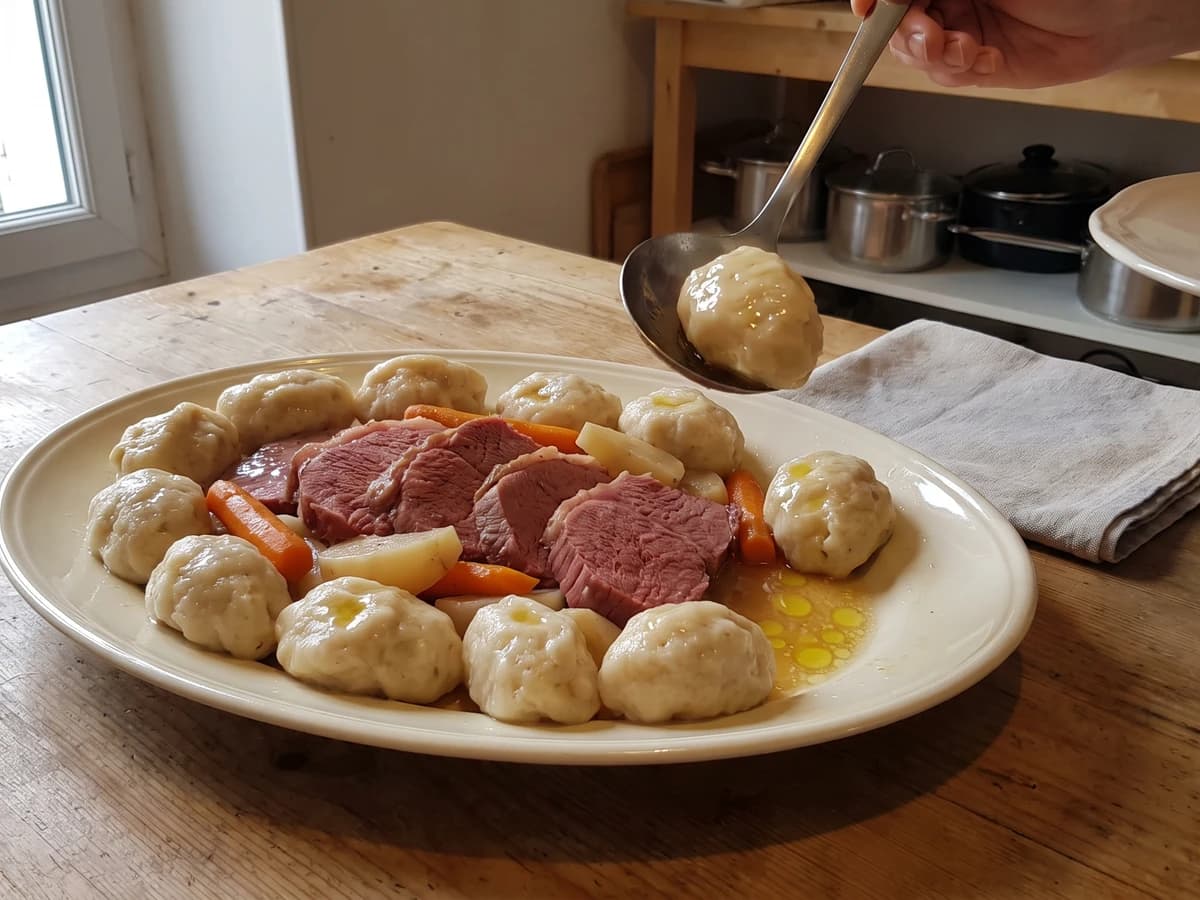
Suet Dumpling
Boulettes au suif, poached beside salt beef, turn equal weights of flour and finely chopped suet into tender, rich dumplings. Keep the beef liquor at a bare tremble and the old garnish works beautifully at home.
A cooking platform built around craft, culture, and the stories behind what we eat.

Created by Chef Juliette
Based on No. 2277, Truffes à la Crème, from Le Guide Culinaire (1907) by Auguste Escoffier
Truffes à la Crème gathers thick slices of black truffle, their butter-rich cooking liquor, and reduced cream inside a crisp vol-au-vent, a lesson in preserving every fragrant drop.
Truffes à la Crème (fresh black truffles in cream) teaches one true thing: the truffle cooking liquor is not a by-product. It is the concentrated heart of the dish, and every fragrant, butter-rich drop must return to the sauce.
The original entry assumed a pastry bench sending up a ready vol-au-vent, a saucier with Béchamel already made, and a pound of truffles for service. For four at home, the truffle quantity is halved, good all-butter puff pastry replaces making pâte feuilletée from the beginning, and the Béchamel remains a prepared component. Making pastry from flour and butter here is brigade scaffolding and can go. Thick slicing, very gentle cooking, the stiff cream reduction, and the final butter mounting are the dish itself, so they stay. One cook, one stove, one evening.
When it is right, the pastry stands butter-gold and crisp around dark, generous slices of truffle glossed with ivory sauce. Keep the heat low when the truffles meet the butter, then guard their cooking liquor as carefully as the truffles themselves. That is the step that decides the dish.
Truffes à la Crème belongs to the Parisian grand-kitchen table, where black winter truffles arriving from Périgord were enclosed in vol-au-vent shells and carried whole to the dining room. It is sometimes mistaken for rustic Périgordin cooking, but its Béchamel, reduced cream, puff-pastry case, and butter finish place it firmly in the formal national canon. At bourgeois celebration tables, the vol-au-vent preserved the grand presentation while allowing the dish to be served generously from the center of the table.
Quantity
11¼ ounces (320 g)
thawed but kept cold
Quantity
1 tablespoon (15 ml / 8 g)
for rolling
Quantity
1
beaten
Quantity
1 teaspoon (5 ml / 5 g)
for the egg wash
Quantity
8 ounces (225 g) after peeling
sliced ⅛ inch (3 mm) thick
Quantity
½ teaspoon (2.5 ml / 3 g)
divided
Quantity
⅛ teaspoon (0.6 ml / 0.3 g)
Quantity
2 tablespoons (30 ml / 28 g)
for cooking the truffles
Quantity
1 teaspoon (5 ml / 5 g)
reduced by half
Quantity
½ cup plus 1 tablespoon (135 ml / 135 g)
for the reduction
Quantity
1½ tablespoons (22 ml / 23 g)
Quantity
1 to 2 tablespoons (15 to 30 ml / 15 to 30 g)
for loosening and rescuing the sauce
Quantity
2 tablespoons (30 ml / 28 g)
cut into small cubes for finishing
| Ingredient | Quantity |
|---|---|
| frozen all-butter puff pastrythawed but kept cold | 11¼ ounces (320 g) |
| plain flourfor rolling | 1 tablespoon (15 ml / 8 g) |
| large eggbeaten | 1 |
| waterfor the egg wash | 1 teaspoon (5 ml / 5 g) |
| fresh black winter trufflessliced ⅛ inch (3 mm) thick | 8 ounces (225 g) after peeling |
| fine sea saltdivided | ½ teaspoon (2.5 ml / 3 g) |
| freshly ground black pepper | ⅛ teaspoon (0.6 ml / 0.3 g) |
| unsalted butterfor cooking the truffles | 2 tablespoons (30 ml / 28 g) |
| fine brandyreduced by half | 1 teaspoon (5 ml / 5 g) |
| heavy creamfor the reduction | ½ cup plus 1 tablespoon (135 ml / 135 g) |
| prepared Béchamel sauce | 1½ tablespoons (22 ml / 23 g) |
| heavy cream (optional)for loosening and rescuing the sauce | 1 to 2 tablespoons (15 to 30 ml / 15 to 30 g) |
| cold unsalted buttercut into small cubes for finishing | 2 tablespoons (30 ml / 28 g) |
Flour the work surface lightly and roll the cold puff pastry to an even ⅛ inch (3 mm). Cut two 8-inch (20 cm) rounds. Put one round on a parchment-lined sheet pan and prick its center with a fork, leaving a 1-inch (2.5 cm) border untouched. Cut a 6-inch (15 cm) circle from the second round to make a ring, reserving the center as the lid. Beat the egg with the water, brush the border of the base lightly, and settle the ring on top without stretching it. Brush the ring and lid with egg wash, keeping it away from the cut edges so the layers can rise. Chill everything for 20 minutes.
Heat the oven to 425°F (220°C). Bake the shell and lid for 10 minutes, reduce the heat to 400°F (200°C), and continue for 12 to 15 minutes, until the pastry is deeply golden, crisp at the sides, and dry through the center. If the center of the shell balloons, press it down gently with the back of a spoon while warm. Remove any damp interior layers that obstruct the cavity, taking care not to pierce the base, then leave the shell uncovered so it stays crisp.
Scrub the truffles under cool water with a soft brush and dry them completely. Peel them as thinly as possible with a small sharp knife or truffle peeler, then weigh out 8 ounces (225 g). Slice them a full ⅛ inch (3 mm) thick. The source calls for thick slices, not translucent shavings, because the truffles must remain substantial after their gentle cooking.
Put the brandy in the smallest saucepan you own and let it bubble over medium heat for 20 to 30 seconds, until reduced by roughly half and stripped of its raw alcoholic smell. This is the home-stove equivalent of the source's burnt liqueur brandy. There is no sense in igniting a teaspoon when a brief reduction preserves the same mellow aromatic intent.
Melt the cooking butter in a small heavy sauté pan over the lowest heat. Add the truffle slices, ¼ teaspoon (1.25 ml / 1.5 g) of the salt, and the pepper, turning gently until every slice gleams with butter. Cover and cook for 6 to 8 minutes, turning once, until the truffles yield slightly at the edge but still hold their shape. Add the reduced brandy for the final minute. The butter should foam softly without coloring. Lift the truffles into a warm bowl with a slotted spoon, then pour every drop of their cooking liquor into a separate cup.
Combine the ½ cup plus 1 tablespoon (135 ml / 135 g) cream and the prepared Béchamel sauce in a small heavy saucepan. Bring them to the gentlest simmer, whisking often, and reduce for 6 to 8 minutes. The mixture must reach the stiff consistency named in the source: drag a spatula across the pan and the furrow should remain open for a moment. It will look too thick. It is exactly right, because the truffle liquor comes next.
Whisk the reserved truffle cooking liquor into the stiff cream reduction. Add just enough of the extra cream to reach nappe, a coating consistency that clings softly to the back of a spoon, reserving at least 1 teaspoon for insurance. Take the pan completely off the heat. Monter au beurre, mounting the sauce with cold butter, by whisking in the cubes a few at a time until the sauce is glossy and unified. Fold in the truffles and warm them over the lowest heat without allowing the sauce to simmer. If the sauce releases oily beads, stop. Ça se rattrape: whisk the reserved teaspoon of cold cream in a clean bowl, then add the broken sauce a spoonful at a time until it comes together. Taste and add the remaining salt only if needed.
Set the warm vol-au-vent shell on its serving platter and spoon in the truffles with all their sauce, letting a few thick slices remain visible at the surface. Rest the pastry lid slightly askew rather than sealing the filling beneath it. Carry it straight to the table while the pastry is crisp and the sauce still gleams. À table!
1 serving (about 185g)
Culinary guides, cultural storytelling, and the editorial depth that makes cooking meaningful.
Discover Culinary ExplorerChef Juliette
Boulettes au suif, poached beside salt beef, turn equal weights of flour and finely chopped suet into tender, rich dumplings. Keep the beef liquor at a bare tremble and the old garnish works beautifully at home.

Chef Juliette
Bread, flour, frangipane, and rice become four cool, supple panades for binding forcemeats, each changing body and flavor while preserving tenderness. The finest Mousselines need none, and knowing that distinction is the lesson.

Chef Juliette
Panade au pain is bread, milk, salt, heat, and attention: stir until the paste releases cleanly, butter it against a skin, and you have the quiet binder behind tender French farces.

Chef Juliette
Panade de farine teaches the drying stroke behind pâte à choux: flour meets boiling buttered water, then stays over the fire until the paste gathers, smooths, and quits the pan cleanly.