Chef Juliette
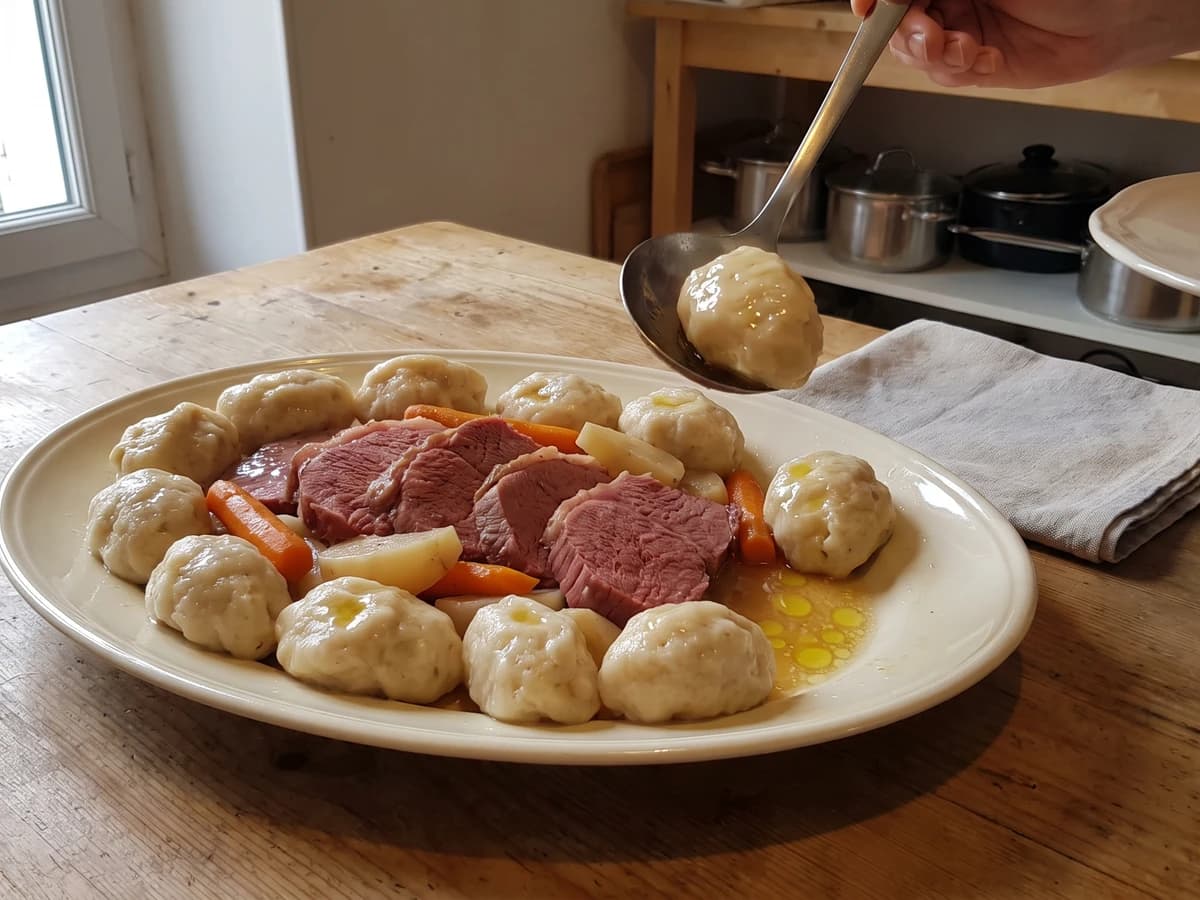
Suet Dumpling
Boulettes au suif, poached beside salt beef, turn equal weights of flour and finely chopped suet into tender, rich dumplings. Keep the beef liquor at a bare tremble and the old garnish works beautifully at home.
A cooking platform built around craft, culture, and the stories behind what we eat.
Created by Chef Juliette
Based on No. 2276, Truffes au Champagne, from Le Guide Culinaire (1907) by Auguste Escoffier
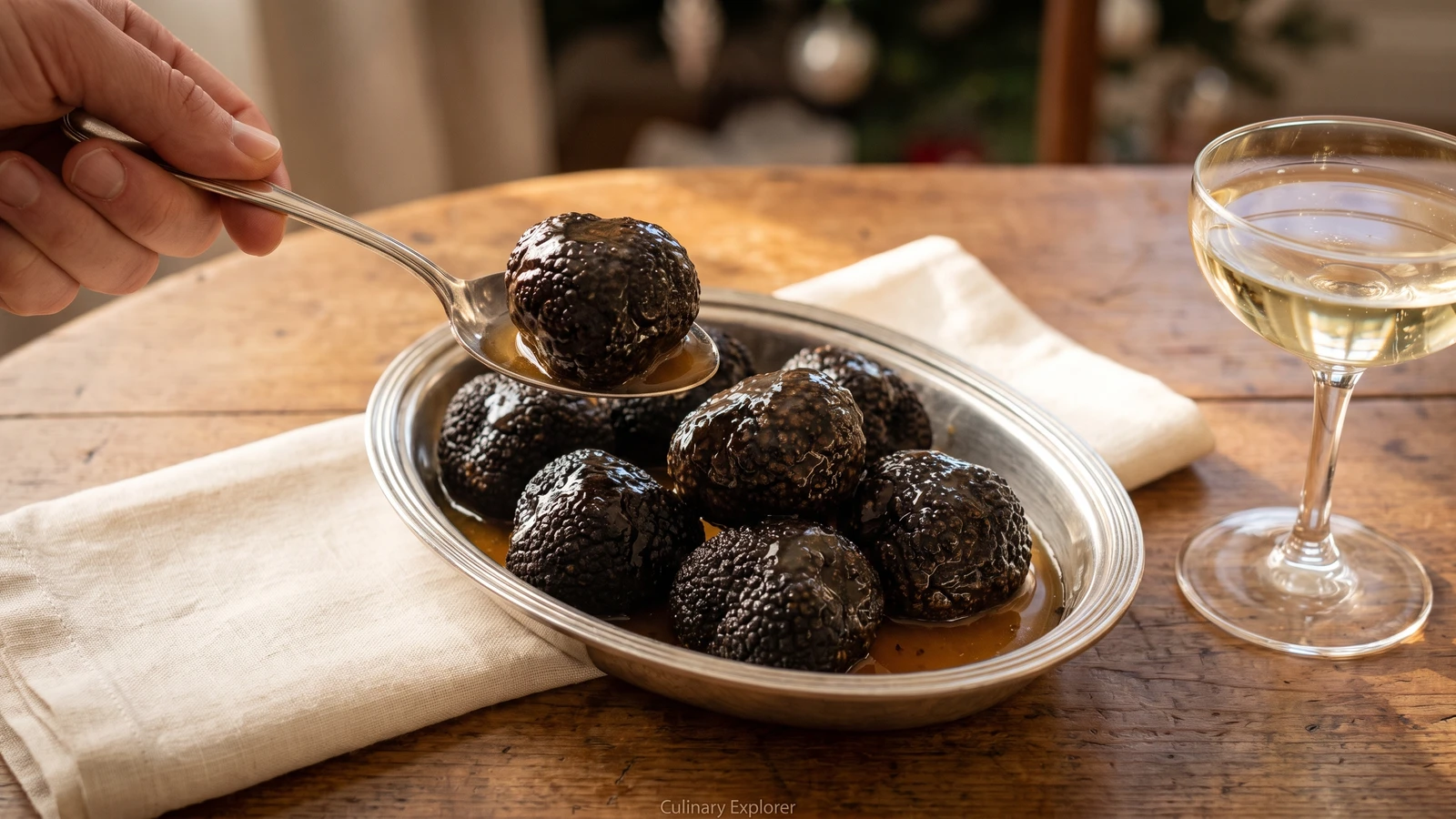
Whole black truffles, gently cooked under Champagne and bathed in a clear veal-stock sauce, teach the most luxurious lesson in restraint: reduce bravely, then guard their perfume with heat kept below a boil.
Truffes au Champagne (whole truffles cooked in Champagne) teaches the discipline of temperature. The one true thing is simple: once the strained sauce returns to the truffles, it must not boil. A boil is not extra cooking here; it is the truffles' perfume leaving the pan.
The original formula assumed a saucier, a strong fond de veau (veal stock) always ready, muslin to hand, and small silver saucepans waiting warm. At home, a tight-lidded saucepan, properly concentrated stock, a muslin-lined sieve, and one warmed timbale, a deep serving dish, do the work. I have reduced the volume to four servings and removed only the individual service silver, which is brigade scaffolding. The covered cooking, near-dry Champagne reduction, veal stock, straining, and ten-minute warm rest are the dish, so every one stays. One cook, one stove, one evening.
The truffles arrive whole and black beneath a clear amber sauce, with Champagne at the front and veal providing quiet depth. This is not a dish to crowd with herbs, butter, or truffle oil. The step that decides everything is the last hold: ten quiet minutes below a boil.
Truffes au Champagne belongs to the grand Parisian service table, where whole black truffles from Périgord and Provence were served as a dish in their own right, often in timbales or small silver saucepans. Champagne here names the cooking wine, not a regional birthplace: the preparation joins two prized ingredients from separate French larders, then disciplines them with clear veal stock and gentle heat. Its path to the home table is direct, because the ceremonial silver can disappear while the covered cooking, near-dry reduction, muslin straining, and final warm rest remain intact.
Quantity
8 small (about 7 oz / 200 g total)
scrubbed and thoroughly dried
Quantity
1½ cups (375 ml / 375 g)
Quantity
½ cup plus 1 tablespoon (135 ml / 135 g)
chilled
Quantity
½ teaspoon (2.5 ml / 3 g)
Quantity
⅛ teaspoon (0.6 ml / 0.3 g)
| Ingredient | Quantity |
|---|---|
| fresh black winter trufflesscrubbed and thoroughly dried | 8 small (about 7 oz / 200 g total) |
| brut Champagne | 1½ cups (375 ml / 375 g) |
| strong, clear, unsalted fond de veauchilled | ½ cup plus 1 tablespoon (135 ml / 135 g) |
| fine sea salt | ½ teaspoon (2.5 ml / 3 g) |
| finely ground white pepper | ⅛ teaspoon (0.6 ml / 0.3 g) |
Brush the truffles under a thin thread of cold running water, working carefully into every crevice so no grit remains. Do not soak them. Dry them thoroughly, then season all over with the salt and white pepper. Rinse the muslin with very hot water, squeeze it nearly dry, and use it to line a fine-mesh sieve; damp muslin absorbs less of the precious sauce.
Arrange the truffles snugly in a single layer in the smallest heavy saucepan that will hold them. Pour in the Champagne, which should come at least three-quarters of the way up their sides. Bring it only to a gentle simmer, cover tightly, and lower the heat. Cook for 12 to 15 minutes, turning the truffles once; they should be hot through and yield only slightly to a fine skewer, never soften like ordinary mushrooms.
Warm the timbale or serving dish with hot water, then empty and dry it. Lift the truffles from the Champagne with a slotted spoon, place them in the warm dish, and cover immediately. Keep every drop of Champagne in the saucepan. Individual silver pans are unnecessary; one covered vessel protects the perfume just as well.
Boil the Champagne uncovered until it is almost completely reduced, about 8 to 12 minutes. Watch closely as the last liquid gathers into roughly 2 tablespoons (30 ml), with broad, glossy bubbles. Lower the heat and swirl the pan rather than stirring. If the edge begins to catch, pour the clear reduction at once into a clean saucepan, leaving the dark deposit behind, and continue gently. Reserve 1 tablespoon (15 ml) of the cold fond de veau, then add the remaining ½ cup (120 ml) to the reduction. Warm only until the first tremor appears at the edge, then strain through the prepared muslin into a warm jug.
Pour the strained sauce immediately over the truffles and cover. Hold the dish for 10 minutes in a shallow bath of hot water over the lowest heat, or on the back of a turned-off burner if the vessel retains warmth. The sauce should remain hot and still, ideally 158 to 176°F (70 to 80°C), without a bubble breaking the surface. If one appears, lift the dish away and stir in the reserved cold fond de veau, then cover and finish the rest off the heat. Ça se rattrape. Serve one or two whole truffles per person with the clear sauce spooned generously over them. À table!
1 serving (about 100g)
Culinary guides, cultural storytelling, and the editorial depth that makes cooking meaningful.
Discover Culinary ExplorerChef Juliette
Boulettes au suif, poached beside salt beef, turn equal weights of flour and finely chopped suet into tender, rich dumplings. Keep the beef liquor at a bare tremble and the old garnish works beautifully at home.

Chef Juliette
Bread, flour, frangipane, and rice become four cool, supple panades for binding forcemeats, each changing body and flavor while preserving tenderness. The finest Mousselines need none, and knowing that distinction is the lesson.

Chef Juliette
Panade au pain is bread, milk, salt, heat, and attention: stir until the paste releases cleanly, butter it against a skin, and you have the quiet binder behind tender French farces.

Chef Juliette
Panade de farine teaches the drying stroke behind pâte à choux: flour meets boiling buttered water, then stays over the fire until the paste gathers, smooths, and quits the pan cleanly.