Chef Juliette
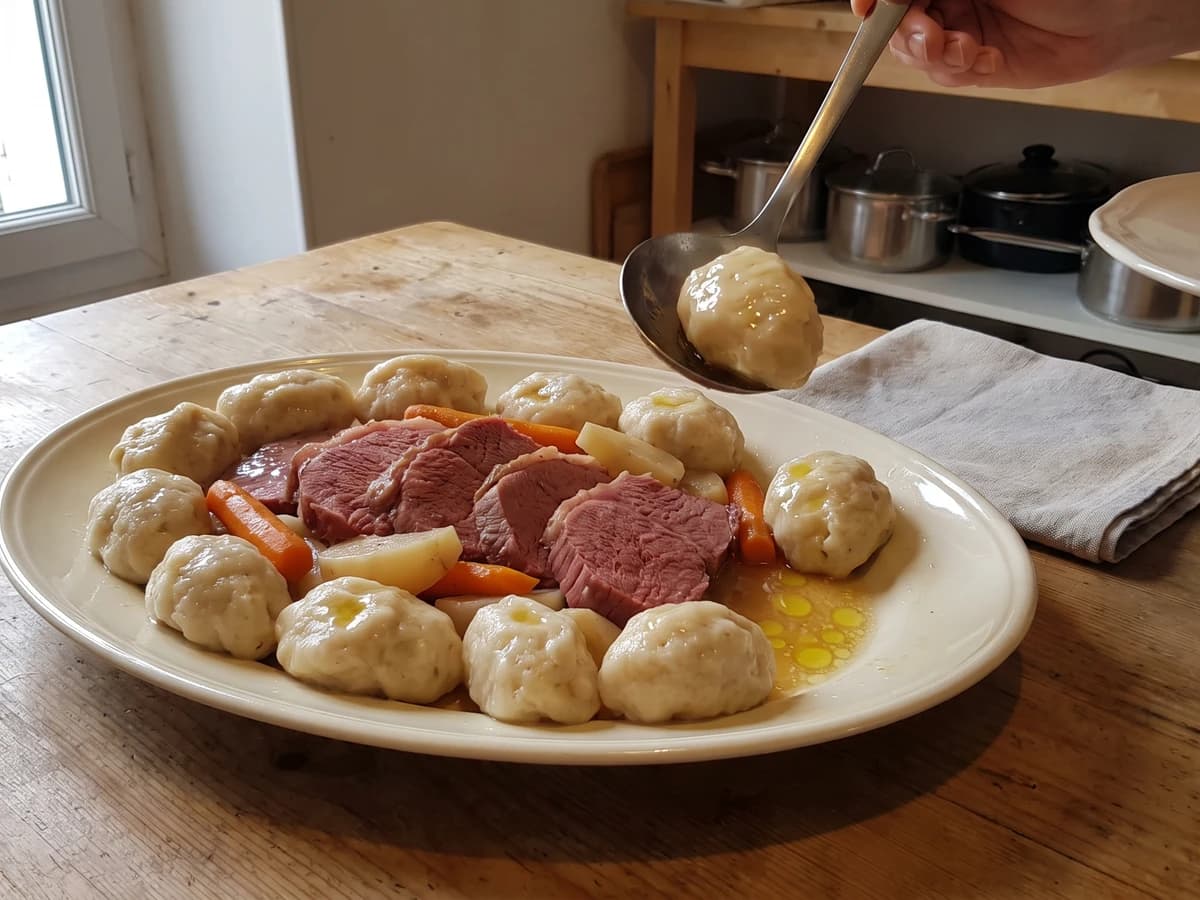
Suet Dumpling
Boulettes au suif, poached beside salt beef, turn equal weights of flour and finely chopped suet into tender, rich dumplings. Keep the beef liquor at a bare tremble and the old garnish works beautifully at home.
A cooking platform built around craft, culture, and the stories behind what we eat.

Created by Chef Juliette
Based on No. 2263, Grilled Tomatoes, from Le Guide Culinaire (1907) by Auguste Escoffier
Tomates grillées prove that gentle heat is a technique, not an absence of one: whole ripe tomatoes, generously oiled, turned patiently until the skins blister and the centers grow yielding.
Tomates grillées teach restraint. Gentle is the whole instruction: whole tomatoes need time for heat to reach their centers, and fierce heat bursts the skins while the flesh is still raw. Oil them generously, keep them whole, and let moderate heat do its quiet work.
The source entry assumed a professional grill whose heat and distance a cook could adjust at a glance, whether beneath a salamander or over banked coals, and it gave no quantity because service decided that. The home equivalent is eight small tomatoes for four people on the cool side of a covered barbecue, or in a ridged cast-iron grill pan over low heat. Time, temperature, and a household portion have been supplied; no seasoning or aromatics have been added, because the source asks for nothing beyond tomatoes and oil.
Open-ended brigade service is scaffolding and can go. Copious oil and gentle grilling are the dish, and both must stay. Set the gentle heat before the tomatoes touch the grate, then refuse to hurry them.
Tomates grillées belong to the grillades of Mediterranean France, particularly Provence and Languedoc, where whole ripe tomatoes cook beside meat or fish over a moderated bed of coals. The classical repertoire kept that household economy and reduced the garnish to its essentials: tomato, oil, and controlled heat. Despite the name, the aim is neither a black crust nor a collapsed tomato; the skin should blister lightly while the flesh softens inside.
Quantity
8 (about 2 lb / 900 g)
Quantity
1/4 cup (60 ml / 55 g)
| Ingredient | Quantity |
|---|---|
| small ripe round tomatoes | 8 (about 2 lb / 900 g) |
| mild olive oil or neutral cooking oil | 1/4 cup (60 ml / 55 g) |
Prepare a two-zone barbecue with modest coals banked to one side, or light one gas burner, and stabilize the covered grill at 325 to 350°F (160 to 175°C). Leave a genuinely cool area beside the heat. For indoor cooking, warm a 12-inch ridged cast-iron grill pan over medium-low heat, then lower it once the ridges are hot; the oil should shimmer on contact but never smoke.
Wash the tomatoes and dry them completely, removing any loose leaves without coring or piercing the fruit. Pour the oil into a wide shallow bowl and roll each tomato through it until the entire skin is thickly glossy. Copiously means the oil drips back into the bowl, not a timid brush across the shoulders. Keep the tomatoes whole, because the skin holds their juices while the centers soften.
Set the tomatoes on the cooler side of the barbecue, close the lid, and grill them for 18 to 25 minutes. Turn each one by a quarter turn every 4 to 5 minutes with gentle tongs, keeping it near the heat but never directly over a fierce flame. On a grill pan, cover the tomatoes with a large lid or inverted metal bowl and rotate them in the same way. The skins should blister lightly and take a few bronze stripes while the fruit slowly grows yielding.
If a skin sticks when you try to turn it, stop and give it another minute; forcing it will tear the tomato. If one bursts before its center is soft, the heat is too strong. Ça se rattrape: move it to the farthest cool edge, turn the split upward so its juices remain inside, and finish it under the closed lid. Lower the heat beneath a grill pan and leave that tomato split-side up without further turning.
Lift each tomato to a shallow platter when its skin is lightly wrinkled and the flesh gives beneath the tongs without collapsing. Spoon over any oil remaining in the coating bowl and let the tomatoes settle for 3 minutes so their juices calm inside the skins. Serve them whole, with no seasoning added. Tomato, oil, gentle heat. That is the dish. À table!
1 serving (about 200g)
Culinary guides, cultural storytelling, and the editorial depth that makes cooking meaningful.
Discover Culinary ExplorerChef Juliette
Boulettes au suif, poached beside salt beef, turn equal weights of flour and finely chopped suet into tender, rich dumplings. Keep the beef liquor at a bare tremble and the old garnish works beautifully at home.

Chef Juliette
Bread, flour, frangipane, and rice become four cool, supple panades for binding forcemeats, each changing body and flavor while preserving tenderness. The finest Mousselines need none, and knowing that distinction is the lesson.

Chef Juliette
Panade au pain is bread, milk, salt, heat, and attention: stir until the paste releases cleanly, butter it against a skin, and you have the quiet binder behind tender French farces.

Chef Juliette
Panade de farine teaches the drying stroke behind pâte à choux: flour meets boiling buttered water, then stays over the fire until the paste gathers, smooths, and quits the pan cleanly.