Chef Juliette
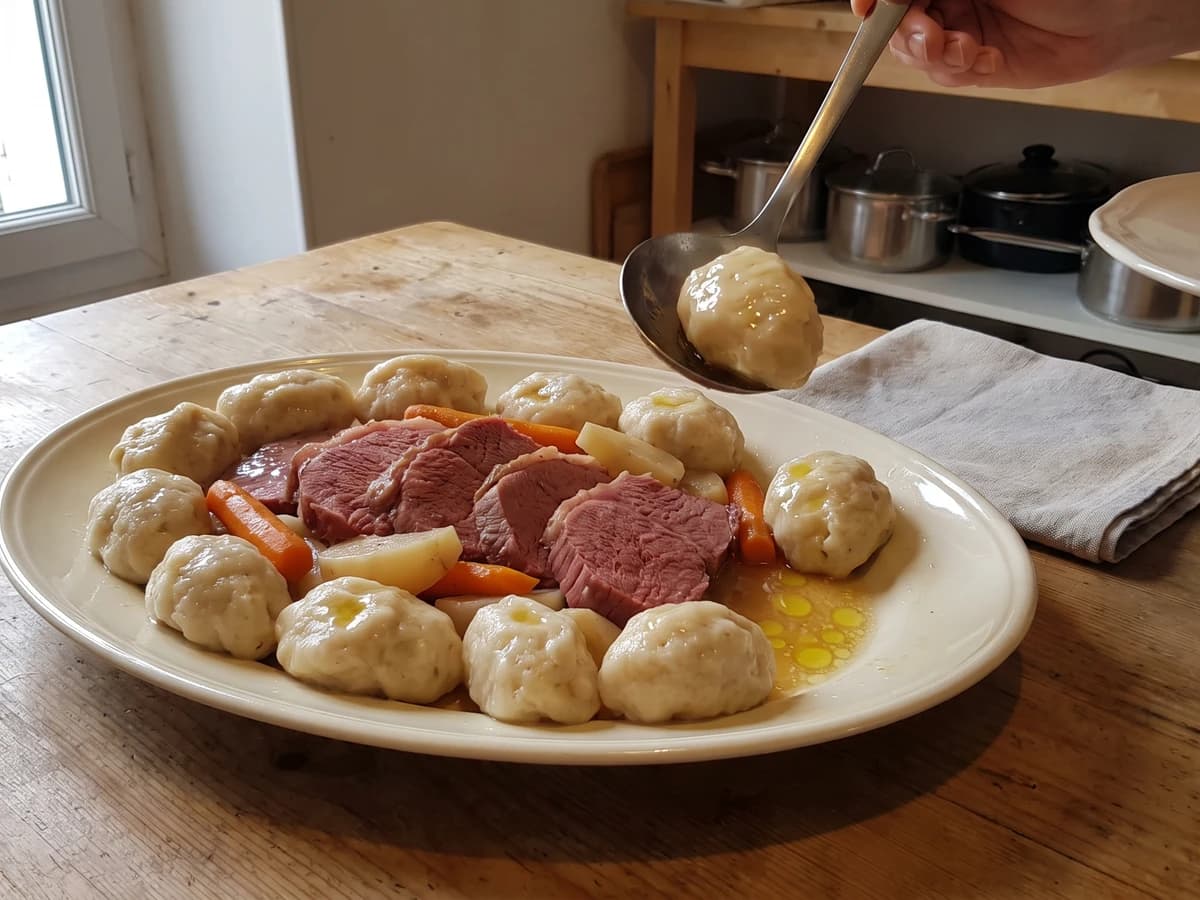
Suet Dumpling
Boulettes au suif, poached beside salt beef, turn equal weights of flour and finely chopped suet into tender, rich dumplings. Keep the beef liquor at a bare tremble and the old garnish works beautifully at home.
A cooking platform built around craft, culture, and the stories behind what we eat.

Created by Chef Juliette
Based on No. 2261, Salsifis Sauté, from Le Guide Culinaire (1907) by Auguste Escoffier
Tender salsify tossed in foaming butter until its edges turn gold, then crowned with crisp fried parsley. The pan matters, but drying decides everything: wet roots steam, dry roots color.
Salsifis Sauté (salsify tossed in butter until golden) teaches one clean lesson: browning begins before the pan. Cooked salsify carries water in its ridges and tender flesh. Leave that water there and the butter cannot color it; dry the roots properly and their pale surfaces take on a nutty gold while the centers remain tender.
The source entry assumed two pieces of brigade mise en place: salsify already cooked and fried parsley waiting at the garnish station. For a home kitchen, the roots are simmered here, the omelet pan becomes a broad 12-inch skillet, and a warmed serving bowl stands in for the timbale. The prepared vegetable, garnish station, and formal serving vessel were scaffolding. The two-inch cut, emphatic drying, real butter, and tossing in the pan are the dish, so they stay. One cook, one stove, one evening.
Give the cooked pieces time on clean towels before they meet the butter. If moisture collects in the skillet and the roots remain pale, stop and dry them again rather than boiling them in their own water. Ça se rattrape. Drying is the step that decides the dish.
Salsifis sauté belongs to Parisian cuisine bourgeoise and the national repertoire of vegetable side dishes, where roots cooked in advance were finished in butter just before service. It traveled easily between the winter market basket, the household table, and the grand kitchen, which added the timbale and crisp fried parsley without changing the plain method beneath them. French markets have long used salsifis for both pale true salsify and dark-skinned scorzonera; the roots are botanically distinct, but the classical kitchen treats them in much the same fashion.
Quantity
about 10 medium roots (2 lb / 900 g)
Quantity
8 cups (1.9 L / 1.9 kg)
for holding and simmering
Quantity
2 tablespoons (30 ml / 30 g)
Quantity
2 teaspoons (10 ml / 12 g), divided, plus more to taste
Quantity
4 tablespoons (60 ml / 56 g)
divided
Quantity
1/2 cup loosely packed (120 ml / 8 g)
washed and dried completely
Quantity
1/2 cup (120 ml / 110 g)
Quantity
1/4 teaspoon (1.25 ml / 0.6 g)
| Ingredient | Quantity |
|---|---|
| fresh salsify roots | about 10 medium roots (2 lb / 900 g) |
| cold waterfor holding and simmering | 8 cups (1.9 L / 1.9 kg) |
| fresh lemon juice | 2 tablespoons (30 ml / 30 g) |
| fine sea salt | 2 teaspoons (10 ml / 12 g), divided, plus more to taste |
| unsalted butterdivided | 4 tablespoons (60 ml / 56 g) |
| flat-leaf parsley leaveswashed and dried completely | 1/2 cup loosely packed (120 ml / 8 g) |
| neutral frying oil, such as sunflower or grapeseed | 1/2 cup (120 ml / 110 g) |
| finely ground white pepper | 1/4 teaspoon (1.25 ml / 0.6 g) |
Combine the cold water and lemon juice in a large bowl. Scrub the salsify, then peel one root at a time and cut it into 2-inch (5 cm) lengths, dropping each piece immediately into the acidulated water. Salsify darkens quickly and releases a sticky sap as it is peeled, so gloves are useful, though hardly mandatory.
Transfer the salsify and its acidulated water to a wide saucepan, then add 1 1/2 teaspoons (7.5 ml / 9 g) of the salt. Bring to a gentle simmer and cook for 12 to 18 minutes, until a small knife enters the thickest pieces with slight resistance. Do not cook them until collapsing soft; they still have to survive the skillet. Lift out thinner pieces as they become ready, then drain everything thoroughly.
Spread the cooked salsify in a single layer on clean kitchen towels or several layers of absorbent paper. Blot the tops gently, then leave the pieces uncovered for at least 10 minutes, turning them once. Their surfaces should feel dry rather than slick before they approach the pan.
While the salsify dries, heat the neutral oil in a small saucepan to about 350°F (175°C). Add the completely dry parsley in two small batches and fry for 8 to 12 seconds, until the leaves deepen in color and become crisp. Stand back as the first leaves enter the oil. Lift them out with a small spider or slotted spoon, drain on absorbent paper, and season with a small pinch of salt.
Heat a broad 12-inch skillet over medium-high heat, then add 3 tablespoons (45 ml / 42 g) of the butter. When it foams vigorously, add the dried salsify in one uncrowded layer. Let the pieces sit for a minute before tossing the pan, then continue cooking for 6 to 9 minutes, tossing only often enough to expose new sides, until the roots wear irregular patches of deep butter-gold. If liquid collects and the pieces remain pale, lift them onto a clean towel, wipe the skillet, blot the roots again, and restart with the reserved butter. Ça se rattrape. Season with the remaining salt and the white pepper, then add any reserved butter not needed for the rescue and toss once more until everything gleams.
Tip the salsify into a warmed, deep serving bowl, keeping the pieces loose rather than packing them down. Spoon the butter remaining in the skillet over the roots and scatter the fried parsley across the top at the last moment so it stays crisp. Serve immediately. À table!
1 serving (about 200g)
Culinary guides, cultural storytelling, and the editorial depth that makes cooking meaningful.
Discover Culinary ExplorerChef Juliette
Boulettes au suif, poached beside salt beef, turn equal weights of flour and finely chopped suet into tender, rich dumplings. Keep the beef liquor at a bare tremble and the old garnish works beautifully at home.

Chef Juliette
Bread, flour, frangipane, and rice become four cool, supple panades for binding forcemeats, each changing body and flavor while preserving tenderness. The finest Mousselines need none, and knowing that distinction is the lesson.

Chef Juliette
Panade au pain is bread, milk, salt, heat, and attention: stir until the paste releases cleanly, butter it against a skin, and you have the quiet binder behind tender French farces.

Chef Juliette
Panade de farine teaches the drying stroke behind pâte à choux: flour meets boiling buttered water, then stays over the fire until the paste gathers, smooths, and quits the pan cleanly.