Culinary Explorer

A cooking platform built around craft, culture, and the stories behind what we eat.
Discover Culinary Explorer
Rizotto à la Piémontaise

Rizotto à la Piémontaise

Created by Chef Juliette

Based on No. 2258, Rizotto à la Piémontaise, from Le Guide Culinaire (1907) by Auguste Escoffier

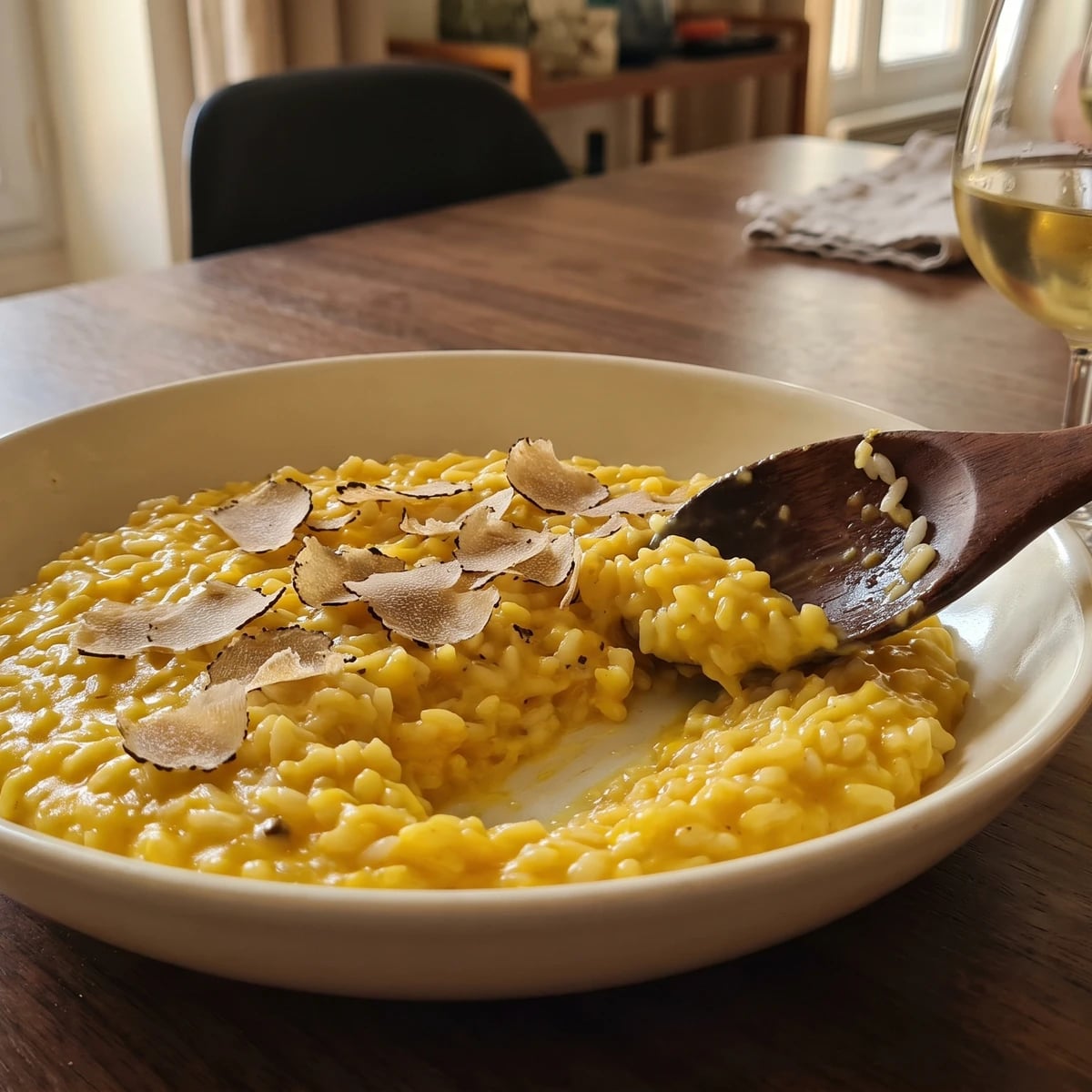
Rizotto à la Piémontaise teaches the patient addition that makes rice creamy: hot consommé in eight measures, saffron, butter, Parmesan, then white truffle or diced ham at the generous finish.

Main Dishes
French
Comfort Food
Dinner Party
Weeknight
15 min
Active Time
30 min cook45 min total
Yield4 servings

Rizotto à la Piémontaise (Piedmont-style rice) teaches the one discipline every absorption-cooked rice demands: the grain must drink before it is fed again. Hot consommé goes in seven or eight installments, never in a flood. Each addition draws starch from the rice while its center cooks, so the finished rizotto is creamy without cream and every grain still holds itself.

The source assumed a saucier stationed at the pan and a consommé pot never off the fire. At home, use one heavy saucepan, one small pan of consommé held at a bare murmur, and eight measured additions. I keep its half-pound of Piedmont rice and half-quart of consommé, exactly the book's proportion, which gives four home servings. What disappears is the brigade's constant stock service, not the measured feeding, covered cooking, or final butter and Parmesan, because those are the dish. No salamander enters here; the original never needed one. This is the honest translation for one cook, one stove, one evening.

The saffron stains the butter gold, Parmesan gives savory depth, and fresh butter leaves the rice loose enough to settle softly in the bowl. If an addition goes in too quickly, don't panic; ça se rattrape, and the rescue waits in the method. Before you touch the pan, remember the step that decides everything: wait until the spoon leaves a brief clean path across the bottom before adding the next measure.

Rizotto à la Piémontaise takes its real home from Piedmont, particularly the rice-growing plains around Vercelli and Novara, where short-grain rice is cooked by gradual absorption and enriched with butter and aged cheese. French classical kitchens carried the method across the Alps, retaining saffron, Parmesan, and the choice of white truffle or diced ham. It is often mistaken for a generic saffron rice, but the white-truffle finish ties this formula directly to Piedmont, while its installment-fed consommé and covered cooking identify the precise classical preparation.

The technique, the tradition, and the story behind every dish.

Discover Culinary Explorer

Ingredients

unsalted butter

Quantity

4 tablespoons (60 ml / 57 g)

divided, with the final half kept cold

medium yellow onion

Quantity

1 medium (about 1 cup / 240 ml / 150 g)

finely chopped

Piedmont rice, preferably Carnaroli or Arborio

Quantity

8 ounces (1¼ cups / 300 ml / 227 g)

clear consommé

Quantity

2 cups (475 ml / 475 g)

kept hot

saffron threads

Quantity

⅛ teaspoon (0.6 ml / 0.1 g)

Parmesan

Quantity

½ cup (120 ml / 45 g)

finely grated

fresh white truffle (optional)

Quantity

1 small (about 0.7 ounce / 20 g)

thinly shaved; choose this or the ham

good cooked ham (optional)

Quantity

⅔ cup (160 ml / 100 g)

cut into small dice; choose this or the truffle

fine salt (optional)

Quantity

Up to ¼ teaspoon (1.25 ml / 1.5 g)

use only if the finished rizotto needs it

Equipment Needed

  • Heavy 3-quart (2.8-liter) saucepan with a tight-fitting lid
  • 1-quart (1-liter) saucepan for the consommé
  • Wooden spoon
  • ¼-cup (60-ml) measure or small ladle
  • Fine grater for the Parmesan
  • Truffle slicer, optional

Instructions

  1. 1

    Warm the consommé

    Bring the consommé to a bare simmer in a small saucepan, then hold it on the lowest heat. It must remain hot but should not boil away or grow saltier through reduction. Plan eight roughly equal additions of about ¼ cup (60 ml) each, keeping the final portion available to judge the texture. The source says about one quart per pound because rice and stovetop heat decide the last spoonful.

    Taste the consommé while it is hot. It should be clear and savory, but not aggressively salty, because Parmesan will season the rice again at the finish.
  2. 2

    Butter the rice

    Melt 2 tablespoons (30 ml / 28 g) of the butter in a heavy saucepan over medium-low heat. Add the onion and fry gently for 5 to 7 minutes, stirring often, until soft and translucent with only the faintest gold. Add the rice, lower the heat, and turn it through the onion for 2 minutes. Sprinkle in the saffron and continue stirring until every grain is glossy, warmly golden, and thoroughly saturated with butter. If the onion begins to brown, lift the pan from the heat for half a minute before continuing; dark onion would cover the saffron rather than support it.

  3. 3

    Feed eight additions

    Add the first ¼ cup (60 ml) of hot consommé and stir slowly with a wooden spoon until it is evenly distributed. Cover the pan and hold the rice at a gentle simmer. When the liquid is nearly absorbed and the spoon leaves a clean path across the pan floor for a second, add the next measure, stir, and cover again. Continue in seven or eight installments for 18 to 22 minutes, tasting after the sixth. The rice is ready when it is tender with slight resistance at its center, never chalky, and the preparation is loose and creamy. If two measures go in at once and the rice swims, uncover it and keep the simmer gentle until the spoon's path returns. Don't attack it with fierce heat or constant beating. Ça se rattrape.

    Stir when each measure enters, as the source directs, then cover between additions. Constant hard stirring can abrade the grains into paste; patient feeding releases enough starch without destroying their shape.
  4. 4

    Monter au beurre

    Take the saucepan fully off the heat while the rizotto is still a little looser than you want to serve it. Montez au beurre (mount with butter): add the remaining cold butter in several pieces, followed by the grated Parmesan, and stir firmly for 30 seconds until both disappear into a glossy, cohesive cream around the grains. Cover and rest for 2 minutes. If butter pools on the surface, the pan was too hot. Stop, beat in a tablespoon of the reserved hot consommé, and continue off the heat until the mixture comes together. Taste before adding any salt.

  5. 5

    Choose the finish

    Choose one finish, never both. For ham, fold the small dice through the finished rizotto and cover for 1 minute, just long enough to warm them. For white truffle, spoon the rizotto into warmed shallow bowls first, then shave the truffle generously over the surface so its perfume is not dulled by the pan. The rizotto should relax outward when served, not stand in a stiff mound; if it has tightened during its brief rest, loosen it with the remaining hot consommé. Serve at once. À table!

Chef Tips

  • Carnaroli holds its shape a little longer, while Arborio absorbs more quickly; either Piedmont rice serves the source honestly. Do not rinse it. The surface starch is needed for the creaminess the method promises.
  • The source calls for consommé, not plain water and not a heavily flavored sauce. A sound prepared consommé is an honest home-kitchen answer when no stockpot is waiting, but choose one that is clear and moderate in salt.
  • No cream goes into this rizotto. Its creamy body comes from gradual absorption, rice starch, Parmesan, and the final cold butter. Add cream and you hide the very technique the dish is meant to teach.
  • Fresh white truffle is seasonal and unforgiving of poor quality. If it smells faint or tired, choose the diced-ham finish the source gives you; it is an equal ending, not a consolation, and far better than perfumed truffle oil.
  • For wine, pour a dry Savoie white with the truffle version. With ham, a light Beaujolais has enough fruit for the saffron and enough freshness for the butter.

Advance Preparation

  • The consommé may be prepared up to three days ahead and kept cold, or frozen for longer storage. Bring it to a bare simmer before the rice meets the butter.
  • The onion can be chopped, Parmesan grated, and ham diced several hours ahead. Keep them separately covered in the cold; leave the finishing butter cold as well.
  • Do not cook the rice ahead and reheat it. For a dinner party, set the measured ingredients beside the stove and warm the consommé in advance, then begin the rizotto about 30 minutes before you intend to serve.
  • Clean a white truffle shortly before cooking, but do not shave it ahead. Its aroma belongs over the filled bowls at the final moment.

Frequently Asked Questions

Nutrition Information

1 serving (about 240g)

Calories
420 calories
Total Fat
17 g
Saturated Fat
10 g
Trans Fat
0 g
Unsaturated Fat
6 g
Cholesterol
50 mg
Sodium
1010 mg
Total Carbohydrates
50 g
Dietary Fiber
1 g
Sugars
2 g
Protein
17 g

Note: Chef personas and recipes are created with AI assistance. Cook with care: follow safe food-handling practices, check doneness with a thermometer when needed, and adapt for allergies and your kitchen.

Where cooking meets culture.

Culinary guides, cultural storytelling, and the editorial depth that makes cooking meaningful.

Discover Culinary Explorer

More from Vegetables and Farinaceous Products - Rice, Tomatoes and Truffles

Browse the full collection