Chef Juliette
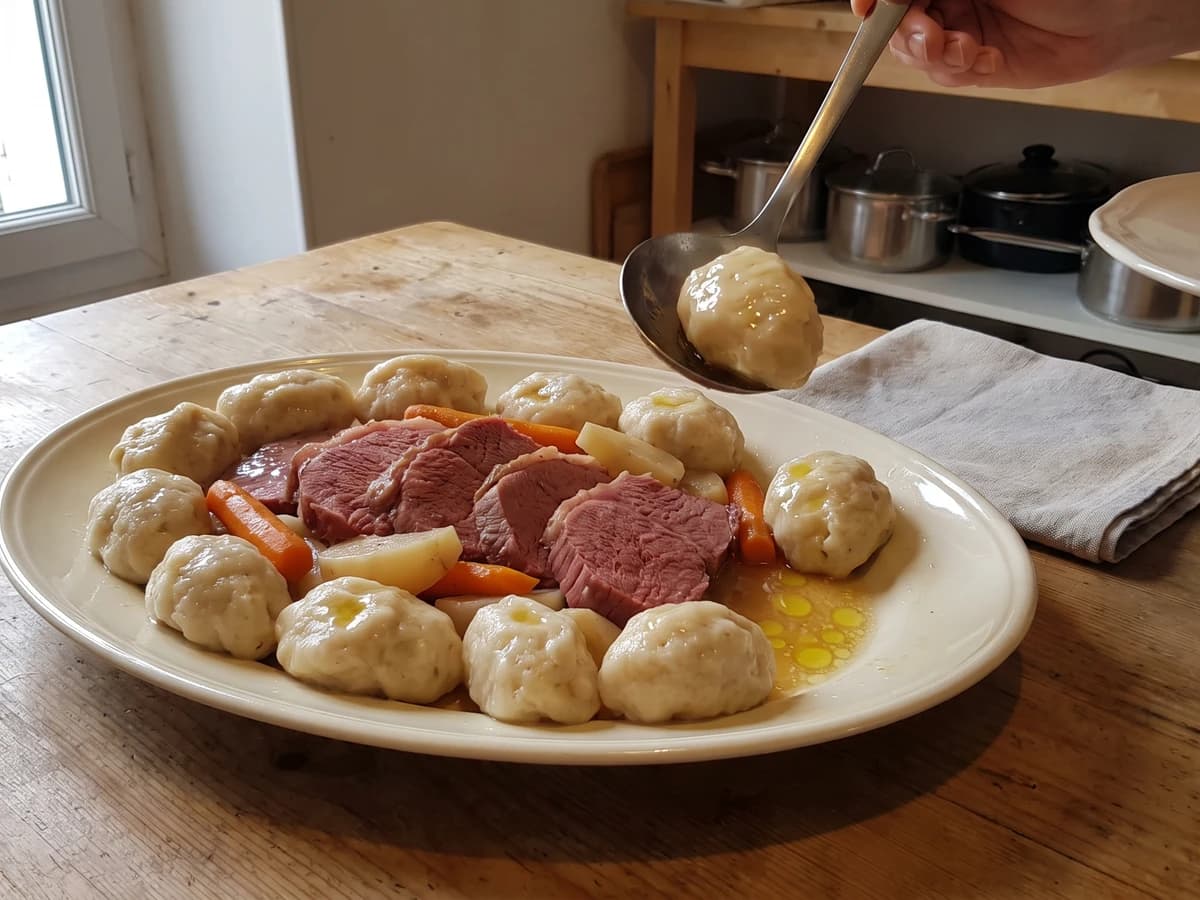
Suet Dumpling
Boulettes au suif, poached beside salt beef, turn equal weights of flour and finely chopped suet into tender, rich dumplings. Keep the beef liquor at a bare tremble and the old garnish works beautifully at home.
A cooking platform built around craft, culture, and the stories behind what we eat.
Created by Chef Juliette
Based on No. 2256, Pilaff Rice (for the Stuffing of Fowls), from Le Guide Culinaire (1907) by Auguste Escoffier
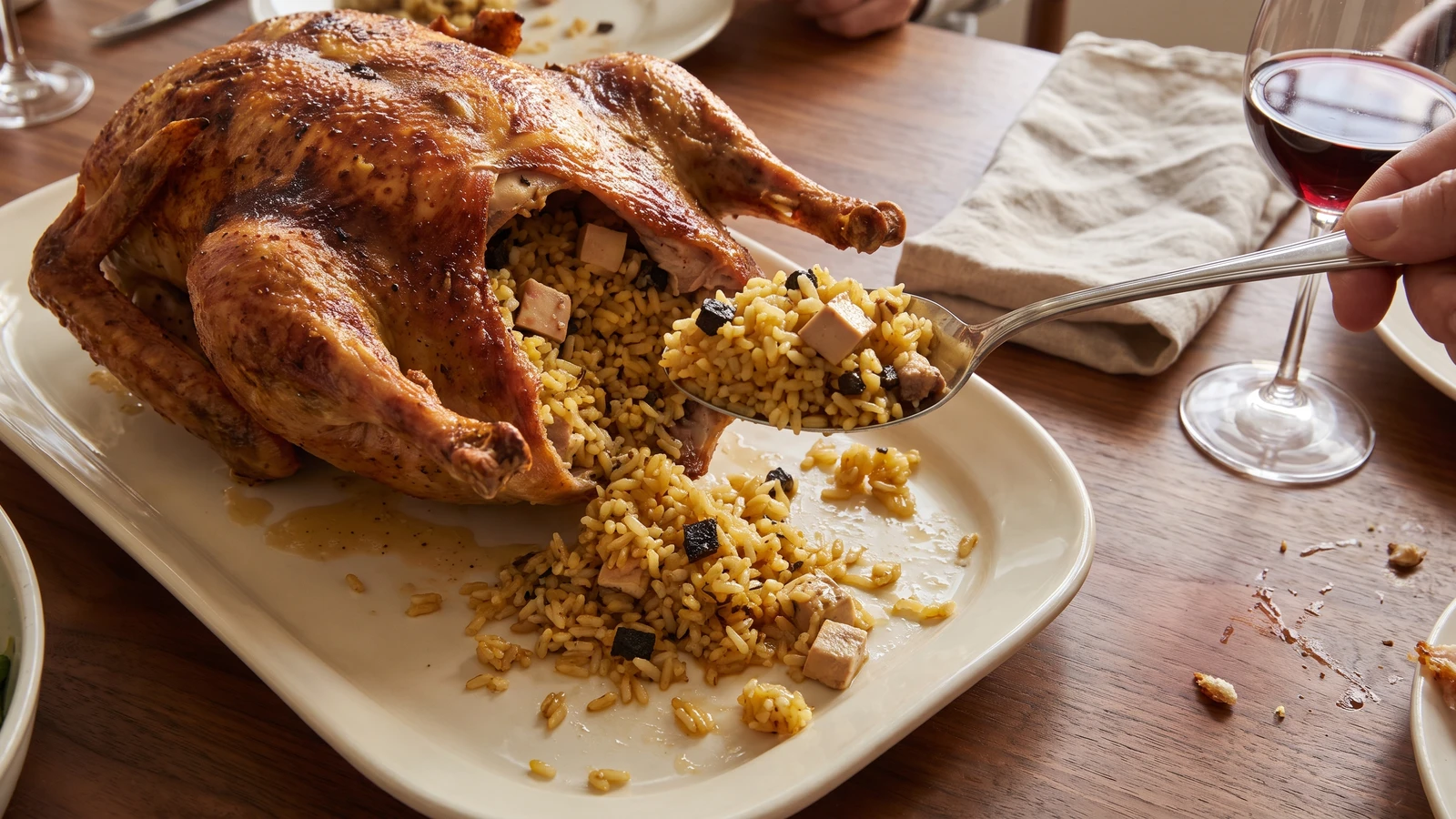
Riz pilaff enters the fowl deliberately undercooked, then finishes on cream and roasting juices, each grain carrying rich dice of foie gras and black truffle without collapsing into paste.
Riz pilaff pour farcir les volailles (pilaff rice for stuffing fowl) teaches one rule that feels backward until you taste the result: the rice must enter the bird only three-parts cooked. Tender rice before stuffing becomes paste. A firm white heart leaves each grain room to drink cream and roasting juices while the fowl finishes.
The original formula assumed a saucier tending pilaff by the quart, a stockpot never off the fire, and enough hands to move everything directly from saucepan to roast. At home, one lidded saucepan, measured light stock, and a tray for stopping the cooking do the same work. I have scaled the prescribed four ounces each of foie gras and truffle per quart of finished rice to three ounces each for about three cups, and fixed the book's "little cream" at three tablespoons, enough to moisten without flooding. Brigade batch production is scaffolding and goes; the equal dice, real cream, and deliberately unfinished rice are the dish and stay.
The finished pilaff should be generous and separate-grained, ivory with cream, darkly freckled with truffle, and enriched by foie gras that softens into the rice without vanishing entirely. One cook, one stove, one evening. The step that decides everything is stopping the rice while a firm white point remains at its center.
Riz pilaff entered the French classical repertoire through the grand kitchens of Paris, which adapted the separate-grained rice method carried from Persia through the Ottoman table into a standard garnish and stuffing. This foie gras and truffle variation belongs to formal roast-poultry service rather than to one French province, its richness marking a special-occasion table. Cooking the rice only three-parts is not ceremonial fuss; it leaves the grain able to absorb cream and roasting juices inside the fowl without collapsing.
Quantity
2 tablespoons (30 ml / 28 g)
Quantity
1, about 1/4 cup (60 ml / 40 g)
very finely diced
Quantity
1 cup (240 ml / 185 g)
rinsed and thoroughly drained
Quantity
1 1/4 cups (300 ml / 300 g), plus up to 2 tablespoons (30 ml / 30 g) if needed
hot
Quantity
1/2 teaspoon (2.5 ml / 3 g)
Quantity
1/8 teaspoon (0.6 ml / 0.3 g)
Quantity
3 tablespoons (45 ml / 45 g)
Quantity
about 1/2 cup (120 ml / 85 g; 3 ounces)
well chilled and cut into 1/3-inch dice
Quantity
about 1/2 cup (120 ml / 85 g; 3 ounces)
drained if preserved and cut into 1/3-inch dice
Quantity
1, weighing 5 to 6 pounds (2.3 to 2.7 kg)
| Ingredient | Quantity |
|---|---|
| unsalted butter | 2 tablespoons (30 ml / 28 g) |
| small shallotvery finely diced | 1, about 1/4 cup (60 ml / 40 g) |
| long-grain white ricerinsed and thoroughly drained | 1 cup (240 ml / 185 g) |
| light chicken stockhot | 1 1/4 cups (300 ml / 300 g), plus up to 2 tablespoons (30 ml / 30 g) if needed |
| fine sea salt | 1/2 teaspoon (2.5 ml / 3 g) |
| ground white pepper | 1/8 teaspoon (0.6 ml / 0.3 g) |
| heavy cream | 3 tablespoons (45 ml / 45 g) |
| raw duck or goose foie graswell chilled and cut into 1/3-inch dice | about 1/2 cup (120 ml / 85 g; 3 ounces) |
| fresh black truffle or whole preserved black truffledrained if preserved and cut into 1/3-inch dice | about 1/2 cup (120 ml / 85 g; 3 ounces) |
| oven-ready fowl, seasoned and prepared for roasting | 1, weighing 5 to 6 pounds (2.3 to 2.7 kg) |
Rinse the rice until the water is nearly clear, drain it thoroughly, and leave it in the sieve for 10 minutes. Wet rice spits in butter and takes its liquid unevenly. Keep the foie gras cold while you cut it, and make the foie gras and truffle dice the same size so each spoonful carries the original equal proportion.
Melt the butter in a 2-quart heavy saucepan over medium-low heat. Add the shallot and cook gently for 2 to 3 minutes, until translucent but not colored. Add the drained rice and nacrer it, coating the grains in butter until they look pearly at the edges and make a faint dry rustle against the pan. This coating helps the grains remain distinct.
Pour in the hot stock, then add the salt and white pepper. Bring it to a bare simmer, stir once, cover tightly, and lower the heat. Cook for 8 minutes before tasting a grain, then check every minute. Stop when the outside is tender but the center still holds a small, firm white point, usually after 10 to 12 minutes. The liquid should be nearly absorbed. If the grain is hard throughout, add 1 tablespoon of hot stock, cover, and cook 2 minutes more. If it is only a shade too tender, spread it immediately and chill it for 10 minutes, then use only 2 tablespoons of cream. Ça se rattrape. Rice that is fully tender should be served as pilaff beside the bird, not packed inside it.
Tip the rice onto a rimmed tray and fold in the cream while the grains are still hot. Spread the rice into a shallow layer and let it shed its fierce heat for about 10 minutes. It should be warm, not hot, when the foie gras enters. Fold in the chilled foie gras and truffle with a flexible spatula, turning gently so the grains stay whole. If the foie gras begins to smear, stop and refrigerate the tray for 10 minutes before continuing.
Fill the prepared fowl immediately before it goes into the oven. Spoon the pilaff loosely into the body cavity, filling it no more than two-thirds full and never pressing it down; the firm rice still needs room to swell. Roast at 375°F (190°C) according to the bird's preparation, beginning to check a 5 to 6 pound fowl after about 1 hour 25 minutes.
Continue roasting until both the thickest part of the thigh and the center of the stuffing register at least 165°F (74°C), commonly 1 hour 30 minutes to 1 hour 50 minutes for a bird of this size. Trust the thermometer, not the clock. If the bird is ready before the pilaff reaches temperature, transfer the stuffing to a covered ovenproof dish and finish it in the oven. Rest the bird for 15 minutes, then spoon out the pilaff while its grains are glossy and separate, the cream absorbed and the foie gras tender. À table!
1 serving (about 440g)
Culinary guides, cultural storytelling, and the editorial depth that makes cooking meaningful.
Discover Culinary ExplorerChef Juliette
Boulettes au suif, poached beside salt beef, turn equal weights of flour and finely chopped suet into tender, rich dumplings. Keep the beef liquor at a bare tremble and the old garnish works beautifully at home.

Chef Juliette
Bread, flour, frangipane, and rice become four cool, supple panades for binding forcemeats, each changing body and flavor while preserving tenderness. The finest Mousselines need none, and knowing that distinction is the lesson.

Chef Juliette
Panade au pain is bread, milk, salt, heat, and attention: stir until the paste releases cleanly, butter it against a skin, and you have the quiet binder behind tender French farces.

Chef Juliette
Panade de farine teaches the drying stroke behind pâte à choux: flour meets boiling buttered water, then stays over the fire until the paste gathers, smooths, and quits the pan cleanly.