Chef Juliette
Suet Dumpling
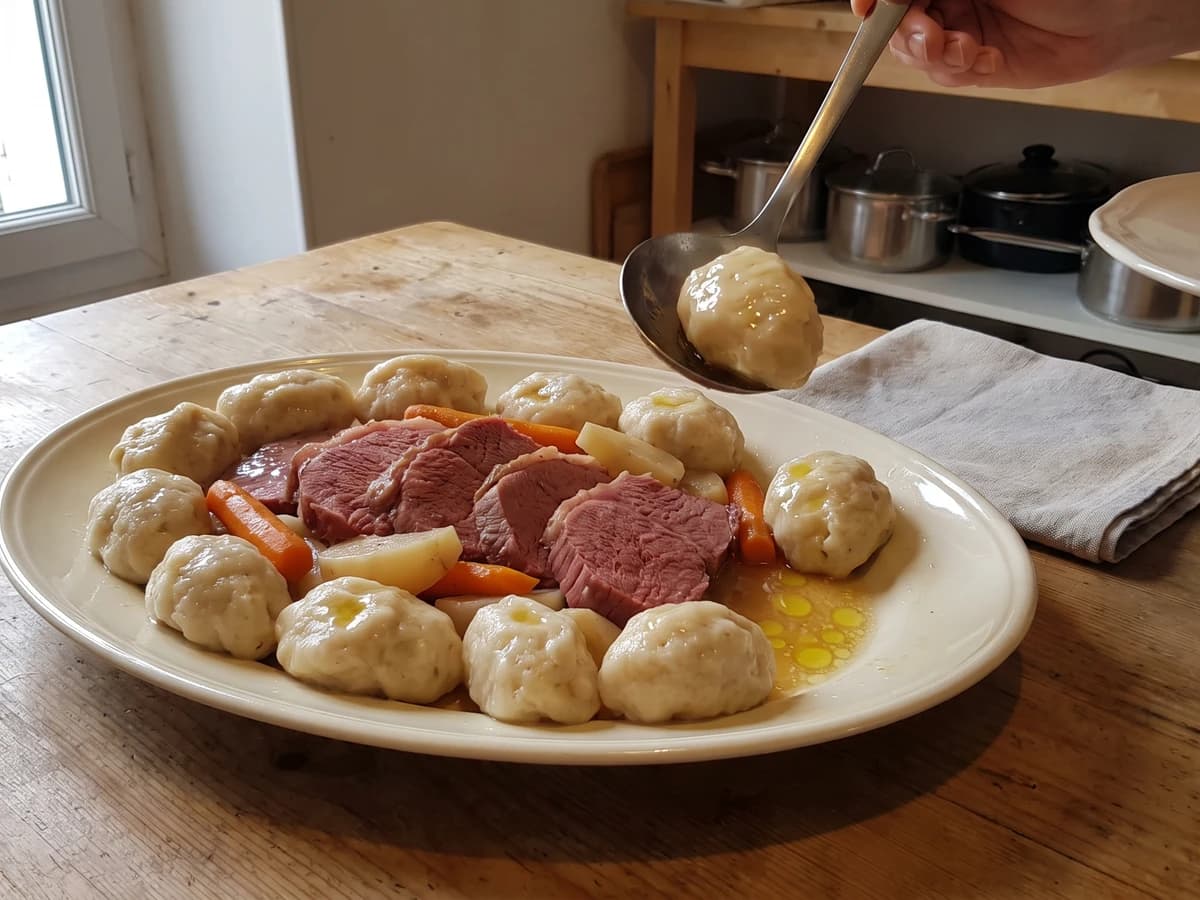
Boulettes au suif, poached beside salt beef, turn equal weights of flour and finely chopped suet into tender, rich dumplings. Keep the beef liquor at a bare tremble and the old garnish works beautifully at home.
A cooking platform built around craft, culture, and the stories behind what we eat.
Created by Chef Juliette
Based on No. 2254, Riz à l’Indienne, from Le Guide Culinaire (1907) by Auguste Escoffier
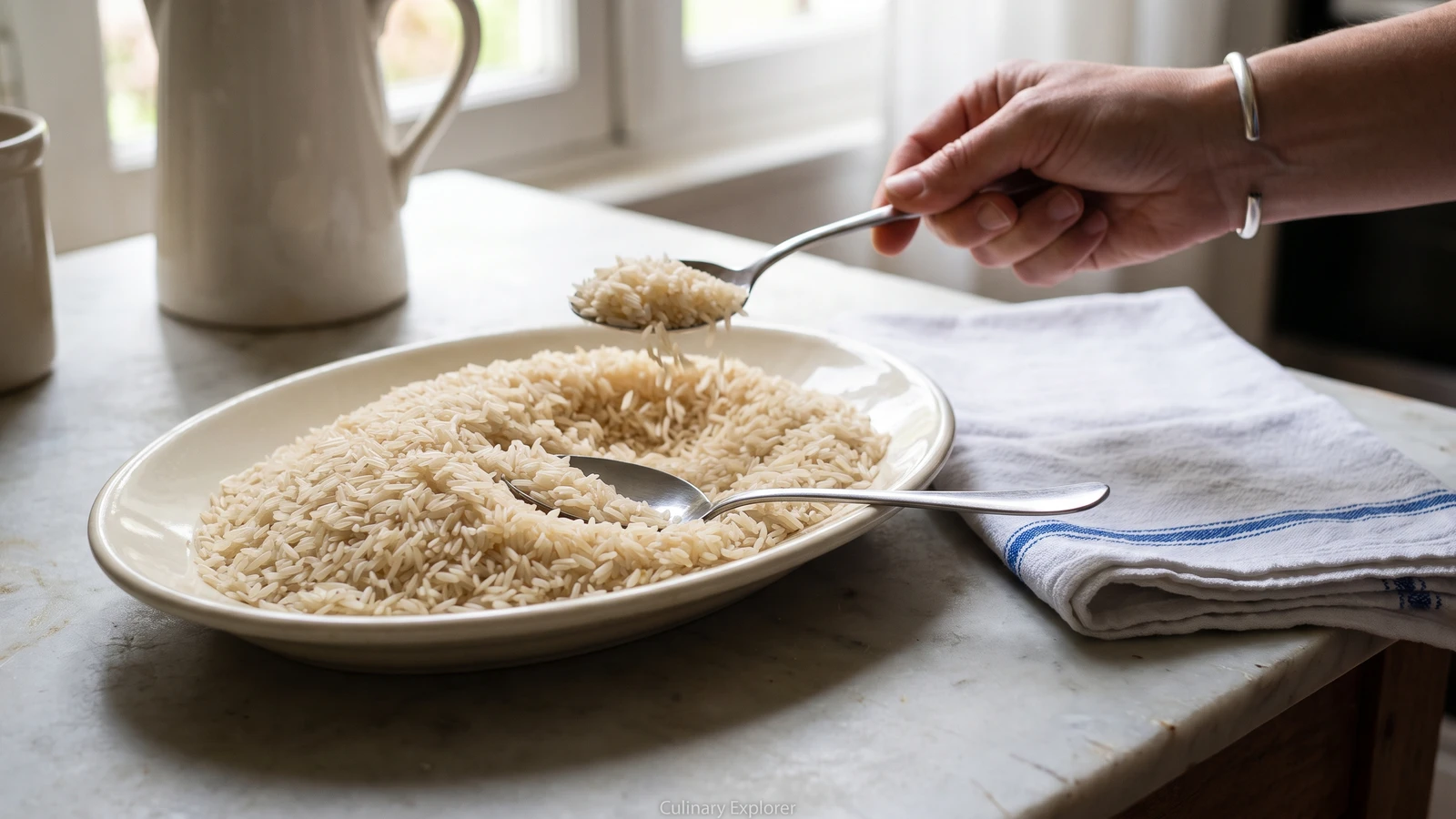
Patna rice, boiled freely, washed until the water stays clear, then dried low and gentle. The washing is the dish: do it properly and every grain arrives light, dry, and separate.
Riz à l’Indienne (Patna rice boiled, washed, and dried) teaches one severe little truth: the washing is the dish. Boiling cooks the grain, but several cold waters strip away the loose starch that would otherwise glue those grains together. Skip that, and no clever drying will save the texture.
The book assumed a professional kitchen could lay half a pound of rice on a napkin over a sieve, then send it to a steamer or very moderate oven without interrupting service. At home, a fine-mesh sieve, a clean cotton towel, and a parchment-lined tray in a low oven do the same work with less apparatus. The original half-pound quantity already serves four as a side, so it needs no false reduction: no stock, no butter, and no perfume added, because this entry is about the grain itself. One cook, one stove, one evening.
The brigade’s napkin and steamer are scaffolding; cold washing and gentle drying are not. Wash until fresh water stays clear around the rice, then drain it patiently before it reaches the oven. If the grains still cling, keep washing. Ça se rattrape.
Riz à l’Indienne belongs to the French classical service of rice, shaped by imported Patna rice from Bihar, whose long, slender grains were prized for remaining separate. French kitchens codified it as a garnish for curries and richly sauced dishes, boiling in abundant water, washing away the surface starch, and drying before service. The title describes that French table tradition; it should not be mistaken for a complete portrait of any single Indian regional rice preparation.
Quantity
1¼ cups (8 oz / 225 g)
Quantity
8 cups (1.9 L / 1.9 kg), plus more cold water as needed for washing
Quantity
2 teaspoons (10 ml / 12 g)
| Ingredient | Quantity |
|---|---|
| Patna rice | 1¼ cups (8 oz / 225 g) |
| water | 8 cups (1.9 L / 1.9 kg), plus more cold water as needed for washing |
| fine sea salt | 2 teaspoons (10 ml / 12 g) |
Heat the oven to 250°F (120°C). Line a rimmed baking sheet with parchment and set a clean, lint-free cotton towel beside it. Fit a fine-mesh sieve inside a large bowl, ready for the several cold washes that decide the dish.
Bring the measured water and salt to a full boil in a large saucepan. Add the Patna rice without rinsing it first, return the water to the boil, and cook uncovered for 15 minutes, stirring gently two or three times so no grains settle on the bottom. At the end, a grain should be tender without a hard, chalky centre and should still hold its long shape. If the centre remains firm, give it another minute, then test again.
Drain the rice immediately into the sieve. Fill the bowl around it with cold water and move the grains gently with your fingertips, then lift the sieve, discard the cloudy water, and repeat with fresh water. Continue until the water remains clear and the rice is completely cool, usually three or four washes. If two grains pressed together feel slick or cling, the washing is not finished. Ça se rattrape: give them another clean bath, because clinging rice needs more washing, not more oven heat.
Let the washed rice drain for 2 minutes, then turn it onto the clean towel in a shallow layer. Fold the towel loosely over the rice and press without crushing, removing as much surface water as possible. Transfer the grains to the parchment-lined sheet, spread them evenly, and dry in the low oven for 15 minutes. Lift them through once with a fork halfway through. The rice is ready when the grains separate freely and feel dry at the surface without browning. If soft clumps remain, tease them apart and return the tray for 5 minutes; if the tips begin to turn brittle, lower the heat and cover the rice loosely with parchment.
Run a fork lightly through the rice, lifting rather than stirring, and transfer it to a warm serving dish. Serve at once beside a dish with enough sauce to meet it at the table. The rice should remain pale, light, and entirely separate. Cooking well is not cooking fancy. À table!
1 serving (about 150g)
Culinary guides, cultural storytelling, and the editorial depth that makes cooking meaningful.
Discover Culinary ExplorerChef Juliette
Boulettes au suif, poached beside salt beef, turn equal weights of flour and finely chopped suet into tender, rich dumplings. Keep the beef liquor at a bare tremble and the old garnish works beautifully at home.

Chef Juliette
Bread, flour, frangipane, and rice become four cool, supple panades for binding forcemeats, each changing body and flavor while preserving tenderness. The finest Mousselines need none, and knowing that distinction is the lesson.

Chef Juliette
Panade au pain is bread, milk, salt, heat, and attention: stir until the paste releases cleanly, butter it against a skin, and you have the quiet binder behind tender French farces.

Chef Juliette
Panade de farine teaches the drying stroke behind pâte à choux: flour meets boiling buttered water, then stays over the fire until the paste gathers, smooths, and quits the pan cleanly.