Chef Juliette
Suet Dumpling
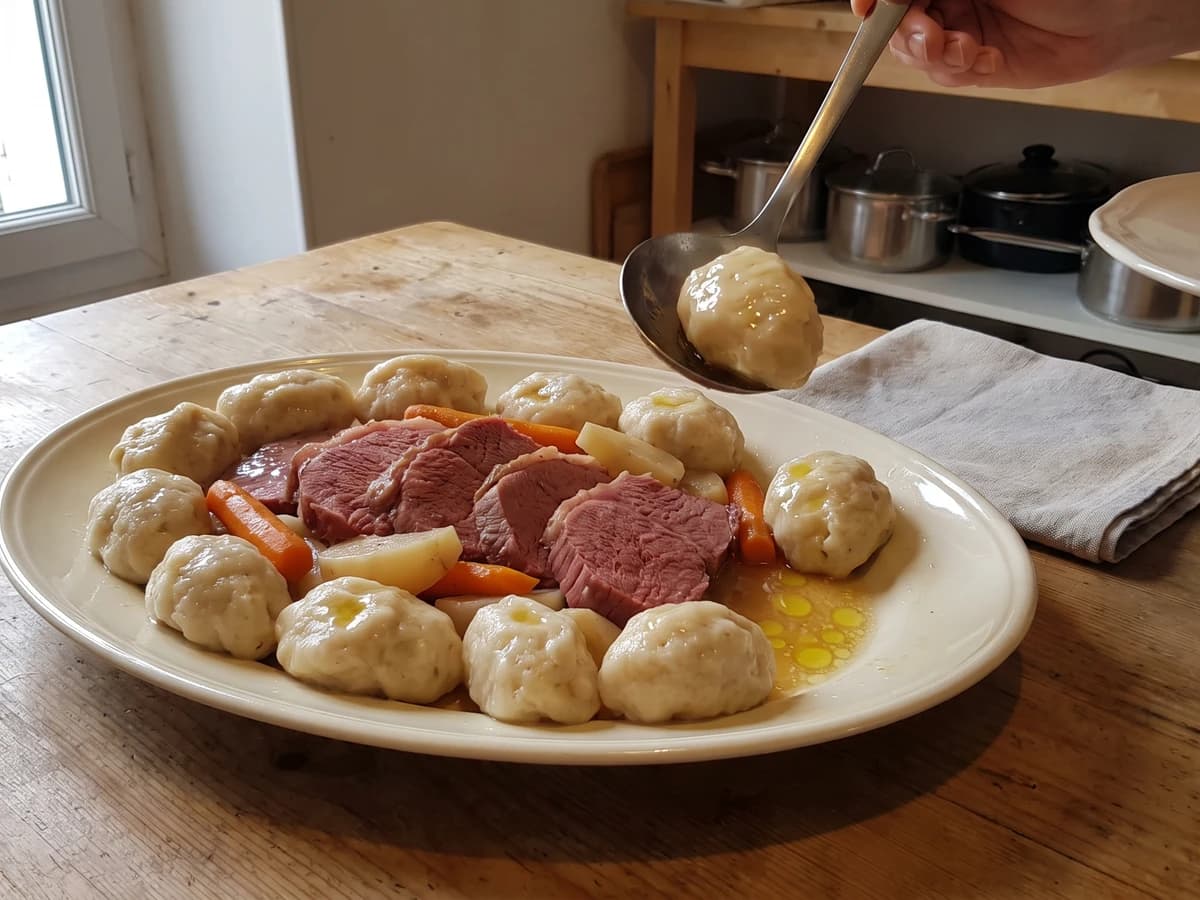
Boulettes au suif, poached beside salt beef, turn equal weights of flour and finely chopped suet into tender, rich dumplings. Keep the beef liquor at a bare tremble and the old garnish works beautifully at home.
A cooking platform built around craft, culture, and the stories behind what we eat.
Created by Chef Juliette
Based on No. 2251, Riz au Blanc (for Fowls and Eggs), from Le Guide Culinaire (1907) by Auguste Escoffier
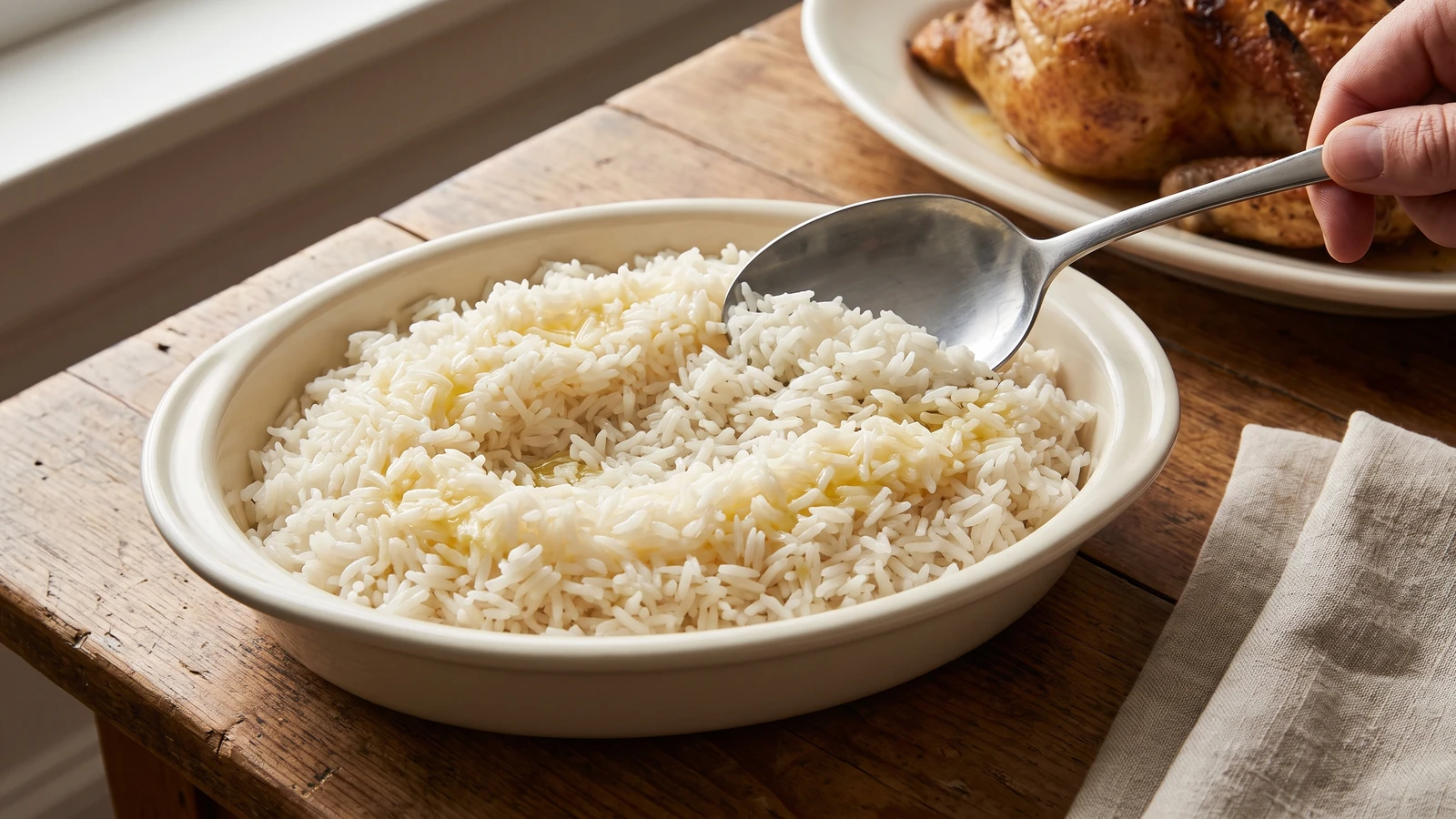
Riz au Blanc proves that plain rice is a technique, not an absence: parboil it in abundant salted water, drain it dry, then let butter and low oven heat separate every tender grain.
Riz au Blanc (plain white rice for fowl and eggs) teaches one true thing: separate grains depend on removing excess water before the butter goes in. Washing clears loose starch, parboiling cooks the grain evenly, and the covered oven finish leaves it tender, glossy, and loose enough to carry the sauce from a fowl or egg dish without becoming paste.
The original entry assumed a saucepan, a separate sauté pan, and a cook who understood a “moderate oven” without being given a temperature. Unlike grander preparations, it asks for no saucier, permanent stockpot, or salamander. The honest home translation is a saucepan, a shallow ovenproof skillet with a lid, and an oven set to 325°F (165°C). Its half-pound of rice already gives four generous side portions, so the proportions remain exactly as written. The measured oven temperature is what changed, because modern ovens permit precision where the old kitchen relied on instinct.
There is no brigade scaffolding to discard here. The transfer into a shallow pan is part of the dish, since it spreads the rice so butter and dry oven heat can reach every grain. Drain it thoroughly before that transfer. Wet rice clumps, but if moisture follows it into the skillet, ça se rattrape: dry it briefly over low heat before covering the pan.
Riz au blanc belongs to the French classical service table rather than to one region: it was prepared as a restrained garnish for poultry and egg dishes whose accompanying sauce supplied the stronger character. Classical kitchens treated rice by several distinct methods, and this one uses abundant water followed by buttered oven drying, not the absorbed-liquid method of a pilaf. Here blanc signals rice kept white and unseasoned beyond salt and butter, not rice without technique; the separate grain is the measure of the cook.
Quantity
1¼ cups (300 ml / 227 g)
Quantity
8 cups (1.9 L / 1.9 kg)
Quantity
2 teaspoons (10 ml / 12 g)
Quantity
5 tablespoons (75 ml / 71 g)
cut into small pieces
| Ingredient | Quantity |
|---|---|
| Carolina Gold or regular long-grain white rice | 1¼ cups (300 ml / 227 g) |
| cold water | 8 cups (1.9 L / 1.9 kg) |
| fine salt | 2 teaspoons (10 ml / 12 g) |
| unsalted buttercut into small pieces | 5 tablespoons (75 ml / 71 g) |
Heat the oven to 325°F (165°C), with a rack in the middle. Put the rice in a bowl, cover it with cold water, and move the grains gently through your fingers. Drain and repeat until the water is only lightly cloudy, usually three or four changes. Washing removes loose surface starch, which would otherwise bind the grains together during the oven finish.
Put the washed rice in a 3-quart saucepan with the cold water and salt. Bring it to a boil uncovered over high heat, then lower the heat enough to maintain a steady but not violent boil. Parboil for 15 minutes, stirring once near the beginning to release any grains caught on the bottom. At the end, the outside of a grain should be tender while its center retains a faint point of firmness.
Pour the rice into a fine-mesh sieve or colander and let it drain for 2 full minutes, shaking the sieve gently once or twice. Do not rinse it again. This is the step that decides the dish: water left among the grains turns to a starchy film under the lid. If the rice still drips when you shake it, wait another minute. Patience, not squeezing.
Transfer the drained rice to a 10-inch ovenproof sauté pan or shallow 2-quart casserole. Scatter the small pieces of butter over and through it, then mix lightly with a fork, lifting from beneath instead of stirring in circles. The butter should coat the grains without crushing them. If moisture pools in the pan, set it over low heat for 1 to 2 minutes and lift the rice gently with the fork until the liquid disappears. Ça se rattrape.
Cover the pan tightly and place it in the oven for 15 minutes. Lift the lid and run a fork lightly through the rice. The grains should be tender, separate, and ivory-white, with a fine butter sheen but no browning. If a grain remains chalky at its center, sprinkle over 1 tablespoon (15 ml / 15 g) hot water, cover, and return the pan to the oven for 5 minutes. Serve at once beside sauced fowl or eggs. À table!
1 serving (about 180g)
Culinary guides, cultural storytelling, and the editorial depth that makes cooking meaningful.
Discover Culinary ExplorerChef Juliette
Boulettes au suif, poached beside salt beef, turn equal weights of flour and finely chopped suet into tender, rich dumplings. Keep the beef liquor at a bare tremble and the old garnish works beautifully at home.

Chef Juliette
Bread, flour, frangipane, and rice become four cool, supple panades for binding forcemeats, each changing body and flavor while preserving tenderness. The finest Mousselines need none, and knowing that distinction is the lesson.

Chef Juliette
Panade au pain is bread, milk, salt, heat, and attention: stir until the paste releases cleanly, butter it against a skin, and you have the quiet binder behind tender French farces.

Chef Juliette
Panade de farine teaches the drying stroke behind pâte à choux: flour meets boiling buttered water, then stays over the fire until the paste gathers, smooths, and quits the pan cleanly.