Chef Juliette
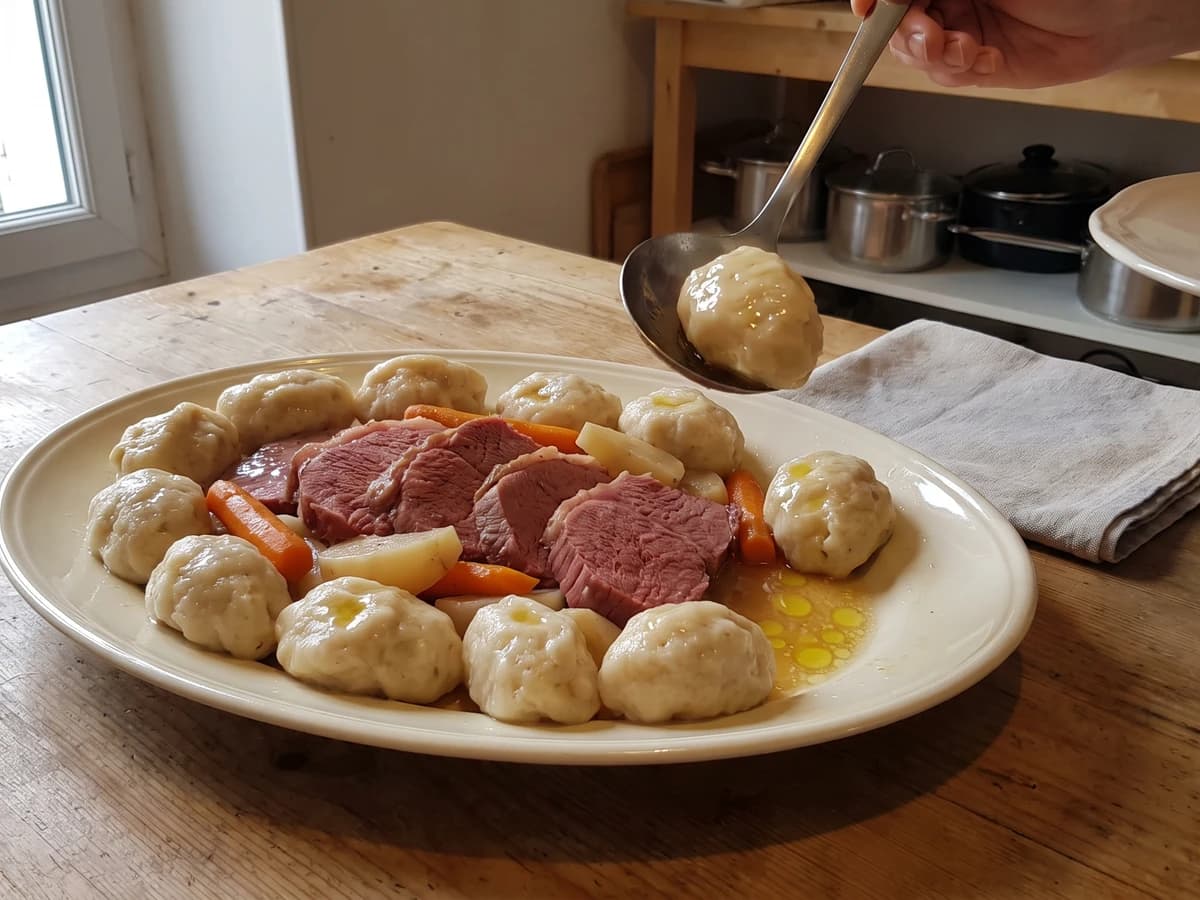
Suet Dumpling
Boulettes au suif, poached beside salt beef, turn equal weights of flour and finely chopped suet into tender, rich dumplings. Keep the beef liquor at a bare tremble and the old garnish works beautifully at home.
A cooking platform built around craft, culture, and the stories behind what we eat.
Created by Chef Juliette
Based on No. 2237, Pommes de Terre Parisienne, from Le Guide Culinaire (1907) by Auguste Escoffier
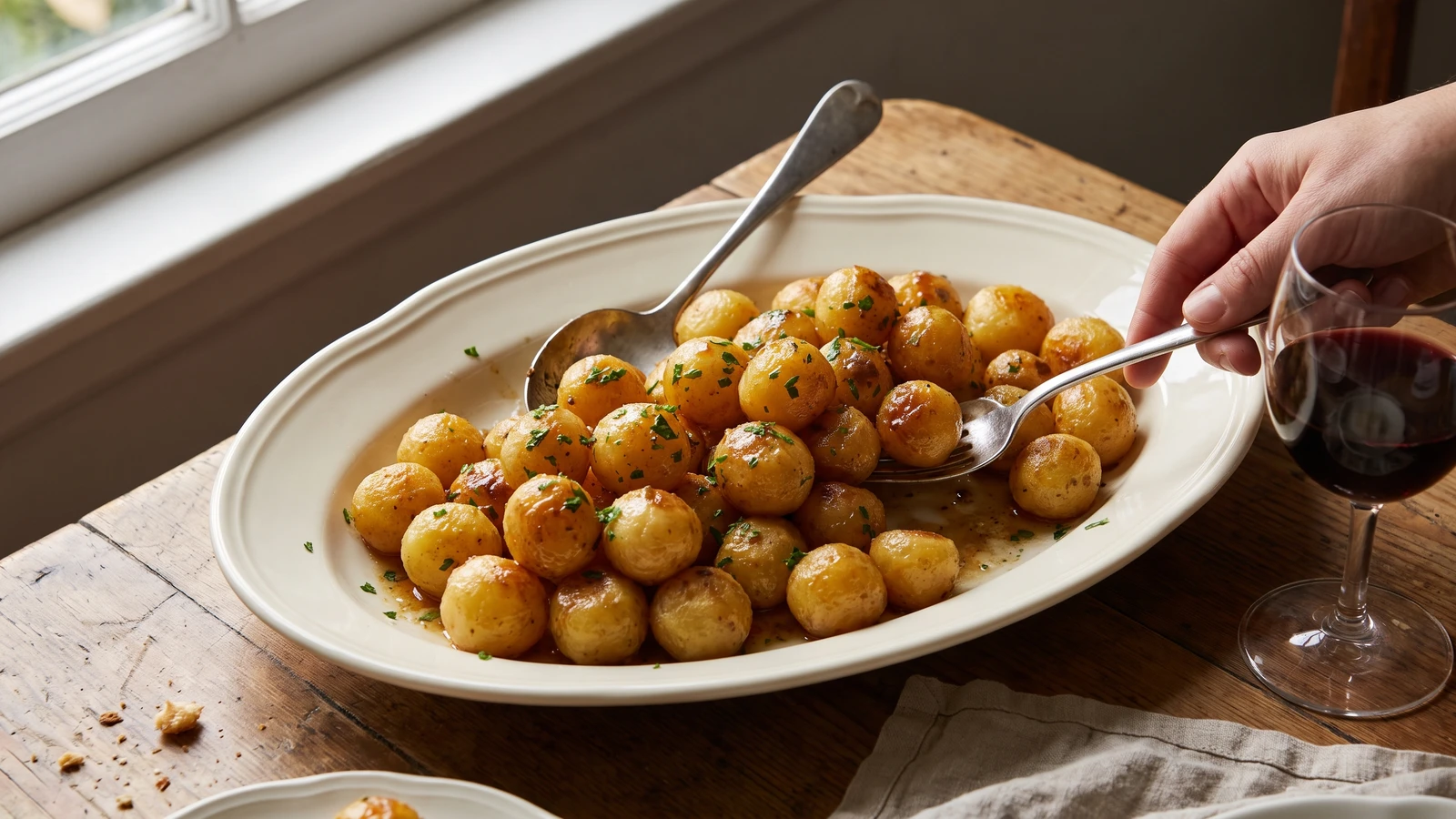
Pommes de Terre Parisienne turn disciplined shaping into pleasure: tiny butter-bronzed potato balls rolled in fluid meat glaze, brightened with parsley, and served while every surface still gleams.
Pommes de Terre Parisienne (small glazed potato balls) teach one exact lesson: the glace de viande must be melted and fluid before it touches the potatoes. Thick glaze clings in dark patches; flowing glaze rolls around each smaller-than-noisette sphere and leaves it lacquered, not burdened.
The source entry assumes a tray of noisette-cut potatoes already underway, a saucier with meat glaze at hand, and a stockpot never off the fire. At home, use the small end of a melon baller and three spoonfuls of properly reduced glace de viande. A brigade's bulk shaping and separate sauce station are scaffolding, so they go; the small even cut, clarified-butter cooking, and final roll in glaze are the dish, so they stay. One cook, one stove, one evening.
Use large potatoes, because broad, unblemished flesh gives the scoop room to turn, and save the trimmings for a potage. Cook the balls until tender and bronze before the glaze enters, then keep that glaze loose and the parsley green. The step that decides the dish is the final rolling: fluid glaze, gentle heat, constant motion.
Pommes de Terre Parisienne belong to the codified garnish work of Paris, where a potato preparation is defined by its shape, cooking, and finish rather than by a romantic regional story. This entry distinguishes them from the noisette family by making the balls smaller and rolling them after cooking in glace de viande with parsley, so the name marks a precise service garnish rather than a potato variety. The preparation traveled from grand kitchens into the cuisine bourgeoise dinner table, where it remains especially suited to roasted beef, veal, and game.
Quantity
4 large, about 2 lb (900 g)
Quantity
5 tablespoons (75 ml / 71 g), yielding about 4 tablespoons clarified butter (60 ml / 56 g), or 4 tablespoons prepared clarified butter (60 ml / 56 g)
clarified, unless already prepared
Quantity
3 tablespoons (45 ml / 50 g)
preferably unsalted
Quantity
Up to 1 tablespoon (15 ml / 15 g)
Quantity
2 tablespoons (30 ml / 8 g)
finely chopped
Quantity
1 teaspoon (5 ml / 6 g), divided
| Ingredient | Quantity |
|---|---|
| large floury or all-purpose potatoes | 4 large, about 2 lb (900 g) |
| unsalted butterclarified, unless already prepared | 5 tablespoons (75 ml / 71 g), yielding about 4 tablespoons clarified butter (60 ml / 56 g), or 4 tablespoons prepared clarified butter (60 ml / 56 g) |
| glace de viandepreferably unsalted | 3 tablespoons (45 ml / 50 g) |
| hot water (optional) | Up to 1 tablespoon (15 ml / 15 g) |
| flat-leaf parsleyfinely chopped | 2 tablespoons (30 ml / 8 g) |
| fine sea salt | 1 teaspoon (5 ml / 6 g), divided |
If you're starting with whole butter, melt it over the lowest heat without stirring. Skim away the white foam, then pour or spoon the clear golden fat into a small bowl, leaving the milky sediment behind; you need about 4 tablespoons (60 ml). Clarified butter keeps its clean flavor while the potatoes cook long enough to become tender and bronze. If you're using prepared clarified butter, warm it just until liquid.
Peel and rinse the potatoes. Press a 3/4-inch (19 mm) Parisienne scoop or melon baller deeply into a broad face of each potato, then turn it through a complete circle to release a neat ball. Keep the balls in cold water as you work and reserve the trimmings for soup or mash; only the brigade needed to pretend those useful scraps didn't exist. You should finish with about 1 lb (450 to 500 g) of balls. Rinse them once, drain thoroughly, and dry them between clean towels. A wet surface spatters and refuses to bronze.
Warm the clarified butter in a wide, heavy skillet over medium heat. Add the dry potato balls in one uncrowded layer, season with half the salt, and roll them through the butter. Cook for 5 to 7 minutes, shaking the pan every minute, until pale gold appears across several sides. Lower the heat to medium-low, cover loosely, and continue cooking for 10 to 15 minutes, shaking often so the balls color evenly. Uncover for the final few minutes and cook until deeply butter-gold and tender at the center when pierced with a fine knife. If they brown before they soften, lower the heat immediately, cover for 3 to 5 minutes, and keep them moving; once tender, uncover briefly to dry the surface again.
While the potatoes finish cooking, place the glace de viande in a small saucepan over the gentlest heat. Stir until it is completely melted and falls from the spoon in a thin, glossy ribbon. Do not boil or reduce it. The glaze must be fluid, never thick; if it remains tacky, stir in hot water 1 teaspoon at a time until it flows readily but still tastes concentrated.
Drain away any excess clarified butter, leaving the potatoes in the warm skillet over the lowest heat. Pour in the fluid glace de viande and roll the balls constantly for 30 to 60 seconds, just until every one carries a thin, even lacquer. If the glaze tightens or gathers in sticky patches, pull the pan off the heat and add another teaspoon of hot water while rolling. Ça se rattrape. Remove the pan from the heat, scatter over the parsley, and roll once more so the green stays fresh. Taste before adding the remaining salt, transfer to a warm serving dish, and serve at once. À table!
1 serving (about 160g)
Culinary guides, cultural storytelling, and the editorial depth that makes cooking meaningful.
Discover Culinary ExplorerChef Juliette
Boulettes au suif, poached beside salt beef, turn equal weights of flour and finely chopped suet into tender, rich dumplings. Keep the beef liquor at a bare tremble and the old garnish works beautifully at home.

Chef Juliette
Bread, flour, frangipane, and rice become four cool, supple panades for binding forcemeats, each changing body and flavor while preserving tenderness. The finest Mousselines need none, and knowing that distinction is the lesson.

Chef Juliette
Panade au pain is bread, milk, salt, heat, and attention: stir until the paste releases cleanly, butter it against a skin, and you have the quiet binder behind tender French farces.

Chef Juliette
Panade de farine teaches the drying stroke behind pâte à choux: flour meets boiling buttered water, then stays over the fire until the paste gathers, smooths, and quits the pan cleanly.