Chef Juliette
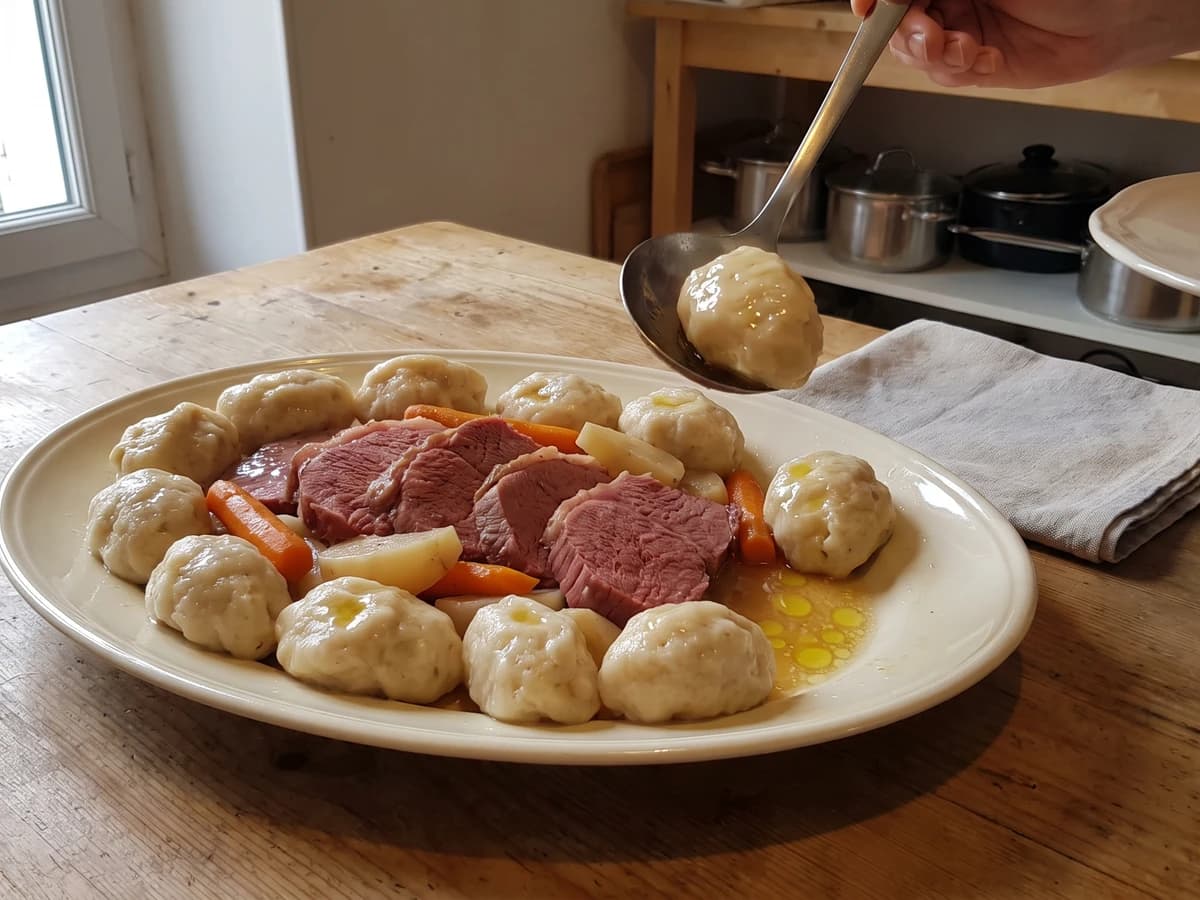
Suet Dumpling
Boulettes au suif, poached beside salt beef, turn equal weights of flour and finely chopped suet into tender, rich dumplings. Keep the beef liquor at a bare tremble and the old garnish works beautifully at home.
A cooking platform built around craft, culture, and the stories behind what we eat.
Created by Chef Juliette
Based on No. 2236, Pommes de Terre Noisettes, from Le Guide Culinaire (1907) by Auguste Escoffier
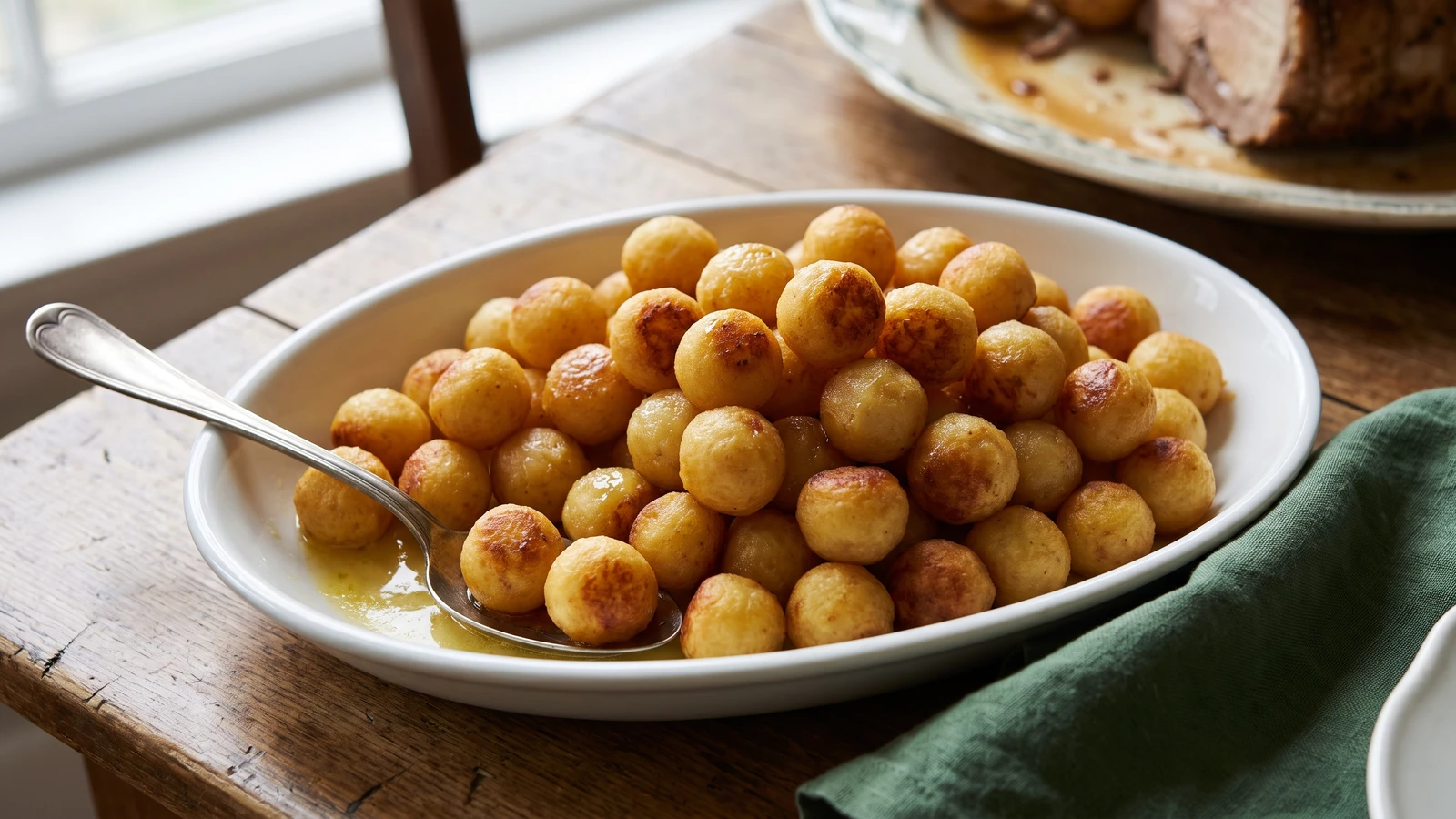
Uniform cutting is the lesson: small potato spheres rolled patiently in butter until every face is golden and the centre stays creamy, a precise classical garnish made for a generous home table.
Pommes de terre noisettes (hazelnut-sized potato balls cooked in butter) teach one lesson before anything meets the pan: every ball must be the same size. When the cut is exact, the noisettes bronze together and their centres turn creamy together; when it isn't, the small ones harden while the large ones remain raw. C'est la même grammaire as any classical potato garnish: the cut controls the cooking.
The original recipe assumed a commis shaping brigade quantities with a round spoon-cutter, clarified butter already waiting beside the stove, and enough pans to prevent crowding. Here, that quantity becomes four servings, and the implied clarified butter is prepared before the potatoes enter the skillet. Those are the only changes. Tubs of ready-cut potatoes and extra hands were brigade scaffolding; uniform spheres and patient cooking in real butter are the dish. One cook, one stove, one evening.
The finished noisettes should be butter-gold on every side, with a delicate set surface and a centre that yields like a small baked potato. Before you heat the pan, make the balls equal; that shaping is the step that decides the dish.
Pommes de terre noisettes belong to the classical garnish repertoire organized in the grand kitchens of Paris, where a potato preparation was defined as precisely by its cut and cooking method as by its seasoning. From formal service they passed naturally to the cuisine bourgeoise table, particularly beside roasted and sautéed meats. Noisette means hazelnut and describes the size, not the flavour; the name calls for neither hazelnuts nor beurre noisette (hazelnut-brown butter).
Quantity
4 large, about 3 pounds (1.35 kg)
peeled
Quantity
10 tablespoons (150 ml / 142 g)
divided
Quantity
1¼ teaspoons (6 ml / 7 g)
divided
Quantity
⅛ teaspoon (0.6 ml / 0.3 g)
| Ingredient | Quantity |
|---|---|
| large floury potatoes, such as russetpeeled | 4 large, about 3 pounds (1.35 kg) |
| unsalted butterdivided | 10 tablespoons (150 ml / 142 g) |
| fine sea saltdivided | 1¼ teaspoons (6 ml / 7 g) |
| ground white pepper | ⅛ teaspoon (0.6 ml / 0.3 g) |
Set aside 2 tablespoons (30 ml / 28 g) of the butter in the cold. Melt the remaining 8 tablespoons (120 ml / 113 g) gently in the skillet without stirring. Skim away the white foam, then pour the clear golden fat into a heatproof cup, leaving the milky sediment behind. Wipe the skillet clean. The original instruction simply says butter because a classical kitchen kept clarified butter ready; making it now prevents the milk solids from burning before the raw potatoes become creamy.
Fill a bowl with cold water. Using an 18 to 20 mm cuillère parisienne (round spoon-cutter), press deeply into each potato and rotate through a complete circle to release a sphere. Work in close rows and aim for about 1½ pounds (680 g) of finished noisettes. Measure the first few against one another, then keep that exact size. Flat-sided scraps and undersized pieces cook at a different rate, so save them for a purée or potage rather than slipping them into this pan.
Swish the noisettes in the cold water, drain them, and rinse once more to remove loose surface starch. Spread them between two clean towels and dry them thoroughly, rolling them gently under your palms so no wet patches remain. Wet potatoes spit in butter and resist browning; dry surfaces begin forming colour as soon as they touch the pan.
Heat the clarified butter in the clean 30 cm skillet over medium heat until it flows freely and glistens. Add the noisettes in a single uncrowded layer, then season with half the salt and the white pepper. Leave them untouched for 4 minutes to establish the first golden faces. Roll the pan, or turn the noisettes with two spoons, and cook for another 6 minutes, turning every 2 minutes. If a potato clings to the pan, don't tear it loose; give it another minute, because a properly formed crust releases by itself.
Reduce the heat to medium-low and continue rolling the noisettes through the butter every 2 minutes until they are evenly golden and a thin skewer slips through the largest one without resistance, 10 to 14 minutes. If they darken before their centres soften, lower the heat, cover the skillet for 2 to 3 minutes, then uncover and roll them until the surfaces are dry and golden again. Ça se rattrape. The brief cover finishes the centres; removing it restores the surface.
Add the reserved cold butter and the remaining salt. Roll the noisettes through the foaming butter for 1 to 2 minutes, until every sphere gleams and no pale face remains. Taste one: the surface should have a delicate golden firmness, while the centre should be creamy and fully tender. Lift them into a warmed serving dish with a slotted spoon and bring them to the table immediately. We don't apologize for butter. À table!
1 serving (about 300g)
Culinary guides, cultural storytelling, and the editorial depth that makes cooking meaningful.
Discover Culinary ExplorerChef Juliette
Boulettes au suif, poached beside salt beef, turn equal weights of flour and finely chopped suet into tender, rich dumplings. Keep the beef liquor at a bare tremble and the old garnish works beautifully at home.

Chef Juliette
Bread, flour, frangipane, and rice become four cool, supple panades for binding forcemeats, each changing body and flavor while preserving tenderness. The finest Mousselines need none, and knowing that distinction is the lesson.

Chef Juliette
Panade au pain is bread, milk, salt, heat, and attention: stir until the paste releases cleanly, butter it against a skin, and you have the quiet binder behind tender French farces.

Chef Juliette
Panade de farine teaches the drying stroke behind pâte à choux: flour meets boiling buttered water, then stays over the fire until the paste gathers, smooths, and quits the pan cleanly.