Chef Juliette
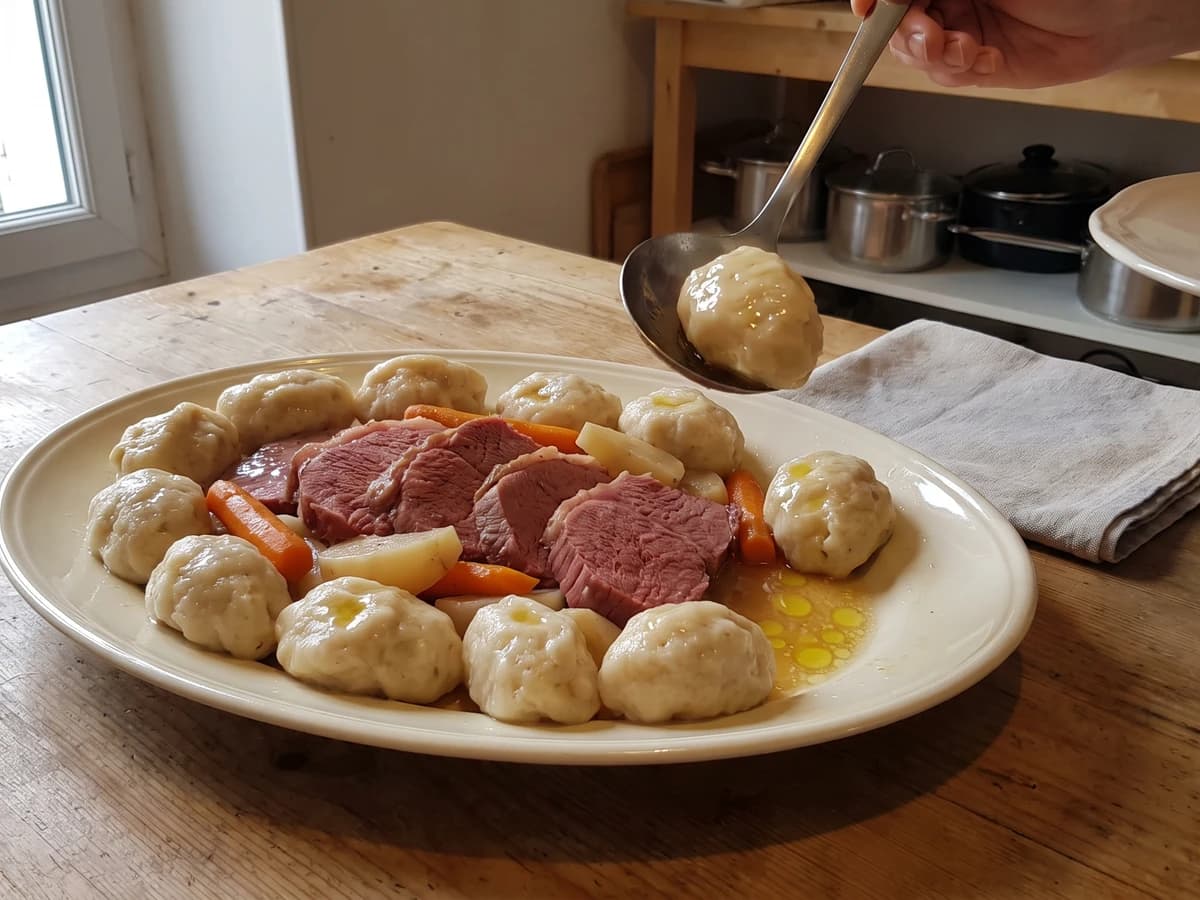
Suet Dumpling
Boulettes au suif, poached beside salt beef, turn equal weights of flour and finely chopped suet into tender, rich dumplings. Keep the beef liquor at a bare tremble and the old garnish works beautifully at home.
A cooking platform built around craft, culture, and the stories behind what we eat.

Created by Chef Juliette
Based on No. 2233, Pommes de Terre Mireille, from Le Guide Culinaire (1907) by Auguste Escoffier
Raw potato roundels sautéed slowly in butter, joined at the last moment by buttery artichoke bottoms and generous black truffle: a precise lesson in cooking each element fully before the final toss.
Pommes de Terre Mireille (butter-sautéed potato roundels with artichoke and truffle) teaches a small but essential discipline: the final sauté is for assembly, not cooking. The potato rounds must already be tender and bronzed, the artichoke bottoms already cooked and buttered, before the truffle joins them. Ask the last toss to finish any one component and the others pay for it.
The professional formula assumed cooked artichoke bottoms waiting in the mise en place, truffle trimmed and sliced, two sauté pans, and a timbale held warm for service. It needed no saucier, stockpot, or salamander. At home, plain frozen or canned artichoke bottoms replace the station's prepared ones, two ordinary skillets do the sauté work, and a deep warmed bowl stands in for the formal timbale. The original ratio stays untouched: four ounces of artichoke and one and a half ounces of truffle for each pound of potato, scaled here for four. The station prep is scaffolding and can go; separate cooking and the final toss are the dish, and they stay. One cook, one stove, one evening.
When Mireille is right, each round keeps its shape, its face butter-gold and its center yielding; pale artichoke slices and black truffle move through the potatoes without disappearing into them. Butter is the foundation, browning gives it depth, and no sauce belongs here. Cook every potato round through before the mixture comes together. That is the one step that decides the dish.
Pommes de Terre Mireille belongs to the codified grand-kitchen repertoire centered on Paris, where precisely cut potatoes became formal accompaniments through disciplined sauté work and carefully proportioned garnishes. The name Mireille carries a Provençal literary echo, but this formula is not a village potato dish from Provence: its cooked artichoke bottoms, abundant truffle, and timbale presentation speak the service language of the formal French table. The final sauté was deliberately brief, meant to marry prepared components beside roast meat or poultry rather than cook them from the beginning.
Quantity
1 pound (454 g / about 3 cups or 710 ml)
peeled and cut crosswise into 3/16-inch (5 mm) roundels
Quantity
4 ounces (113 g / about 3/4 cup or 180 ml)
drained, dried, and sliced
Quantity
1 1/2 ounces (43 g / scant 1/4 cup or 55 ml)
brushed clean or drained, then thinly sliced
Quantity
6 tablespoons (90 ml / 85 g)
divided
Quantity
1 teaspoon (5 ml / 6 g)
divided
Quantity
1/4 teaspoon (1.25 ml / 0.6 g)
| Ingredient | Quantity |
|---|---|
| medium waxy potatoes, such as Charlotte or Yukon Goldpeeled and cut crosswise into 3/16-inch (5 mm) roundels | 1 pound (454 g / about 3 cups or 710 ml) |
| plain cooked artichoke bottomsdrained, dried, and sliced | 4 ounces (113 g / about 3/4 cup or 180 ml) |
| fresh black truffle or whole preserved black trufflebrushed clean or drained, then thinly sliced | 1 1/2 ounces (43 g / scant 1/4 cup or 55 ml) |
| unsalted butterdivided | 6 tablespoons (90 ml / 85 g) |
| fine sea saltdivided | 1 teaspoon (5 ml / 6 g) |
| freshly ground black pepper | 1/4 teaspoon (1.25 ml / 0.6 g) |
Warm a deep timbale-style serving bowl with hot water, then set it aside. Pat the cooked artichoke bottoms thoroughly dry and slice them about 3/16 inch (5 mm) thick. Slice the truffle thinly and keep it covered. Prepare the potatoes last so they do not discolor, dry the roundels well, and season them just before cooking with three-quarters of the salt and all the pepper. Wet potato steams and sticks; a dry surface lets the butter bronze it.
Heat a wide 12-inch skillet over medium heat and add 2 tablespoons of the butter. When the butter foams actively without darkening, arrange half the potato roundels in one uncrowded layer. Sauté them for 10 to 12 minutes, turning as their undersides become butter-gold, until both faces are bronzed and a small knife slips through the centers without resistance. Transfer them to a warm plate and repeat with another 2 tablespoons of butter and the remaining potatoes. If the faces brown while the centers remain firm, lower the heat, cover the pan for 60 to 90 seconds, then uncover and let the trapped moisture cook away before continuing. Ça se rattrape.
While the second potato batch cooks, melt 1 tablespoon of the butter in a smaller skillet over medium heat. Add the sliced cooked artichoke bottoms and sauté for 3 to 4 minutes, tossing gently, until thoroughly hot, glossy, and lightly golden at the edges. They are already cooked; this step gives them butter and color. If they release liquid, let it evaporate completely before they rejoin the potatoes, since wet artichokes would soften the bronzed rounds.
Return all the potato rounds to the wide skillet over medium-low heat. Add the buttered artichoke bottoms, sliced truffle, remaining tablespoon of butter, and most of the reserved salt. Sauté the whole for only 60 to 90 seconds, shaking the pan and turning gently with two spatulas until the artichoke and truffle are distributed throughout. The potatoes and artichokes enter this final sauté fully cooked; it exists only to marry them. If the rounds begin to break, stop shaking and fold the mixture once or twice with the spatulas.
Taste and add the last of the salt if needed. Empty and dry the warmed serving bowl, then spoon in the Mireille without packing it down, leaving several truffle slices visible among the butter-glossed rounds. Bring it to the table immediately, while the edges are still crisp and the truffle is most fragrant. À table!
1 serving (about 155g)
Culinary guides, cultural storytelling, and the editorial depth that makes cooking meaningful.
Discover Culinary ExplorerChef Juliette
Boulettes au suif, poached beside salt beef, turn equal weights of flour and finely chopped suet into tender, rich dumplings. Keep the beef liquor at a bare tremble and the old garnish works beautifully at home.

Chef Juliette
Bread, flour, frangipane, and rice become four cool, supple panades for binding forcemeats, each changing body and flavor while preserving tenderness. The finest Mousselines need none, and knowing that distinction is the lesson.

Chef Juliette
Panade au pain is bread, milk, salt, heat, and attention: stir until the paste releases cleanly, butter it against a skin, and you have the quiet binder behind tender French farces.

Chef Juliette
Panade de farine teaches the drying stroke behind pâte à choux: flour meets boiling buttered water, then stays over the fire until the paste gathers, smooths, and quits the pan cleanly.