Chef Juliette
Suet Dumpling
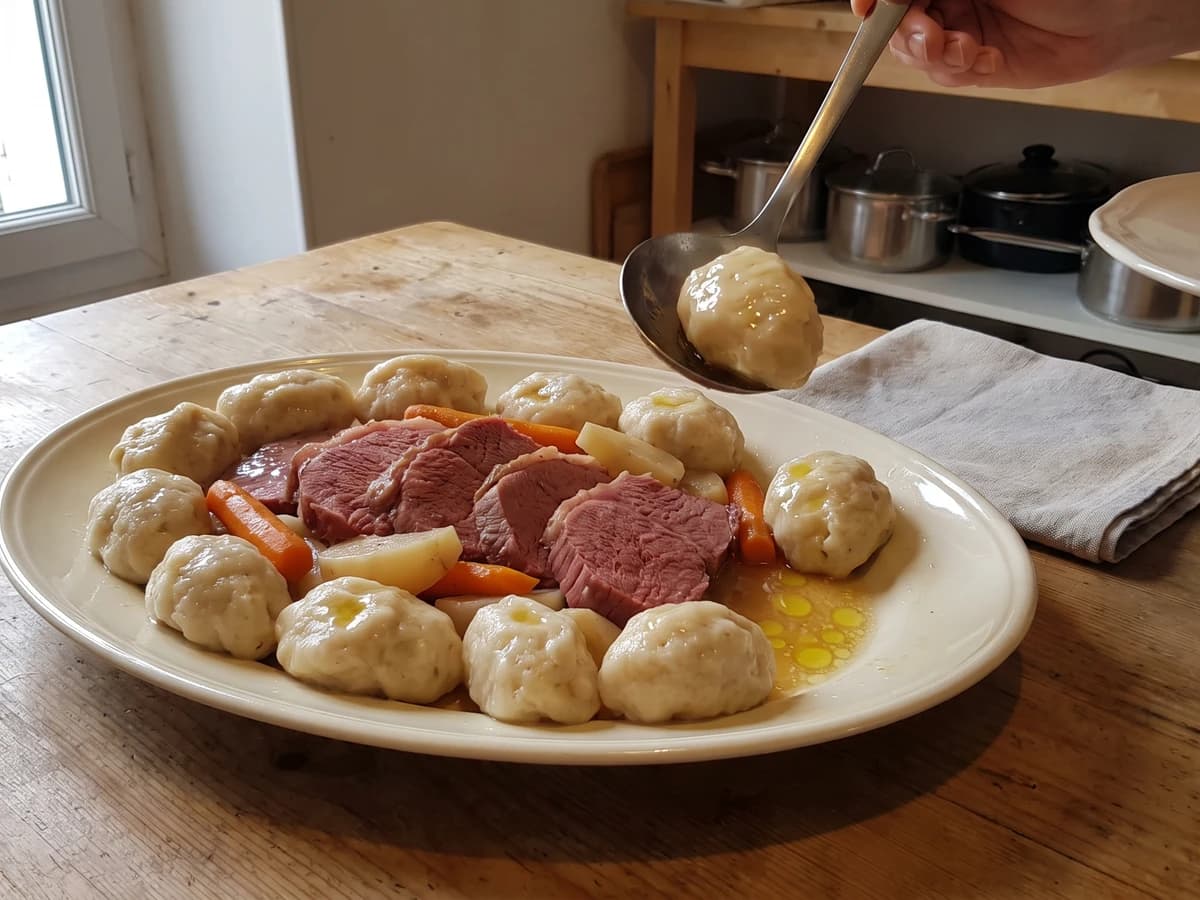
Boulettes au suif, poached beside salt beef, turn equal weights of flour and finely chopped suet into tender, rich dumplings. Keep the beef liquor at a bare tremble and the old garnish works beautifully at home.
A cooking platform built around craft, culture, and the stories behind what we eat.
Created by Chef Juliette
Based on No. 2230, Pommes de Terre à la Maître-d’Hôtel, from Le Guide Culinaire (1907) by Auguste Escoffier
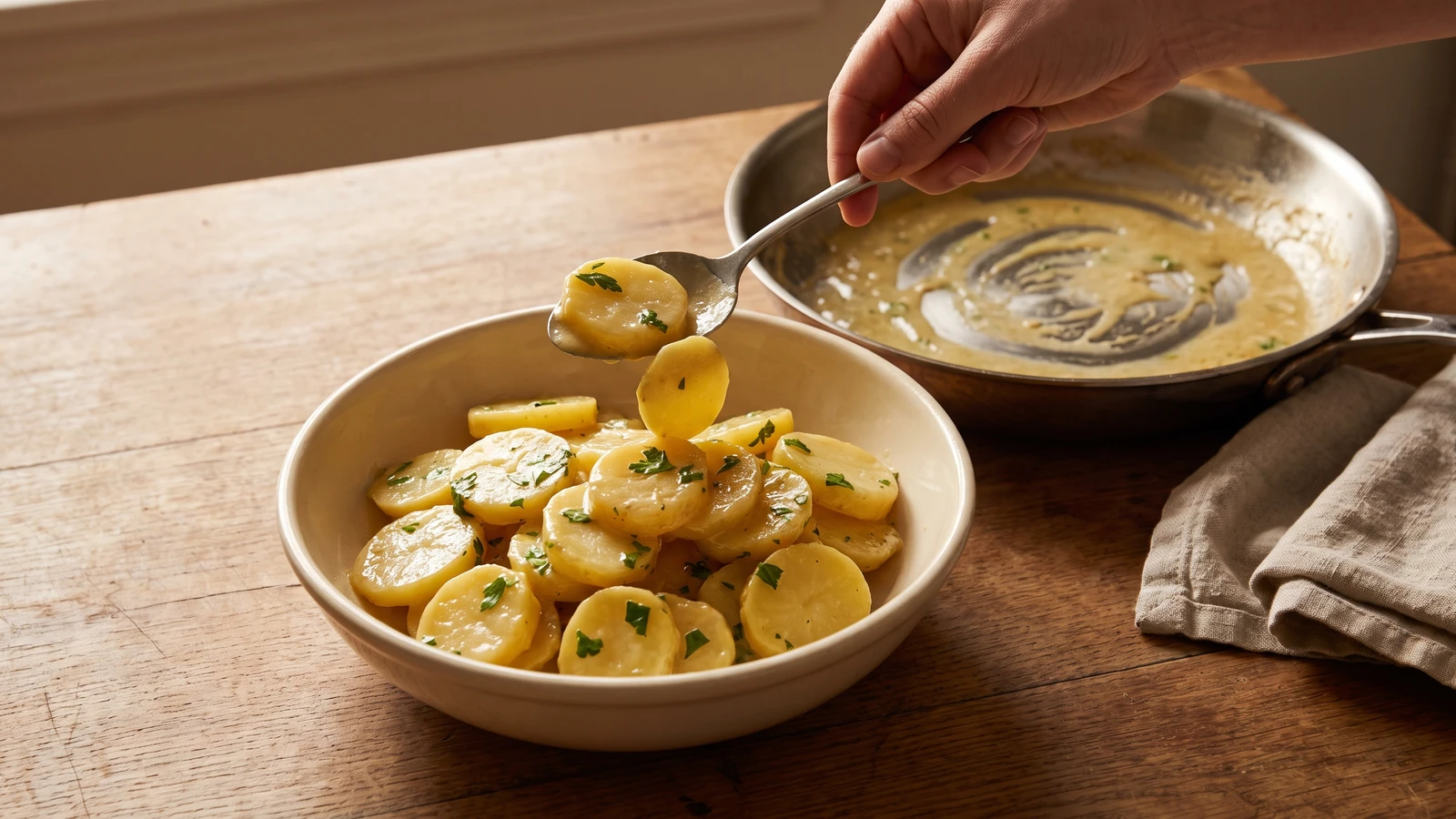
Hot waxy potato roundels drink in boiling milk until the pan turns nearly dry, then parsley cuts through their pale richness. A spare classical side whose success rests on heat, timing, and restraint.
Pommes de Terre à la Maître-d’Hôtel (hot potato roundels reduced in milk and parsley) teaches continuity of heat. The potatoes leave their salted water cooked and hot, are peeled and cut before they cool, then meet milk at a boil. Keep that chain unbroken. It lets the milk reduce around tender slices instead of leaving cold potatoes stranded in a white puddle.
The brigade formula assumed a cook who could bring potatoes, boiling milk, and a warmed timbale together at the exact moment of service. It needed no saucier, perpetual stockpot, or salamander; synchronized hands and a formal serving vessel were its only scaffolding. At home, one saucepan, one small pan, a wide skillet, and a warmed serving bowl do the work for four. The old market description of Dutch potatoes becomes an ordinary waxy yellow potato because that is the reliable modern equivalent, and the timbale becomes a straight-sided bowl. Nothing else changes. There is no butter, lemon, or cream in this particular formula. One cook, one stove, one evening.
Watch the final reduction. The potatoes should remain whole while the milk disappears into a thin pearly film, with no loose liquid when you tilt the pan. If the slices soften before the milk is gone, lift them out and finish the reduction alone. Ça se rattrape. The reduction is the dish, and it is the one step that matters most.
Pommes de Terre à la Maître-d’Hôtel belongs to the national classical service repertoire rather than to one French province; the name points to the dining room and its maître d’hôtel, not to a regional potato variety. Although the better-known maître-d’hôtel garnish combines butter, parsley, and lemon, this potato formula follows a distinct method: hot roundels covered with boiling milk, reduced until dry, and finished with parsley alone. Its spare professional method passed naturally into cuisine bourgeoise because it requires timing and attention, not a brigade.
Quantity
1½ lb (680 g / about 5 medium)
scrubbed
Quantity
8 cups (1.9 L / 1.9 kg), or enough to cover by 1 inch (2.5 cm)
Quantity
1 tablespoon plus ½ teaspoon (17.5 ml / 21 g)
divided
Quantity
2 cups (475 ml / 490 g)
Quantity
¼ teaspoon (1.25 ml / 0.6 g)
finely ground
Quantity
¼ cup (60 ml / 15 g)
finely chopped
| Ingredient | Quantity |
|---|---|
| waxy yellow potatoesscrubbed | 1½ lb (680 g / about 5 medium) |
| cold water | 8 cups (1.9 L / 1.9 kg), or enough to cover by 1 inch (2.5 cm) |
| fine saltdivided | 1 tablespoon plus ½ teaspoon (17.5 ml / 21 g) |
| whole milk | 2 cups (475 ml / 490 g) |
| white pepperfinely ground | ¼ teaspoon (1.25 ml / 0.6 g) |
| flat-leaf parsleyfinely chopped | ¼ cup (60 ml / 15 g) |
Put the scrubbed, unpeeled potatoes in a 3-quart saucepan and add the cold water and 1 tablespoon of the salt. Bring steadily to a boil, then lower the heat to a gentle simmer. Cook until a small sharp knife enters the centre cleanly but the potatoes still hold their shape, 18 to 24 minutes after the simmer begins. Cracked skins and collapsing edges mean the boil is too fierce; lower the heat at once.
As the potatoes approach tenderness, pour the milk into a small saucepan and heat it gently, stirring across the bottom from time to time. Fill the serving bowl with hot tap water to warm it. Bring the milk just to a boil as the potatoes finish; if it rises toward the rim, lift the pan from the heat and lower the flame. A skin on top is harmless, so whisk it back into the milk.
Drain the potatoes immediately. Hold each one in a folded clean towel, remove the thin peel with a small knife, and cut it crosswise into roundels about ¼ inch (6 mm) thick. Work carefully but without dawdling, laying the hot slices directly into a wide 10-inch sauté pan. Their heat is part of the method. If a roundel breaks, keep it; a few imperfect pieces belong at a home table.
Pour the boiling milk over the hot potato roundels, then season with the remaining ½ teaspoon salt and the white pepper. Bring everything back to a controlled boil, immediately lower it to a lively simmer, and cook uncovered for 12 to 18 minutes. Shake the pan gently every few minutes and use a broad spatula only when a slice must be loosened; stirring with a spoon will turn the edges to paste. The milk is completely reduced when no liquid flows across the pan as you tilt it, though a thin ivory film should still cling to the potatoes. If the roundels become fully tender while loose milk remains, lift them into the warmed bowl, reduce the milk alone, then return the potatoes for one careful turn. Ça se rattrape. If you smell scorching, transfer the unburnt contents to a clean pan without scraping the bottom and continue over gentler heat.
Take the pan from the heat and scatter over the chopped parsley. Fold once, just enough to carry the green through the potatoes without breaking them. Empty and dry the warmed serving bowl, spoon in the roundels with every trace of the reduced milk, and serve at once. Add nothing else. À table!
1 serving (about 260g)
Culinary guides, cultural storytelling, and the editorial depth that makes cooking meaningful.
Discover Culinary ExplorerChef Juliette
Boulettes au suif, poached beside salt beef, turn equal weights of flour and finely chopped suet into tender, rich dumplings. Keep the beef liquor at a bare tremble and the old garnish works beautifully at home.

Chef Juliette
Bread, flour, frangipane, and rice become four cool, supple panades for binding forcemeats, each changing body and flavor while preserving tenderness. The finest Mousselines need none, and knowing that distinction is the lesson.

Chef Juliette
Panade au pain is bread, milk, salt, heat, and attention: stir until the paste releases cleanly, butter it against a skin, and you have the quiet binder behind tender French farces.

Chef Juliette
Panade de farine teaches the drying stroke behind pâte à choux: flour meets boiling buttered water, then stays over the fire until the paste gathers, smooths, and quits the pan cleanly.