Chef Juliette
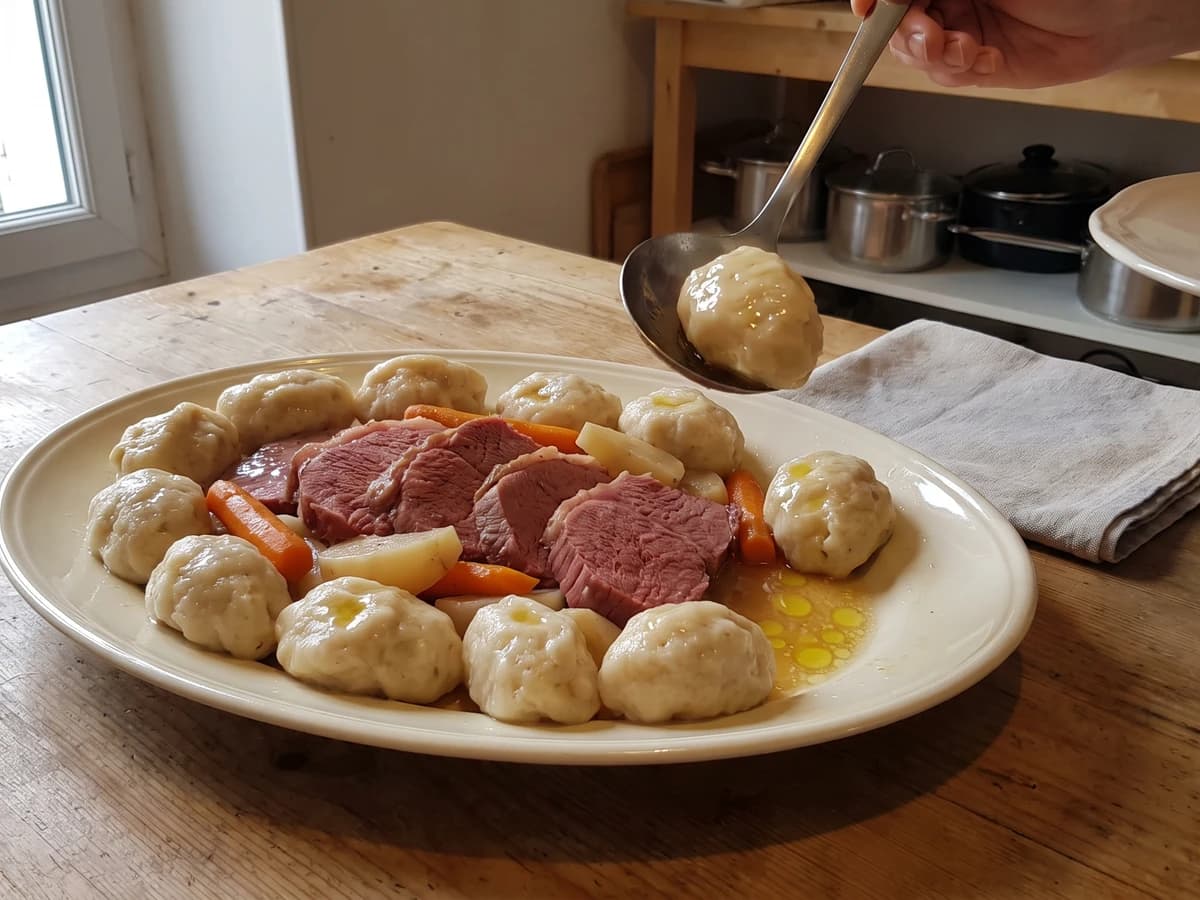
Suet Dumpling
Boulettes au suif, poached beside salt beef, turn equal weights of flour and finely chopped suet into tender, rich dumplings. Keep the beef liquor at a bare tremble and the old garnish works beautifully at home.
A cooking platform built around craft, culture, and the stories behind what we eat.
Created by Chef Juliette
Based on No. 2229, Pommes de Terre Maire, from Le Guide Culinaire (1907) by Auguste Escoffier
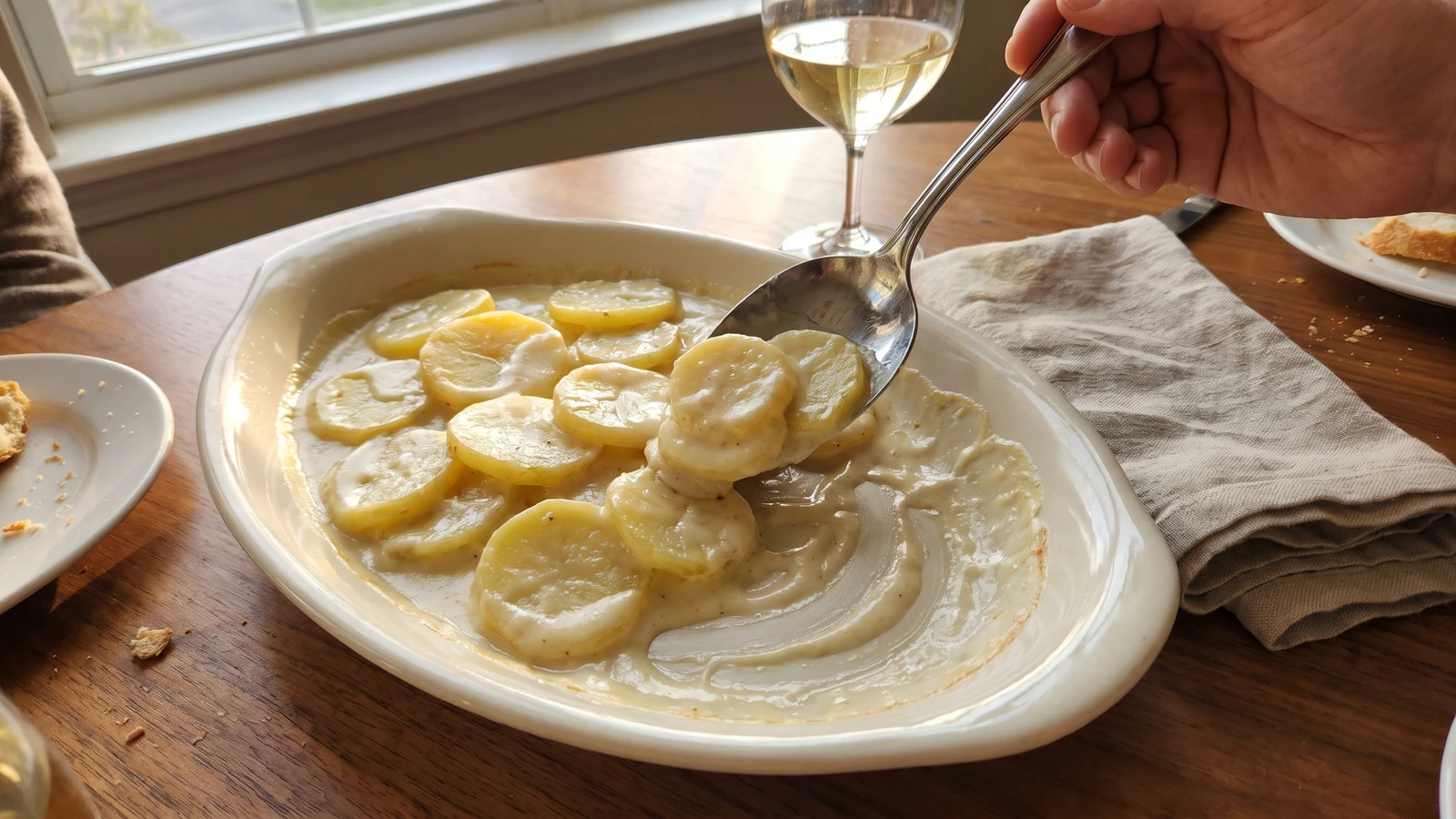
A quiet lesson in reduction: sliced boiled potatoes take up cream as it thickens, then a final uncooked spoonful restores the sauce's soft gloss, ready for roast chicken or veal.
Pommes de Terre Maire (potatoes in reduced cream) is a lesson in reduction, not richness for its own sake. The potatoes enter the pan already tender, so the cream's work is to concentrate around them until it clings without boiling the slices into collapse. Before you touch a pan, know this: the final two minutes decide the dish.
The book gives Maire the same treatment as Pommes à la Crème. Unlike entries that leaned on a saucier, a stock never off the fire, or a salamander, this one assumes only freshly boiled potatoes, a wide sauté pan, and a cook free to watch the reduction. At home, six potatoes and one broad skillet reproduce that quick evaporation honestly, scaled for four. One cook, one stove, one evening.
The brigade's holding pans and batch service are scaffolding, so they can go. Boiling the potatoes whole, slicing them evenly, reducing the cream patiently, and loosening it with uncooked cream are the dish, so those steps stay. Watch the sauce rather than the clock, and stop while it coats every slice but still moves.
Pommes de Terre Maire belongs to the codified Parisian grand-kitchen repertoire rather than to a named regional potato tradition. In that canon, Maire is not a distinct garnish: the entry sends the cook directly to Pommes à la Crème, preserving the same sequence of boiled slices, reduced cream, and fresh cream at the finish. The method passed naturally to the bourgeois home table because its refinement comes from watching a pan, not from specialized equipment.
Quantity
6 medium, about 2 pounds (900 g)
scrubbed and left unpeeled
Quantity
10 cups (2.4 L / 2.4 kg)
Quantity
1 tablespoon (15 ml / 18 g)
Quantity
1½ cups (360 ml / 355 g)
divide 1¼ cups for simmering and keep ¼ cup uncooked for finishing
Quantity
¾ teaspoon (3.75 ml / 4.5 g)
Quantity
⅛ teaspoon (0.6 ml / 0.3 g)
Quantity
⅛ teaspoon (0.6 ml / 0.25 g)
| Ingredient | Quantity |
|---|---|
| waxy potatoesscrubbed and left unpeeled | 6 medium, about 2 pounds (900 g) |
| cold water | 10 cups (2.4 L / 2.4 kg) |
| fine sea salt for the cooking water | 1 tablespoon (15 ml / 18 g) |
| heavy creamdivide 1¼ cups for simmering and keep ¼ cup uncooked for finishing | 1½ cups (360 ml / 355 g) |
| fine sea salt | ¾ teaspoon (3.75 ml / 4.5 g) |
| freshly ground white pepper | ⅛ teaspoon (0.6 ml / 0.3 g) |
| freshly grated nutmeg | ⅛ teaspoon (0.6 ml / 0.25 g) |
Put the scrubbed potatoes in a 4-quart saucepan with the cold water and the tablespoon of salt. Bring slowly to a boil, then lower the heat immediately and simmer gently for 20 to 25 minutes. They are ready when a thin knife reaches the centre cleanly but the skins remain intact. Don't let them tumble in a hard boil; split skins admit water and give the cream a sodden potato. If one begins to crack, test the others at once and lift out each potato as it becomes tender.
Drain the potatoes and leave them uncovered for 5 minutes so their surface moisture escapes. Peel them while still warm, then cut them across into even ¼-inch (6 mm) slices. Work with a thin, sharp knife and lift the slices rather than pushing them into a heap. If an over-tender potato begins to crumble, let it cool for 10 minutes and cut it slightly thicker. Ça se rattrape. Do not rinse the slices, because their surface starch helps the cream cling.
Pour 1¼ cups (300 ml / 296 g) of the cream into a wide 11- to 12-inch sauté pan. Add the fine salt, white pepper, and nutmeg, then bring the cream just to a gentle simmer. Lay in the warm potato slices, no more than two layers deep, and simmer for 6 to 8 minutes. Shake the pan often and turn the slices once with a flexible spatula; stirring with a spoon breaks them. The cream is ready when it has reduced by roughly half, coats each slice, and leaves a slow-closing trail across the pan. If it tightens before the potatoes are evenly coated, take the pan off the heat and shake in 1 tablespoon (15 ml / 15 g) of the reserved cold cream. Ça se rattrape.
Take the pan off the heat and fold in the remaining reserved cream, about 3 tablespoons (45 ml / 44 g), by gently shaking the pan. This is the raw cream of the original method: cream kept uncooked until the finish, not a requirement to buy unpasteurized dairy. It should loosen the reduction into a soft, glossy coating with a little sauce gathering beneath the potatoes. Taste, adjust the seasoning only if needed, and transfer everything to a warm shallow serving dish. Serve immediately. À table!
1 serving (about 290g)
Culinary guides, cultural storytelling, and the editorial depth that makes cooking meaningful.
Discover Culinary ExplorerChef Juliette
Boulettes au suif, poached beside salt beef, turn equal weights of flour and finely chopped suet into tender, rich dumplings. Keep the beef liquor at a bare tremble and the old garnish works beautifully at home.

Chef Juliette
Bread, flour, frangipane, and rice become four cool, supple panades for binding forcemeats, each changing body and flavor while preserving tenderness. The finest Mousselines need none, and knowing that distinction is the lesson.

Chef Juliette
Panade au pain is bread, milk, salt, heat, and attention: stir until the paste releases cleanly, butter it against a skin, and you have the quiet binder behind tender French farces.

Chef Juliette
Panade de farine teaches the drying stroke behind pâte à choux: flour meets boiling buttered water, then stays over the fire until the paste gathers, smooths, and quits the pan cleanly.