Culinary Explorer

A cooking platform built around craft, culture, and the stories behind what we eat.
Discover Culinary Explorer
Pommes de Terre à la Lyonnaise

Pommes de Terre à la Lyonnaise

Created by Chef Juliette

Based on No. 2227, Pommes de Terre à la Lyonnaise, from Le Guide Culinaire (1907) by Auguste Escoffier

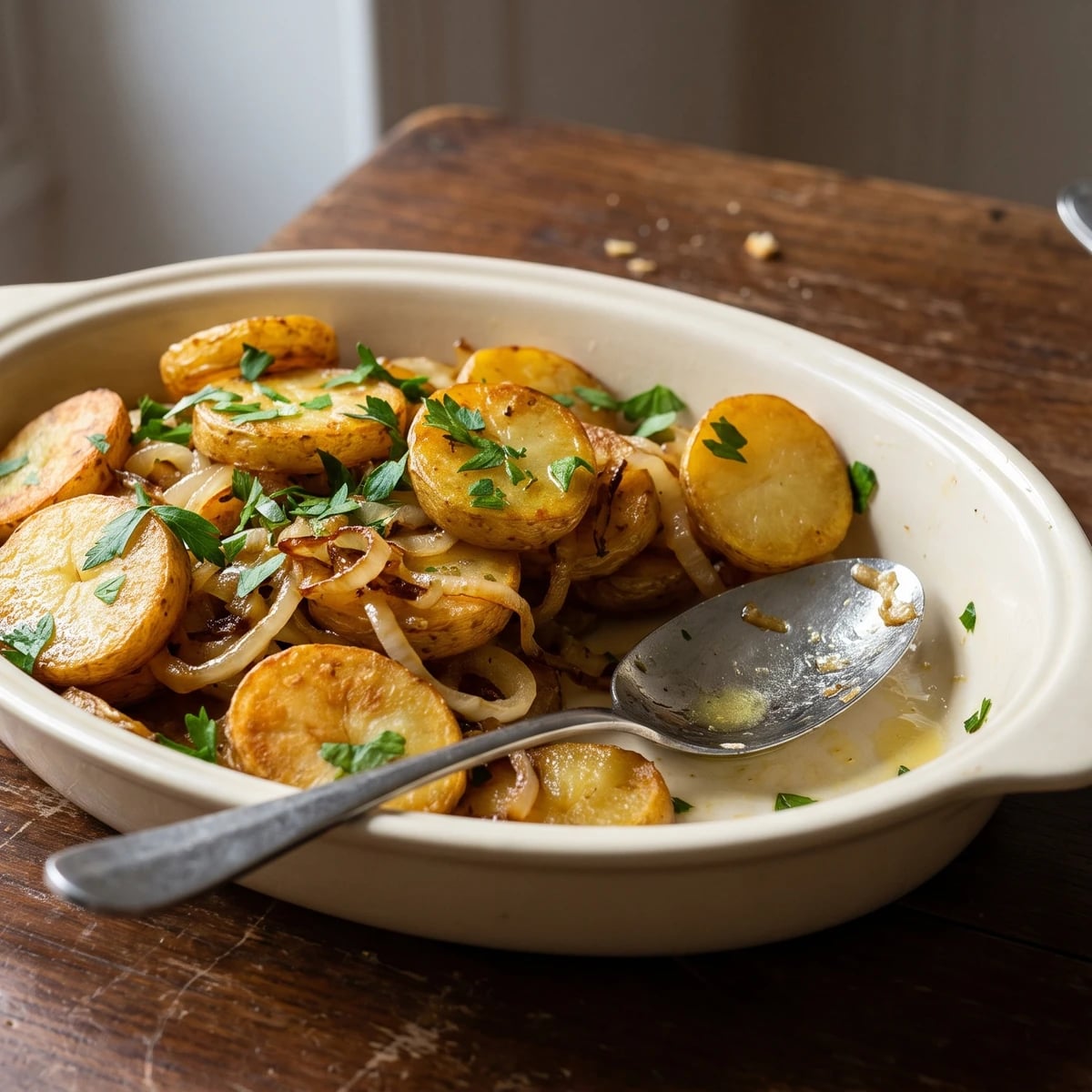
Pommes de Terre à la Lyonnaise proves that separate cooking is not fuss but judgment: butter-gold potato rounds and onions browned at their own pace, then married with parsley in one generous pan.

Side Dishes
French
Weeknight
Comfort Food
20 min
Active Time
50 min cook1 hr 30 min total
Yield4 servings

Pommes de Terre à la Lyonnaise (Lyon-style potatoes) teaches one true thing: ingredients that finish at different speeds must earn their colour separately. Brown the onions beside the potatoes, not on top of them; marry the two only when each is ready, and you get golden rounds threaded with sweet onion rather than a pale heap with broken edges.

The classical entry assumed peeled, plain-boiled potatoes were already waiting in the brigade, two sauté pans could move at once, and a timbale stood ready for service. It called for no saucier, perpetual stock, or salamander, and neither do you. For one cook, one stove, one evening, boil and cool 680 grams of potatoes, keep the book's onion proportion at exactly one quarter by weight, use two ordinary skillets, and serve from a warm household dish. Having the potatoes ready and presenting them in a timbale were service scaffolding; the separate butter sauté is the dish, and it stays.

Cool the potatoes before you slice them. That is the step that matters most: warm potato rounds smear and fracture in the pan, while cool ones take a butter-gold face and remain themselves.

Pommes de Terre à la Lyonnaise belongs to Lyon, where onions browned in butter are a defining note of the city's hearty home and bouchon tables. In the classical vocabulary, à la lyonnaise is not ornamental geography: it tells the cook to expect properly golden onions, while this potato preparation keeps them apart until the final toss so each retains its own texture. The dish passed easily into the national repertoire because its method is modest but exact, plain-boiled potatoes made generous with butter, onion, and parsley.

The technique, the tradition, and the story behind every dish.

Discover Culinary Explorer

Ingredients

waxy potatoes, such as Yukon Gold

Quantity

1½ pounds (680 g / about 5 small-to-medium)

peeled and left whole

yellow onion

Quantity

6 ounces (170 g / about 1 large)

peeled and thinly sliced

cold water

Quantity

2 quarts (1.9 L / 1.9 kg), or enough to cover by 1 inch (2.5 cm)

unsalted butter

Quantity

5 tablespoons (75 ml / 70 g)

divided

fine sea salt

Quantity

1 teaspoon (5 ml / 6 g), plus more to taste

freshly ground black pepper

Quantity

½ teaspoon (2.5 ml / 1 g)

flat-leaf parsley

Quantity

3 tablespoons (45 ml / 10 g)

roughly chopped

Equipment Needed

  • 4-quart saucepan
  • Rimmed tray or large plate for cooling
  • 12-inch heavy skillet
  • 10-inch skillet
  • Thin flexible spatula

Instructions

  1. 1

    Plain-boil the potatoes

    Put the peeled whole potatoes in a saucepan and cover them with the cold water by 1 inch (2.5 cm). Bring just to a boil, then lower the heat and simmer gently for 18 to 25 minutes, depending on size. A thin knife should pass through the centre cleanly, but the potato must still hold its shape without splitting. Leave the water unsalted because the source seasons the potatoes only after they meet the onions. Drain thoroughly and spread the potatoes on a tray so moisture can escape.

  2. 2

    Cool and slice

    Let the potatoes cool uncovered for 20 to 30 minutes, until no warmth remains at the centre, then cut them crosswise into roundels about ¼ inch (6 mm) thick. Pat the cut faces dry if they look damp. If a round crumbles under the knife, stop. Ça se rattrape: refrigerate the whole potatoes for 10 minutes, then resume with a thin, sharp knife; cooler starch cuts more cleanly.

    Keep any broken pieces for the cook. Never apologize at your own table, but give the serving dish the handsome whole rounds.
  3. 3

    Brown the onions

    Melt 2 tablespoons (30 ml / 28 g) of the butter in a 10-inch skillet over medium heat. Add the sliced onion and sauté, turning frequently, for 12 to 16 minutes, until supple and an even golden colour. Golden is the mark, not dark onion jam. If the butter catches before the onions colour, lower the heat and add a tablespoon of the measured water; scrape the pan, let the water evaporate, and continue. Remove any blackened slivers because their bitterness won't cook away. Take the skillet off the heat when the onions are ready.

  4. 4

    Sauté the potatoes

    Melt the remaining 3 tablespoons (45 ml / 42 g) butter in a wide 12-inch skillet over medium-high heat. When the foam subsides, arrange the cool, dry potato rounds in as broad a layer as the pan permits. Sauté, meaning cook briskly while turning in hot butter, for 8 to 12 minutes. Slide the pan and turn sections gently with a thin spatula until the rounds show butter-gold faces and lightly crisp edges. If they cling, wait another 30 seconds rather than scraping; a properly browned face releases from the pan. Lower the heat if the butter darkens faster than the potatoes.

    If your skillet is smaller than 12 inches, brown the potatoes in two batches and divide the butter between them. A crowded pan traps moisture and denies the potatoes their colour.
  5. 5

    Marry and finish

    Tip the golden onions and every drop of their butter into the potato skillet. Season with the salt and pepper, then sauté the two together for 2 to 3 minutes, lifting gently from the edges toward the centre until the onions thread themselves among the rounds. Take the pan off the heat and fold in most of the parsley. Taste, correct the seasoning, and transfer everything to a warmed shallow serving dish, scattering over the remaining parsley and spooning the butter from the pan across the top. Cooking well is not cooking fancy. À table!

Chef Tips

  • Weigh the trimmed onion against the potatoes if you can: 170 grams of onion to 680 grams of potato preserves the book's one-to-four proportion exactly. More onion may taste pleasant, but it shifts the dish away from potatoes dressed à la lyonnaise.
  • Choose a waxy or all-purpose potato that remains intact after boiling. Yukon Gold is the easy choice; a very floury baking potato tends to feather at the edges and break during the final sauté.
  • Serve these beside a pork chop, roast chicken, sausage, or a plainly cooked steak. A light Beaujolais suits the Lyon table and won't bully the butter or sweet onion.
  • The finished dish is best straight from the pan. Refrigerate leftovers for up to 3 days, then reheat them gently in a wide skillet so the potatoes regain their edges.

Advance Preparation

  • The potatoes may be plain-boiled up to 1 day ahead. Cool them promptly, refrigerate them whole in a covered container, and slice them shortly before sautéing.
  • The onion may be sliced and the parsley washed, dried, and chopped several hours ahead. Keep both covered and cold, in separate containers.
  • Do not combine the browned onions and potatoes early. Their final few minutes together belong just before serving, while the potato faces are still crisp and the butter gleams.

Frequently Asked Questions

Nutrition Information

1 serving (about 215g)

Calories
275 calories
Total Fat
14 g
Saturated Fat
9 g
Trans Fat
1 g
Unsaturated Fat
4 g
Cholesterol
38 mg
Sodium
605 mg
Total Carbohydrates
34 g
Dietary Fiber
4 g
Sugars
3 g
Protein
4 g

Note: Chef personas and recipes are created with AI assistance. Cook with care: follow safe food-handling practices, check doneness with a thermometer when needed, and adapt for allergies and your kitchen.

Where cooking meets culture.

Culinary guides, cultural storytelling, and the editorial depth that makes cooking meaningful.

Discover Culinary Explorer

More from Vegetables and Farinaceous Products - Onions (Oignons)

Browse the full collection